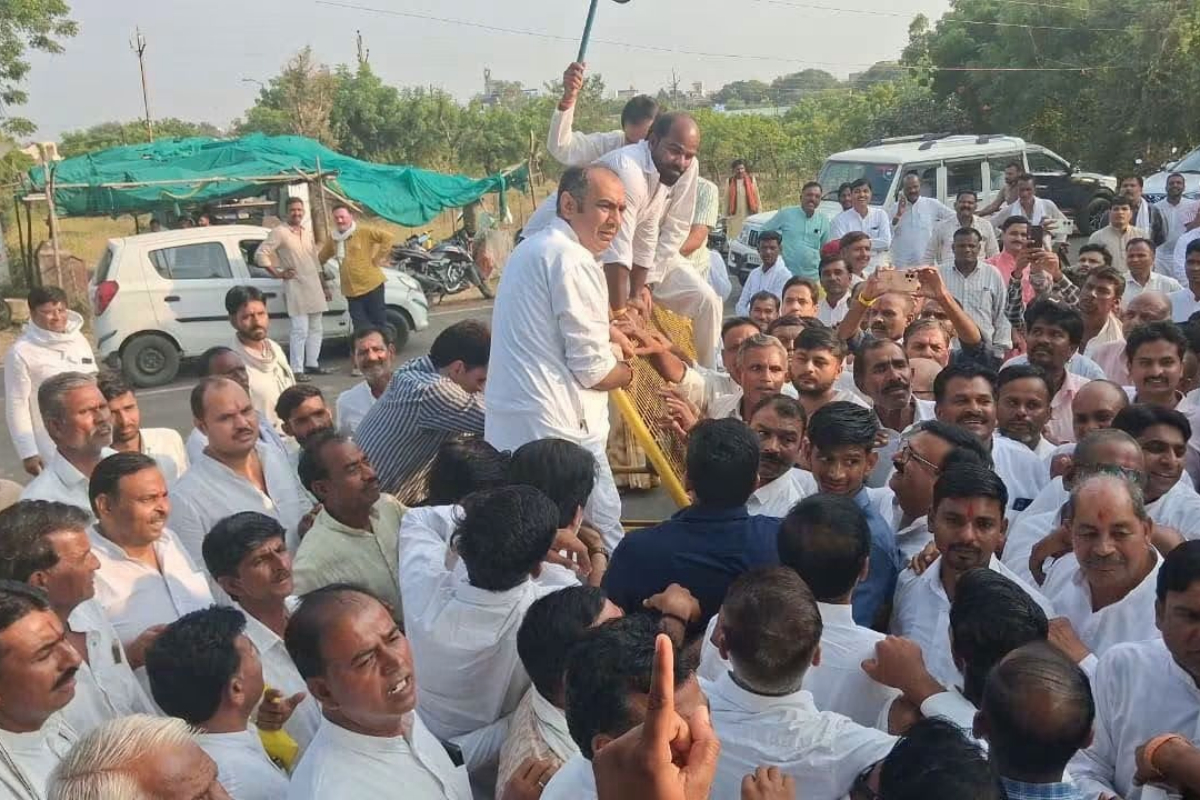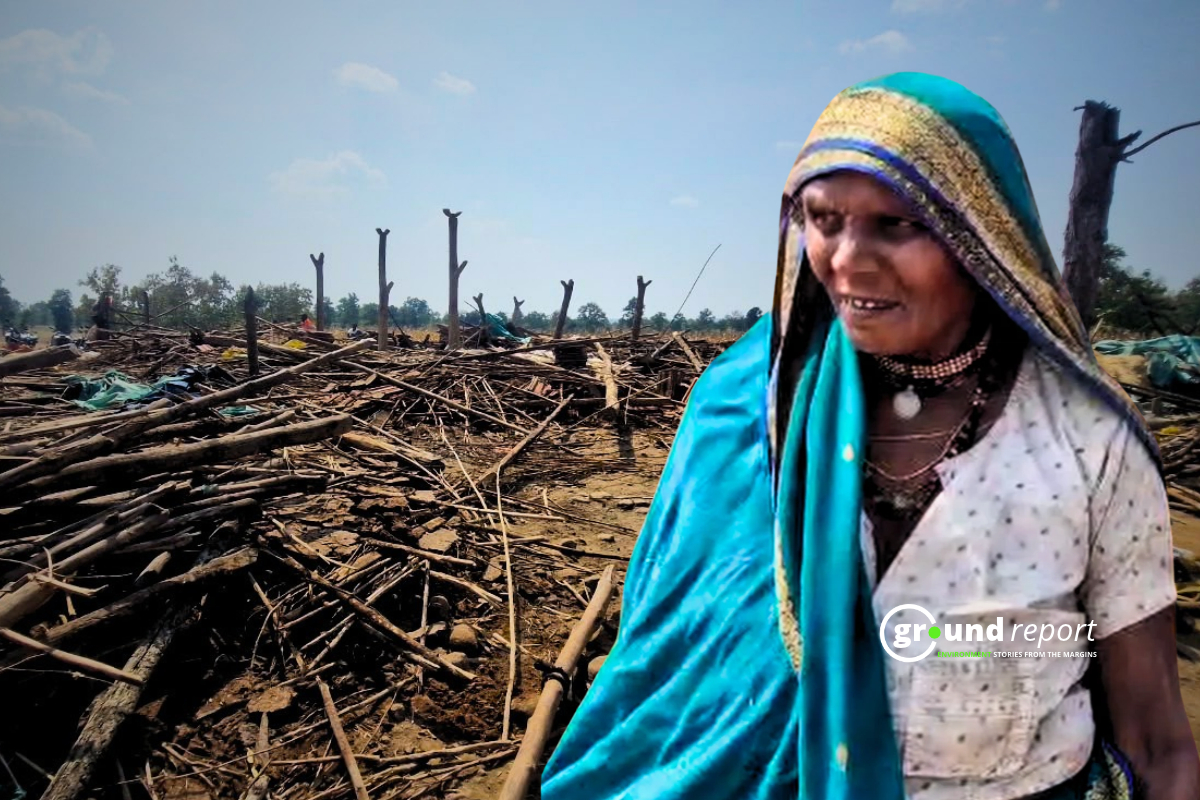
Villagers of Kundla Agar, located about 200 kilometres from Bhopal, staged a protest on July 21 amid rainfall. The villagers alleged that the ethanol factory located close to the village was releasing contaminated water into a drain. According to the villagers, water discharged from the factory is reaching the village’s water sources through the drain.
The company has denied these allegations, claiming that it operates under a zero liquid discharge system.
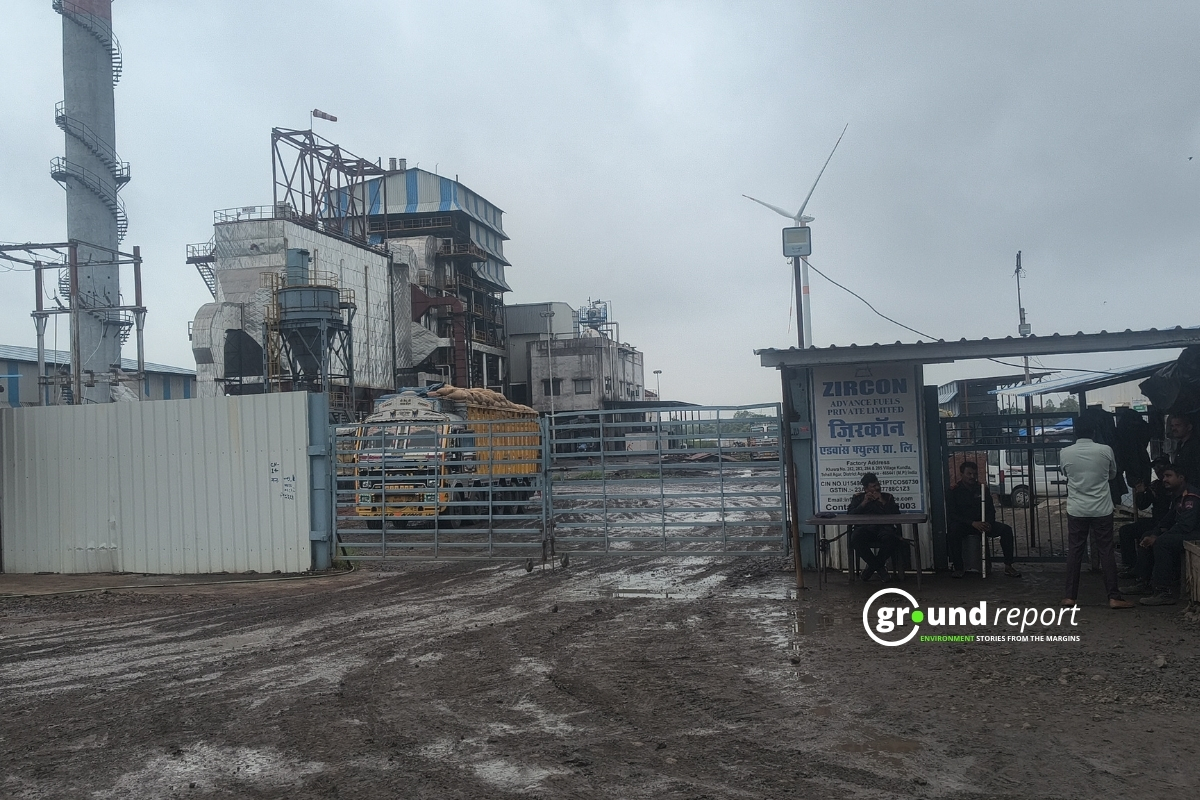
The Ground Report team reached the village on August 11 to assess the villagers’ complaints and the condition of the factory. The ethanol factory is located on the left side of the road, around 7 to 8 kilometres before Agar Malwa.
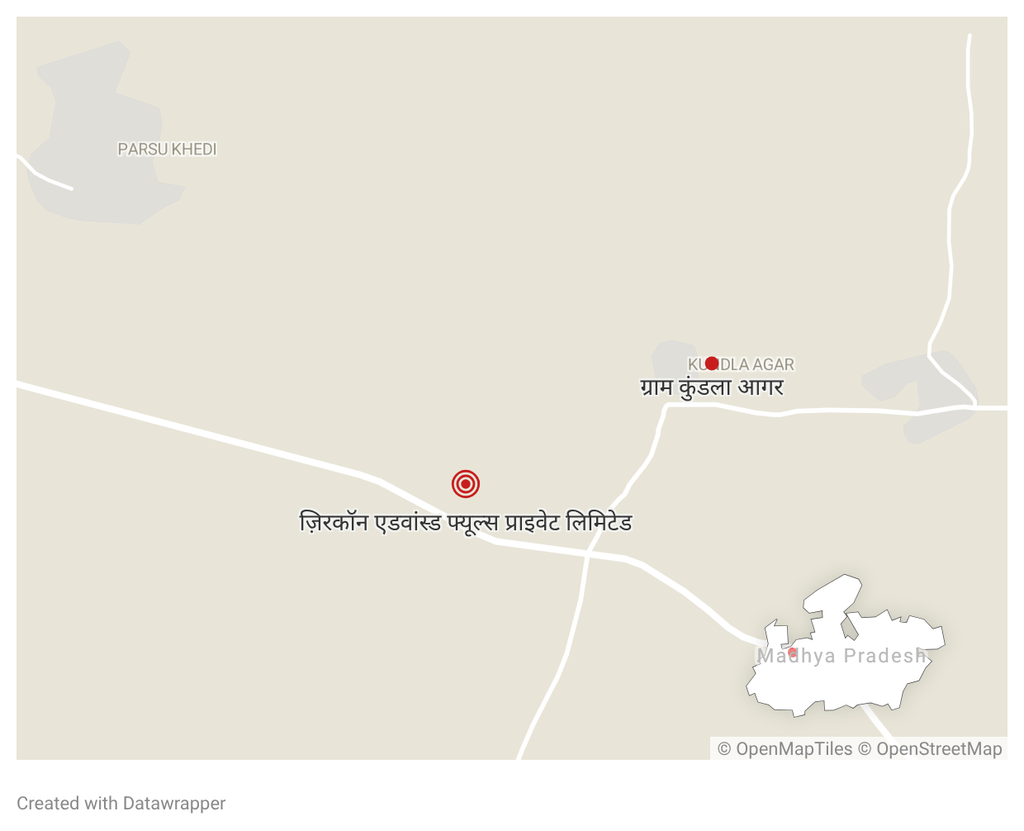
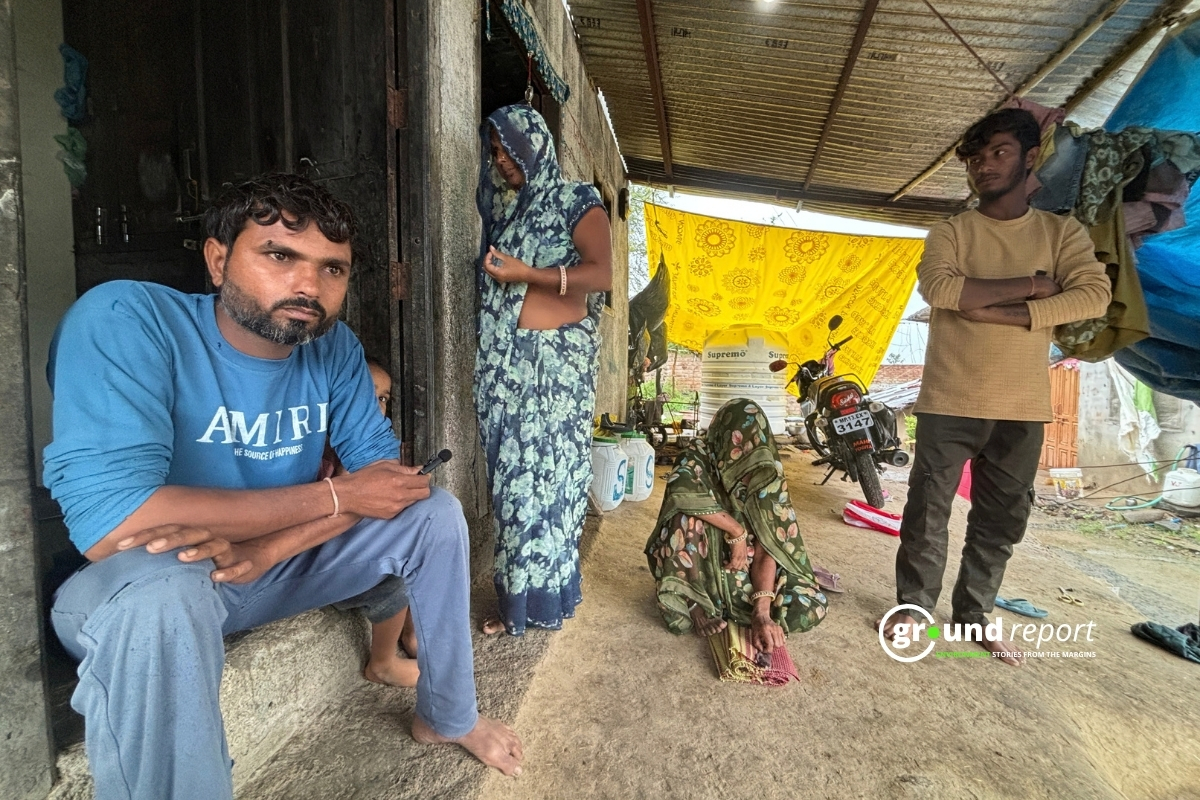
As soon as we entered the village, a foul smell welcomed us. Villagers said they had to endure the stench every day. They showed us photographs and videos recorded during the protest, pointed towards the factory and alleged that contaminated water was being discharged into the drain.
Route to the Drain
The villagers took the team to the drain about which they had complained. After heavy rainfall on August 9 and 10, the drain had become considerably cleaner, but it still smelt foul.
To reach the far end of the factory, it was necessary to walk for about 10 minutes through muddy and crop-covered terrain, entering the water in the drain. At the location that villagers identified as the point where water was being discharged, the water was stagnant and muddy. However, no water could be seen flowing out of the factory at that time.
While recording the drain, some employees of the company also began recording the team. The team continued recording without responding.
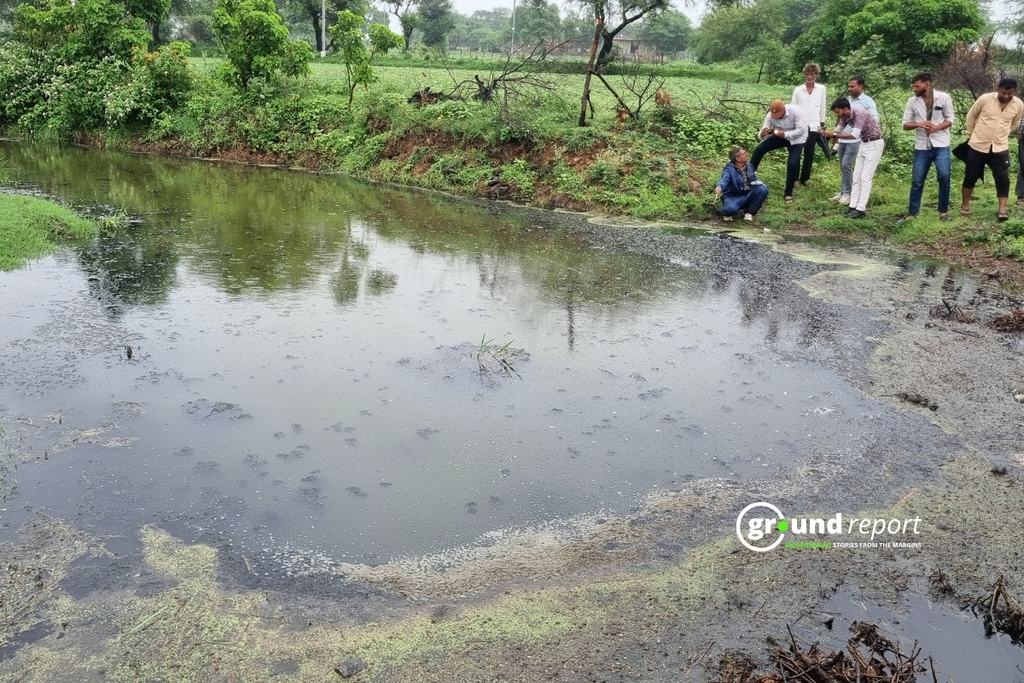
Some villagers were found at a small bridge over the drain. The bridge is used by villagers to travel between places. The villagers said they wash their hands and feet with the water from the drain. They complained of itching and infections on their hands.
The villagers also took the team to Piplya Kumar Dam, from where the company is said to obtain water. According to local farmer Shiv Singh, the Irrigation Department had temporarily stopped supplying water but later resumed it. The team did not receive any official statement on the matter.
Shiv Singh said farmers had faced water shortages during the summer.
Company Denies Allegations
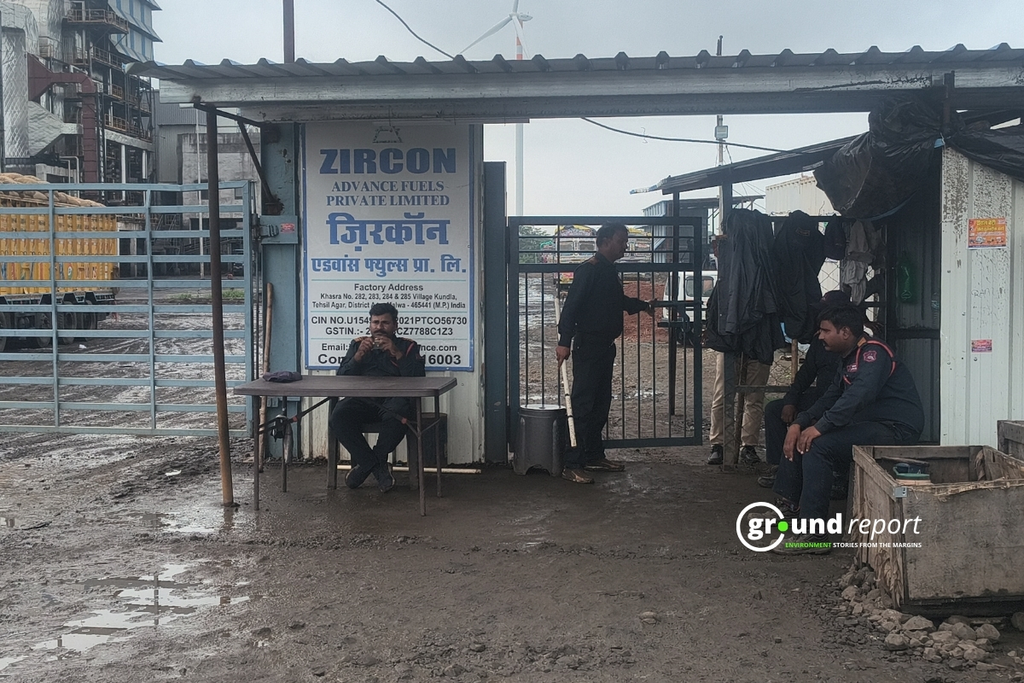
To physically verify the villagers’ complaints and the company’s claims, the team attempted to enter the factory. Security personnel at the gate refused entry without permission from the company owner.
An attempt was made to contact company owner Rakab Chand Jain by phone. He later called from another number and said that he was outside and therefore could not meet the team.
Over the phone, Jain described the villagers’ allegations as baseless. He said that notices issued by the Gram Panchayat and complaints by villagers were attempts to blackmail the company. He alleged that some villagers steal from the company and that, when action is taken against them, they put pressure on the company to withdraw FIRs.
Jain said that no water leaves the factory and that water used in the plant is recycled and reused. He said that rainwater cannot be prevented from flowing out.
When asked about the photographs and videos from the site, Jain said that there is no discharge from the factory.
Gram Panchayat Complaint
According to Gram Panchayat Secretary Rambabu Carpenter, the panchayat includes Semli and Kundla Kheda villages. The two villages have an estimated combined population of around 2,794.
Rambabu said villagers had been facing problems for more than a year. According to him, even Gram Panchayat officials are not allowed to enter because of the factory’s security arrangements.
He said that there had been no such complaints about the factory earlier, but later water began being discharged into the rear section of the drain. According to Rambabu, the foul smell persists 24 hours a day and can be detected in some colonies of Agar as well.
He said the permission granted to the company mentions zero liquid discharge. According to him, the problem related to discharge emerged about one to one-and-a-half years after the factory began operations, and the problem had started even before the onset of the rains.
Rambabu said complaints were made verbally to senior officials, but so far the villagers had received only assurances.
Inspection by the Tehsildar and Human Rights Commission
Agar Tehsildar Vijay Saini said that on July 21, 2026, villagers had blocked the road in protest against dirty water from the factory entering the drain and against environmental pollution.
Regarding the situation, the Tehsildar said that dirty water had been discharged into the drain from the company’s side. He said that no written panchnama, or “inspection report” was prepared at the time; instead, a report of the entire incident was submitted to the Sub-Divisional Magistrate (SDM).
In contrast, Ujjain Pollution Control Board Regional Officer Deepak Kale said Zircon Advanced Fuels Private Limited had been granted permission on March 24, 2025, and that the company is monitored through an online portal. However, when the portal was checked, no data was visible.
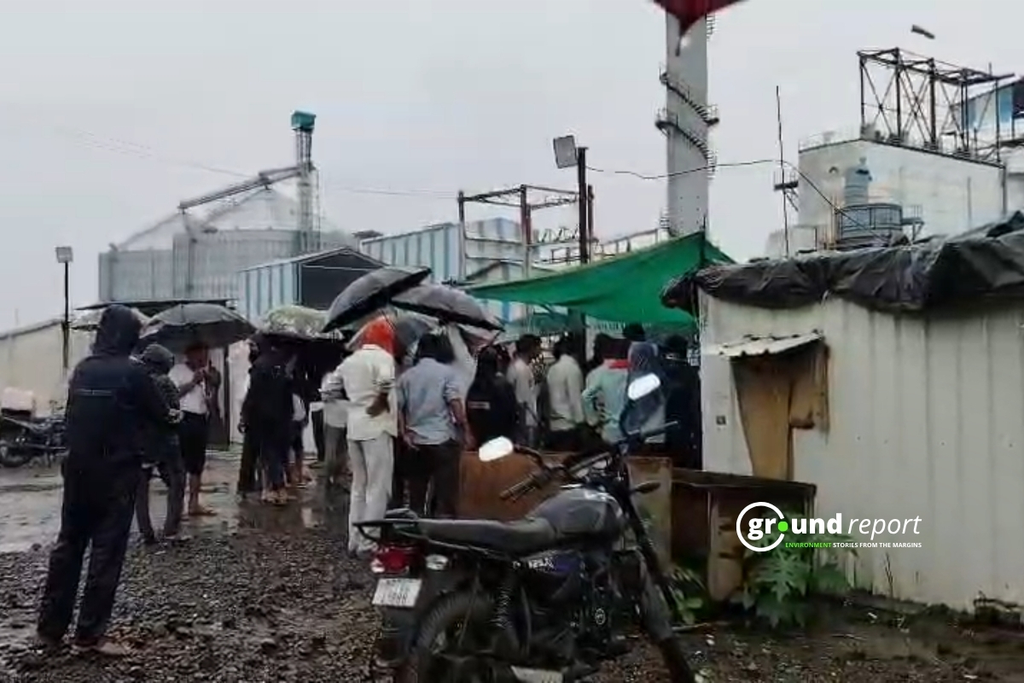
Following the villagers’ complaints, a notice was issued to them on August 17, and they were called for a hearing before the Human Rights Commission at the Agar Collectorate on August 18.
During the public hearing, the villagers presented their complaints concerning the factory before Dr Areport”,h Pratap Singh, Chairperson of the Madhya Pradesh State Human Rights Commission.
After this, a team comprising the Commission Chairperson, DIG Mukesh Kumar Srivastava, Agar Collector Dr Sher Singh Meena, the Superintendent of Police and other senior officials conducted a physical inspection of the factory.
During the inspection, the team examined the quantity of water used by the industry, the treatment of wastewater and the system for its disposal. The commission chairperson directed officials to pay particular attention to public health and safety based on testing of water samples.
Different Claims Emerge During the Investigation
S.K. Gupta, a scientist with the Ujjain Pollution Control Board who was present during the August 18 inspection, said that Zero Discharge was found at the company. He also said that he had no information about the situation before the inspection.
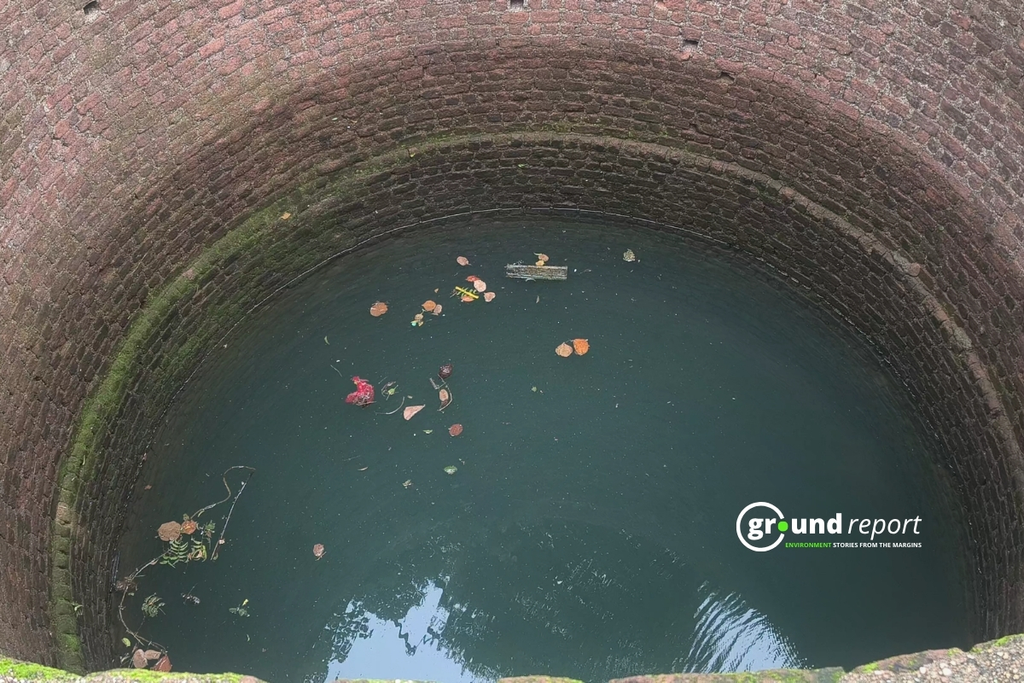
PHE Department Sub-Engineer Vijay Chavda said that on July 23, water samples had been collected from hand pumps inside and outside the village and from a private well. According to him, no contamination had been detected in the tests so far.
Chavda said that if the discharge of water into the drain continues, it could create problems in the future. The drain flows towards the Lakhandar River at Nalkheda. The tubewell used for the tap-water scheme was also tested, and no contamination was found in it so far.
The PHE Department said it would keep the village’s water under observation and conduct testing every month.
Zero Liquid Discharge, Rules and Standards
Prem Kumar Katiyar, an expert from the National Sugar Institute, said that under a zero liquid discharge system, water from a factory should not be discharged outside the premises. Under this system, water is treated using an ETP and other equipment and then reused within the plant itself.
According to him, if there is a complaint that water is being discharged outside, samples should be collected and compared from different locations: the water entering the factory, the water being reused after treatment, and different points along the drain.
A source with around eight years of experience in other industries said that treating and reusing water is expensive. According to the source, some companies may store water and later discharge it into rivers or drains. The source also said that having online monitoring does not necessarily mean that the entire treatment and discharge process is being independently verified.
According to the rules of the Central Pollution Control Board, paddy- and grain-based ethanol factories fall under the Red Category of industries. Under the Environment (Protection) Act, 1986, the Zero Liquid Discharge system applies to distillery industries.
Under this system, the discharge of chemically contaminated wastewater from the factory premises into open drains, rivers, land or groundwater sources is prohibited. The concentrated waste generated by the plant is reportedly converted into biogas through a UASB reactor and dried and converted into DDGS, or Distillers Dried Grains with Solubles, which is used as animal feed.
For treated condensate water, the prescribed limit for BOD is 30 milligrams per litre, and the limit for COD is 250 milligrams per litre. An OCEMS, or Online Continuous Effluent Monitoring System, is provided for monitoring.
New Questions from Online Data
The Ground Report team examined data from the Madhya Pradesh Pollution Control Board’s online monitoring system for the period from July 1 to August 23, 2026.
According to the government server, during this period the data availability for all 11 water flow meters associated with the condensate polishing unit (CPU) was continuously recorded at 0.0%. The data status displayed against these meters was “NA”, meaning “not available”.
The portal recorded the industry’s status as “Site Shutdown” from August 1 to 6 and again on August 18, 2026. During the same period, the data availability for the 50 TPH-capacity boiler, identified as Boiler_50TPH_PM, was recorded at 87.04%.
On August 10, 2026, the value recorded for the emission parameter of this boiler was 32765.0. The Pollution Control Board’s regional officials were asked for clarification regarding this data, but no response had been received by August 25.
Dixit, a Pollution Control Board official posted in Bhopal, said ethanol plants fall under the Red Category and are required to send information online. He also said that “NA” can mean both “not applicable” and “not available”, and that the relevant information could be clarified only by the regional office concerned.
Company Hits Back
Following the Tehsildar’s statement, Jain said that there is no route through which discharge can leave the factory. He said villagers could put anything into the drain and that material found there did not necessarily come from the factory.
Jain alleged that the Sarpanch’s brother had demanded four plots in the factory and threatened to shut down the factory when the demand was not met. He also accused villagers of stealing from the plant and putting pressure on the company to remove their names from FIRs.
When asked about the items found in the drain, he said he had no information about them. He said that flow meters had been installed at the factory but refused to provide the water bill.
Agar Malwa SDM Milind said that the Tehsildar had submitted an investigation report. On the basis of this report, the Collector had constituted an investigation team. He said what the investigation had found would become clear only after the report was received.
The team attempted several times to contact the Agar Malwa Collector by phone and sent messages but could not establish contact.
At present, the villagers’ allegations, the company’s claim of zero liquid discharge, the administrative report and the online monitoring data are all part of the ongoing investigation. The situation regarding whether water was being discharged into the drain and its impact on drinking-water sources will become clear only after the results of the water samples and the report of the district-level investigation team are received.
Support Us To Sustain Independent Environmental Journalism In India.
More Ground Reports
He Was Married as a Child, Now Manish Dangi Helps Stop It for Others
Despite The Ban, How Gutkha Became MP’s Most Common Household Habit