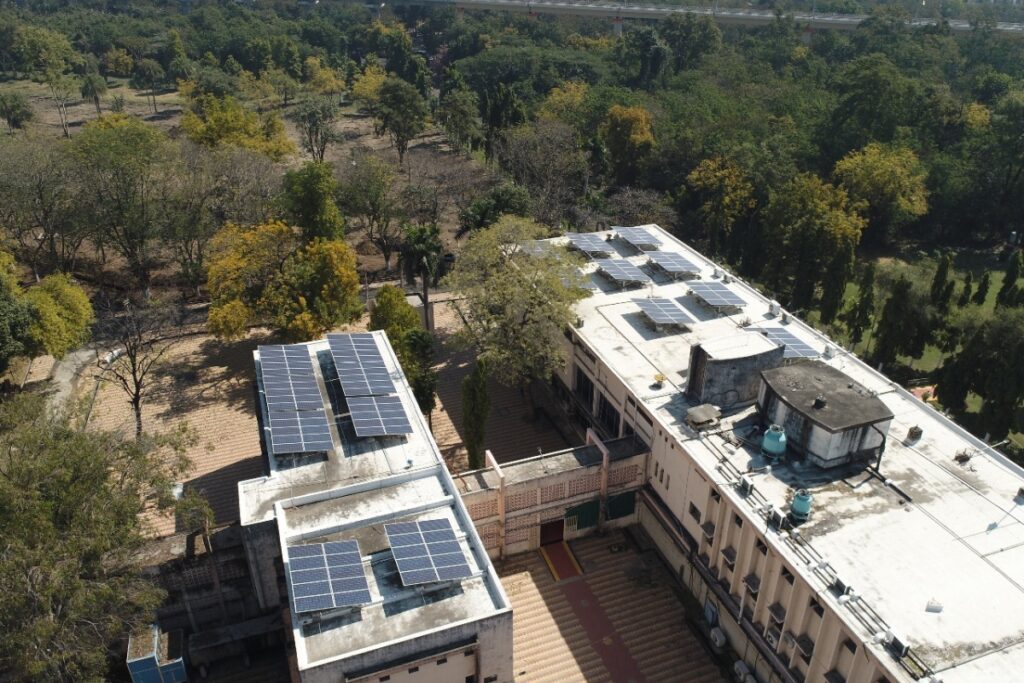
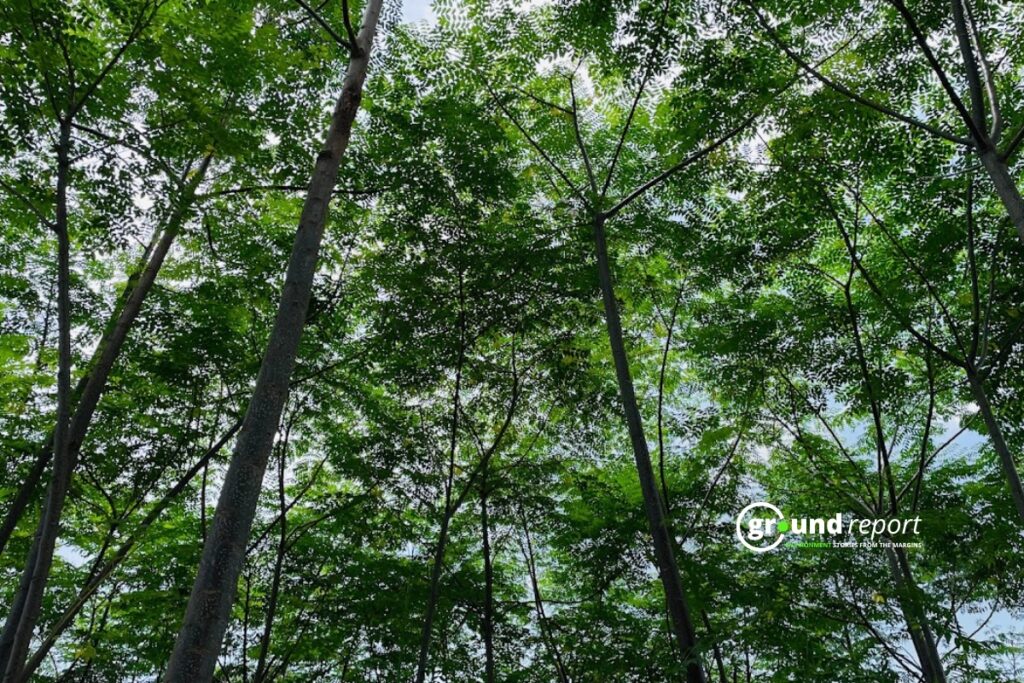
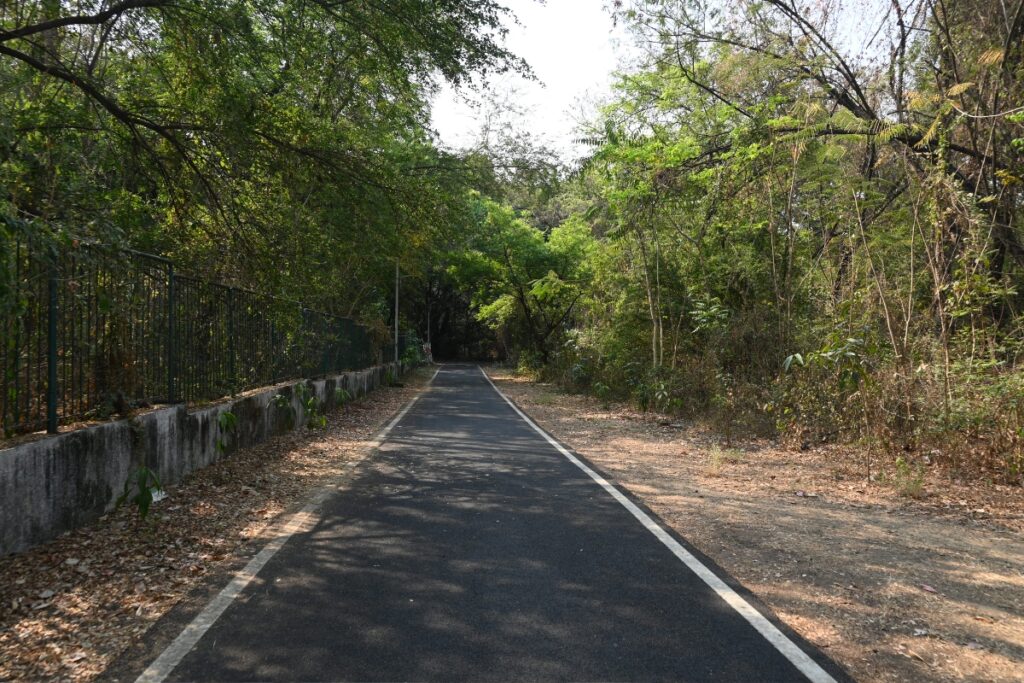
Inside a fenced-in 46-hectare government science campus in Nagpur, researchers counted 1,744 trees across 83 species. They argued that the site meets the criteria for an Other Effective Area-Based Conservation Measure, or OECM, essentially a land that protects nature as a co benefit of its real purpose.
A new study of the CSIR-National Environmental Engineering Research Institute campus was published in the journal Trees and adds fresh data to a case that’s been building for years: fenced institutional land can help protect urban biodiversity without creating a single new protected area.
India’s formally protected areas cover a little over 5% of its land, far short of the 30% it agreed to protect by 2030 under the Kunming-Montreal Global Biodiversity Framework.
Under the Convention on Biological Diversity’s OECM framework, adopted by India in its 2022 national guidelines, land already under stable management — from sacred groves to industrial estates — can count toward the 30% target without new land acquisition.
In 2022, Aravalli Biodiversity Park in Delhi-NCR became the country’s first and only recognized site.
NEERI has not applied for formal designation.
“Our campus supports improved microclimate with a reduction of 3-5 degrees, ground water table, also better air environment and pollinator diversity, followed by many other cultural benefits,” Dr. Shalini Dhyani, principal scientist and head of the Center for Ecological Systems and Resilience Design at CSIR-NEERI and the study’s senior author, told Ground Report in an email.
Fenced campuses like NEERI’s are not designed as public parks, but Dhyani argued their value reaches beyond the boundary walls.
The study, Dr. Shivam Shrotriya of the Wildlife Institute of India said, remains “a proof of concept rather than raising a promising case” for OECM status. Its tree inventory and the TreMs hypothesis are real contributions, he said, but OECM designation requires biodiversity outcomes sustained by governance over time.
The Study
A team led by S. Saraniya and Shalini Dhyani of CSIR-NEERI surveyed the campus using 172 sample plots over a year. They calculated a Shannon diversity index of 3.13 — a standard ecology score measuring how many tree species are present and how evenly they’re spread across the population — which they said is comparable to nearby protected forest.
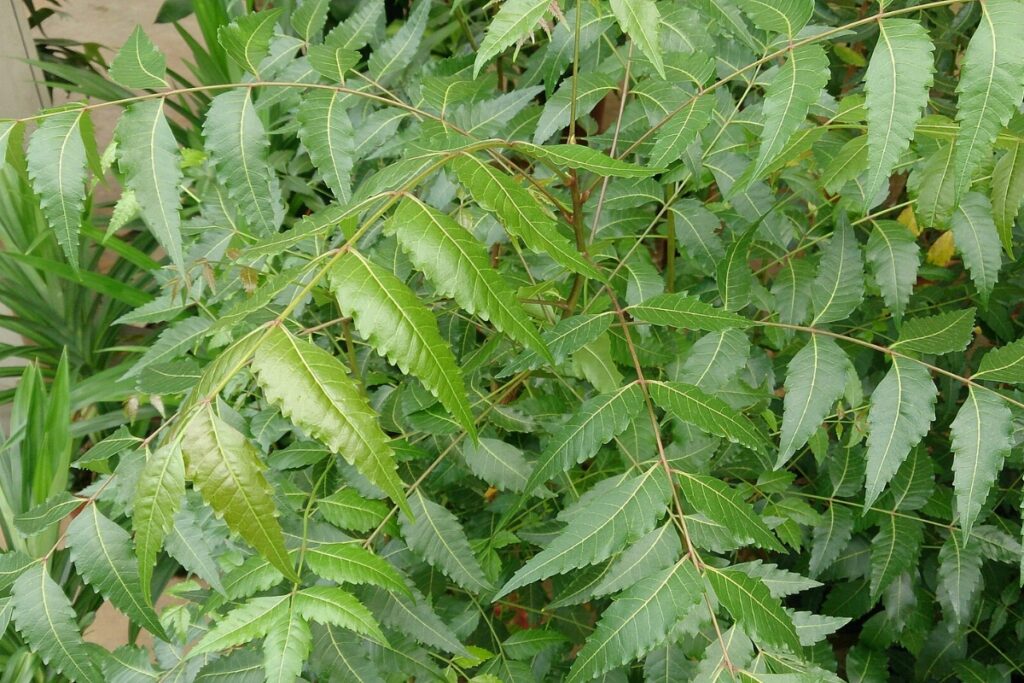
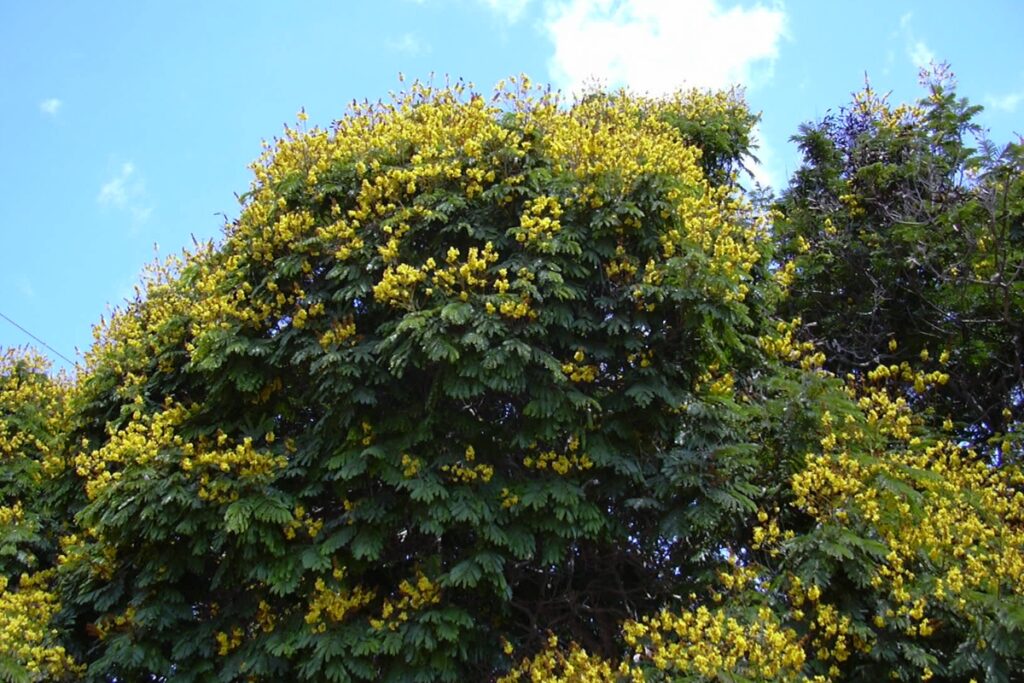
The neem tree, Azadirachta indica, a species native to the Indian subcontinent, stores the most carbon on campus — nearly 63 megagrams per hectare — ahead of the non-native Peltophorum pterocarpum and the native sacred fig, Ficus religiosa.
Prof. Harini Nagendra of Azim Premji University, who has studied urban trees across Indian cities for over a decade, questions the native-versus-non-native framing itself. She called the tree-only survey a reasonable starting point, while adding that future studies should see insects, fungal life, and soil health to understand whether the campus is “functioning as an ecosystem,” not just holding trees.
Dr. Shivam Shrotriya of the Wildlife Institute calls the use of TreMs as a proxy for biodiversity a good hypothesis, but one that remains untested. ‘My interest is to see how well the proxy holds against the actual data,’ he said. At a site like NEERI, he noted, animals may not immediately begin using these microhabitats, so their presence alone may not reflect the site’s actual biodiversity.
For OECM purposes specifically, he said, TreMs “don’t have direct value” — actual species inventories are what count.
The authors call their own paper “a pilot ecological evidence base rather than a thorough OECM evaluation.”
Native-Non-Native Debate
The tree species were evenly split between native and non-native species, 49% to 51%. But the campus’s most common tree, Peltophorum pterocarpum, is not native to India.
“OECM criteria require sustained biodiversity outcomes, and efforts should be made to achieve better native biodiversity outcomes in case large native populations or ‘pristine native cover’ are not there,” Dhyani said.
Her team’s data also suggested non-native trees on campus host more microhabitats, and potentially more associated biodiversity, than the native species did.
“I personally don’t believe in this dichotomy, especially in cities, between native and non-native species,” Nagendra said, pointing out that trees like tamarind, now culturally Indian, arrived from elsewhere generations ago. Cities need some non-native cover by design, she added — native deciduous species in dry regions lose their leaves in peak summer, while campuses need year-round shade.
Additionally, native and non-native researchers also need to ask whether a species spreads beyond the site, affects other plants and animals, or changes the local ecosystem. This is where the question of exotic and invasive species comes in.
Non-native species that have naturalized in Indian forests are still counted as part of total biodiversity, Shrotriya said. But OECM rules treat non-native species differently depending on whether they’re invasive — meaning they spread aggressively and damage the local ecosystem — or simply naturalized without causing harm.
OECM evaluation scores invasive species negatively, he said, but stays unclear on non-invasive ones.
“The discussion on this point… could have been valuable,” he said.
OECM Policy and Safeguards
Under India’s OECM guidelines, developed by the environment ministry, the National Biodiversity Authority, and UNDP, a recognized site must show effective governance and undergo periodic monitoring to confirm it continues delivering conservation outcomes.
A 10-city study by the World Resources Institute tracked satellite data across Ahmedabad, Bengaluru, Delhi, Mumbai, and six other major cities between 2000 and 2015. The built-up area grew 47% near city centers and 134% on the outskirts.
When city residents are starved of green space, they tend to seek out institutional campuses. But that’s where the dichotomy lies. Nagendra said fully open access would mean traffic, noise, and disturbance that undercuts the biodiversity itself.
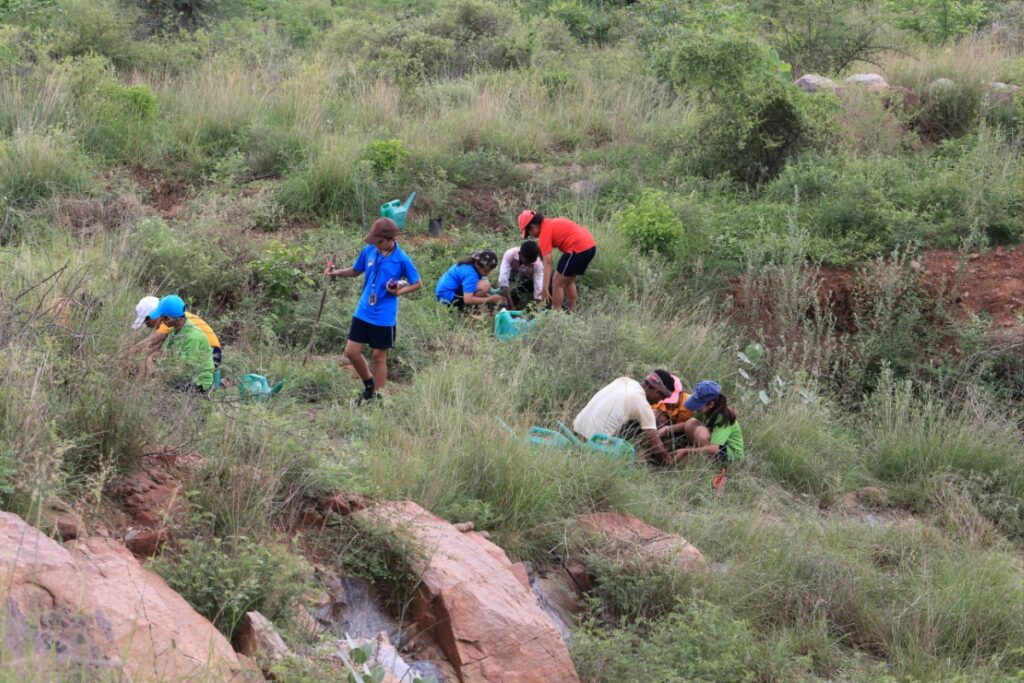
“We are encouraging people to look beyond PAs and see how small scattered campuses and many other such small patches can play a big role in conservation,” Dhyani said, describing campuses as one piece of a wider mosaic alongside sacred groves and community forests.
Shrotriya co-authored a 2022 study comparing vegetation on Indian academic campuses to land outside them. That study found campuses held onto significantly more tree cover than the areas around them — the same broad conclusion the NEERI paper reaches. His 2022 study relied on remote sensing data rather than physical ground surveys.
That kind of ground-level verification, he said, needs to happen at more sites before anyone can confidently claim campuses matter for conservation. “It should be extended outside of that campus and to other non-academic campuses,” he said.
“It could help India move towards this target, but it’s not actually going to help because these are very small parts,” Nagendra said. “The real 30 by 30… will not happen through urban green spaces.” That doesn’t mean campuses lack value, she added — just that their value is to the city itself, not to the national target.
Without independent enforcement, however, OECM status risks becoming “a relabeling exercise.” Reviews are carried out by the same institute managing the site, and there’s no legal penalty if conservation value declines. If priorities change with a new director, a funding crunch, or a need for more lab space, the campus’s ecological value could shrink.
Support Us To Sustain Independent Environmental Journalism In India.
More Ground Reports
He Was Married as a Child, Now Manish Dangi Helps Stop It for Others
Despite The Ban, How Gutkha Became MP’s Most Common Household Habit