
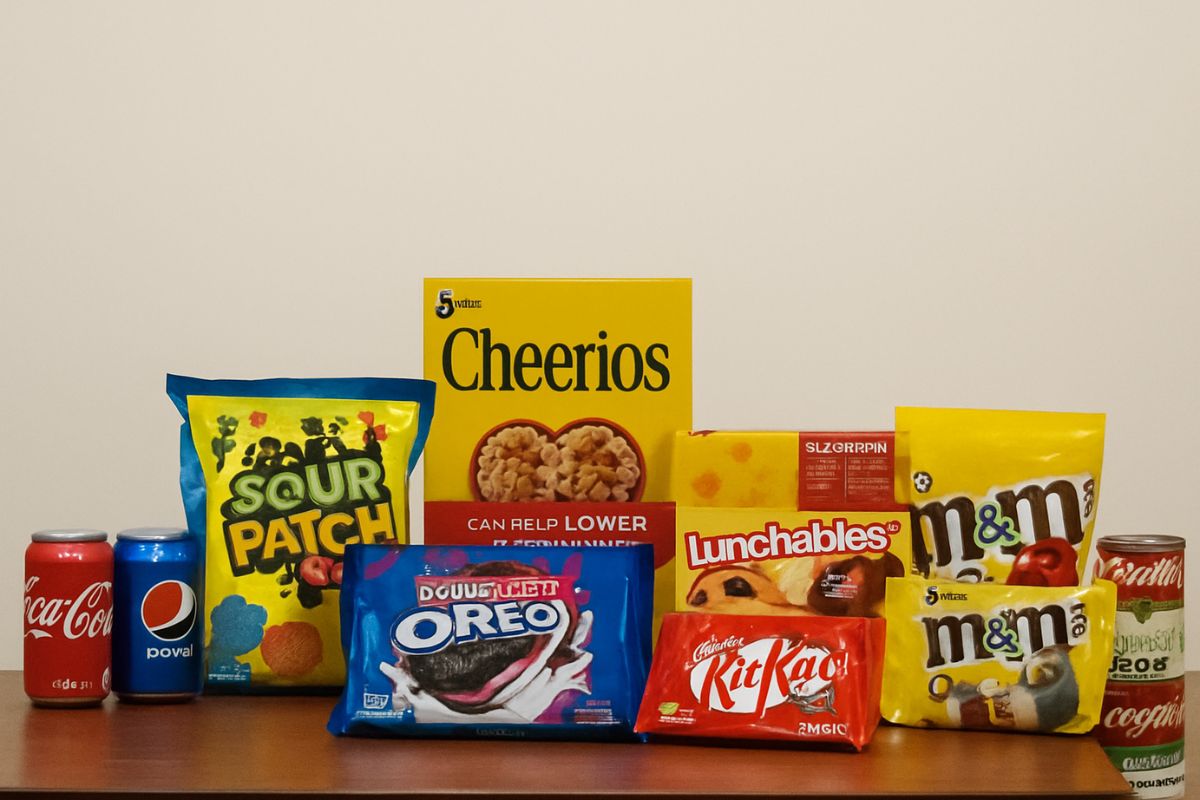
San Francisco has opened a major lawsuit against ten large food companies, arguing that their products have played a direct role in growing health problems in the United States. The case claims these companies designed and promoted ultra-processed foods in ways that encourage repeat consumption and long-term harm. City Attorney David Chiu said the firms “engineered a public health crisis” and must now face legal action.
Companies named in case
The suit lists Coca-Cola, PepsiCo, Mondelez, Kellogg, Nestlé, Kraft Heinz, Post Holdings, General Mills, Mars Incorporated and ConAgra Brands. These companies make many products sold across the country, including Oreos, Kit Kat bars, Cheerios and Lunchables.
| No. | Company | Notes |
|---|---|---|
| 1 | Kraft Heinz | Named for packaged meals, snacks, sauces |
| 2 | Mondelez International | Named for cookies, crackers, snacks |
| 3 | Post Holdings | Named for cereals and packaged foods |
| 4 | Coca-Cola | Named for soft drinks and sweetened beverages |
| 5 | PepsiCo | Named for snacks and soft drinks |
| 6 | General Mills | Named for cereals and snacks |
| 7 | Nestlé USA | Named for frozen foods, snacks, drinks |
| 8 | Mars | Named for confectionery and snacks |
| 9 | Conagra Brands | Named for frozen meals and packaged foods |
| 10 | Kellanova / WK Kellogg Co. | Named for cereals and snack lines |
San Francisco argues that these foods are tied to Type 2 diabetes, fatty liver disease, heart disease and some cancers. Chiu said, “They took food and made it unrecognizable and harmful to the human body.”
What lies behind claims
Ultra-processed foods include candy, chips, sodas, energy drinks, frozen meals and many packaged snacks. Chiu’s office says these items are built from “chemically manipulated cheap ingredients with little if any whole food added.” The lawsuit says the products are made to trigger cravings and lead people to eat more than they planned.
The Food and Agriculture Organization has described these foods as products built from altered sugars, modified oils and a range of additives not used in home cooking. These ingredients increase shelf life and create strong flavors, making the foods easy to buy, store and finish quickly.
Many items common in American homes fall into this group. White bread, cereal, crackers, canned pasta, chicken nuggets and sweetened yogurts are part of the long list of foods labeled as ultra-processed.
Why the case is gaining notice
Public health concern over these foods has grown. A report from the U.S. Centers for Disease Control and Prevention said most Americans get more than half of their daily calories from ultra-processed foods. U.S. Health Secretary Robert F. Kennedy Jr. has pointed to the rise of chronic disease linked to these products. He has argued for removing them from food support programs.
California has already moved to limit some additives in school meals. In October, Governor Gavin Newsom signed a law that will phase out certain products over the next decade. Many researchers say the problem is tied to long-term exposure rather than short-term intake.
University of California professor Kim Newell-Green said, “Mounting research now links these products to serious diseases, including Type 2 diabetes, fatty liver disease, heart disease, colorectal cancer, and even depression at younger ages.”
Claims inside the lawsuit
San Francisco says the companies violated state rules on unfair competition and public nuisance by marketing these foods as acceptable everyday choices. The city seeks court orders to stop what it calls “deceptive marketing” and to push the companies to fund public health messaging.
Chiu said the goal is to force the companies to help cover the cost of treating chronic diseases. “We are seeking to enjoin deceptive marketing and to obtain restitution in civil penalties to recover the enormous costs borne by governments,” he said.
The complaint compares the food industry’s methods with past tactics used by tobacco companies. It points to a 1999 meeting where, according to the filing, top executives warned of “devastating public health consequences.”
How the public is affected
A large share of food sold in the United States now fits the ultra-processed category. The New York Times reported that these items make up about 70 percent of the national food supply. Many are promoted as convenient or healthy, but the lawsuit says this presentation hides their real effects.
Chiu said many products “don’t seem unhealthy, but they’re falsely marketed as healthy.” He said the companies “copied the addiction science and marketing techniques that filled the big tobacco playbook.” He pointed to cartoon mascots and tie-ins with toy brands that target children.
Chiu also shared a personal story. He said his mother used Pringles chips to encourage him during swimming lessons. “And to this day, I love my Pringles. But they are designed to be highly addictive,” he said.
Companies push back on claims
The Consumer Brands Association, which represents several of the named companies, issued a statement. Sarah Gallo, senior vice president of product policy, said the companies “support Americans in making healthier choices and enhancing product transparency.” She said they are offering items with reduced sugars and sodium and “no synthetic color additives.”
Sarah also said there is “no agreed upon scientific definition of ultra-processed foods” and warned that classifying foods by processing alone “misleads consumers and exacerbates health disparities.” She said the companies follow standards set by the U.S. Food and Drug Administration.
None of the individual firms gave separate comments on the lawsuit.
Growing attention on food power
A recent three-part series in The Lancet studied how large food companies have shaped policy debates for decades. The series said the firms built deep influence across health and nutrition policy spaces, including in India.
Chiu said, “The most damning aspect of all this is that, like the tobacco and opioid industries, the UPF industry had actual knowledge that their products caused harm.” He said the case aims to bring those internal discussions into public view and set new limits on marketing.
A similar private case in Philadelphia earlier this year was dismissed because the judge said the claim lacked detail. San Francisco’s case is more expansive and backed by city funds.
Support us to keep independent environmental journalism alive in India.
Keep Reading
Small Wild Cats in Big Trouble: India’s First National Report Released
After Tragedy, Families Face Delays in Tiger Attack Compensation
Stay connected with Ground Report for underreported environmental stories.