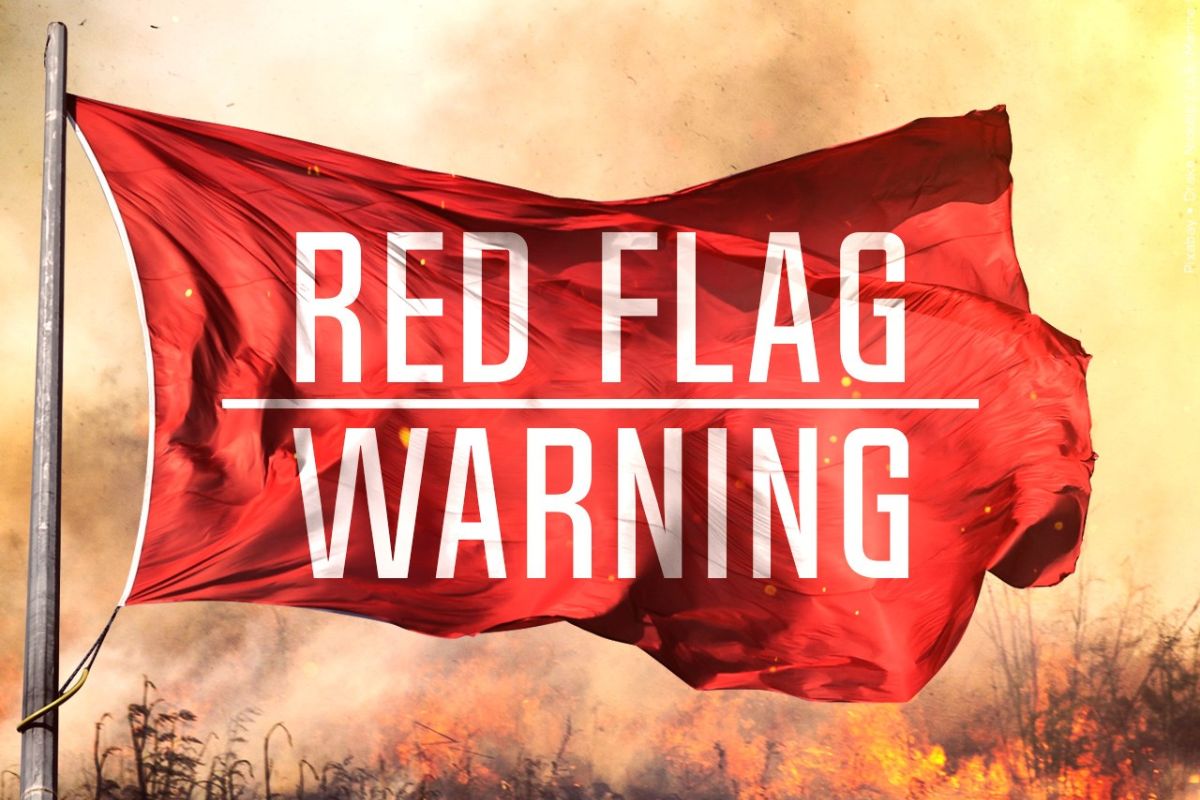
The National Weather Service (NWS) has issued Red Flag Warnings across multiple states as dry conditions, strong winds, and unseasonably warm temperatures create dangerous wildfire conditions this weekend. The warnings cover parts of North Carolina, South Carolina, Georgia, Minnesota, Texas, Oklahoma, Colorado, Kansas, Nebraska, Wyoming, and New Mexico.
Wind gusts are reaching up to 40 mph in some areas, and humidity has dropped as low as 13 percent. Fire crews are deploying resources to the most at-risk zones, and burn bans are in effect across several counties.
What Is a Red Flag Warning?
A Red Flag Warning is an official alert issued by the National Weather Service when weather conditions strongly favour the rapid ignition and spread of wildfires. Strong winds, very low humidity, warm temperatures, and dry vegetation combine to make even a single spark dangerous.
When a warning is active, local fire departments often restrict open burning. That includes backyard bonfires and burning yard waste.
“A Red Flag Warning signals dangerous fire weather conditions, including strong winds and low humidity. Taking precautions during these warnings can help reduce the risk of property damage and improve personal safety,” said Holly Sacks, Director of Port UW and CAT Management.
The NWS issued warnings for Western North Carolina and parts of South Carolina running from 8 a.m. to 11 p.m. on Saturday. Wind gusts reached up to 40 mph, and humidity dropped as low as 13 percent, conditions the NWS described as extreme fire weather.
Counties under warning in North Carolina include the Great Smoky Mountains National Park area, Caldwell Mountain, Avery, Mecklenburg, Cleveland, Gaston, and Iredell. In South Carolina, Chester, Chesterfield, Lancaster, and York counties are affected.
Minnesota and Georgia Face Critical Conditions
In Minnesota, critical fire weather was forecast across central and southern parts of the state. Temperatures approached 60 degrees Fahrenheit, with southwest winds gusting between 35 and 45 mph and relative humidity falling to between 15 and 20 percent. The warning ran from noon to 7 p.m. for most of the region, and from 10 a.m. to 9 p.m. for parts of southern Minnesota.
NWS Atlanta issued a separate warning covering most of Georgia, projecting widespread critical fire weather across the state on Saturday.
The NWS office in Birmingham issued a warning on Friday, March 27, covering Marion, Tuscaloosa, Jefferson, Montgomery, and several other Alabama counties, a sign of how quickly the risk zone was spreading across the Southeast.
Why These Conditions Are So Dangerous
High temperatures dry out vegetation. Low humidity removes remaining moisture from the air. Strong winds accelerate fire spread. Accumulated dry leaves and grass act as ready fuel. Together, these factors can turn a lawn mower spark, a downed power line, or an unattended grill into a fast-moving fire.
Red Flag Warnings are being issued more frequently across the United States. Earlier snowmelt, prolonged droughts, and rising temperatures are extending the fire season and widening the zones at risk, according to reporting by The Guardian.
The NWS urges residents in warned areas to water lawns and remove dry brush from around their homes. Firewood, propane tanks, and grills should be moved away from buildings. Residents should avoid burning trash or yard debris entirely while the warning is active. Anyone who spots fallen power lines or fire hazards should report them to local authorities immediately.
Support Us To Sustain Independent Environmental Journalism In India.
More Ground Reports
Panna: Villagers Protest Irrigation Projects, Demand Documents, and Transparency
Fulkai Maai Demands the Return of Crèches for Malnourished Korku Children
Stay Connected With Ground Report For Underreported Environmental Stories.
Support Us To Sustain Independent Environmental Journalism In India.