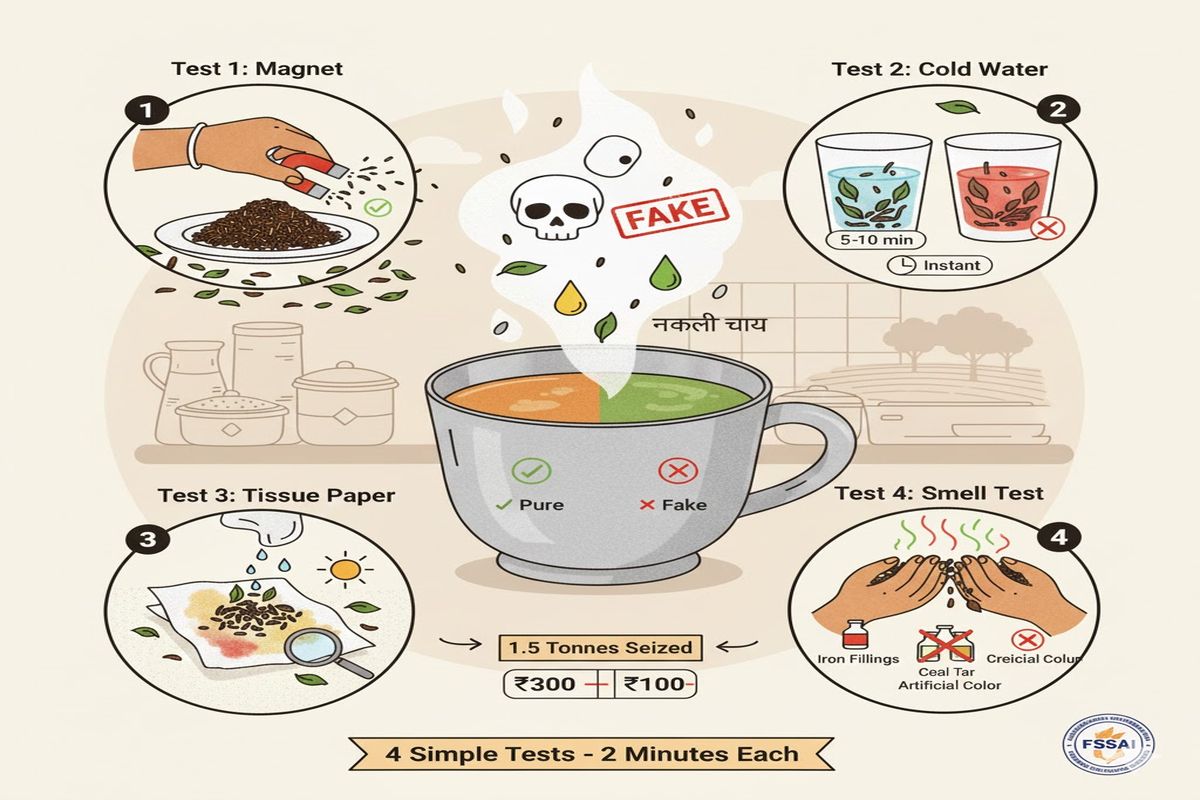
Your daily cup of tea might contain iron fillings, coal tar, sawdust, or harmful artificial colors instead of pure tea leaves. FSSAI seized 1.5 tonnes of adulterated tea dust from Coimbatore exposing a massive fake tea problem across India. Even more shocking, 32 percent of sampled tea brands contained pesticide levels exceeding permissible limits according to Food Safety Authority studies.
India produces 76 percent of tea for domestic consumption making it the world’s second largest tea producer. The India tea market was valued at 10.96 billion USD in 2023. With such massive consumption, tea adulteration has become rampant and highly profitable for manufacturers who add cheap dangerous substances to increase weight and profits.
K. Tamilselvan, Designated Officer of FSSAI, explained the sophisticated methods discovered during raids. Some 500g tea dust packets contained 50g sachets of tea dust mixed with high concentration of colorants. This sachet was designed to be mixed with genuine tea dust to produce strong color. Several packets already contained tea dust pre-mixed with colorants ready for immediate sale.
What Dangerous Substances Are Mixed in Your Tea
Manufacturers add iron fillings, coal tar dyes, artificial colors, sawdust, dried cow dung, and exhausted tea leaves to bulk up products. [FSSAI updated its testing method for iron fillings in tea on April 2, 2024, because iron particles have become one of the most common adulterants. Iron enters tea mainly due to wear and tear of old processing machinery during manufacturing.
Current FSSAI regulations set the maximum limit for iron particles in tea powder at 150 milligrams per kilogram. Many manufacturers exceed this limit deliberately. Used tea leaves get collected, dried thoroughly, and sold again after adding artificial colors. Research confirms that one kilo of genuine tea leaves brews 400 to 500 cups of tea. Adding artificial flavors and colors doubles this output to 800 to 1,000 cups from the same amount.
Test 1: How to Detect Iron Fillings Using a Magnet
Spread a small quantity of tea leaves thinly on a clean glass plate or white paper. Take a strong magnet and hold it about one centimeter above the tea leaves. Do not let the magnet touch the leaves directly. Move the magnet slowly across the entire surface of tea leaves.
If your tea is pure and unadulterated, the magnet will remain completely clean. Nothing will stick to it. The tea leaves will not move or jump toward the magnet. If iron fillings contaminate your tea, small black metallic particles will immediately jump up and attach themselves firmly to the magnet. The more particles that stick, the higher the level of adulteration.
Test 2: How to Spot Artificial Colors With Cold Water
The cold water test reveals whether manufacturers added artificial dyes or colorants to your tea. This method exploits the different dissolution rates of natural tea compounds versus synthetic dyes.
Fill a transparent glass with cold water or room temperature water. Do not use hot or warm water as heat changes how substances dissolve. Add exactly one tablespoon of tea leaves to the water. Do not stir, shake, or disturb the glass in any way. Simply place it on a table and observe carefully.
Pure authentic tea leaves release color very gradually over several minutes. The water slowly turns light brown or amber. This gentle color change happens because natural tea compounds dissolve slowly in cold water. It takes five to ten minutes for noticeable color development.
If the water color changes instantly or within seconds to dark red, bright orange, yellow, or any other intense color, your tea contains heavy artificial colorant adulteration. Synthetic dyes dissolve almost immediately in water regardless of temperature. This immediate dramatic color change provides definitive proof of adulteration.
Test 3: How to Find Coal Tar Using Tissue Paper
The tissue paper test detects coal tar dyes and petroleum based adulterants in tea leaves. This method takes about thirty minutes total but requires only simple materials.
Place a clean white tissue paper or blotting paper on a flat surface. Make sure the tissue is completely white with no patterns. Spread a few tea leaves evenly on the tissue paper. Sprinkle some water drops over the leaves using your fingers or a spoon. The leaves should be damp but not swimming in water.
Let the tissue paper dry completely in bright sunlight. This takes approximately twenty to thirty minutes depending on weather conditions. Once completely dry, carefully remove all the tea leaves from the tissue paper. Hold the tissue up against bright sunlight or place it under a strong light. Examine every part carefully for any colored stains, spots, or oily marks.
If the tea is pure and unadulterated, the tissue paper will show absolutely no stains or discoloration. Coal tar contamination leaves permanent colored stains that do not wash away even with water. Oily residue or greasy marks on the paper also indicate adulteration with petroleum products or mineral oils.
Test 4: What Your Nose Tells You About Tea Quality
Take a small amount of dry tea leaves in your palm. Rub the leaves gently between your fingers to release the natural aroma. Bring your cupped hands close to your nose and smell carefully.
Pure tea leaves have a distinctive fresh natural fragrance. Real tea has a pleasant earthy smell with slight floral or grassy notes depending on the variety. If you detect any artificial or chemical smell, your tea likely contains dangerous adulterants. Some adulterated teas smell like paint, vinegar, or industrial solvents.
What Health Problems Does Adulterated Tea Cause
Several cases of liver infections across India have been reported due to consuming adulterated tea according to laboratory testing services. Studies demonstrate that tartrazine causes serious health disorders including liver damage, kidney dysfunction, and DNA damage. This coal tar dye found in tea samples from factories gets metabolized into aromatic amine by gut microflora causing anemia, allergic reactions, asthma, tumors and cancer.
Consumers report severe stomach pain, nausea, vomiting, and diarrhea after drinking heavily adulterated tea. Allergic reactions include intense itching, hives, and skin inflammation. Some people develop breathing difficulties or asthma symptoms requiring emergency treatment. Iron overload contributes to liver disease, heart problems, and diabetes.
How to Buy Safe Pure Tea in India
Purchase tea only from reputable established brands and authorized retailers. Always check for FSSAI license numbers prominently displayed on tea packaging. FSSAI regulations clearly state that tea products must be free from extraneous matter, added coloring matter and harmful substances. Verify license numbers on the official FSSAI website.
Buy whole tea leaves instead of tea dust or powder whenever possible. Adulterants are much easier to mix into powdered forms. Avoid purchasing extremely cheap tea that costs significantly less than market rates. If 500g of branded tea normally costs 300 rupees but sells for 100 rupees, that product is almost certainly fake or heavily adulterated.
Perform these simple home tests whenever you buy a new brand of tea for the first time. Store tea in airtight containers away from moisture and heat. Replace tea every three to six months rather than keeping large stocks. These quick checks take only minutes but protect your health from serious harm.
Support us to keep independent environmental journalism alive in India.
Keep Reading
Small Wild Cats in Big Trouble: India’s First National Report Released
After Tragedy, Families Face Delays in Tiger Attack Compensation
Stay connected with Ground Report for underreported environmental stories.