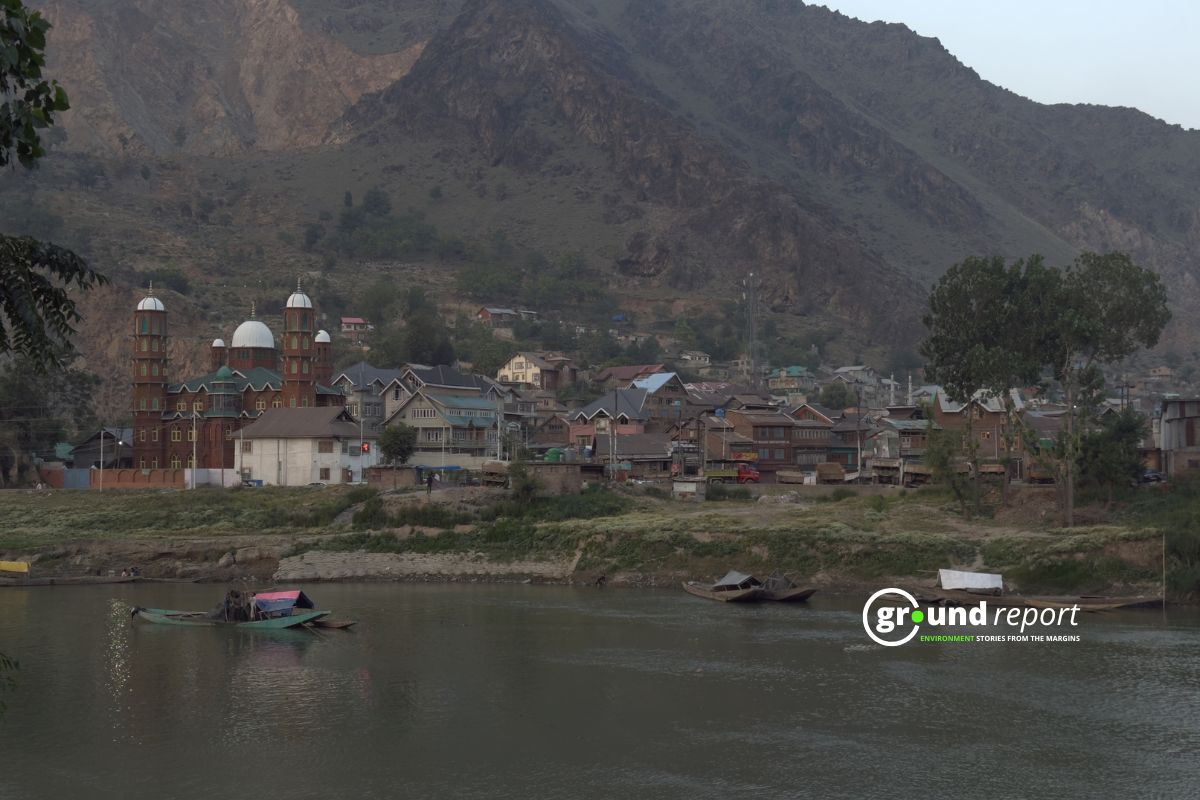
On 6 September 2023, then–Chief Minister Shivraj Singh Chouhan pressed a button and declared Sanchi “India’s first solar city.” The promise was that the ancient Buddhist town of Sanchi, best known for its UNESCO-listed stupas, would be powered through clean energy, mostly solar.
Soon, new charging stations were put up. There were solar street lights. And, even rooftop solar was promoted across the city, with almost 8500 residents. To fulfil the city’s energy needs, 2.5 MW daily electricity consumption, two solar parks—3 MW in Nagauri and 5 MW in Gulgaon—were built across rocky uneven terrain.
There were challenges. There were issues with the local tribal population, as they were being displaced and their livelihood was threatened. The rocky, uneven terrain made logistics challenging and expensive. “Taking the machinery up the hill in Nagauri… and we couldn’t even do any blasting there… that’s why our costs increased a little,” Sandeep Sumar Jain, General Manager, Narmada Hydroelectric Development Corporation Ltd, said.
We have reached out to NHDC for a comment on the displacement of the tribal population and why this site was chosen. We will update the story when we receive the comment.
Despite this, the NHDC—a joint venture between the National Hydroelectric Power Corporation and the Government of Madhya Pradesh—completed the project ahead of schedule.
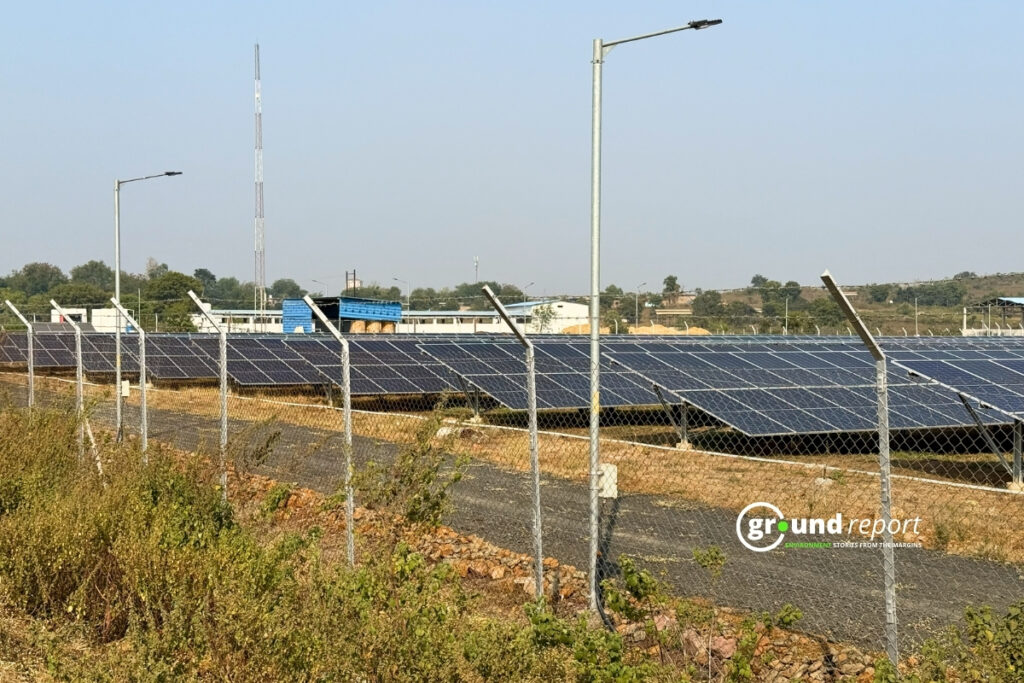
To get a bit technical: Two solar parks with a combined installed capacity of 8 MW (3 MW in Nagauri and 5 MW in Gulgaon) inject power directly into the Salamatpur substation, a state-level grid infrastructure. This capacity exceeds the city’s peak demand of 2.5 MW. Unlike the Rewa Solar Project, which integrates with the inter-state transmission system through 220kV lines connected to PGCIL’s 400/220kV network, this configuration operates at the distribution level, bypassing the national grid.
While Nagauri power plant generates more than the city’s residential consumption, the 5MW Gulgaon plant was set up to produce enough for the city’s agricultural needs.
“This will improve voltage and grid stability”, Manu Shrivatsav, official at the state’s Power and Renewable Energy Department, said. From the sub-station, the electricity flows through existing feeders to homes, farms, and city infrastructure.
Back in 2023, we reported on the transformation of an ancient city into a solar city. You can read and watch the video here.
In the past year, the project exceeded its targeted capacity output factor, generating 15.02 million units—earning nearly ₹10 lakh more than projected, an NDHC official told Ground Report.
Two Years Later?
The solar plants give the output that makes this project a success. On the other hand, the locals feel a bit disillusioned about the title of ‘Solar city’. Many say the city’s solar tag has brought little tangible benefit.
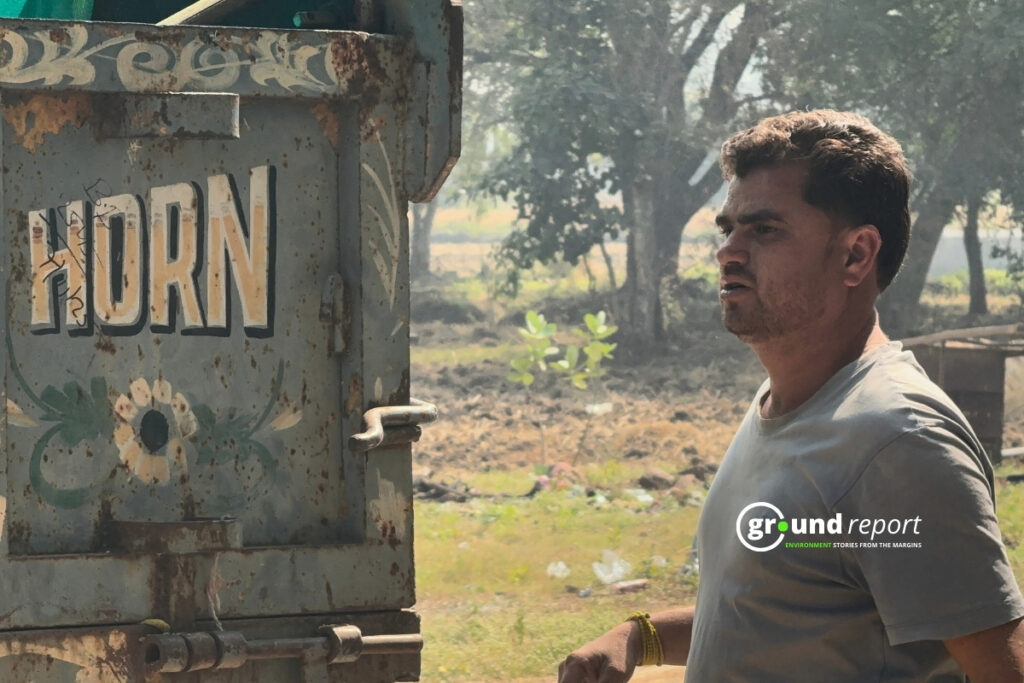
Despite the solar city branding, the town’s electricity reliability remains uneven. And, infrastructure maintenance (lack thereof) remains a concern for the residents, making living unsafe, Hemraj Singh, a resident, said. One pointed at the electric pole where “at least 40 joints” hold the line together.
Upendra Rajput, a farmer and resident, recalled two recent electrocution deaths and said livestock routinely die from broken lines.
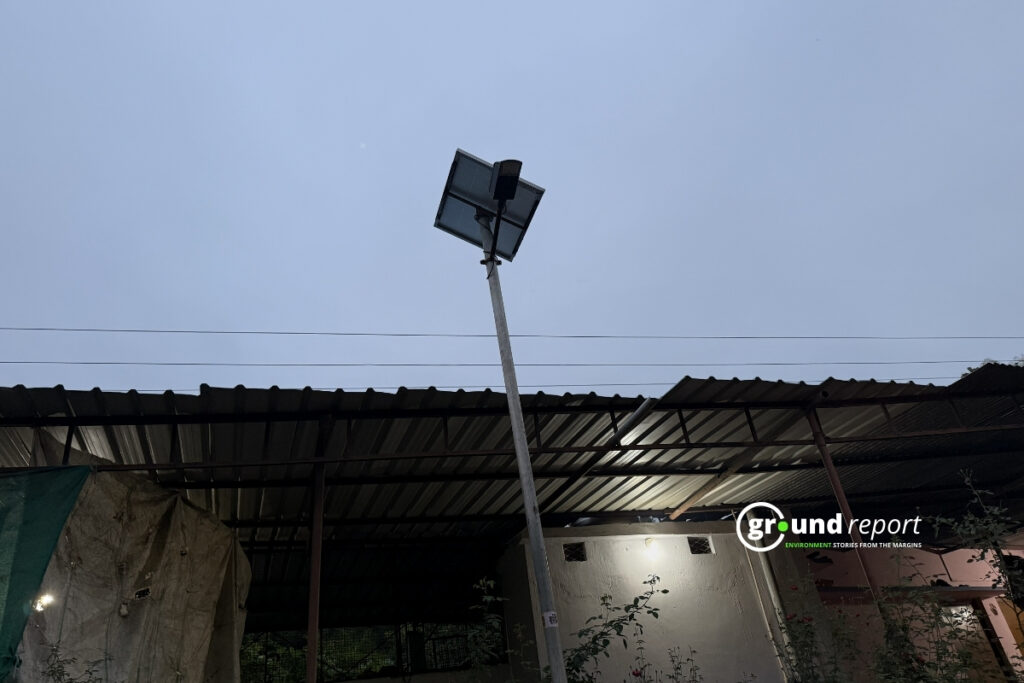
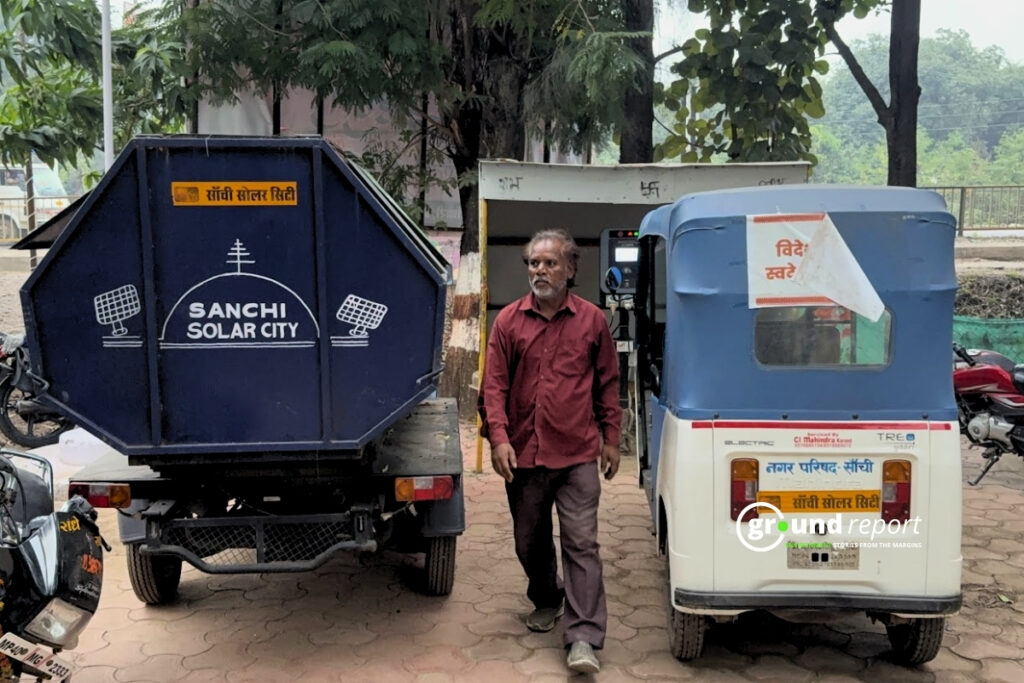
Sanchi was supposed to showcase solar-powered public amenities—streetlights, coolers, EV charging stations, battery-operated waste vehicles. But most of these have fallen into disrepair.
More than half of the 120 solar streetlights no longer work or have been stolen. Solar fans and lamps distributed to households reportedly failed within a week, Rajput told Ground Report. Only two of the five planned solar water coolers have been installed. Just two of the four EV charging stations operate. Out of eight garbage-collection vehicles, only two run on batteries; the rest still use diesel. In a town of 2,000 houses, only 25–30 rooftops have solar systems.
Electricity Bills and Duration
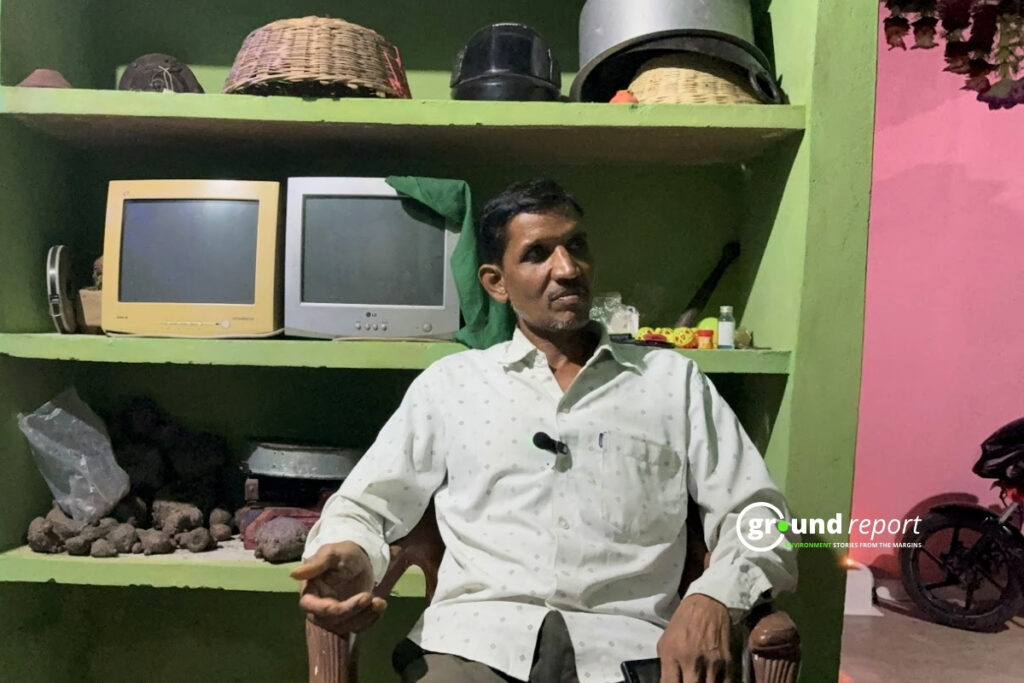
Some residents are turning to rooftop solar not because of the city’s initiative, but despite it. “Electricity bills should be lower,” Sunil Pal, a resident of Sanchi, said. “But we’re still getting the same bills.”
Pal installed a 3 KW system after months of disputing electricity bills and confrontation with the local electricity department officials. “How did my consumption jump from 250 units to 540 units in six months?” he demanded of officials.
He installed the solar panels in 2025, opting for a plan that required no down payment. He will pay a monthly installment of ₹3,400 for two and a half years. He went ahead with the installation only because the entire cost was covered under this installment scheme. Pal’s bill reduced to just 200-300/month.
Deepesh Prajapati, another resident, installed a 3-kilowatt solar system under the PM Surya Ghar scheme. It cost ₹2 lakh, and he received a subsidy of ₹78,000.
Others like Hemraj Singh want to follow suit. “I’m very keen to get it installed,” he said, “but I need some support… I earn barely ₹8,000 to ₹10,000 a month.” They are not aware of the Surya Ghar scheme. They allege that no government official has come to explain it to them so far.
According to information from MPEB Sanchi (the electricity department), the city has a total of 1,500 electricity connections, of which only 30 rooftop solar systems have been installed so far. Five of these are on government buildings, and the rest are residential. Under the PM Surya Ghar scheme, only two rooftop solar systems have been installed in the city so far.
Most people in Sanchi depend on agriculture for their livelihood. And yet farmers say the solar city has not eased their challenge of timely irrigation.
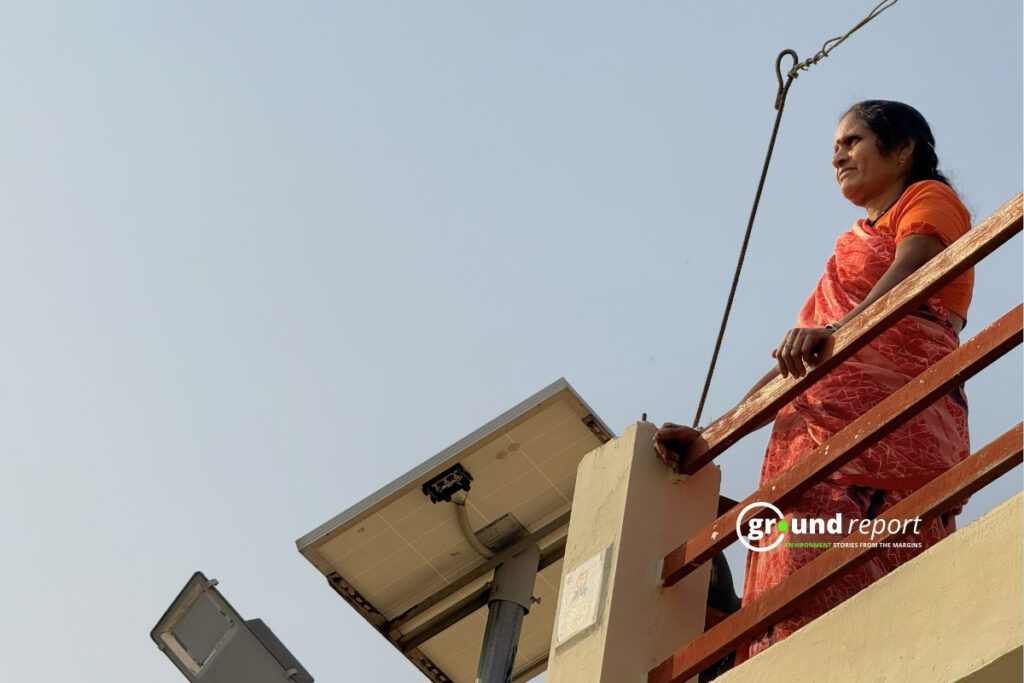
Outages due to maintenance or faults stretch for hours or even days. “If we can’t farm on time… then there’s no point,” Rajput said.
Srivatstav from the renewable energy department said they are trying to shift agricultural loads to daytime so farmers can use solar power directly. “We are providing the cheapest electricity… that’s why we are doing load shifting,” he said.
The government’s other scheme to integrate renewable energy through solar pumps has its procedural barriers. Sunil, who has been trying for two years, said: “Their website doesn’t work…” His mother is often anxious when his son goes to the field at night. These solar pumps would be the end to her paranoia, as solar rooftop has been. “It [solar pumps] is a great relief at home… if it can be applied in the fields too,” she said.
The Madhya Pradesh government’s Department of New and Renewable Energy said in a notification that only farmers without permanent electricity connections will be eligible in the first phase of the solar pumps scheme. And, this scheme will remain in effect until March 2028.
In the second phase, those with existing permanent power pumps may be included.
Becoming India’s first solar city is a milestone, and Sanchi’s 8 MW of solar power—cutting an estimated 14,325 tonnes of carbon emissions annually—marks a genuine achievement.
But the transition will only succeed when the people who live here feel like stakeholders, not bystanders.
For now, residents still pay the same electricity bills and endure the same outages, even as their city produces the clean energy India needs for its climate future.
This work is supported by the Just Transition Research Centre-JTRC fellowship offered by IIT Kanpur, Climate Trends and Earth Journalism Network.
Support us to keep independent environmental journalism alive in India.
Keep Reading
Sanchi solar city and the looming storage problem
Renewable energy expansion in India needs sustainable storage solution
India’s renewable energy expansion posing threats to grid stability
Stay connected with Ground Report for underreported environmental stories.