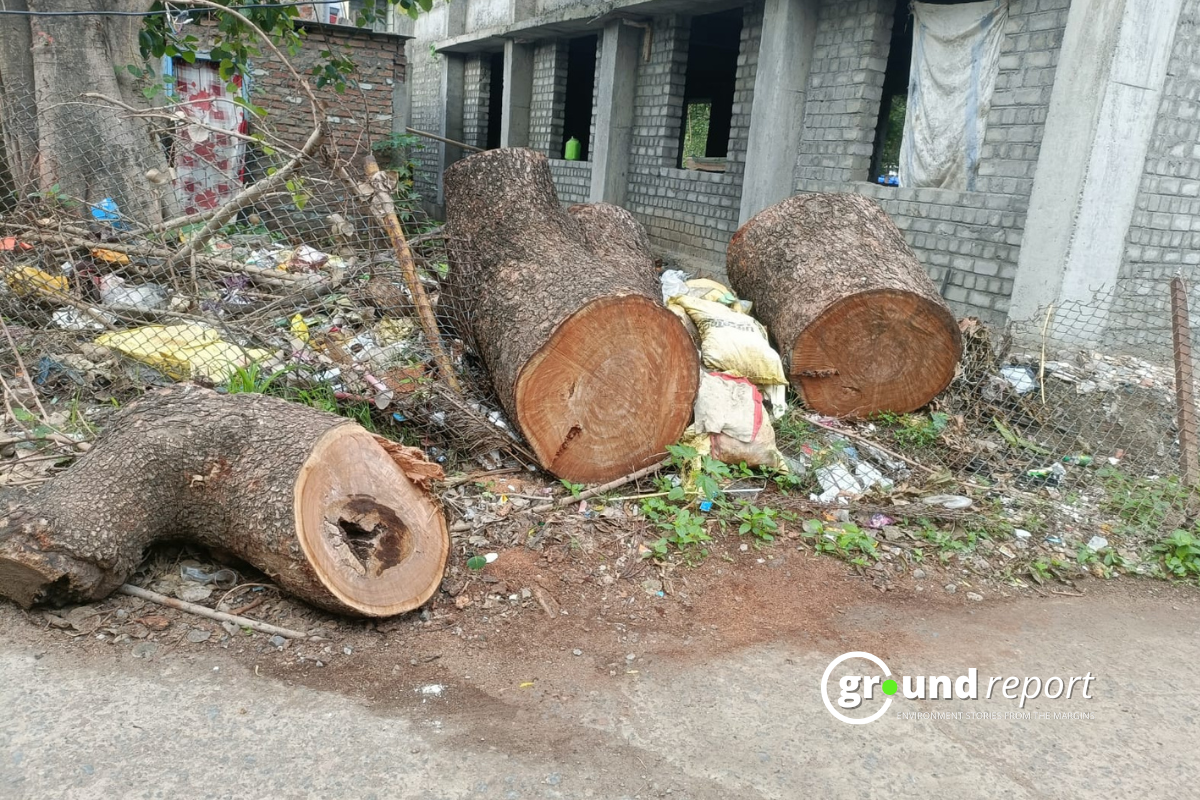
The Madhya Pradesh High Court issued a sweeping order on November 26, 2025, stopping all tree cutting, pruning, and transplantation across the state until further notice. The decision came after investigations revealed widespread tree felling without proper oversight, including claims that 8,000 trees were cut for railway projects and 1,000 trees removed from the Sagar District Collectorate alone.
Chief Justice Sanjeev Sachdeva and Judge Vinay Saraf issued the order while hearing two related petitions filed by Neeraj Garg and other interveners. The court directed that no tree can be removed anywhere in Madhya Pradesh without permission from both the National Green Tribunal’s committee and the concerned tree officer.
Did State Admit Breaking Rules?
The court discovered serious gaps in how the state manages tree protection. Deputy Advocate General Swapnil Ganguly admitted that violations had occurred in the past. He told the court these were “bonafide errors” made for infrastructure development. He also revealed that Madhya Pradesh has no tree transplantation policy to regulate tree cutting and replanting.
The railway authorities disputed claims about mass tree felling. Additional Solicitor General Sunil Jain stated that only 435 trees were cut for railway projects, not the 8,000 trees reported. He argued that no permission was needed for these cuts and requested time to present regulations supporting this claim.
Why Were Judges So Concerned?
However, the court expressed concern about tree transplantation practices. Photographs submitted by the state government showed transplanted trees in poor condition. The judges described the images as showing a “dismal state of affairs” that was “far from reality” of successful transplantation.
The Sagar Collectorate incident particularly troubled the court. A newspaper article from Dainik Bhaskar dated November 25, 2025, reported that the Collector permitted cutting 1,000 trees within the Collectorate premises. Ganguly disputed this number under instructions, claiming only shrubs were pruned, not trees cut. The court ordered the Sagar Collector to file an affidavit within two weeks clarifying exactly how many trees were removed and what steps were taken for transplantation or restoration.
Who Actually Controls Tree Protection?
The court identified a major legal problem in how tree officers operate. Under the Madhya Pradesh Vrikshon Ka Parirakshan (Nagariya Kshetra) Adhiniyam, 2001, the state government appoints tree officers to enforce protection laws in urban areas. These officers must hold ranks of gazetted forest officer, municipal commissioner, or chief municipal officer.
The court found that municipal commissioners appointed as tree officers were delegating their powers to subordinate staff. They claimed authority under Section 69(4) of the Municipal Corporation Act, 1956, which allows principal officers to delegate powers to other municipal officers.
The judges ruled this practice illegal. They explained that tree officers receive appointments directly from the state government under the 2001 tree protection law, not under the Municipal Corporation Act. Therefore, municipal commissioners cannot delegate these specific duties to subordinates. The court noted that the tree protection law already provides that the state government can appoint subordinate officers, but these must work under the tree officer’s supervision.
What Must Government Do Now?
The court ordered the state government to properly appoint tree officers under the 2001 law. In cases where tree officers already exist, those appointed individuals must personally exercise their powers without delegation to subordinates.
The judges also directed the state to immediately develop a tree transplantation policy. No such policy currently exists to guide how trees should be moved, what survival rates should be achieved, or how to verify successful transplantation.
Several government officials appeared in court following an earlier order. These included Anupam Awasthi from Gati Shakti Bhopal, Pankaj Tyagi from the Railway Division, Sanskriti Jain from Bhopal Municipal Corporation, V.N. Ambade as Principal Chief Conservation of Forests, and officials from the Madhya Pradesh Vidhan Sabha. The court exempted these officers from attending future hearings until further orders.
Had Green Tribunal Already Intervened?
The National Green Tribunal had already issued directions on this matter. On May 23, 2025, in a case filed by Nitin Saxena against the Madhya Pradesh Road Development Corporation, the tribunal created a joint committee to investigate tree cutting. The committee includes representatives from the Ministry of Environment Forest and Climate Change, Central Pollution Control Board, forest department, and State Pollution Control Board.
The tribunal gave this committee specific tasks. It must ensure compliance with the 2001 tree protection law. It directed the Principal Chief Conservator of Forest to form a high-level committee to examine any permission requests involving more than 25 trees. All trees must be geo-tagged so their exact location, type, and number can be tracked and published.
How Long Does Recovery Take?
The tribunal ordered a complete tree census across Madhya Pradesh, organized by city and district. Before granting cutting permission, committees must consider alternatives that would require felling fewer trees. The tribunal emphasized that compensatory afforestation must happen at rates between 10 to 100 times the number of trees cut, depending on land availability.
The tribunal noted that trees take 70 to 100 years to regenerate the green cover lost when mature trees are cut. It stated that cutting 700 trees adversely affects the environment and human life for generations. Compensation ratios should reflect this long regeneration period and the oxygen generated by trees during their lifetime.
What Information Must Officials Provide?
The High Court directed all respondents to file affidavits within two weeks. These must detail how many trees were cut, how many more need removal for ongoing projects, and where transplanted trees will be placed. The affidavits must include specific information about the number of trees, their locations, and the nature, age, and size of replacement plantings planned to restore lost green cover.
The court scheduled the next hearing for December 17, 2025. Until then, the complete ban on tree cutting, pruning, and transplantation remains in force across Madhya Pradesh unless the National Green Tribunal’s committee and the proper tree officer grant advance permission.
The respondents must also reply to the original petition filed by Neeraj Garg regarding allegations of cutting trees without planting replacements.
Support us to keep independent environmental journalism alive in India.
Keep Reading
Small Wild Cats in Big Trouble: India’s First National Report Released
After Tragedy, Families Face Delays in Tiger Attack Compensation
Stay connected with Ground Report for underreported environmental stories.