
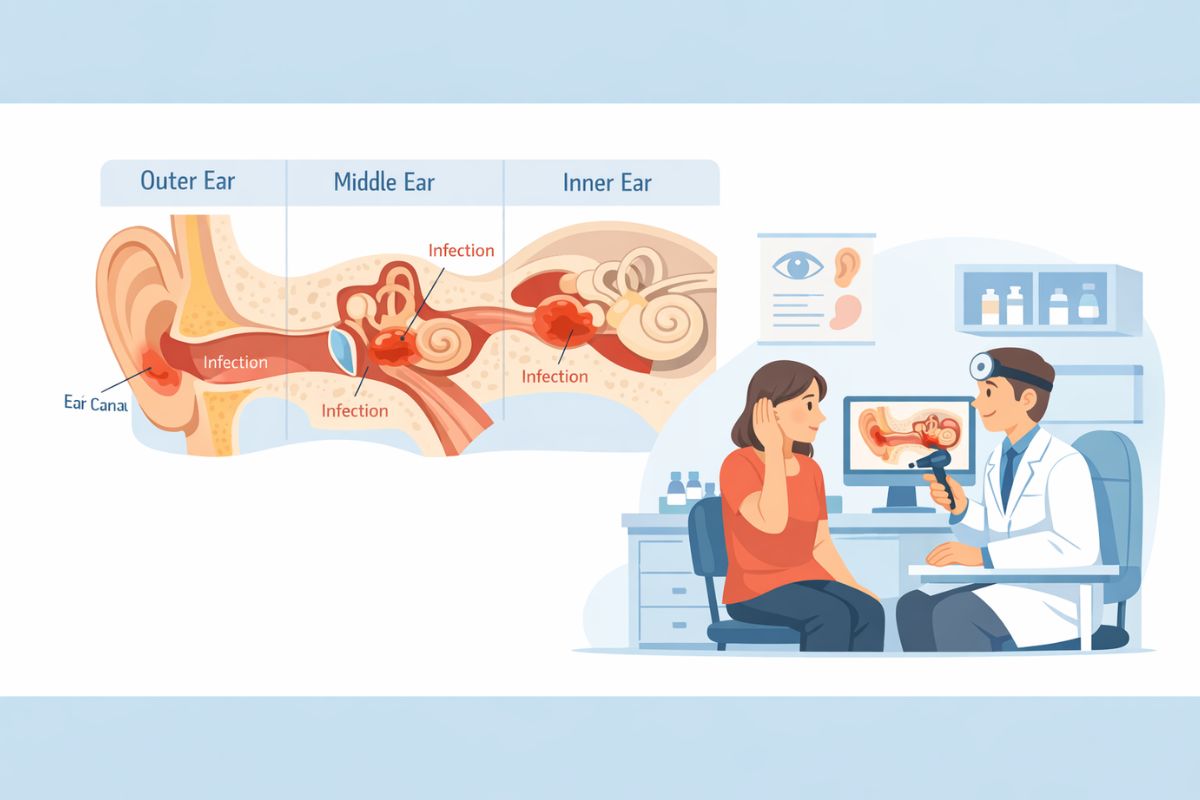
Ear infections are a common health issue affecting people of all ages, from infants and children to adults and the elderly. While many ear infections are mild and resolve on their own, others can cause significant discomfort, hearing problems, and complications if left untreated. Understanding the causes, recognising early warning signs, and knowing when to seek expert care are essential for protecting your ear health and overall well-being. In this blog, we will understand what an ear infection is, its types, causes, symptoms, and when to see an ENT specialist.
What Is an Ear Infection?
An ear infection occurs when bacteria, viruses, or fungi infect the structures of the ear, leading to inflammation, fluid buildup, and pain. Depending on the area affected, ear infections are classified into three main types: outer ear infections, middle ear infections, and inner ear infections. Each type has distinct causes, symptoms, and treatment approaches.
Ear infections are especially common after colds, flu, allergies, or sinus infections, which can block the normal drainage of fluids from the ear and create an environment where germs thrive.
Types of Ear Infections
1. Outer Ear Infection
It is also known as “swimmer’s ear.” This infection affects the ear canal. It often develops when moisture remains trapped in the ear, allowing bacteria or fungi to grow.
Common causes include:
- Excessive moisture from swimming or sweating
- Injury from cotton swabs or earbuds
- Skin conditions like eczema
2. Middle Ear Infection
This is the most common type, particularly in children. It occurs when fluid builds up behind the eardrum, often following a cold or respiratory infection.
Common causes include:
- Blocked Eustachian tubes
- Upper respiratory infections
- Allergies
3. Inner Ear Infection
Inner ear infections are less common but can affect balance and hearing. They are usually caused by viral infections and may lead to dizziness or vertigo.
Common Causes of Ear Infections
Several factors can increase the risk of developing an ear infection:
- Respiratory Infections: Colds, flu, and sinus infections can spread bacteria or viruses to the ears.
- Allergies: Nasal congestion and inflammation can block ear drainage.
- Poor Ear Hygiene: Using sharp objects or cotton buds can damage the ear canal.
- Water Exposure: Frequent swimming or water trapped in the ears.
- Weakened Immunity: Children, elderly individuals, and people with chronic illnesses are more vulnerable.
- Environmental Factors: Pollution, smoke, and sudden weather changes can irritate the ear and nasal passages.
Signs and Symptoms of Ear Infections
If symptoms persist for more than a few days or worsen, seek medical attention. The symptoms of an ear infection vary depending on the type and severity, but commonly include:
- Ear pain or discomfort
- A feeling of fullness or pressure in the ear
- Difficulty hearing or muffled sounds
- Fluid or pus discharge from the ear
- Fever, especially in children
- Headache
- Dizziness or loss of balance
- Irritability or trouble sleeping in infants
When Should You See an ENT Specialist?
While mild ear infections may resolve with rest and basic care, certain situations require prompt evaluation by a specialist. An experienced ear doctor in Pune can accurately diagnose the type of infection and recommend the most effective treatment plan, preventing long-term complications. You should consult an ENT doctor if:
- Ear pain is severe or persistent
- Hearing loss develops suddenly
- There is discharge, bleeding, or swelling around the ear
- Fever is high or does not subside
- Infections recur frequently
- Dizziness or balance problems occur
Conclusion
Ear infections are common but should never be taken lightly. Recognising early signs, understanding the underlying causes, and seeking timely medical care are essential for effective treatment and prevention of complications. With expert guidance from an experienced ENT specialist and access to care at the best ENT hospital in Pimpri Chinchwad Pune, patients can receive accurate diagnosis, advanced treatment, and long-term relief.
Disclaimer: This content is sponsored and does not reflect the views or opinions of Ground Report. No journalist is involved in creating sponsored material and it does not imply any endorsement by the editorial team. Ground Report Digital LLP. takes no responsibility for the content that appears in sponsored articles and the consequences thereof, directly, indirectly or in any manner. Viewer discretion is advised.
Support us to keep independent environmental journalism alive in India.
Stay connected with Ground Report for underreported environmental stories.