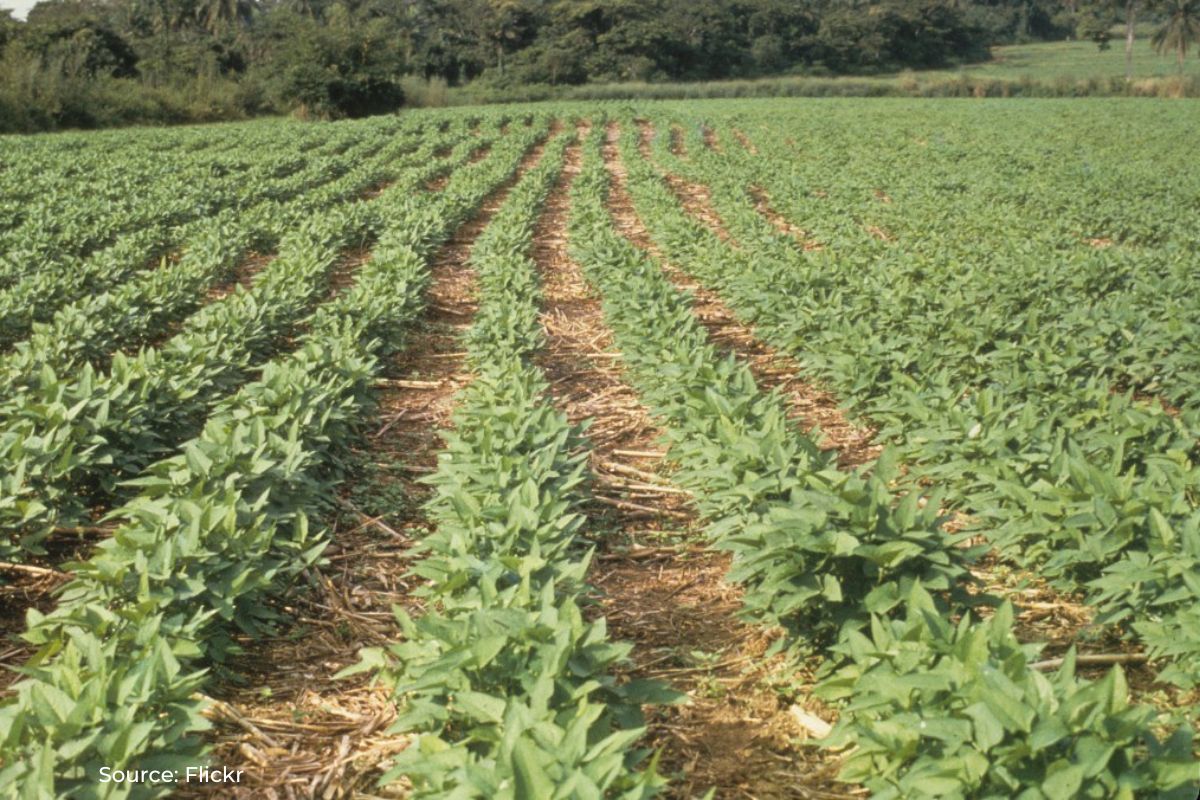
Soybean growers worldwide face a persistent enemy: Phytophthora sojae, the pathogen responsible for Phytophthora root and stem rot (PRR). Each season, this soil-borne disease causes significant yield losses—especially in water-logged or compacted fields. Traditional chemical fungicides provide short-term protection, but resistance and soil fatigue are becoming common problems.
A biological solution is now reshaping sustainable crop management: Trichoderma harzianum. This beneficial fungus, long recognized for its ability to protect plant roots and enhance soil health, is proving to be one of the most reliable defenses against PRR in soybean production.
In this guide, we’ll explore how to use Trichoderma harzianum effectively, from seed treatment to integrated management, so you can safeguard yields and build healthier soils.
Understanding Trichoderma harzianum: Nature’s Root Defender
Trichoderma harzianum is a naturally occurring soil fungus that forms a protective barrier around plant roots. It colonizes the rhizosphere—the zone where roots and soil microbes interact—outcompeting pathogens like Phytophthora sojae and releasing enzymes that break down their cell walls.
It also stimulates induced systemic resistance (ISR), activating the plant’s immune responses, while promoting root and shoot growth. Studies (Rigobelo et al., 2024; Larran et al., 2023) confirm higher seedling vigor and lower disease incidence when soybean seeds are treated with Trichoderma harzianum formulations.
High-quality trichoderma fungicide provides viable spores that quickly colonize the roots, protecting plants during the most vulnerable early growth stages. These powder formulations are easy to apply, stable in storage, and compatible with many organic and IPM systems.
Recognizing Phytophthora Root Rot Early
Early identification of PRR is essential for effective management. Infected plants often appear wilted or stunted, even when the soil remains moist. On closer inspection, the lower stems may show dark, water-soaked lesions that gradually spread upward, turning tissues brown and brittle. The roots themselves often appear darkened and decayed, easily breaking apart when handled.
These symptoms usually appear in areas of the field where water tends to collect, especially after heavy rain or irrigation. Poor drainage, compacted soil, and cool, saturated conditions create the perfect environment for Phytophthora sojae to thrive. Once symptoms are visible, the pathogen is already well established in the soil, making preventive measures — like seed treatment with Trichoderma — the most effective line of defense.
Regular scouting, particularly in low-lying or flood-prone areas, helps farmers detect PRR early and respond before major yield losses occur.
Seed Treatment and Soil Application: How to Use Trichoderma Effectively
Applying Trichoderma harzianum at the seed or soil level is the key to long-term protection. The idea is simple: introduce the beneficial fungus before the pathogen takes hold. As the seed germinates, Trichoderma spores wake up alongside the roots, colonizing them and building a living barrier against Phytophthora.
For seed treatment, farmers can mix Trichoderma powder with the seeds at about three to five grams per kilogram. The coating should be even, with the treated seeds dried gently in the shade before planting. Avoid mixing the biological treatment with chemical fungicides in the same batch, as this can reduce microbial viability. Treated seeds should ideally be sown within a day to ensure the best colonization rates.
When disease pressure is high, a soil or furrow application can offer additional protection. The product can be mixed with water and applied directly into the planting row or around the base of young plants. In waterlogged or flood-prone fields, reapplication may be necessary after heavy rainfall to re-establish root zone activity.
Farmers who use trichoderma commercial products such as HarzShield often observe healthier stands, stronger root systems, and significantly lower disease levels compared to untreated plots. For fields where rhizobia inoculants are also used, it’s best to apply Trichoderma first and the nitrogen-fixing bacteria 24 hours later, allowing both to establish without competition.
This preventive approach doesn’t just stop disease — it helps soybean roots develop deeper and stronger, which means better access to water and nutrients throughout the season.
Integrated Disease Management: Combining Biologicals and Fungicides
Even with strong biological protection, certain high-risk fields may still require the support of targeted fungicides. In such cases, the goal is not to replace Trichoderma but to complement it. This combination delivers both preventive and curative effects, giving plants the best chance of survival while preserving soil microbial balance.
For heavily infested soils, growers can integrate a fungicide for phytophthora root rot with biological products to control disease outbreaks effectively without disrupting beneficial microbes.
To get the most out of this approach, avoid applying broad-spectrum fungicides like metalaxyl at the same time as biologicals. Instead, space applications a few days apart to prevent interference. Rotating fungicide modes of action also helps reduce resistance. Equally important is maintaining good drainage and soil structure since waterlogged soils are PRR’s best ally.
By combining selective fungicides with Trichoderma harzianum, farmers can achieve strong protection without compromising long-term soil health. This balance is at the heart of sustainable soybean production.
Building Resilient Soybean Fields: Results and Real-World Practices
When used season after season, Trichoderma contributes to a more balanced and disease-suppressive soil. Growers notice less crusting, better drainage, and stronger root systems across rotations. Over time, these biological improvements lead to reduced dependence on chemical fungicides and more consistent yields, even in years with unfavorable weather.
For best results, consistency matters. Treat every batch of seed, maintain good water management, and avoid practices that disrupt soil biology, such as overuse of harsh chemicals. A balanced system where beneficial microbes, nutrients, and good agronomy work together. It will always outperform reactive, chemical-heavy programs.
Phytophthora Root Rot Management for Long-Term Soil Health
Phytophthora root rot has challenged soybean farmers for decades, but biological innovations like Trichoderma harzianum are changing how we manage it. This naturally occurring fungus doesn’t just protect plants; it transforms the root zone into a living ecosystem that supports growth and resilience.
By integrating biological products early through seed treatment and soil application and combining them thoughtfully with selective fungicides when necessary, growers can protect their yields while restoring soil vitality.
As agriculture evolves toward greater efficiency and environmental care, Trichoderma harzianum stands out as a cornerstone of modern biological farming, and a small microbe making a big difference underground.
Ground Report. No journalist is involved in creating branded material and it does not imply any endorsement by the editorial team. Ground Report Digital LLP. takes no responsibility for the content that appears in branded articles and the consequences thereof, directly, indirectly or in any manner. Viewer discretion is advised.
Support us to keep independent environmental journalism alive in India.
Stay connected with Ground Report for underreported environmental stories.