Plug-in solar, also called balcony solar, is spreading fast. Once a niche European idea, the technology is now drawing attention from renters, homeowners, and policymakers across the world as energy bills rise and the demand for accessible clean power grows.
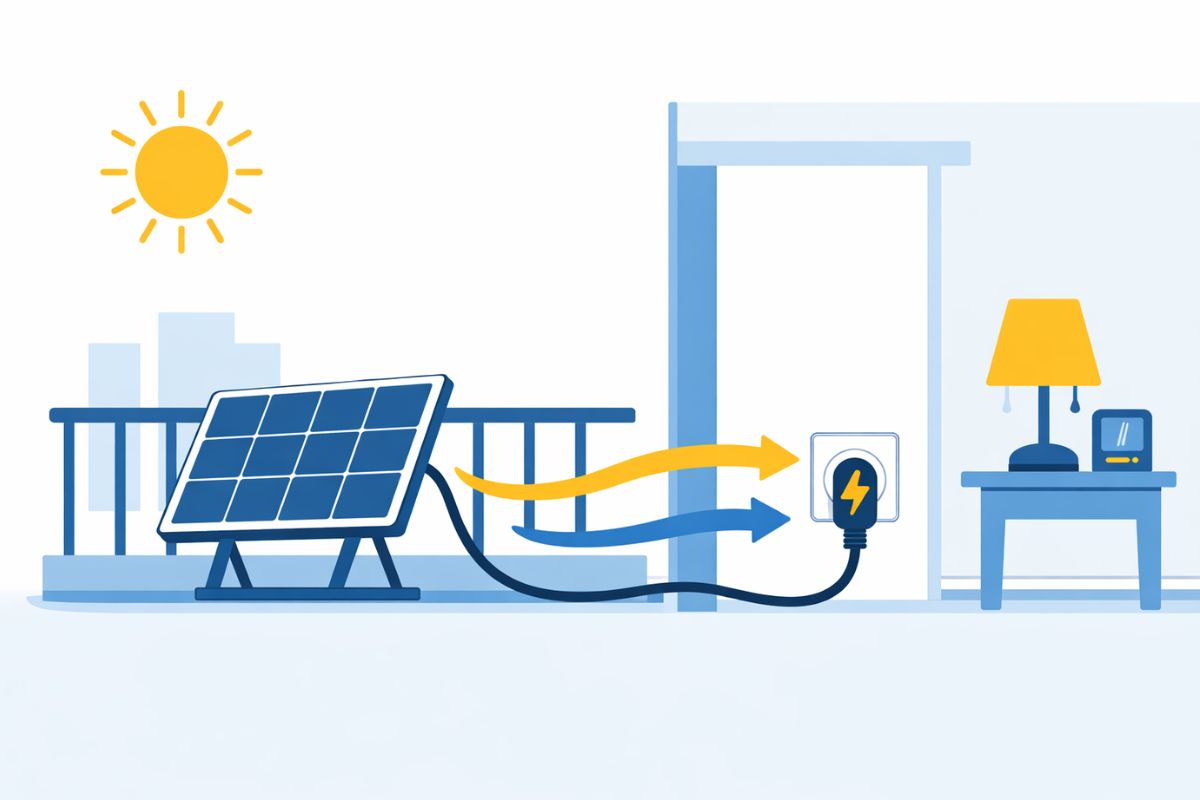
These are solar panels that connect directly to a standard power outlet, supplying electricity into the home without the need for a contractor, a roof, or complicated paperwork. They sit quietly on a balcony railing, a patio, or a backyard — and start working the moment the sun comes out.
What Are Plug-In Solar Panels?
A plug-in solar system is a small photovoltaic setup made up of one or more solar modules, an inverter, a low-voltage connection cable, and a plug for connecting to the final circuit in a home’s electrical network. Balconies, carports, garage roofs, and terraces are all common installation spots.
Systems range in output from 200 to 1,600 watts — enough to power a small air conditioner. A typical home rooftop installation, by comparison, runs between 3,000 and 9,000 watts. Plug-in systems are not designed to power an entire home; they are built to take a meaningful bite out of a household’s energy consumption.
Germany leads the world in adoption. More than 1.2 million small plug-in systems are now registered with the German government, and the technology has seen similar growth in the Netherlands, Austria, and Italy. The United States is catching up, with a wave of state legislation pushing the technology into the mainstream.
How Do They Work?
High-efficiency photovoltaic cells capture sunlight and convert it into electricity. A built-in microinverter then transforms that electricity into AC power, compatible with a home’s electrical system. The panel does not need to be wired into a fuse box or connected by an electrician.
The panel itself is a standard solar panel. What makes it special is the microinverter — a small device with the intelligence to make the system cooperate safely with a home’s existing electrical setup. You cannot simply buy any solar panel and do this; the panels are made specifically for this purpose.
Once plugged in, appliances in the home draw on solar energy first before pulling from the grid. Any surplus electricity that the home cannot use immediately flows back into the public network. A standard 800-watt balcony system can typically cover 15 to 25 percent of a typical apartment’s monthly electricity needs.
In early 2026, UL Solutions launched the UL 3700 certification — the new safety standard for plug-in solar. Certified kits include automatic power cut-off, meaning that if the cord is unplugged while the sun is shining, the metal prongs on the plug go dead in under a second. Anti-islanding technology also disables the inverter if the main power supply cuts out, protecting electrical workers on the grid.
What Are the Benefits?
The most immediate benefit is cost. Balcony solar systems are lighter, cheaper, and simpler to install than traditional roof-mounted panels, making them attractive to people who want solar benefits but cannot afford or access a full rooftop installation. A 400-watt system produces roughly 300 to 600 kilowatt-hours per year and typically pays for itself within about five years, depending on location and usage.
Renters benefit particularly. Because the panels are portable, renters can take them when they move and place them on almost any stable surface — a balcony, a carport, or on top of an RV. Cora Stryker, co-founder of Bright Saver, a California nonprofit that advocates for plug-in solar, says the technology took off in Germany once renters were permitted to install the systems, and she sees the potential for a similar trajectory in the United States.
The environmental impact also adds up at scale. One report from Bright Saver projects that, with the right policies in place, plug-in solar could deliver power to more than 20 million homes in the next decade. As electricity prices rise and climate pressures mount, a panel that plugs into a wall socket is proving to be one of the most straightforward ways for ordinary people to take control of where their energy comes from.
Support Us To Sustain Independent Environmental Journalism In India.
Keep Reading
Highway Halt Puts Kashmir’s Fruit Economy at Risk
Railway line expansion plan put Kashmir’s apple orchards at risk
Warmer winters in Kashmir raise concerns over apple and crop yields
Stay Connected With Ground Report For Underreported Environmental Stories.