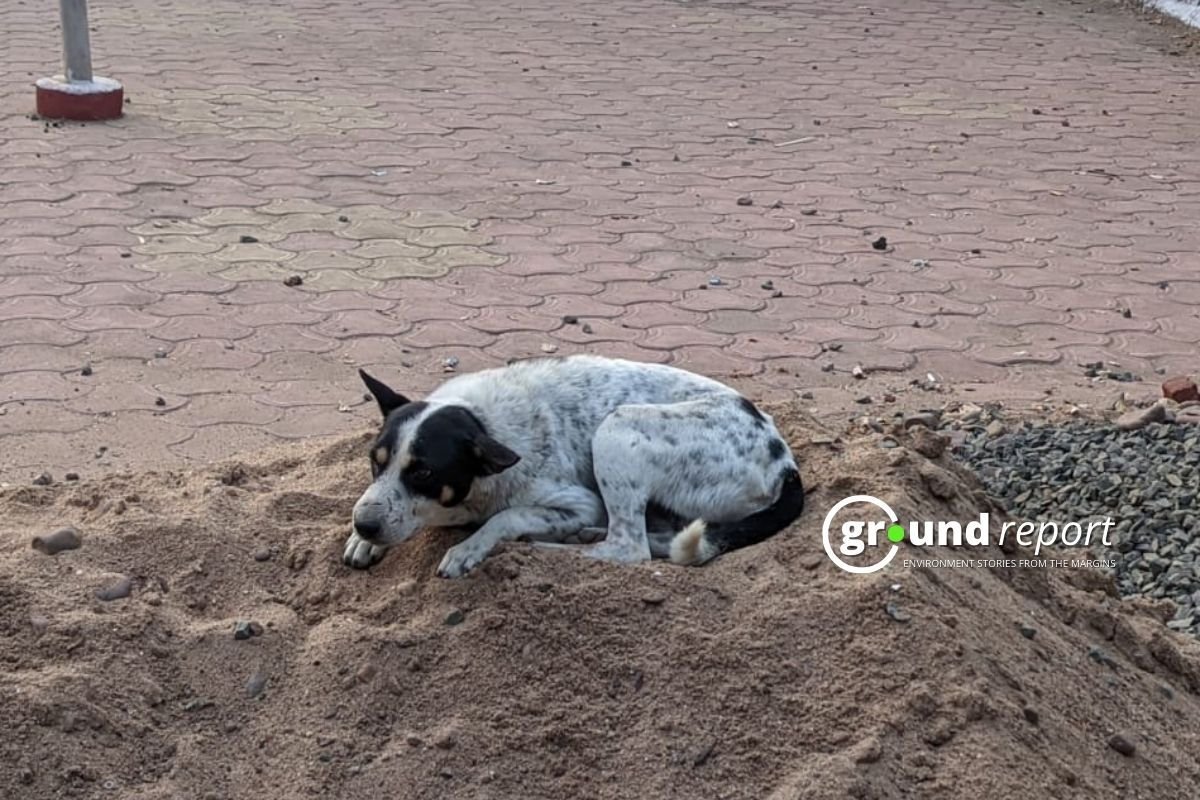
The Supreme Court on Friday ordered the immediate removal of stray dogs from public spaces across India. The order followed a sharp increase in dog-bite cases reported from schools, hospitals, and transport hubs.
A bench of Justices Vikram Nath, Sandeep Mehta, and N.V. Anjaria directed authorities to remove all stray dogs from educational institutions, hospitals, sports complexes, bus stands, depots, and railway stations. The dogs must be relocated to designated shelters after sterilisation and vaccination under the Animal Birth Control (ABC) Rules.
The bench said the animals “shall not be released back to the same location from which they were picked up.” The entire process must be completed within eight weeks.
Rising Dog-Bite Cases Trigger Action
The court noted that despite years of implementing the Capture-Sterilize-Vaccinate-Release model, stray dog populations have continued to grow. It said, “The implementation of these Rules has been ineffective, to say the least, across jurisdictions.”
The bench observed that India still records one of the highest rates of rabies-related deaths in the world. It said that “incidents continue to be reported with alarming frequency,” and that administrative inaction had made public spaces unsafe.
The judges referred to a case of a Welsh entrepreneur bitten by a stray dog during a morning run in Bengaluru to show the problem’s widespread nature. “The menace is neither confined to rural or densely populated localities nor limited to vulnerable citizens,” the court said.
Local municipal bodies have been instructed to conduct regular inspections to ensure no stray dog habitats exist in or near institutional areas. “Every stray dog is to be forthwith removed from such premises and relocated to a shelter after sterilisation,” the court said.
Each institution must appoint a nodal officer responsible for maintaining cleanliness and preventing stray dogs from entering. The officer’s details must be displayed at the entrance and shared with local authorities.
State governments and union territories have two weeks to identify vulnerable areas and secure them with fencing, gates, and boundary walls. The bench warned that “any lapse in this regard shall be viewed seriously.”
Extending Focus to Highways
The Supreme Court expanded its directions beyond stray dogs. It ordered the removal of stray cattle and other animals from highways and roads across India.
“All national highways will have helpline numbers for reporting stray cattle,” the court said. It directed the National Highways Authority of India (NHAI), state road departments, and local bodies to form dedicated patrol teams. These teams will remove animals obstructing traffic and ensure they are relocated to shelters.
The animals must receive proper food, water, and veterinary care in line with the Prevention of Cruelty to Animals Act and the Animal Birth Control Rules, 2023.
The bench ordered all chief secretaries, NHAI officials, and the Ministry of Road Transport and Highways to file compliance reports within eight weeks. The reports must include details on removal mechanisms, patrol teams, and operational helplines.
“Any laxity will be viewed seriously,” the court said. It added that the directions must be “implemented uniformly across India.”
The next hearing in the case will be held on January 13, 2026, when the Supreme Court will review the compliance reports from all states and union territories.
Support us to keep independent environmental journalism alive in India.
Keep Reading
Elephants Are Back in MP After a Century, But Can They Stay?
Solar Energy – A Paradigm Shift in Wildlife Conservation
Stay connected with Ground Report for underreported environmental stories.