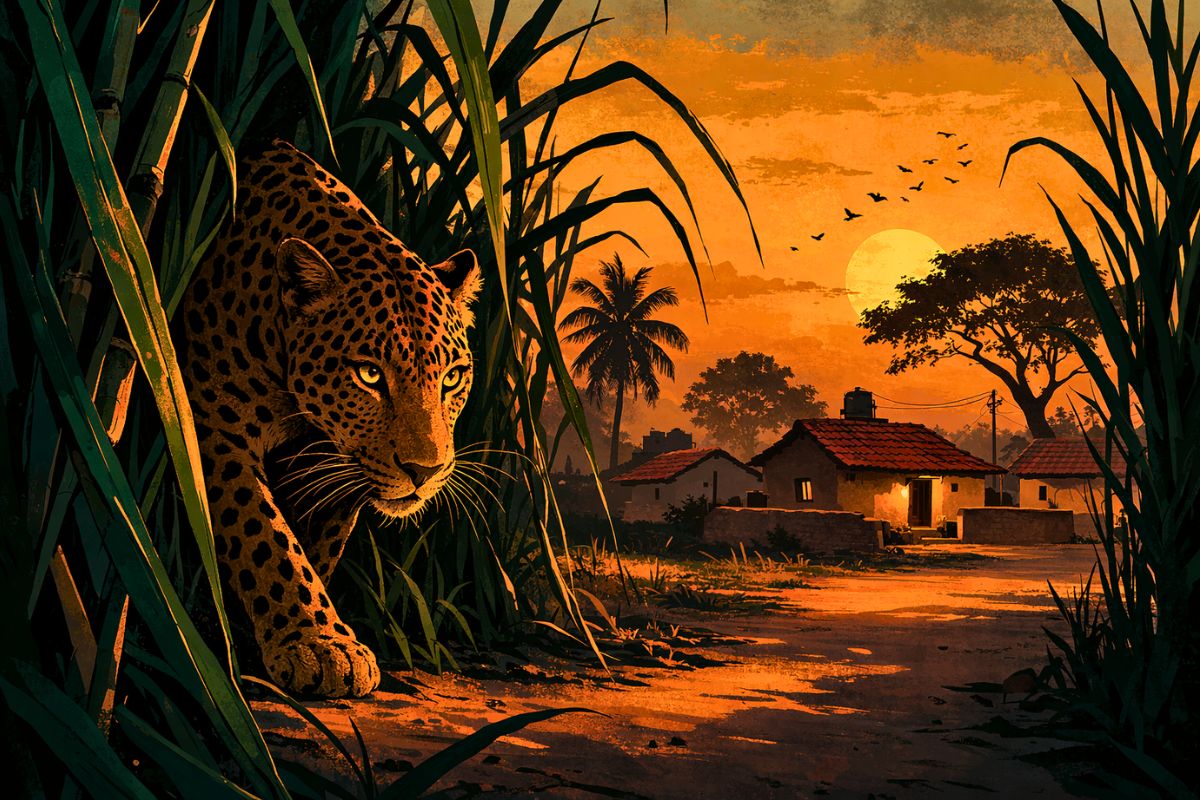
On October 12, 2025, a six-year-old girl was killed by a leopard in Shirur taluka, Pune district. It was the third such death in the district that year. Eight people had died in 2024. The attacks were not new, Junnar had been India’s most chronic human-leopard conflict zone for years. But this death pushed the state government to act, and act fast.
Within days, Deputy Chief Minister Ajit Pawar announced that Maharashtra would capture and transfer around 50 leopards to Vantara, a 3,500-acre private animal rehabilitation centre in Jamnagar, Gujarat, run under the Ambani family umbrella. The decision moved quickly from announcement to paperwork. By November 6, a formal proposal was sitting with the Central Zoo Authority. What followed was not just an administrative process, it was the beginning of a controversy that reached international courts, global wildlife bodies, and the doors of Indian newsrooms.
How the Decision Came About
“We have spoken to Minister of Environment, Forest and Climate Change Bhupendra Yadav,” Pawar told reporters after meeting district officers. “We said people are tired and frustrated. He said leopards should be captured and neutered… A decision has been taken that around 50 leopards will be shifted to Vantara.”
Maharashtra’s Chief Conservator of Forests Jitendra Ramgaonkar confirmed to The Hindu that the proposal had been submitted to the Central Zoo Authority for approval on November 6, 2025. Ramgaonkar said the Manikdoh Leopard Rescue Centre was running out of space and that Vantara had the infrastructure to handle leopards involved in attacks on humans.
This was not the first transfer. An earlier batch of leopards from Manikdoh had already been sent to Vantara in March 2024, according to Hindustan Times, making the October announcement an escalation of an existing arrangement, not a fresh one.
What Vantara Is
Vantara is the project of Anant Ambani, son of Reliance Industries Chairman Mukesh Ambani. Formed by merging the Greens Zoological Rescue and Rehabilitation Centre and the Radhe Krishna Temple Elephant Welfare Trust, the 3,500-acre centre sits near the world’s largest oil refinery in Jamnagar. It houses over 2,000 species, around 200 elephants, 300 big cats, and 1,200 reptiles.
Vantara has recruited veterinary and animal-care staff from conservation NGOs across India. Animal convoys travelling to Jamnagar carry vets and an ambulance.
How the Mahadevi Case Changed the Conversation
Before the leopards, there was Mahadevi, an elephant held by a Jain institution in Kolhapur since 1992. The Bombay High Court, upheld by the Supreme Court, ordered her transfer to Vantara on welfare grounds.
Thousands of Kolhapur residents walked a silent 45-kilometre protest over 12 hours demanding her return. The Jain community condemned the move and called for transfer to a government facility instead of a private one.
Vantara stated it had not initiated the transfer and that the Ambani family plays no role in daily operations, offering only philanthropic support.
Why International Bodies Raised Alarms
CITES, the global body governing trade in endangered species, with 185 member countries including India, sent a fact-finding team to India in September 2025. Its report, released in early November, directed India to apply stricter due diligence on animal import permits.
The report found that eight chimpanzees had been brought to Vantara using forged export permits from Cameroon. It questioned the origin and mode of acquisition of multiple imported animals. While no evidence of commercial use was found, the report flagged several imports as raising serious questions.
The Wildlife Animal Protection Forum of South Africa separately wrote to South African Environment Minister Dion George raising concerns about exports of leopards, cheetahs, and tigers to Vantara and rejecting the explanation that the animals had been rescued.
In January 2025, staff at a chimpanzee rehabilitation centre in the Democratic Republic of Congo were caught off guard when a Kinshasa Zoo delegation arrived with authorisation to collect 12 chimpanzees. The staff refused. The transfer was later carried out, and the chimpanzees were flown to India on February 13. DRC export permits listed nine animals with a captive-bred origin code, a classification experts say is impossible, as no great ape breeding facilities exist in DRC.
A German investigation by Süddeutsche Zeitung quoted a European wildlife dealer saying supply lists were shrinking because “everything goes to India,” and that increased wild catches were the obvious consequence.
The CITES Standing Committee’s 79th meeting in Samarkand, Uzbekistan, listed Vantara as a contentious agenda item.
How Courts Handled the Scrutiny
Two public interest petitions filed separately by advocates C.R. Jaya Sukin and Dev Sharma alleged unlawful animal acquisition, mistreatment, and money laundering at Vantara. A Supreme Court bench comprising Justices Pankaj Mithal and P.B. Varale dismissed both, relying on a Special Investigation Team report submitted within three weeks.
The court said it had “no hesitations” proceeding on the SIT findings and called further complaints “wholly unjustified.” The full SIT report remains under sealed cover. Justice Chelameswar told the Supreme Court Observer, that he saw no reason the full report could not be released.
The bench also directed that Vantara could pursue legal action for defamation against media organisations — a ruling press freedom advocates criticised as institutional cover for suppressing scrutiny.
How the Press Was Pressured
As coverage of Vantara grew, so did legal threats against journalists. Down To Earth magazine received calls and emails demanding removal of its story, followed by a defamation notice of up to Rs 1,000 crore from lawyers claiming to represent Anant Ambani.
NorthEast Now’s executive editor said he received a threatening email alleging critical reporting incited violence and hatred.
Vantara filed a petition against Himal Southasian in February 2025 over its investigative report, claiming it violated a judicial order. The Delhi High Court ruled on May 19 that no such order existed and dismissed the contempt claim. Legal experts identified the case as a Strategic Litigation Against Public Participation, a SLAPP suit, designed to suppress public debate.
What Happens Now
The transfer of 50 leopards from Junnar remains pending Central Zoo Authority approval. India has urged CITES not to restrict animal imports despite unresolved concerns. The Vantara file sits open at multiple international bodies simultaneously.
In Junnar, the trapping continues. The sugarcane still grows tall. The forests that once kept people and leopards apart remain fragmented — and that problem has not moved anywhere.
Support Us To Sustain Independent Environmental Journalism In India.
Keep Reading
Highway Halt Puts Kashmir’s Fruit Economy at Risk
Railway line expansion plan put Kashmir’s apple orchards at risk
Warmer winters in Kashmir raise concerns over apple and crop yields
Stay Connected With Ground Report For Underreported Environmental Stories.