Social media posts warning of toxic oil rain or “black snow” reaching Kashmir from Tehran are false, weather experts confirmed on Monday. The claims spread rapidly after Israeli airstrikes set fire to major fuel depots in the Iranian capital.
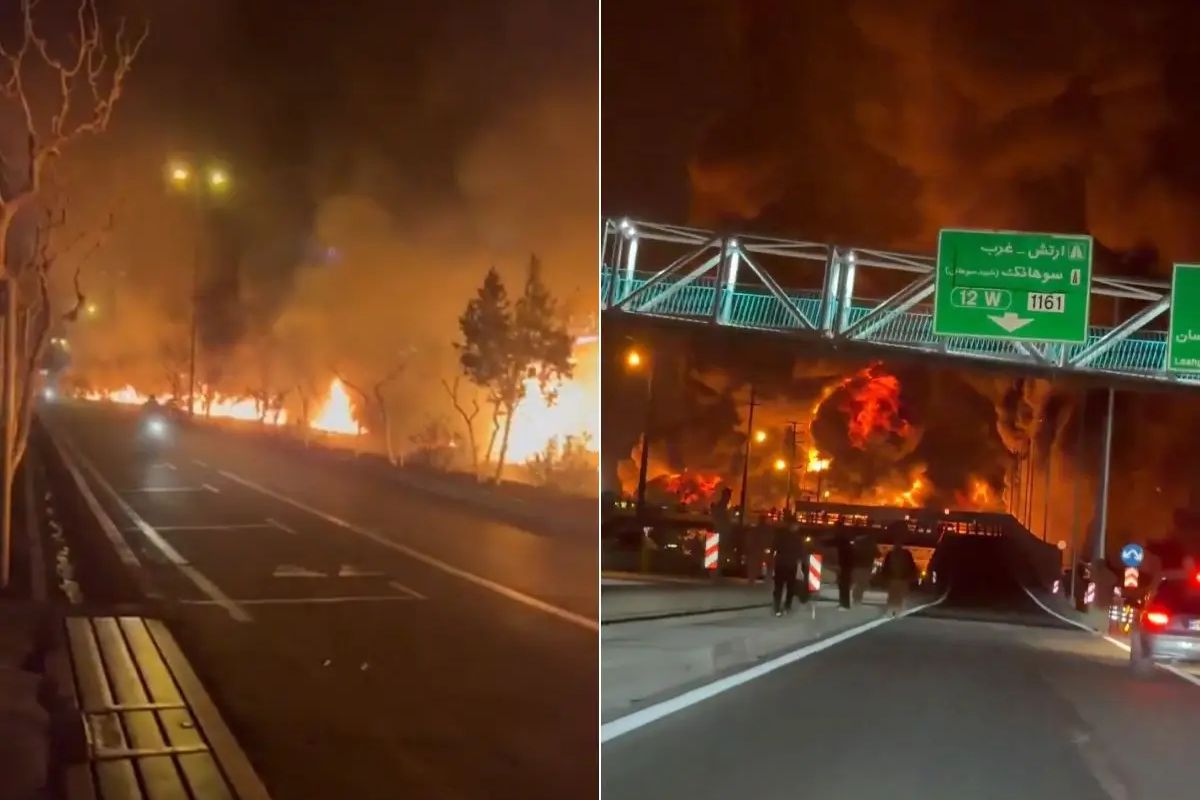
Iran’s capital was engulfed in toxic smoke that unleashed black rainfall dozens of miles away after overnight Israeli strikes on several fuel depots caused fires to burn for hours. Iran’s Red Crescent Society warned that the fires released hazardous chemicals, including hydrocarbons, sulphur, and nitrogen oxides, into the atmosphere, and that rainfall in Tehran on Sunday morning was highly dangerous.
What Experts Actually Say
Both weatherman Navdeep Dahiya and the Kashmir Weather account directly addressed the viral posts. Kashmir Weather stated that no large-scale destruction of oil infrastructure, such as the burning of hundreds of oil wells seen during the Gulf War, has occurred. That scale of sustained burning is what is typically required to release enough soot and sulphur dioxide to travel thousands of kilometres and affect distant regions.
Kashmir Weather further explained that most strikes in the Middle East so far have been localised and short-duration, with fires controlled within hours. Such limited emissions disperse and dilute heavily in the atmosphere long before they can reach South Asia. Kashmir sits roughly 1,800 to 4,000 kilometres from major conflict zones. For black snow or toxic acid rain to fall there, specific and sustained atmospheric circulation patterns would need to carry undiluted pollutants the entire distance, conditions that simply do not exist right now.
Dahiya added that satellite imagery showing a cloud cluster over Afghanistan is newly formed cloud cover from a Western Disturbance, not a smoke plume from Tehran.
What Is Actually Coming: Rain and Snow
The real weather story for Kashmir is a fresh Western Disturbance. The India Meteorological Department confirmed that a fresh Western Disturbance is likely to affect the Western Himalayan region from March 9, with isolated to scattered light rainfall and snowfall expected over Jammu and Kashmir, Himachal Pradesh, and Uttarakhand through March 13.
Daytime temperatures in many parts of Kashmir may drop by 4 to 6 degrees Celsius between March 9 and 12, with light rain or snowfall expected at many places in the higher reaches.
The mountains of North India witnessed one of the poorest rainfall and snowfall totals of the winter season, with February registering a deficiency as high as 94 percent over Uttarakhand and 89 percent over Jammu and Kashmir.
Support Us To Sustain Independent Environmental Journalism In India.
Keep Reading
Highway Halt Puts Kashmir’s Fruit Economy at Risk
Railway line expansion plan put Kashmir’s apple orchards at risk
Stay Connected With Ground Report For Underreported Environmental Stories.