India is heading into its hottest months, with temperatures forecast to exceed 45C in parts of the country. At the same time, the ongoing war with Iran is squeezing the nation’s $6 billion bottled water industry, pushing up production costs and threatening supply.
Bisleri, India’s largest bottled water brand, raised prices by 11% last month. A box of 12 one-litre bottles now costs 24 rupees more than before. Brands including Bailley and Clear Premium Water have followed, according to Reuters.
For millions of Indians, bottled water is not a luxury. A study by Data for India found that around 15% of urban households and 6% of rural households rely on it for drinking water. Clean tap water remains out of reach for many, particularly in summer, when shortages, groundwater contamination and ageing infrastructure leave communities with few alternatives.
Plastic Bottle Problem
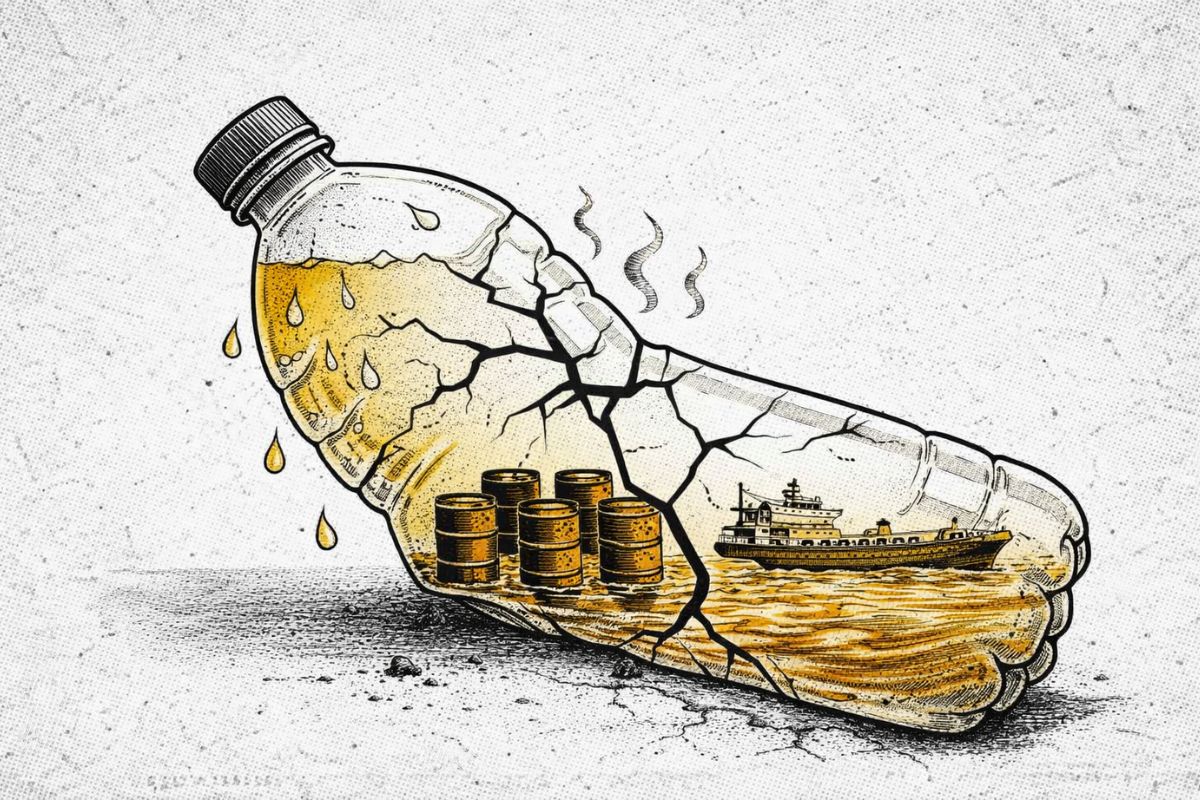
The price rises trace back to crude oil. Bottled water is sold almost entirely in plastic bottles made from Polyethylene Terephthalate, or PET. Manufacturers produce PET by heating crude oil-derived resin pellets and shaping them into preforms, small plastic tubes that are later moulded into bottles.
Iran’s near-total blockade of the Strait of Hormuz has disrupted roughly 20% of the world’s oil and gas shipments. Brent crude briefly hit $119 a barrel this week, close to its highest since the start of the conflict.
“The cost of preforms has increased from 115 rupees a kg to around 180 rupees per kg. There is also a shortage in the supply of preforms,” said Vijaysinh Dubbal, president of the Maharashtra Bottled Water Manufacturers Association. He added that around 20% of bottle manufacturing plants in Maharashtra have temporarily shut down.
Brands Absorb Costs, For Now
Despite the surge in production costs, the retail price of a one-litre bottle has largely held at around 20 rupees. A five-litre bottle still sells for between 60 and 70 rupees. Many brands and vendors have absorbed the extra costs rather than passing them on to consumers.
But Dubbal warned this cannot last. “Absorbing extra costs is not a sustainable practice for companies. If things get worse, customers are likely to face the heat,” he said.
The pressure is arriving at the worst possible moment. April and May mark peak demand for bottled water and non-alcoholic beverages across India.
Wider Ripple Effects
The strain extends beyond water. India’s PET packaging market was valued at $1.5 billion in 2024 and is projected to reach $2.2 billion by 2033. PET is used across the beauty, pharmaceutical and food delivery sectors.
Vaibhav Saraogi, director of Chemco Plastic Industries, one of India’s largest PET preform suppliers, said a prolonged surge in preform prices would hit the entire packaging industry.
For now, most consumers have been shielded. But with summer still intensifying and the war showing no sign of ending, that protection may not hold much longer.
Support Us To Sustain Independent Environmental Journalism In India.
Keep Reading
Highway Halt Puts Kashmir’s Fruit Economy at Risk
Railway line expansion plan put Kashmir’s apple orchards at risk
Warmer winters in Kashmir raise concerns over apple and crop yields
Stay Connected With Ground Report For Underreported Environmental Stories.