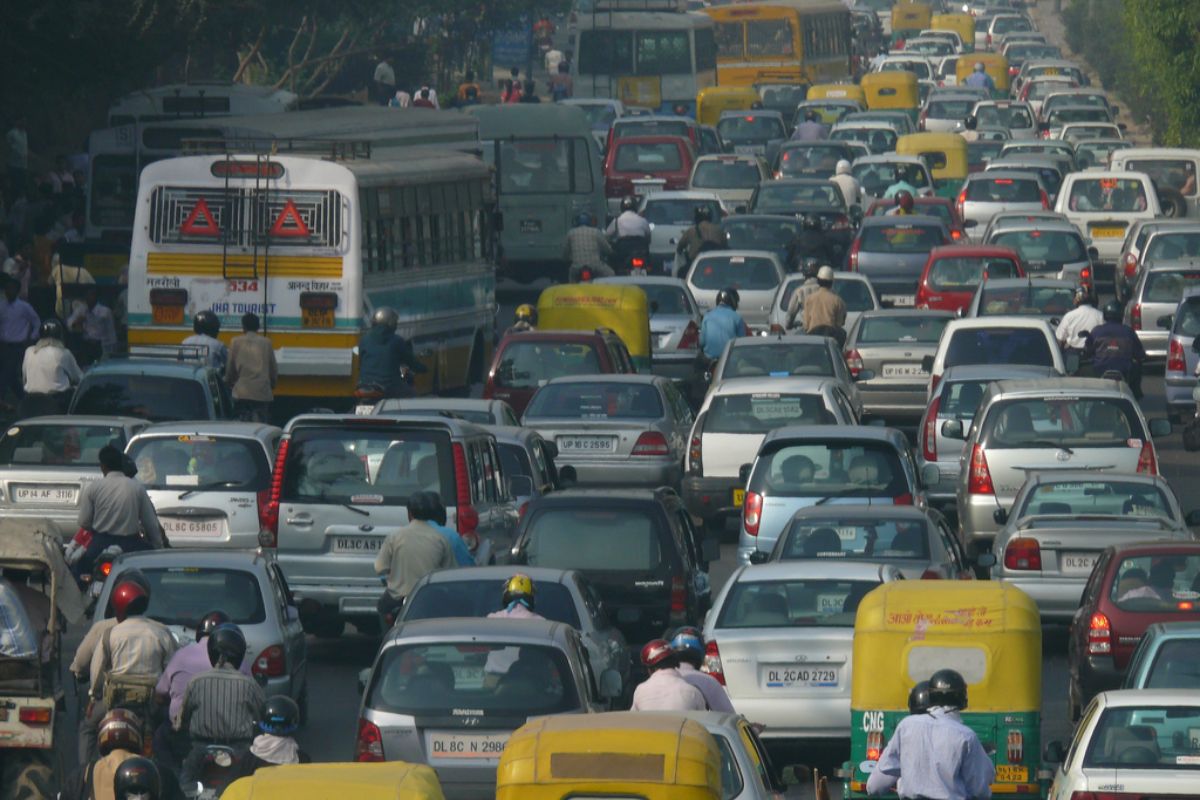
Delhi’s rising vehicle load and its impact on air quality have come under sharp scrutiny after the Prime Minister’s Office reviewed data on emissions and traffic volume in the National Capital Region. A high-level meeting chaired by the Principal Secretary to the Prime Minister examined the scale of the problem and directed states to speed up measures that can cut pollution and reduce dependence on older vehicles.
Officials noted that Delhi holds more than half of all vehicles registered across the NCR. The number of vehicles in the region has reached 2.97 crore, growing at about seven percent each year.
The review also found that 37 percent of the total vehicle stock falls under BS I to BS III emission norms, which are no longer aligned with current standards. The meeting called this a major concern and sought immediate steps from Delhi, Uttar Pradesh, Haryana, Punjab and Rajasthan to correct the trend.
The Principal Secretary asked all states to revise their electric vehicle policies and remove gaps that slow adoption. The directive included expanding charging networks and using new technology to improve enforcement of emission rules. The instructions described the need for “practical, result-oriented” action that can bring visible improvement in the coming months.
The pressure on Delhi intensified further when the Commission for Air Quality Management issued an advisory on reducing traffic during periods of severe pollution. Soon after the advisory, Delhi’s Environment Department ordered both government and private offices in the capital to switch to staggered working hours. The order also made it compulsory for all offices to implement work-from-home for half of their staff.
The order cited the Environment Protection Act, 1986, and measures laid out under the Graded Response Action Plan. Officials said the shift in work patterns is meant to cut daily traffic volume, which remains a major contributor to the city’s pollution levels.
The department wrote, “Vehicular emissions contribute a lot to air pollution and it is felt that there needs to be” stronger control during this period. The directive is expected to stay in place until the air quality index moves out of the severe range.
The focus on vehicles follows weeks of dense smog across the capital. Pollution levels climbed due to a combination of traffic emissions, industrial activity, and weather conditions that trapped pollutants close to the ground. The latest directives seek to ease some of this load by lowering traffic movement and pushing states to retire older vehicles.
The new measures will test how quickly agencies can respond to the PMO’s demands. The outcomes will depend on how soon states strengthen their electric vehicle policies, expand charging points, and enforce emission rules on the ground. The decisions mark another attempt to tackle one of Delhi’s most persistent challenges: the growing number of vehicles and the pollution they produce.
Credits Banner Image: Traffic Jam in Delhi by NOMAD via Wikimedia Commons (CC BY 2.0).
Support us to keep independent environmental journalism alive in India.
Keep Reading
Small Wild Cats in Big Trouble: India’s First National Report Released
After Tragedy, Families Face Delays in Tiger Attack Compensation
Stay connected with Ground Report for underreported environmental stories.