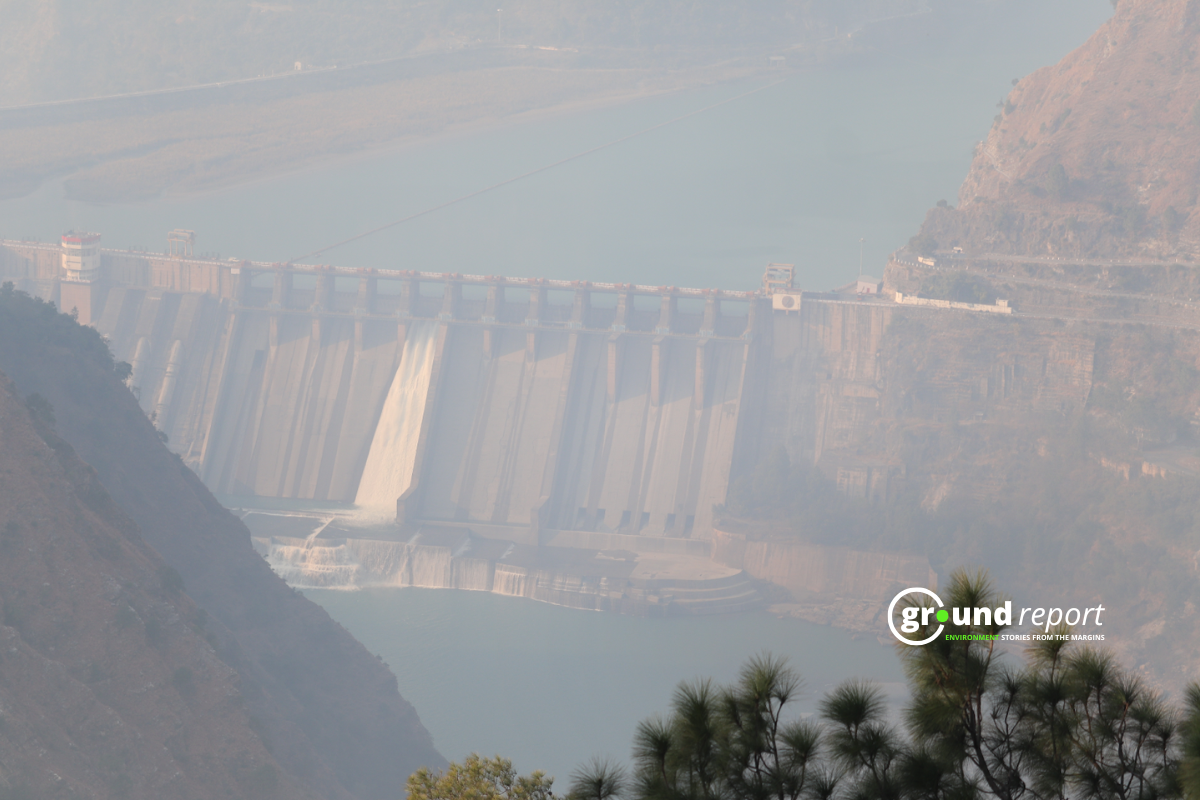
The National Hydroelectric Power Corporation Limited and its joint ventures operate 23 hydropower projects across India with a total capacity of 7,771 megawatts. Power generation from these facilities has supplied millions of homes and industries, but recent data shows fluctuating output over the past three years.
Union Power Minister Manohar Lal shared detailed information about NHPC’s operations in the Lok Sabha on December 11 while responding to a question from Member of Parliament Mian Altaf Ahmad. The minister outlined both current generation levels and ambitious expansion plans that could reshape India’s hydropower landscape.
Numbers Tell a Different Story Each Year
NHPC’s 23 commissioned projects produced 29,894 million units of electricity in 2022-23. The following year saw a decline to 26,056 million units, with generation dropping further to 25,194 million units in 2024-25. Between April and October 2025, the projects generated 23,015 million units.
NHPC Power Generation Trends
| Year | Generation (Million Units) |
|---|---|
| 2022-23 | 29,894 |
| 2023-24 | 26,056 |
| 2024-25 | 25,194 |
| 2025-26 (Apr-Oct) | 23,015 |
The variations in generation reflect the seasonal nature of hydropower and changing water availability patterns. Hydroelectric plants depend on river flows, which fluctuate based on rainfall and snowmelt.
Despite these variations, NHPC is not slowing down. The corporation and its subsidiaries are currently constructing eight new hydropower projects with a combined capacity of 8,514 megawatts across India. The expansion represents a significant bet on clean energy infrastructure.
Kashmir’s Rs 28,000 Crore Power Gamble
Four of these eight under-construction projects are concentrated in a single location. Jammu and Kashmir’s Chenab Valley is witnessing the construction of four major dams that together will add 3,014 megawatts of generating capacity.
The projects carry a total price tag of Rs 27,945 crore and are scheduled for completion between 2026 and 2028. Officials said the facilities will substantially strengthen electricity supply in a region that has faced chronic power shortages for decades.
The 850-megawatt Ratle Hydroelectric Project is being built jointly by NHPC and Ratle Hydro Power Corporation at a cost of Rs 5,282 crore. The facility will begin operations in November 2028.
Chenab Valley Power Projects Limited is executing the remaining three projects. The 1,000-megawatt Pakal Dul facility, costing Rs 12,728 crore, will start generating power in December 2026. The 624-megawatt Kiru Project, with an investment of Rs 5,409 crore, also targets a December 2026 launch. The 540-megawatt Kwar facility, priced at Rs 4,526 crore, is set for March 2028 commissioning.
Chenab Valley’s Power Revolution
| Project Name | Capacity (MW) | Cost (Rs Crore) | Commissioning Date |
|---|---|---|---|
| Ratle | 850 | 5,282 | November 2028 |
| Pakal Dul | 1,000 | 12,728 | December 2026 |
| Kiru | 624 | 5,409 | December 2026 |
| Kwar | 540 | 4,526 | March 2028 |
| Total | 3,014 | 27,945 | – |
The government said timely completion will improve electricity availability, reduce seasonal deficits, support industrial growth, and contribute to India’s clean energy goals.
The minister said NHPC provides employment opportunities to local residents, including families affected by the projects, through contractors working on construction. The corporation also offers bidding opportunities to local people to encourage entrepreneurship and support local businesses.
The government pointed to the Centralized Public Grievance Redress and Monitoring System as the mechanism for addressing complaints. The online portal allows residents to file grievances, which are examined and resolved within set deadlines.
The Chenab Valley projects represent nearly 40 percent of NHPC’s entire expansion pipeline. The four facilities will nearly double the electricity generation capacity being added to Jammu and Kashmir’s grid over the next four years. Besides the Jammu and Kashmir projects, NHPC is constructing three facilities in Arunachal Pradesh and one in Sikkim.
Support us to keep independent environmental journalism alive in India.
Keep Reading
Small Wild Cats in Big Trouble: India’s First National Report Released
After Tragedy, Families Face Delays in Tiger Attack Compensation
Stay connected with Ground Report for underreported environmental stories.