The Union environment ministry notified the Solid Waste Management Rules 2026 on Tuesday, according to a government release. The new rules replace the 2016 framework and come into effect from April 1, 2026.
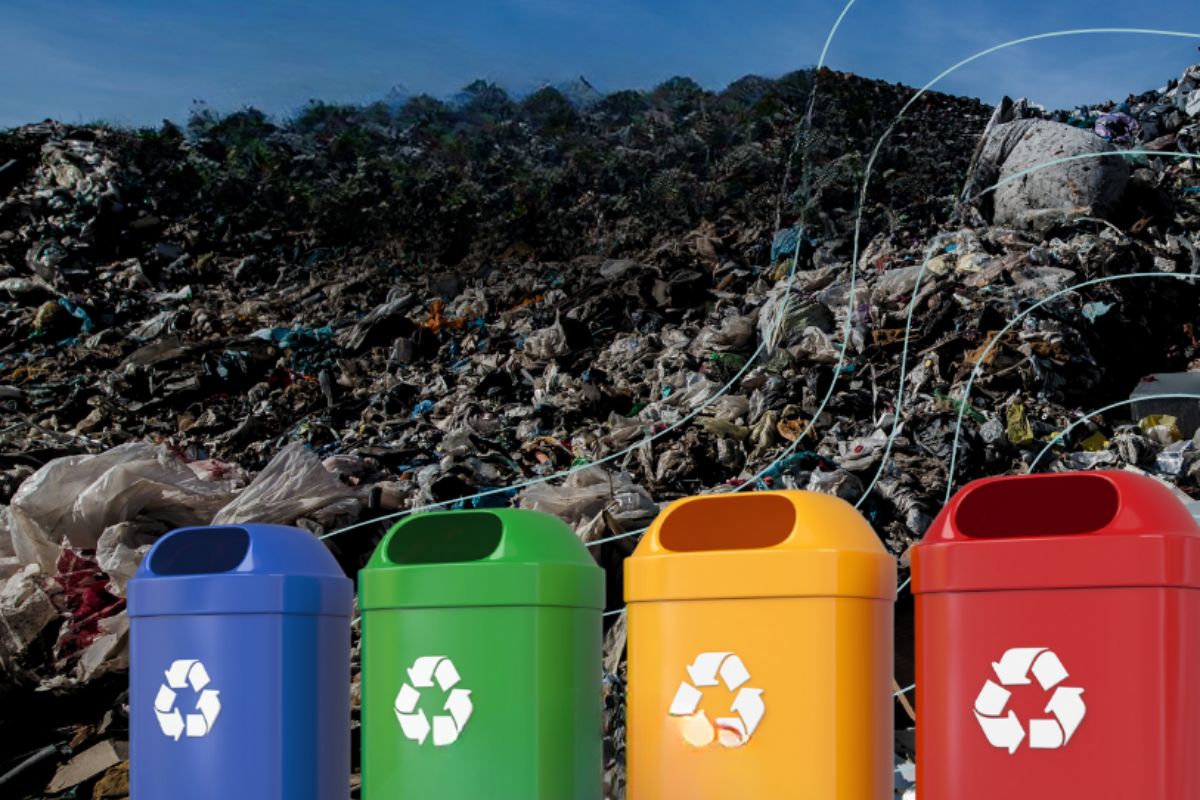
The revised framework mandates four-stream segregation of waste at source, expands the definition of bulk waste generators, and introduces environmental compensation for non-compliance, the ministry said.
“The new solid waste management rules, if implemented properly, are set to significantly improve waste management in India,” said Priyanka Singh, Programme Lead, Council on Energy, Environment and Water.
What Existed Before, What Changes Now
The Solid Waste Management Rules 2016 governed waste handling until now, the ministry said. Those rules did not specify floor area or water consumption limits for bulk waste generators, according to the notification.
The 2016 framework lacked mandatory four-stream segregation and centralized online monitoring, the ministry stated. The earlier rules did not introduce the polluter-pays concept, according to the ministry.
Bulk waste generators now include entities with floor area of 20,000 square metres or more, water consumption of 40,000 litres per day or more, or solid waste generation of 100 kg per day or more, according to the notification. This covers central and state government departments, local bodies, public sector undertakings, institutions, commercial establishments, residential societies, universities, and hostels, the ministry said. Bulk generators account for nearly 30 percent of total solid waste generation in most cities, according to the release.
These entities must register through a centralized online portal and process wet waste on-site wherever possible, the ministry said. Where on-site processing is not feasible, they must obtain an extended bulk waste generator responsibility certificate and pay fees, the notification said
“A CEEW study identifies lack of segregation, data inadequacy and absence of focus on waste reduction as key challenges in waste management,” Singh said. “Some of the key changes in new rules include mandatory 4-way segregation across the supply chain, which will reduce contamination, boost processing efficiency, and decrease landfill use.”
The broader definition means more entities will now be classified as bulk waste generators, expanding accountability and reducing burden on urban local bodies, the ministry said.
How New Framework Will Operate
Waste must now be separated into wet waste, dry waste, sanitary waste, and special care waste at the source, the notification stated. Wet waste includes kitchen waste, vegetables, and fruit peels, according to the rules. This will be composted or processed through bio-methanation at the nearest facility, the ministry said.
Dry waste comprises plastic, paper, metal, and glass, the notification stated. It will go to Material Recovery Facilities for sorting and recycling, the ministry said. Sanitary waste includes used diapers, sanitary towels, and tampons, the notification said. These must be securely wrapped and stored separately, the ministry stated. Special care waste includes paint cans, bulbs, mercury thermometers, and medicines, according to the rules. Authorized agencies will collect these or residents must deposit them at designated collection centers, the ministry said.
The centralized online portal will track all stages of solid waste management, including generation, collection, transportation, processing, disposal, and biomining of legacy waste, the ministry stated. Environmental compensation based on polluter-pays principle will deter non-compliance, according to the ministry. The Central Pollution Control Board will prepare guidelines while State Pollution Control Boards will levy compensation, the rules stated.
Industrial units including cement plants and waste-to-energy plants must replace solid fuel with refuse derived fuel, the notification stated. The fuel substitution rate will increase from the current 5 percent to 15 percent over six years, the ministry said.
Higher landfill fees for unsegregated waste will exceed the cost of segregation, transportation, and processing of segregated waste, the ministry said. Landfills are now strictly restricted to non-recyclable, non-energy recoverable waste and inert material, the notification stated.
The waste hierarchy prioritizes prevention and reduction, followed by reuse, recycling, recovery, and disposal, according to the ministry.
What Special Provisions, Land Allocation Rules Apply
The rules mandate mapping and assessment of all legacy waste dumpsites with time-bound biomining and bioremediation, the ministry said. Quarterly progress reporting through the online portal is required and State Pollution Control Boards must conduct annual landfill audits, the notification stated.
Local authorities in hilly areas and islands can levy user fees on tourists and regulate tourist inflow based on available waste management facilities, the notification stated. Hotels and restaurants must undertake decentralized processing of wet waste according to norms prescribed by State Pollution Control Boards or Pollution Control Committees, the notification stated.
The rules introduce graded criteria for development around solid waste processing and disposal facilities, the ministry said. A buffer zone must be maintained for facilities with installed capacity exceeding 5 tonnes per day, according to the notification.
The Central Pollution Control Board will develop guidelines on buffer zone size and permissible activities, the rules stated. This is expected to expedite land allocation for waste processing facilities by states and union territories, the ministry said.
Support us to keep independent environmental journalism alive in India.
Keep Reading
Small Wild Cats in Big Trouble: India’s First National Report Released
After Tragedy, Families Face Delays in Tiger Attack Compensation
Stay connected with Ground Report for underreported environmental stories.