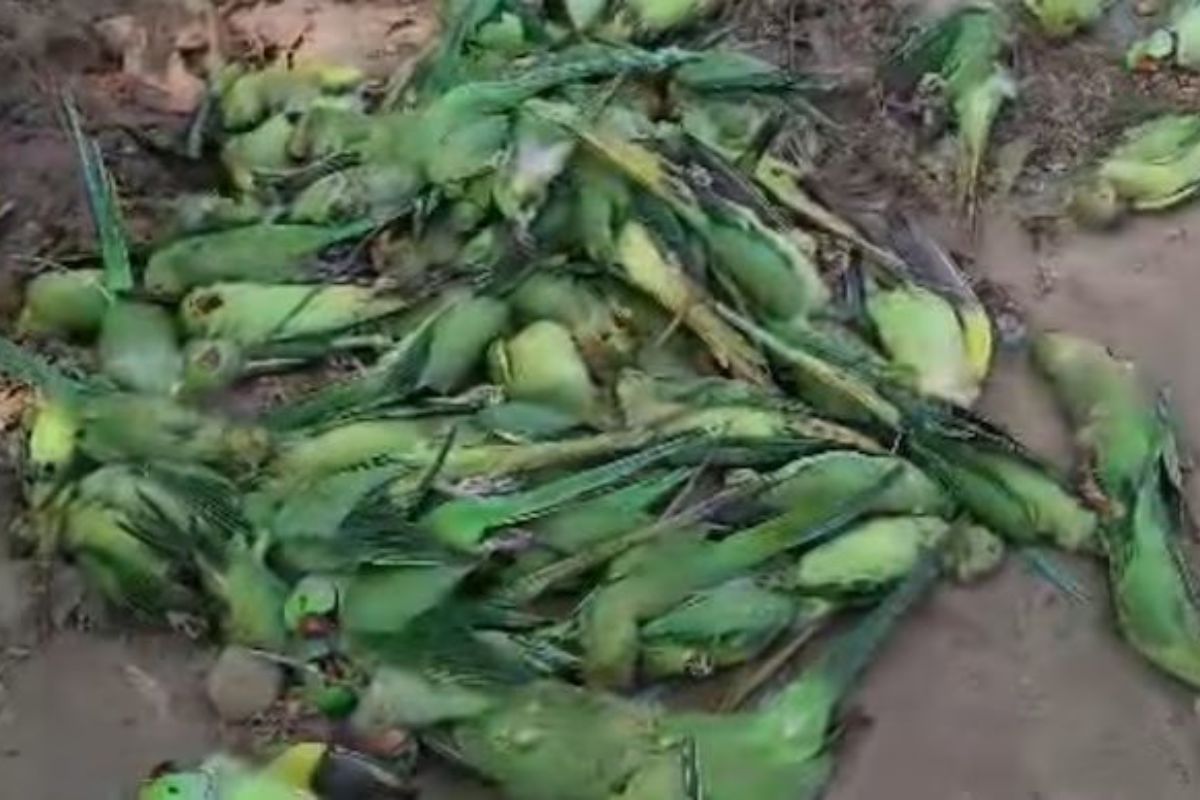
At least 200 parrots have died along the Narmada River in Khargone district over the past four days due to acute food poisoning, officials confirmed on Friday. The deaths initially sparked fears of bird flu, but post-mortem examinations have ruled out any infectious disease.
Why 100s of Parrots Suddenly Dead?
District wildlife warden Tony Sharma said rescue teams found several parrots alive near an aqueduct bridge in the Badwah area, but the toxicity levels were so severe that the birds died shortly after. Veterinary tests found no trace of avian influenza.
“There were no traces of bird flu in any of the samples examined,” Sharma said. He added that the forest department has now banned feeding activities near the bridge and stationed staff to enforce the order.
Veterinarian Dr Manisha Chauhan, who conducted the post-mortems, said the birds showed clear signs of food poisoning with no indicators of bird flu. She noted that people often unknowingly feed birds items that are harmful to their digestive systems.
“The pattern of deaths and clinical signs clearly pointed away from infectious disease,” Dr Chauhan said.
What Was Found Inside Dead Birds?
Veterinary extension officer Dr Suresh Baghel said rice grains and small pebbles were found in the stomachs of several dead parrots. He explained that visitors feeding cooked or leftover food to birds near the bridge likely contributed to the deaths.
Dr Baghel also cited pesticide exposure from nearby agricultural fields and contaminated river water as possible contributing factors. He warned that many human foods overwhelm the digestive systems of parrots and can lead to rapid organ failure.
Joint teams from the forest, veterinary and wildlife departments have been monitoring the area since residents raised the alarm four days ago. Viscera samples from the dead birds have been sent to a laboratory in Jabalpur to identify the exact toxins involved.
The incident has prompted conservationists to call for greater public awareness about the dangers of feeding wild animals. Experts say improper human interaction with wildlife along riverbanks can have fatal consequences and urge visitors to avoid feeding birds altogether.
Officials continue surveillance in the affected area to prevent further deaths.
Support us to keep independent environmental journalism alive in India.
Keep Reading
Small Wild Cats in Big Trouble: India’s First National Report Released
After Tragedy, Families Face Delays in Tiger Attack Compensation
Stay connected with Ground Report for underreported environmental stories.