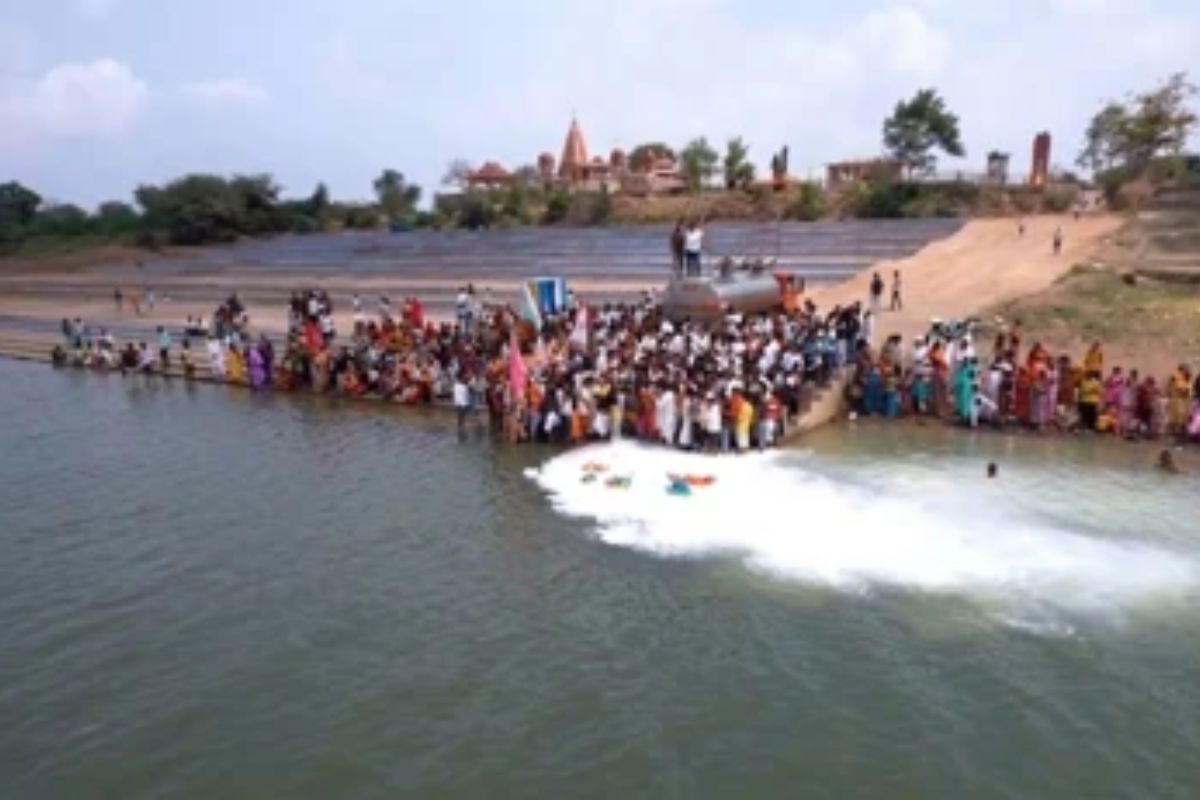
Tankers of milk rolled into Satdev village on a Wednesday morning, and with time, almost 11,000 litres of milk flowed into the Narmada River. The act was an offering, a ritual marking the end of a 21-day religious event in the Bherunda area of Sehore district, about 90 kilometres from the district headquarters.
Though there are concerns about how this would impact the already degraded river.
“Such large quantities of organic matter can deplete dissolved oxygen in water, adversely affecting the river ecosystem,” environmentalist and wildlife activist Ajay Dube said. “These impact local communities dependent on the river for drinking water and threaten aquatic life as well as domestic animals.”
The Ritual
The milk offering continued for all 21 days— approx 151 litres daily, with 1,100 litres poured on day one and 11,000 litres on the final day alone.
The organisers said the milk was offered to purify the river and bless pilgrims. They described the site as the ancient Tapobhumi of the Saptarishis, where Lord Shiva is believed to have manifested as Pataleshwar Mahadev.
Pawan Pawar, a devotee associated with the sant, defended the ritual. “Baba’s [Lord Shiva] passion is to perform Abhishek —a Hindu ritual where devotees offer sacred items— of Narmada ji and to feed people,” Pawar told Newsgram. “For Him, Narmada ji is like a mother.”
Science Behind the Concern
The Bhopal-based environmentalist Subhash Pandey described the milk as a significant organic pollutant. “It is highly oxygen-demanding and can lead to oxygen depletion, aquatic mortality, eutrophication, and loss of potability,” Pandey told Ground Report. “These effects are predictable from dairy effluent chemistry and have been documented in similar incidents worldwide.
When biodegradable organic matter, including milk, enters a river, bacteria in the water break it down. The bacterial population grows and consumes organic matter. They draw energy from the dissolved oxygen in the water and cause it to drop sharply. Fish and other aquatic animals that depend on dissolved oxygen for respiration can suffocate as levels fall.
The whole milk’s biological oxygen demand is up to 250 times greater than that of raw sewage. Applied to 11,000 litres, that makes this single ritual the oxygen-depleting equivalent of pouring roughly 2.75 million litres of sewage into the Narmada, in one morning.
Other countries take even accidental milk spills seriously. Earlier this year, a farmer in Devon, UK, accidentally spilled 8,000 litres of milk into a nearby stream. Authorities declared it an emergency. The farmer built a temporary dam to stop the flow. Environment Agency officers arrived with pumps and rain guns, pulled the milk from the water, and spread it safely across nearby fields. They followed the contamination for eight kilometres downstream.
When dissolved oxygen drops to critical levels of below 2mg/l, a state called hypoxia develops.
“The dissolved oxygen in the water will drop to two to three milligrams per liter,” Pandey said. “For water to be healthy, it should be six or more. Below four milligrams, the water becomes very risky for aquatic animals.”
“For water to be portable —water safe for drinking— the BOD (Biochemical Oxygen Demand) should be three or less,” Pandey said. “After adding this much milk, the BOD would have increased to 1,000 to 1,300 milligrams per liter. You can calculate how many times that is.”
“The damage happens in two phases,” he said. “First, the milk raises the BOD and kills sensitive aquatic life, the zooplankton, the phytoplankton, and the fish. Then, as those animals decay, the BOD rises again. This flowing water carries that damage downstream. It will become unfit for anyone to drink.”
Why the Narmada Matters
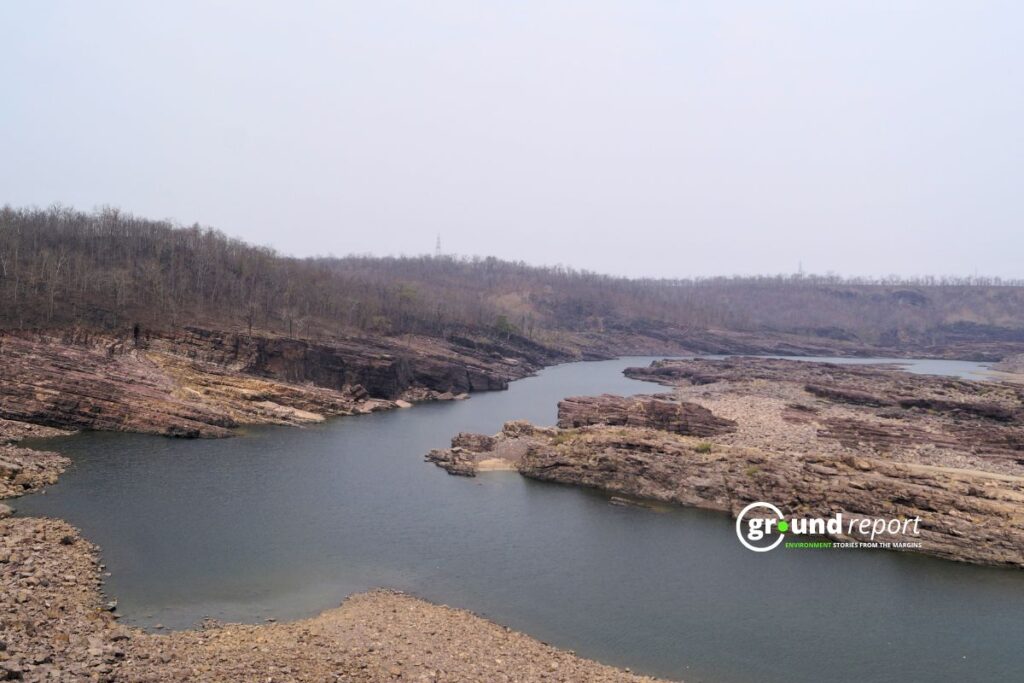
The river Narmada originates at Amarkantak in Madhya Pradesh and travels 1,312 kilometres westward through Maharashtra and Gujarat before emptying into the Arabian Sea via the Gulf of Cambay.
It is the largest west-flowing river in peninsular India and serves as a primary water source for irrigation and drinking water, and supports the lives and livelihoods of millions.
The Narmada has been battling pollution from sewage, sand mining, and industrial waste for decades. To restore it, the Madhya Pradesh government launched the Narmada Seva Mission, planting trees along the banks and cracking down on sewage and industrial discharge into the river.
“The Madhya Pradesh Pollution Control Board should have come forward, tested the water, and given a public report. But, they gave nothing,” Pandey said. “There are clear provisions under the Environment Protection Act 1986 and the Water Act 1974 to act against anyone who pollutes a potable water body, intentionally or not. But when the authority that should act stays silent, and the government shows no interest, all the conservation work being done on the ground means nothing.”
Dube said religious offerings must be symbolic and mindful of ecological consequences.
More Ground Reports
What does Ramsar status actually change for Bihar’s wetlands?
MP Poshan Aahar Closures Put Rural Women’s Livelihoods at Risk