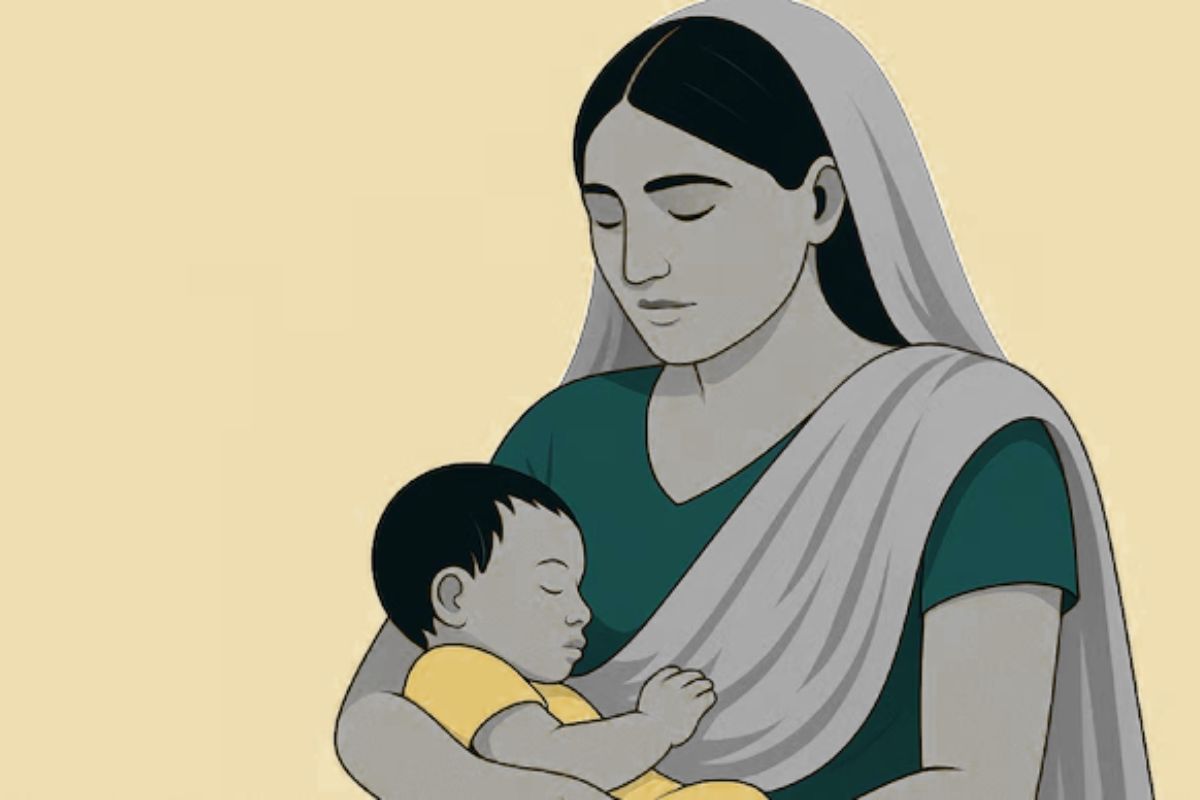
A new study has detected uranium in the breastmilk of every lactating mother tested across six districts in Bihar, raising concerns about infant health in a region already grappling with heavy metal contamination.
Researchers analyzed breastmilk samples from 40 mothers aged 17 to 35 years in Bhojpur, Samastipur, Begusarai, Khagaria, Katihar, and Nalanda districts. The study, conducted between October 2021 and July 2024, found uranium-238 in all samples, with concentrations reaching up to 5.25 micrograms per liter.
The findings were published in Scientific Reports, marking the first such assessment in Bihar’s Gangetic plains.
What the Numbers Show
The uranium concentrations varied significantly by location. Khagaria district recorded the highest average level at 4.035 micrograms per liter. Katihar district showed the single highest reading of 5.25 micrograms per liter in one sample. Nalanda district had the lowest average at 2.354 micrograms per liter.
Researchers used advanced laboratory equipment to measure the uranium content. They digested the breastmilk samples with nitric acid and perchloric acid before analyzing them with Inductively Coupled Plasma Mass Spectrometry at NIPER-Hajipur.
The study employed Monte Carlo simulation, running 10,000 iterations to assess health risks. This statistical method revealed that 70 percent of infants in the study group face potential non-carcinogenic health effects from uranium exposure through breastmilk.
Understanding the Risk to Infants
Dr. Ashok Sharma of AIIMS Delhi, a co-author of the study, explained the findings said the uranium levels remained below permissible limits and are expected to have minimal actual health impact on mothers and infants.
“The study analyzed breast milk from 40 lactating mothers and found uranium (U-238) in all samples. Although 70% of infants showed potential non-carcinogenic health risk, the overall uranium levels were below permissible limits,” Dr. Sharma said.
He emphasized that infants with hazard quotient values above one indicate possible non-carcinogenic risks. These risks include effects on kidney development, neurological development, and cognitive outcomes such as low IQ and neurodevelopmental delay if long-term exposure continues.
However, Dr. Sharma clarified that based on observed concentrations ranging from zero to 5.25 micrograms per liter, the actual impact on infant health is likely low. Most uranium absorbed by mothers is excreted through urine rather than concentrated in breastmilk.
Why Infants Are More Vulnerable
The research highlights that infants face greater risks than adults from the same level of exposure. Babies have lower body weight, which means the concentration of toxic substances becomes proportionally higher in their systems. Their organs are still developing, making them more susceptible to damage.
Infants also absorb heavy metals more readily than adults. Their bodies cannot eliminate uranium as efficiently, leading to longer retention times. The study found that infants are highly vulnerable to potential non-carcinogenic risk compared to their mothers due to real-time uranium elimination difficulties.
The health assessment calculated average daily dose, hazard quotient, and cancer risk using established formulas from the United States Environmental Protection Agency. The mean average daily dose was 0.00027491 milligrams per kilogram of body weight per day, with a maximum of 0.0005257 milligrams per kilogram per day.
The hazard quotient ranged from 0.4242 to 2.6287, with a mean value of 1.3745. Values above one indicate potential health risks. The study found no carcinogenic risk in the exposed subjects.
Where the Uranium Comes From
Uranium is a naturally occurring radioactive element found in granite and other rocks. It enters groundwater through natural processes in oxygen-rich environments and through human activities including mining, coal burning, nuclear industry emissions, and phosphate fertilizer use.
Bihar’s groundwater contamination likely stems from multiple sources. The region’s geology includes uranium-rich rock formations. Over-extraction of groundwater, widespread fertilizer use in agriculture, and inadequately treated industrial effluents contribute to the problem.
Earlier research by the same team examined 273 groundwater samples across Bihar. That study found uranium contamination in 20 samples exceeding 30 micrograms per liter, the World Health Organization’s provisional limit for drinking water. Another 150 samples showed uranium levels between one and 30 micrograms per liter.
The highest groundwater uranium concentration was recorded at 82 micrograms per liter in Supaul district, followed by 77 micrograms per liter in Nalanda and 66 micrograms per liter in Vaishali. Eleven districts in Bihar have reported uranium contamination in groundwater, including Gopalganj, Saran, Siwan, East Champaran, Patna, Vaishali, Nawada, Nalanda, Supaul, Katihar, and Bhagalpur.
Transfer from Water to Mother to Infant
Although groundwater shows high uranium levels in some areas, breastmilk contains much lower concentrations. This occurs because uranium does not accumulate strongly in breast tissue. The element prefers binding to phosphate groups and calcium-rich tissues like bones and kidneys.
The study found only a weak positive association between uranium concentration in breastmilk and both the age of mothers and their duration of residence. This suggests that longer exposure may slightly contribute to elevated levels, though not at statistically significant levels.
Uranium binds to plasma proteins and accumulates preferentially in bones and kidneys rather than breastmilk. Its low affinity for milk components including lipids, proteins, and water, combined with the absence of specific transport mechanisms, results in lower concentrations. The primary excretion route remains through urine, reflecting rapid renal clearance and low lactational transfer efficiency.
A Pattern of Heavy Metal Contamination
Bihar has faced documented exposure to multiple heavy metals in recent years. Previous studies by the same research team identified arsenic, lead, and mercury in biological samples from exposed populations across the state.
An estimated 151 districts across 18 states in India report groundwater uranium contamination, with approximately 1.7 percent of groundwater sources affected in Bihar. Elevated uranium levels have been observed globally in countries including Canada, the United States, Finland, Sweden, Switzerland, the United Kingdom, Bangladesh, China, Korea, Mongolia, Pakistan, and the lower Mekong Delta region.
Germany has adopted a stricter limit of 10 micrograms per liter for uranium in drinking water as of 2011, compared to the WHO’s 30 micrograms per liter guideline.
What This Means for Breastfeeding Mothers
Despite the findings, researchers strongly advise against discontinuing breastfeeding. Dr. Sharma stated that breastfeeding should not be discontinued and remains the most beneficial source of infant nutrition unless clinically indicated.
“While uranium exposure may pose risks such as impaired neurological development and reduced IQ, breastfeeding should not be discontinued,” he said. The study concludes that breastfeeding is the optimal method for infant nutrition, and stopping should only occur based on clinical indication.
Breastmilk provides essential nutrients and antibodies that support infant growth and development. The immunological and nutritional benefits outweigh the risks from the uranium levels detected in this study.
What Happens Next
Dr. Sharma indicated that similar studies will expand to other states. “We are under the process of examining the heavy metals in other states and their impact on human health which is a need of the hour,” he said.
The research team plans to investigate pesticides and environmental pollutants in breastmilk. Dr. Sharma noted that their previous work identified arsenic, lead, and mercury in breastmilk, and they emphasize the need for continued biomonitoring of toxic contaminants including pesticides to better understand infant exposure risk.
The study calls for several actions. Researchers recommend statewide biomonitoring of uranium contamination, regular groundwater testing, and public health advisories for pregnant and breastfeeding women. They advocate for safer water access through filtration methods capable of removing uranium, such as reverse osmosis systems.
The report stresses the need for further research into uranium mobility in water, soil, and food chains. There is an urgent need to monitor uranium-238 in Bihar to assess and mitigate potential health risks to mothers and infants.
Support us to keep independent environmental journalism alive in India.
Keep Reading
Small Wild Cats in Big Trouble: India’s First National Report Released
After Tragedy, Families Face Delays in Tiger Attack Compensation
Stay connected with Ground Report for underreported environmental stories.