
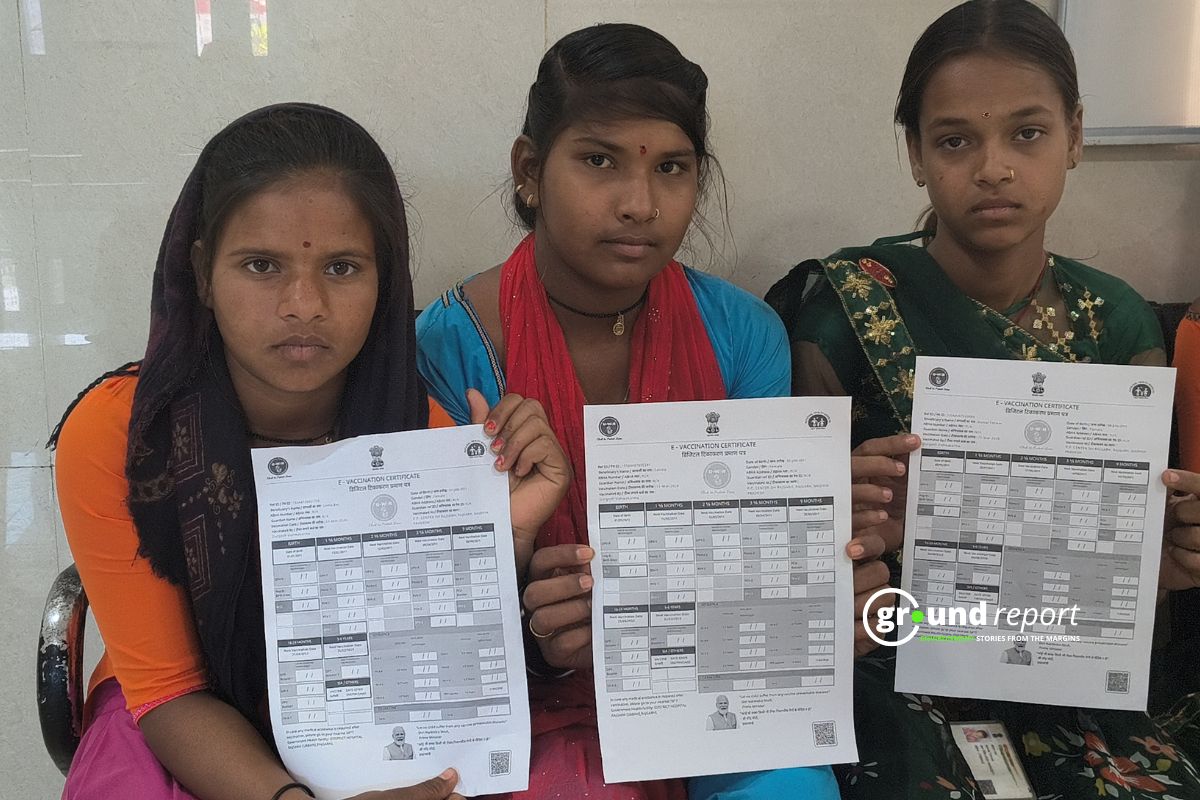
Rajgarh | In India, a woman dies of cervical cancer every eight minutes. Globally, India accounts for nearly 21–25% of all deaths caused by this disease. Confronting these alarming numbers, the Government of India launched a nationwide campaign on February 28, 2026, aiming to provide free HPV (Human Papillomavirus) vaccinations to nearly 11.5 million adolescent girls (up to 14 years of age).
But in the narrow lanes and rural pockets of Rajgarh city in Madhya Pradesh, this battle is not just against cancer. It is also against vaccine hesitancy, built through rumors, misleading viral videos, and a deep mistrust that has lingered since the COVID-19 pandemic. The World Health Organization (WHO) lists vaccine hesitancy as one of the threats to global public health, particularly in lower- and middle-income countries.
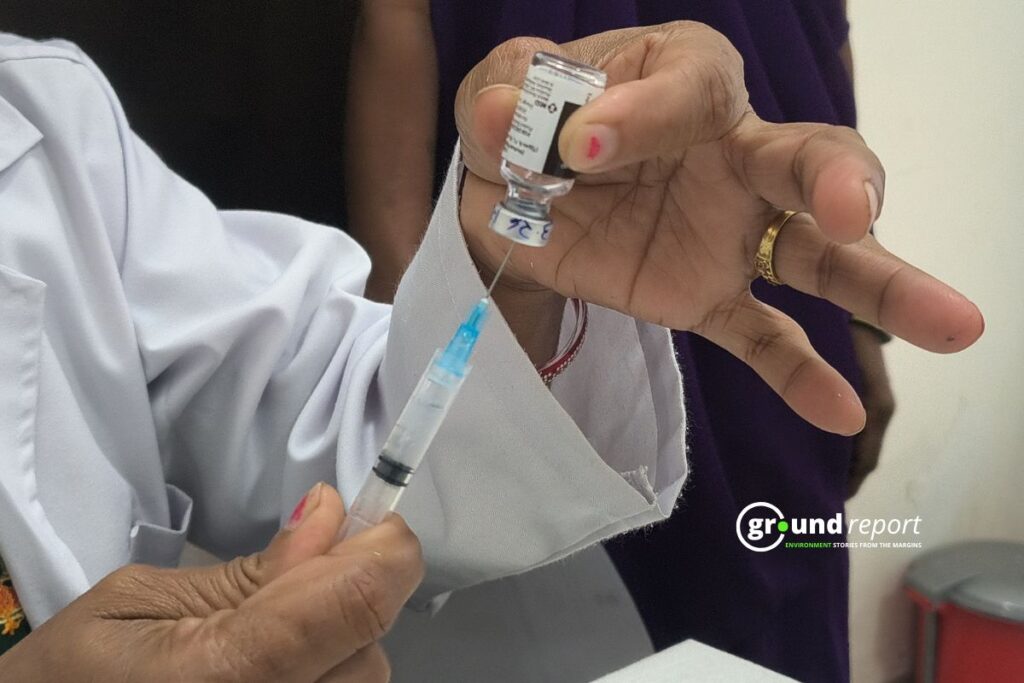
On the ground, the success of the vaccination campaign rests on frontline workers.
“The Girl Is Under Treatment”: Excuses That Mask Fear
Shilpi Sahu, an anganwadi (community childcare) worker posted in Ward No. 1 (Part 2) of Rajgarh town, confronts this wall of distrust every day. Since the campaign began on February 28, she has been actively engaged in mobilizing families. The target in her ward was small, but achieving it has proven unexpectedly difficult.
Out of seven eligible girls, Shilpi has managed to get only two vaccinated so far. Each day, she visits their homes, trying to convince their families. “Every day I go door to door, urging them to get their daughters vaccinated. But despite repeated efforts, the families refuse outright,” Sahu says.
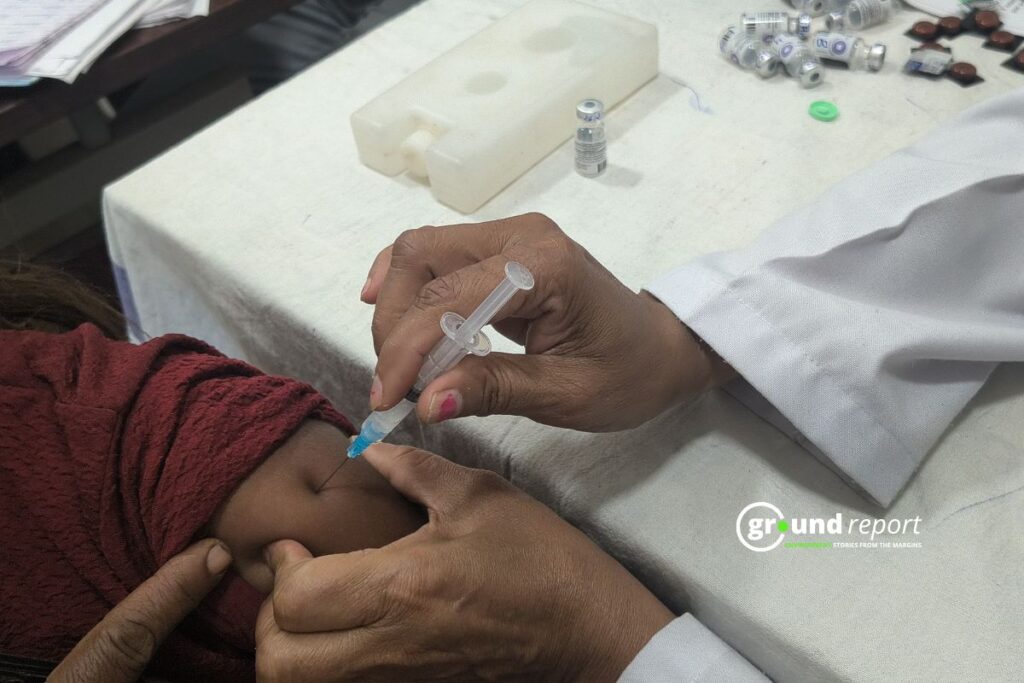
The cervix is the lower part of the uterus that connects to the vagina. According to the World Health Organization (WHO), almost all cervical cancer cases (about 99%) are caused by persistent infection with high-risk types of human papillomavirus (HPV), a very common virus spread through sexual contact.
HPV includes more than 100–200 types; at least 13 are high-risk and can cause cancer. The immune system can control most HPV infections and cause them to disappear without symptoms. However, when high-risk types persist for years, they can silently cause abnormal cell changes that develop into cancer.
Detection is difficult because HPV usually has no early symptoms, and cervical cancer may take years to develop. WHO notes that screening tests are crucial, as this is the only HPV-related cancer with effective screening tools for early detection and prevention.
Sahu understands the importance of the vaccine. Her training emphasized how crucial it is in preventing cervical cancer. Yet, her knowledge often falls short in the face of parental hesitation and resistance. During a field visit with Sahu, Ground Report observed how refusals are often cloaked in excuses.
At one home, a guardian, Shanti Bai Gurjar, said that the adolescent girl was currently undergoing treatment and therefore could not receive the vaccine. Sahu asked if a doctor had advised it. The mother, avoiding eye contact, said yes. The evasion was apparent; her daughter stood beside her, nodding awkwardly.
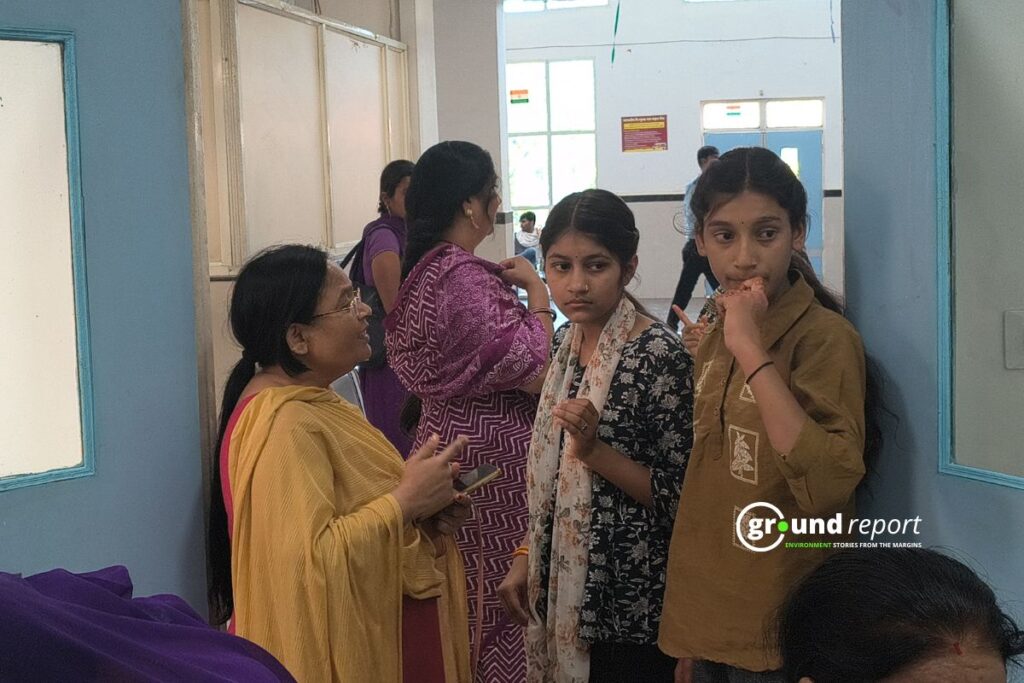
However, when asked for a doctor’s prescription or any medical documentation, none was provided. The claim appeared to be a verbal excuse, a way to avoid vaccination and end the conversation.
A 2025 study based in Punjab identified a lack of knowledge (90.1%) and the high cost of vaccines (5.9%) as reasons behind the state’s low HPV vaccination numbers.
The Shadow of COVID Vaccines: “Why Risk My Daughter?”
Outside Gopal Mewade’s house in the Dak Bungalow area in Rajgarh, the distrust has a troubling layer. When approached for his daughter’s vaccination, Gopal refused. His reluctance is tied to his wife, Yashoda Mewade’s, health. He believes her condition worsened after receiving the COVID vaccine.
“She now experiences breathlessness and anxiety, and our medical expenses have increased. She was completely healthy before,” he says. “If my daughter ends up like my wife, where will I take her?”
Scientifically, COVID-19 vaccines and HPV vaccines are entirely different. But for many like Gopal, “a vaccine is a vaccine.” The distinction holds little meaning. He recalls being told during the pandemic that there was “no guarantee” with vaccines that he wouldn’t fall sick. He interprets common, short-term reactions—such as fever or headache—as harmful effects that could have lasting consequences. In reality, while vaccines can have mild side effects; these are typically temporary and a normal sign of the body building protection.
The WHO explained the side effects of the COVID-19 vaccine and the vaccine as a whole. “It [vaccines] increases blood flow so more immune cells can circulate, and it raises your body temperature to kill the virus.” Essentially, these short-lived side effects are a sign that the vaccine is working, triggering the body’s immune system to build protection against the virus.
Based on nearly one million survey responses (Dec 2020–June 2021), COVID-19 vaccine hesitancy in India varied sharply across states. The highest hesitancy was reported in Tamil Nadu (40%), followed by Punjab (33%), Haryana (30%), Gujarat (29%), and Andhra Pradesh (29%). And the state of Madhya Pradesh at 22% hesitancy.
The same survey found the hesitancy stemmed mainly from waiting for others (42%), perceived lower need (35%), fear of side effects (34%), doubts about effectiveness (21%), and disbelief (11%). The overall rate of hesitancy toward the vaccine decreased from 37% to just 12% within 12 months in 2020-21.
There is a gender component to this. For every 1000 men, only 891 women were vaccinated. Another 2024 study, post-COVID-19 vaccination, identified reasons behind the gender disparity, ranging from cultural to socioeconomic. India already lacks the concept of adult vaccination, and in the cultural setup, women’s health is rarely prioritized, the study noted.
Social Media: A Digital Virus of Misinformation
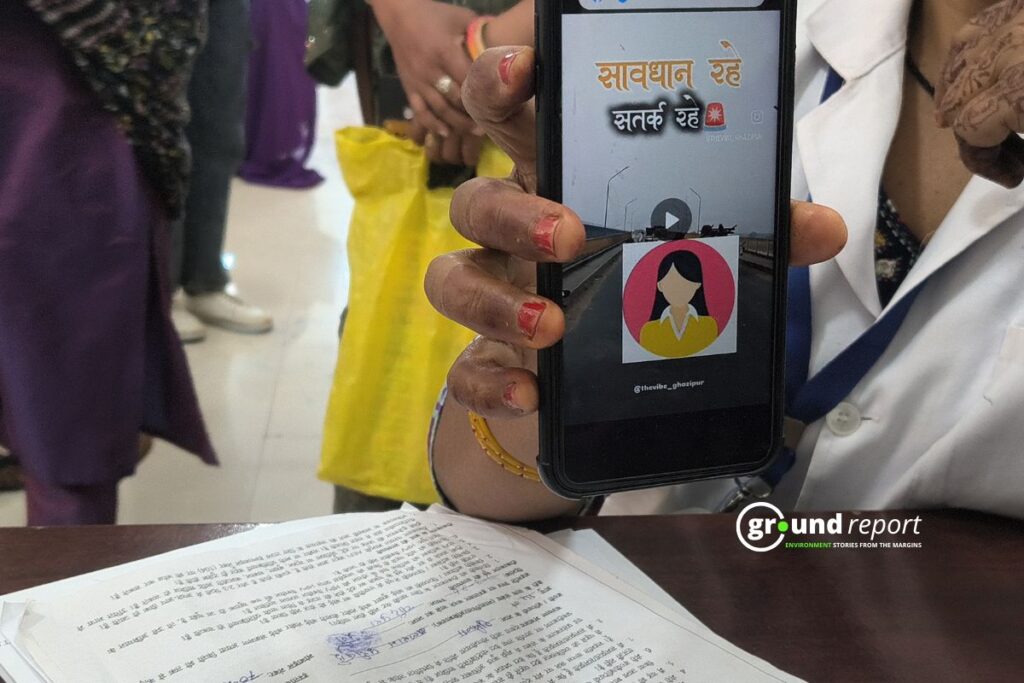
In villages like Kali Talai, near the city of Rajgarh, this misinformation has escalated into hostility. Savitri Gurjar, an anganwadi worker, says she faces rude behavior when she approaches people to encourage vaccination. Families refuse to let her in or even talk to her. In a video she recorded, a young girl rushes back into the room after Gurjar brings up the topic of vaccination. In some cases, families were persuaded to come to the hospital, only to leave moments before vaccination out of fear.
Rekha Dwivedi, an Auxiliary Nurse Midwifery (ANM), describes how a viral video is spreading rapidly in the field, falsely claiming that girls who receive the HPV vaccine will become infertile in the future. This is a typical viral video with high-octane music, exaggerated language, and fast animation to induce fear.
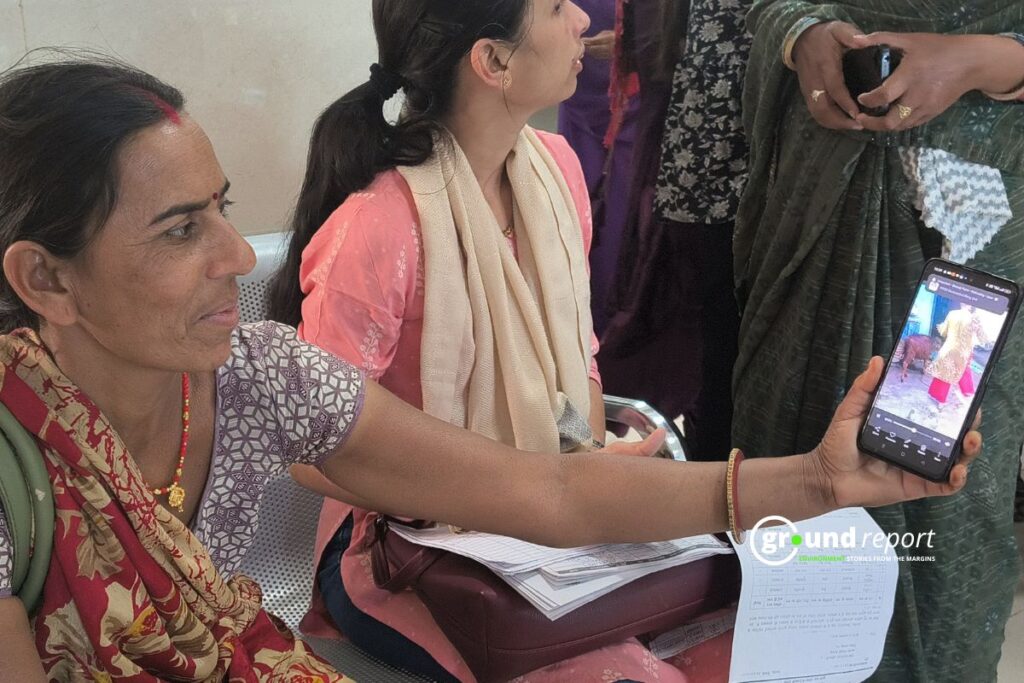
While a reason for misinformation, the mentioned survey found a “positive association between internet penetration and actual vaccination coverage.”
Contrary to misinformation, leading global health institutions such as the WHO, CDC, and the Indian Academy of Pediatrics state clearly that the HPV vaccine has no negative impact on fertility. In fact, it helps prevent conditions that may later require treatments like radiation, which can affect reproductive health.
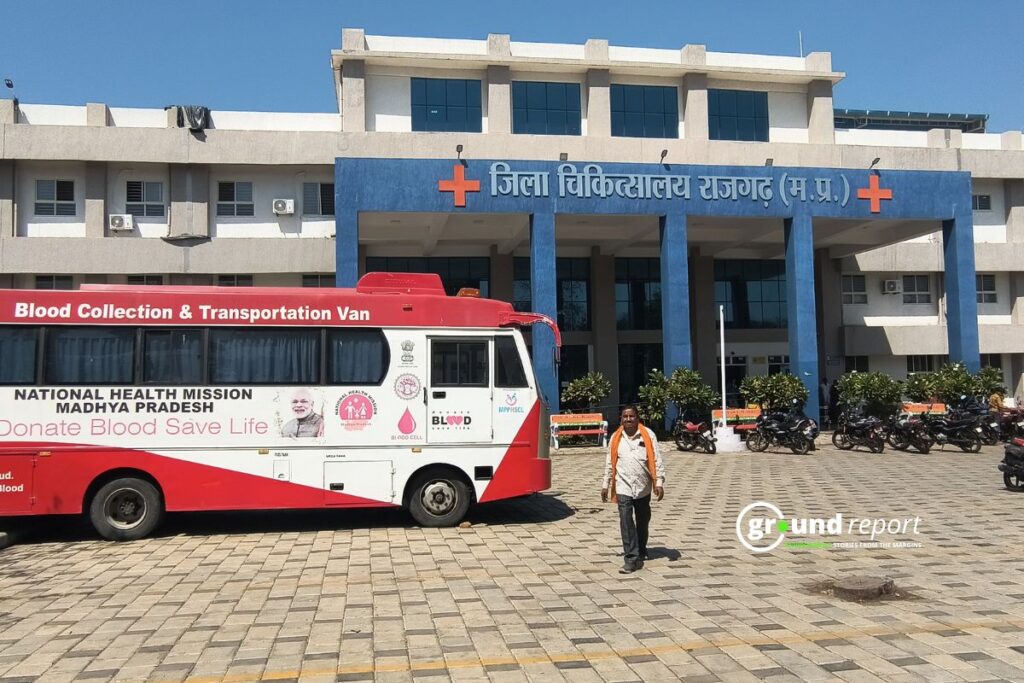
Almost 160 countries have introduced the HPV vaccine, and 90 of them have adopted a single-dose schedule. More than 500 million doses have been administered globally, and Rajgarh district hospital’s Chief Medical and Health Officer (CMHO), Dr. Shobha Patel, said that there have been no reported long-term side effects. She added that the hospital has administered “3,000 doses with zero side effects.” She assured that the administration has ensured proper cold chain management and observation protocols after vaccination.
Challenge of Building Trust
A study, published in 2023, found that “children born after the Emergency (1976-1977) were less likely to be immunized or to be born in hospitals.” This likely weakened trust in the modern health services, particularly in regions close to Delhi, with high coercion intensity. Even during the polio vaccination, the program faced hesitancy from the Muslim community. The New York Times reported in 2003 that the polio vaccination campaign invoked the same fears of mistrust of health institutions.
Since trust in health services cannot be measured directly, researchers often interpret low immunization rates as indicators of mistrust and hesitancy. Hence, many studies and surveys, particularly after the COVID-19 vaccination drive, highlighted the importance of building trust and sharing knowledge with communities.
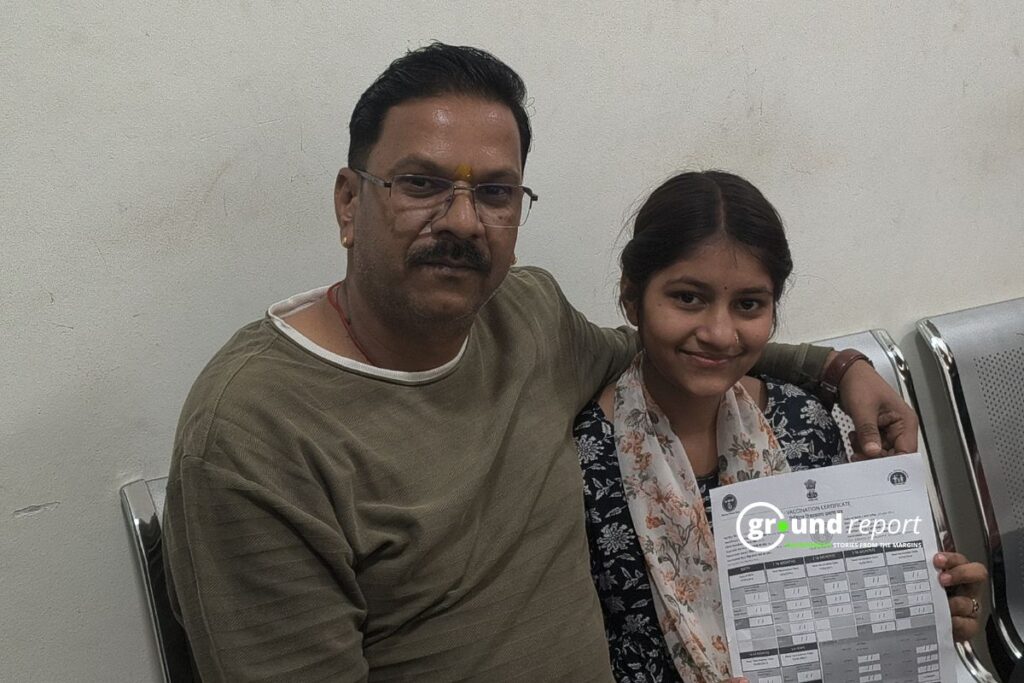
Jitendra Songira, an employee at the Rajgarh District Hospital, set an example by ensuring his 14-year-old daughter, Kashi Songira, received the HPV vaccine in his presence. “I love my daughter deeply and understand the risks of cancer. This vaccine is completely safe and will protect her from a life-threatening disease,” he says. “Government policies may change in the future. We should take advantage of this free protection while it is available.” He urges other parents not to delay.
Amid all the hesitancy, Madhya Pradesh vaccinated “more than 1 lakh daughters in just 15 days,” the State Chief Minister Dr. Mohan Yadav posted on X on 16th March.
Though one thing is clear: making vaccines available is not enough. Frontline workers like Shilpi Sahu are often left to answer complex scientific questions, counter misinformation, and bridge years of public hesitancy and distrust. Each hesitant household reflects a deeper history of doubt. Though for Rekha Dwivedi, every vaccinated girl is a step in the forward direction. A win for her and other healthcare workers’ persistence, conversations, and trust-building in the community.
This report is part of a collaborative series by Ground Report and Feminism in India.
Support Us To Sustain Independent Environmental Journalism In India.
More Ground Reports
Panna: Villagers Protest Irrigation Projects, Demand Documents, and Transparency
Fulkai Maai Demands the Return of Crèches for Malnourished Korku Children
Stay Connected With Ground Report For Underreported Environmental Stories.
Support Us To Sustain Independent Environmental Journalism In India.