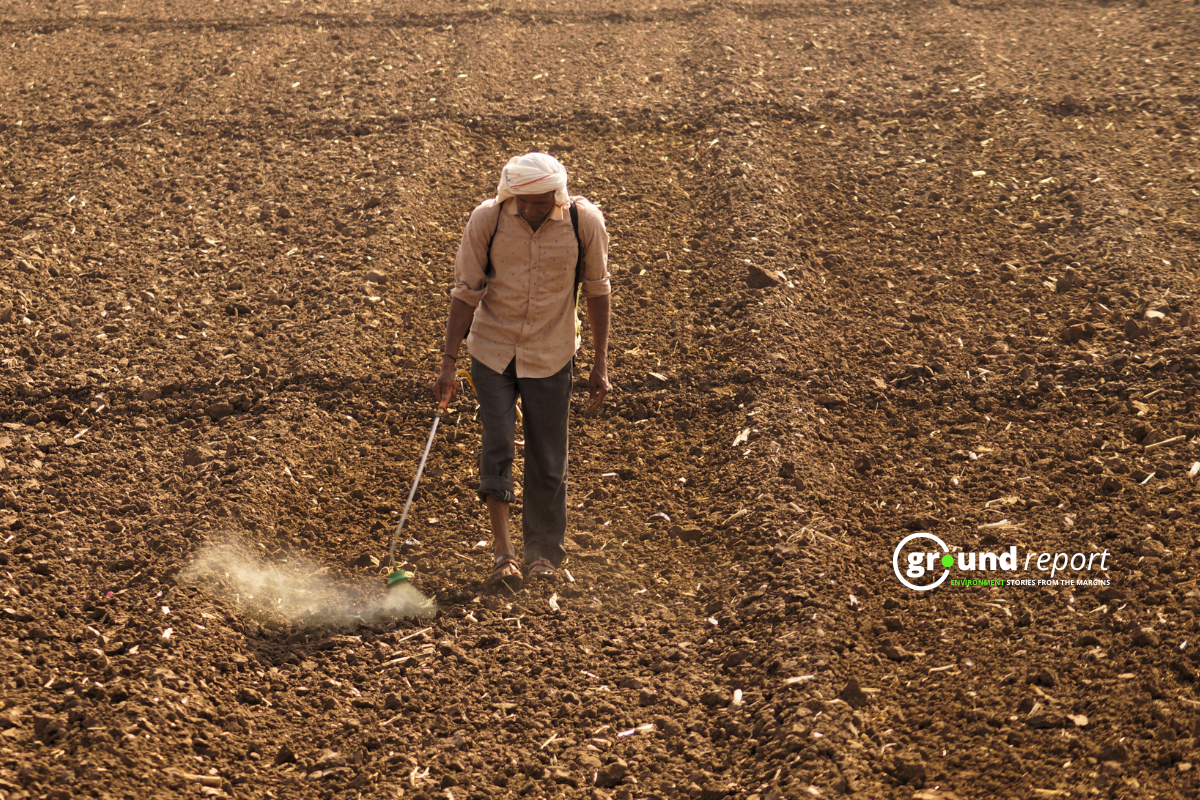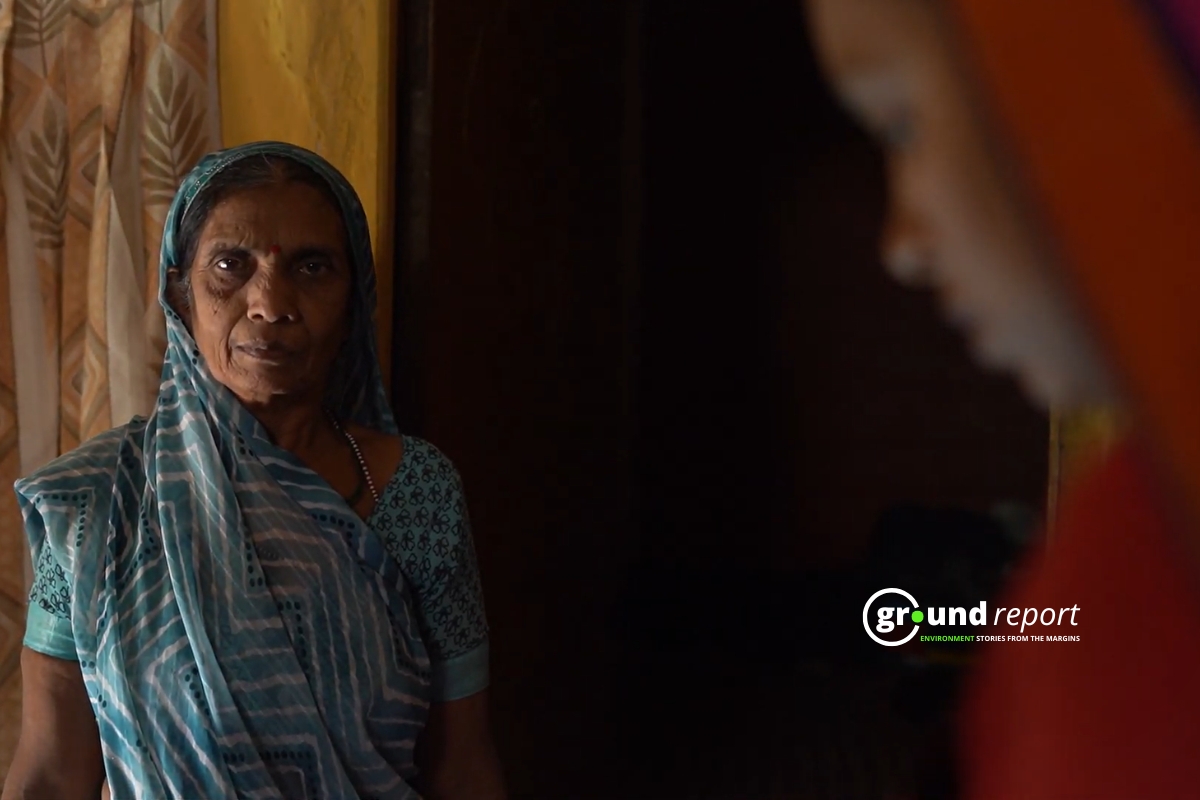
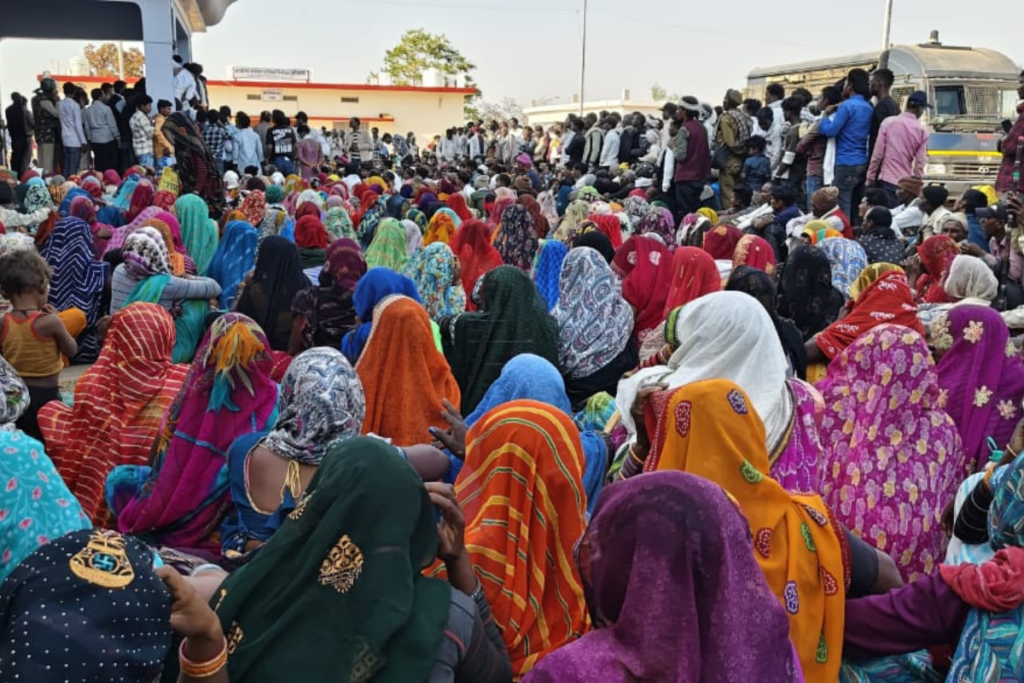
Villagers affected by the Majhgaya and Runjh irrigation projects in Madhya Pradesh’s Panna district staged a protest at the district collectorate earlier this week, raising concerns over land acquisition, compensation, and rehabilitation.
The demonstration, held on March 11 and 12, was led by social activist Amit Bhatnagar. On the second day, tensions escalated between protesters and the administration.
On March 12, the district administration imposed Section 163 of the Bharatiya Nagarik Suraksha Sanhita (BNSS), barring gatherings of more than four people on the collectorate premises. Protesters alleged that officials also cut off the campus water supply during the demonstration, escalating tensions between villagers and the police.
Villagers Question Compensation and Rehabilitation
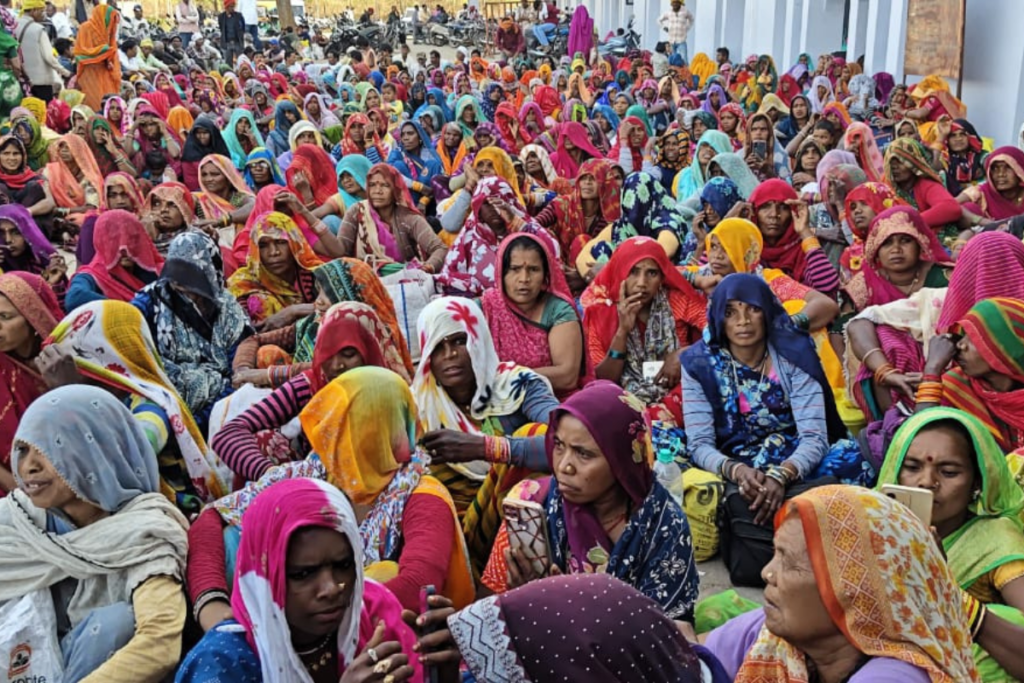
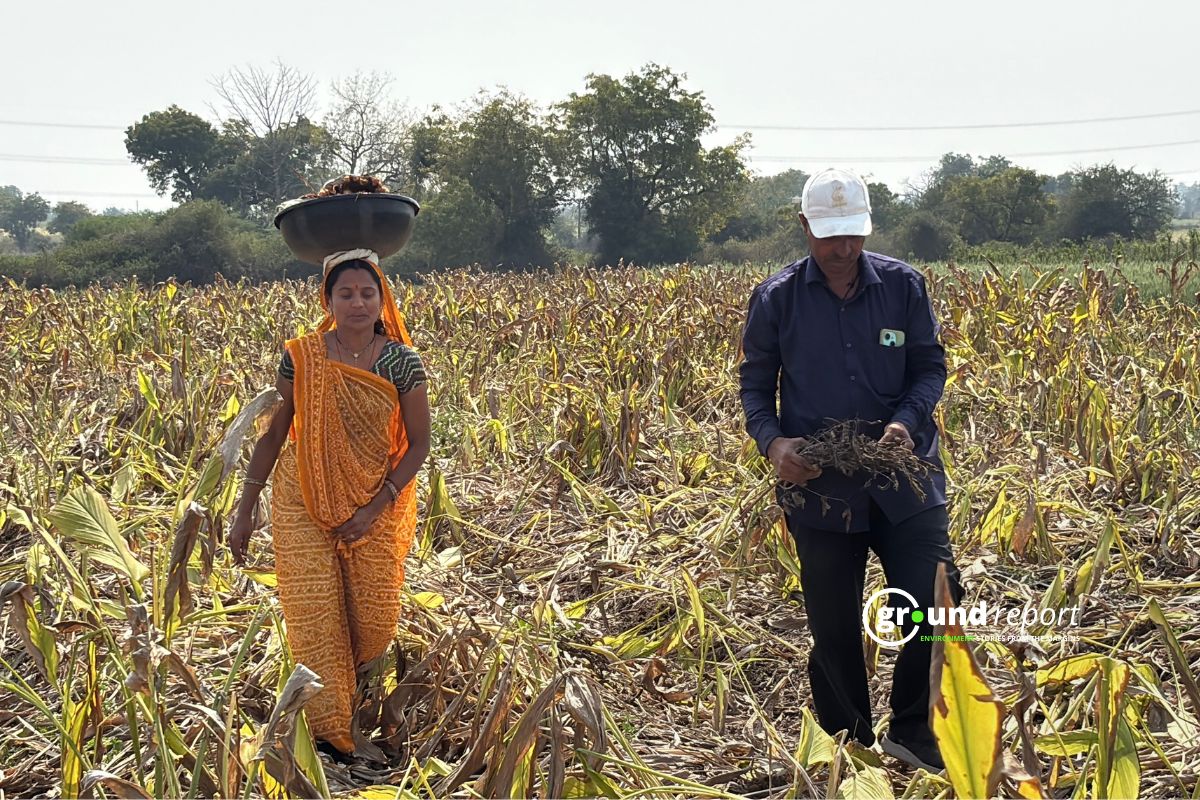
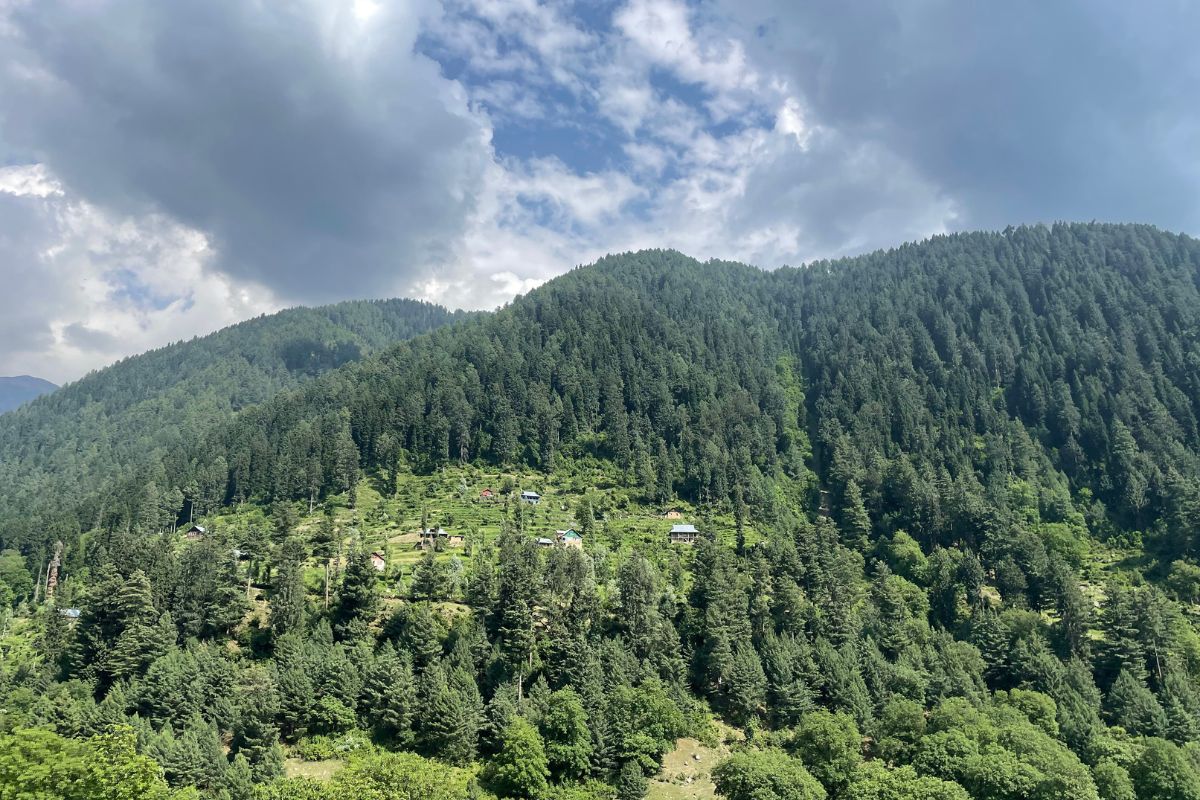
Dozens of villages in and around Panna are expected to be affected by the two irrigation projects and the larger Ken–Betwa river linking project. Farmers and tribal families say their land is being acquired without a clear roadmap for compensation and rehabilitation.
“We are being told that the government will take our land, but no one has explained where our families will go or how we will survive,” said Sumitra Adivasi, one of the protesters. She said families are being offered compensation of around ₹5 lakh, which she argues is far too little to buy land or build a new home.
On March 11, thousands of farmers and tribal residents gathered at the Panna collectorate demanding clarity on land acquisition procedures and compensation packages. Under the banner of the Jai Kisan organization, protesters marched from Satna Naka to the collectorate, calling the protest a “Nyay Satyagraha” (justice sit-in).
Activist Amit Bhatnagar alleged that the administration is not properly implementing the Right to Fair Compensation and Transparency in Land Acquisition, Rehabilitation and Resettlement Act, 2013. According to him, the law entitles displaced families to a compensation package of at least ₹7.36 lakh, yet in several cases, villagers are being offered less.
He also alleged that officials classified irrigated land as non-irrigated in some villages to lower compensation payments. Villagers further claim that in some places houses were demolished and standing crops destroyed before full compensation and rehabilitation arrangements were completed.
Protesters say they are demanding official documents related to land acquisition and rehabilitation so affected communities can make informed decisions about their future.
Tensions Escalate on the Second Day
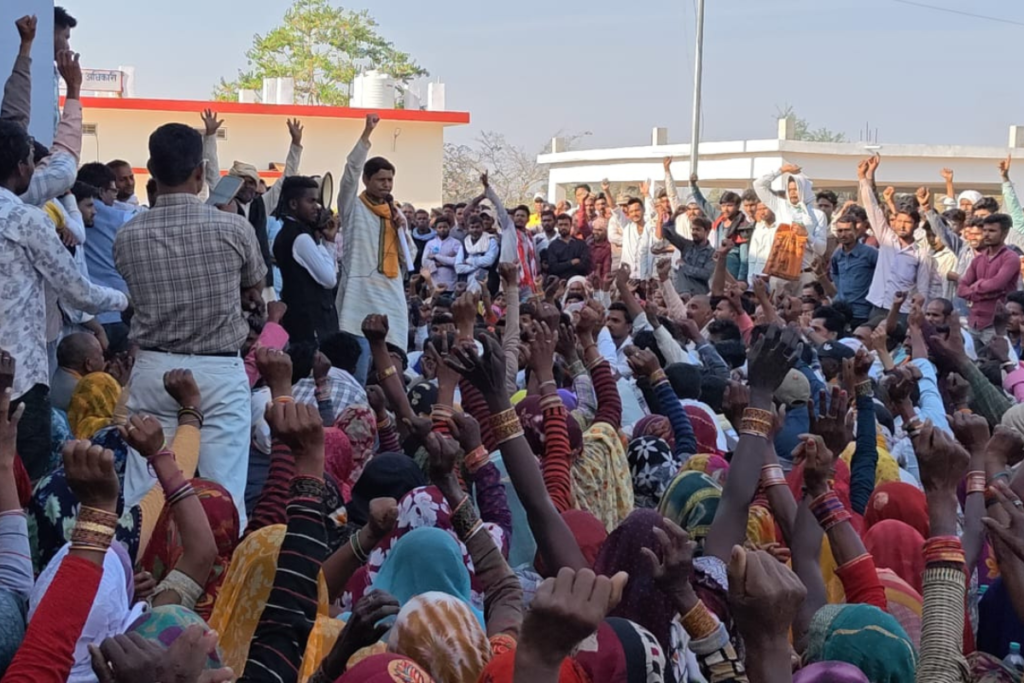
After reaching the collectorate, the protest became increasingly tense on the second day as thousands of farmers and tribal women remained gathered at the premises. As the crowd continued to grow, authorities sealed off parts of the collectorate complex and deployed additional police forces.
Officials later invited Bhatnagar inside the building for talks. Protesters claim that during this time, Section 163 of BNSS was invoked and notices were issued banning gatherings and slogans inside the premises. In response, Bhatnagar announced that he would court arrest. Many women and farmers at the protest also declared they would court arrest in solidarity.
Soon after, scuffles reportedly broke out between police and protesters, and a lathi-charge was carried out.
Protest Suspended After Talks
Later, following negotiations between the administration and protest leaders, the agitation was temporarily suspended under certain conditions.
According to a memorandum submitted by the protesters, the administration agreed to provide certified copies of key documents related to the Ken–Betwa Link Project, the Majhgaya Medium Irrigation Project, and the Runjh Medium Irrigation Project within five days. These include administrative orders, land acquisition proceedings under Section 11, gram sabha records, and compensation awards.
Officials also assured protesters that they would hear complaints from affected villages within seven days and would not take any eviction action until then. Based on this written assurance, Bhatnagar announced that the protest had been suspended for now but not withdrawn.
“If the administration fails to act within the agreed time frame, the movement will resume,” Bhatnagar warned.
Projects at the Centre of the Dispute
The controversy centers on three projects: the Ken–Betwa river linking project and the Majhgaya and Runjh medium irrigation projects in Panna district. The government says these initiatives aim to improve irrigation and drinking water availability in the drought-prone Bundelkhand region.
In 2023, the Madhya Pradesh cabinet approved revised plans for the Runjh and Majhgaya projects.
The Runjh irrigation project, with an estimated cost of ₹513 crore, aims to irrigate about 14,450 hectares of land and is expected to benefit 47 villages in Ajaigarh tehsil. The Majhgaya irrigation project, approved at a cost of ₹693 crore, is designed to irrigate about 1,360 hectares and benefit 38 villages in the same tehsil.
According to documents from the state’s Water Resources Department, the Majhgaya project alone will require about 1,523 hectares of land, including revenue, private, and forest land. More than 930 hectares of agricultural land may be affected, and around 999 families could be displaced.
The project area has an estimated population of 16,896, including 16.4 percent Scheduled Castes and about 22 percent Scheduled Tribes, indicating that marginalized communities will bear a significant share of the impact.
The projects have also figured in political discussions. Khajuraho MP Vishnu Dutt Sharma previously urged the Lok Sabha to expedite the Majhgaya dam project, saying it could bring drinking water and irrigation benefits to hundreds of villages in his constituency, Panna district, and the wider Bundelkhand region.
Speaking to Ground Report, Panna Collector Usha Parmar said, “A delegation of affected people met us. They demanded that they be provided with documents related to land acquisition. These documents will be given to them.”
Ground Report has covered in detail the on-ground situation of rehabilitation in villages set to be displaced by the Daudhan dam being built under the Ken–Betwa link project. You can read that report here.
For now, the dispute highlights a familiar tension: while the government and elected representatives frame the projects as essential for development and water security in Bundelkhand, affected villagers are asking a fundamental question — who ultimately pays the price of development, and whether displaced families are receiving the rights guaranteed to them under the law.
Support Us To Sustain Independent Environmental Journalism In India.
More Video Reports
After Compensation, How are Families Coping With The Sewer Deaths in Indore
20 Villages, One Fight: Why Bundelkhand is Protesting the Ken-Betwa Project