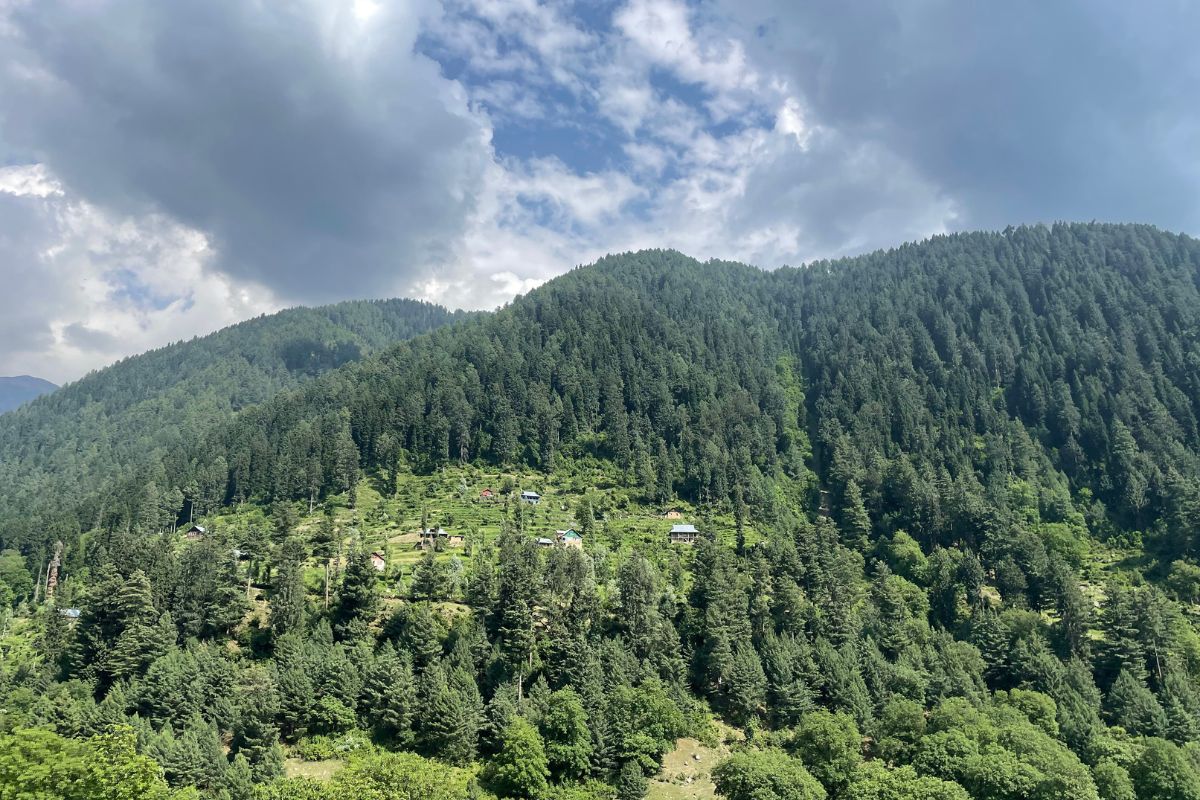
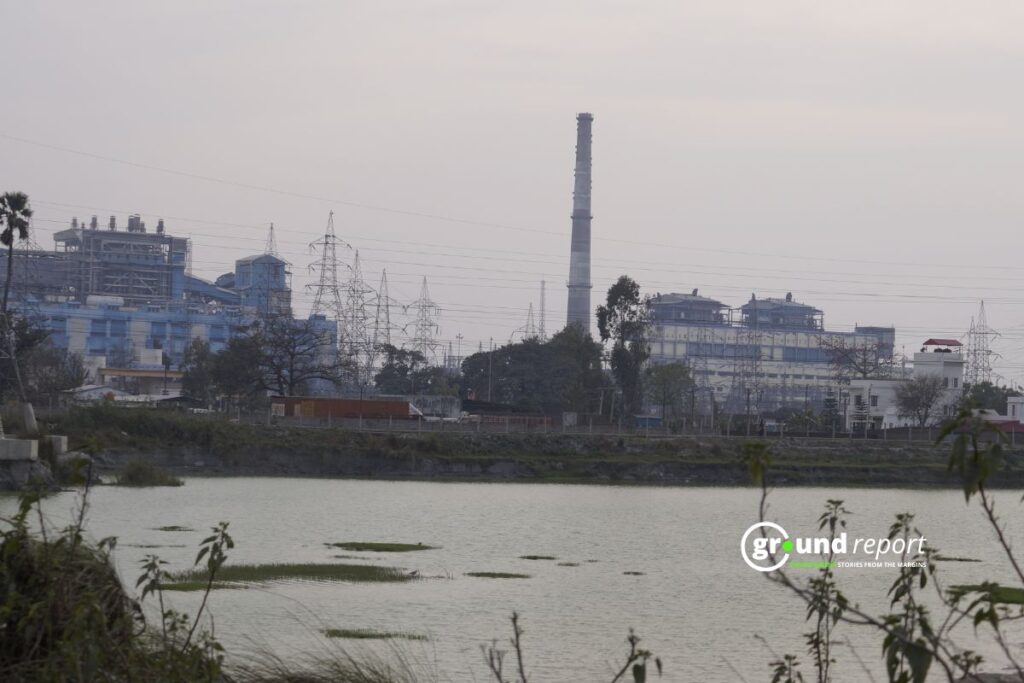
We turned off the Muzaffarpur, Bihar highway and drove toward Kanti Khurd village. The massive Kanti Thermal Power Plant was on the other side of the highway. And, as we turned, we met Lal Bahadur Kushwaha, our local contact. Trucks rumbled past us, kicking up clouds of fine, grey dust which the villagers call Garda, or as in this case it was coal fly-ash.
As we bumped along a concrete road pitted with mud and potholes, Kushwaha answered our questions about the fly-ash-laced existence. Houses lined both sides, their walls coated with the same fly-ash-tinged dust blowing from the plant. We stopped at the curve. Kushwaha introduced us to people who have spent years challenging National Thermal Power Corporation Limited (NTPC), a public sector company that runs the plant. The older villagers spoke with guarded scepticism, shaped by long legal battles. Fisherfolk told us how ash settles on lake bottoms and in canals, has made the water shallow and killed fish. Litchi farmers explained how yields and fruit quality have dropped. Some have turned to mushroom farming just to keep their households afloat. We have talked about mushroom farming in a separate article. Kushwaha spearheaded the training for mushroom farming.
This story follows the fly-ash itself, how it mixes with the corners of life. These stories frame a decades-long struggle with the airborne and water-borne waste, largely unburned minerals known as fly-ash and bottom-ash, that has defined their lives in Kothiya, Kanti Khurd, and other hamlets within a few kilometres of the plant’s ash ponds.
Fly-ash Laced Existence
Lal Bahadur Kushwaha has lived here for generations with meagre resources. In 1985, and a few years before, he saw the plant as a symbol of change. He thought his fortune would grow. The plant would employ villagers and invest in the necessary infrastructure. Villagers, Kushwaha included, were ready to accommodate the “little ill-effects” of the plant. Even 40 years after the plant’s establishment, the social and economic realities of the village haven’t changed.
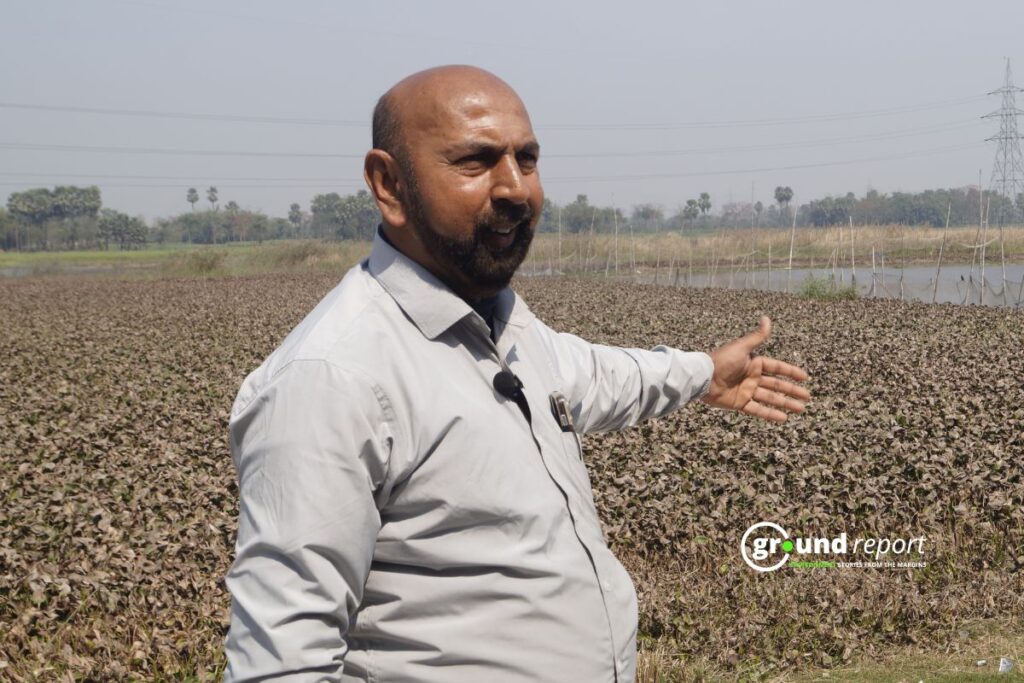
“Even today, people of our village are forced to go to Muzaffarpur [a major city almost 20 km away] and work as labourers. This power plant did not give us employment. On the contrary, it destroyed our means of employment, like farming and fish farming,” Kushwaha said.
“We did not get any facility from the plant, nor is there any medical facility, nor tap water; everything is disturbed,” Ram Pravesh Pandey, who has 50 litchi trees, said. Muzaffarpur is known for its litchi across the country. But the fly ash is affecting the litchi production.
January is the time when litchi flowers bloom. The ash flying from the power plant sticks to the flower. “We have to spray water on the tree all the time. More than 20 litres of water is spent on one tree. Both our cost and hard work have increased, and despite this, the yield is less. Where earlier I used to earn 35-40 thousand rupees from litchi in a season, now it is not even 10 thousand,” said Pandey.
At 5:30 am, Gyanti Devi wakes up, lights the stove, and races the wind. “If breakfast isn’t cooked before the Garda blows,” she said, “the ash will settle and the children won’t eat.” Her household chores have doubled, she said with much reluctance. All the food-related work, from cooking to eating, has to be finished before 8 am. “I have complained many times, but no one listens.” She described how fly-ash doubles her load: harming her health and adding endless cleaning to daily chores.
A thermal power plant burns coal to produce electricity, with great environmental impacts. Burning of coal produces two types of ashes– fly ash and bottom ash– along with greenhouse gases like carbon dioxide, chlorofluorocarbons, and methane. Fly ash is in the form of powder, which pollutes the air, while bottom ash is in liquid form, which can pollute water sources. It can lead to respiratory issues.
Several peer-reviewed studies have found “developmental neuro-behavioural effects in children living near ash ponds.” A lot of times it comes into our bodies via food diets. Though most of these studies are based in the United States and Europe.
The Legal Battle
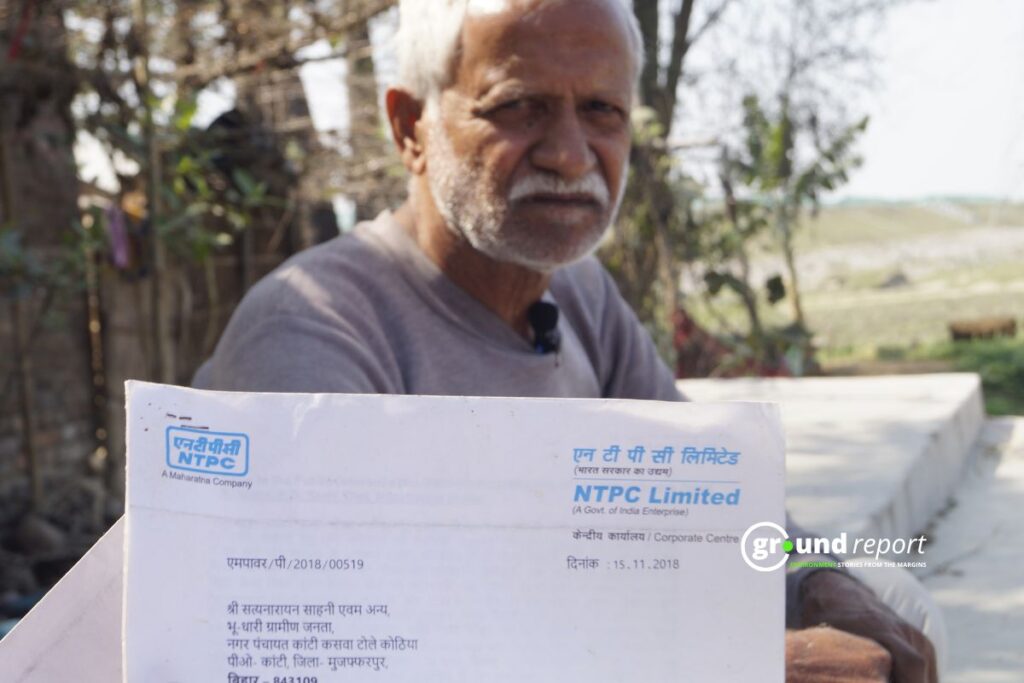
Satyanarayan Saini, a 70-year-old white-beared man, is cynical and stoic. He said, “We have now become accustomed to living in pain. Every time the media comes, we tell our story, and nothing happens after that.” He brought all the documents, petitions, and letters from NTPC. He showed them as evidence of his long-fought fight against the government and system. “Such a plight would not have happened even during British rule,” he said.
He petitioned the National Green Tribunal Principal Bench, New Delhi, in 2019 against the Kanti Bijlee Utpadan Nigam Limited (KBUNL), which runs the Kanti Thermal Power Plant. The report submitted by the state pollution control board (PCB) found “deficiencies in handling of the fly ash.” In reply, KBUNL admitted to the violations and deficiencies. Though the impact on soil or on animals couldn’t be established. In July 2020, the court disposed of the case and directed the State PCB to oversee the implementation of necessary measures and collect a ₹5 crore performance bank guarantee from KBUNL.
Two years later, in 2022, Dinesh Prasad Chaurasia and other residents of Narsanda Village sent a letter petition to the NGT. The Principal Bench took notice and filed a suo moto case. A Joint Committee visited the area and filed the report in July 2022. The report found that,
- fly-ash dyke were not fenced;
- paved roads were not constructed due to which dust was getting suspended in air due to vehicular movement;
- dry fly-ash were being loaded on trucks whereas wet fly-ash is to be loaded to prevent emission;
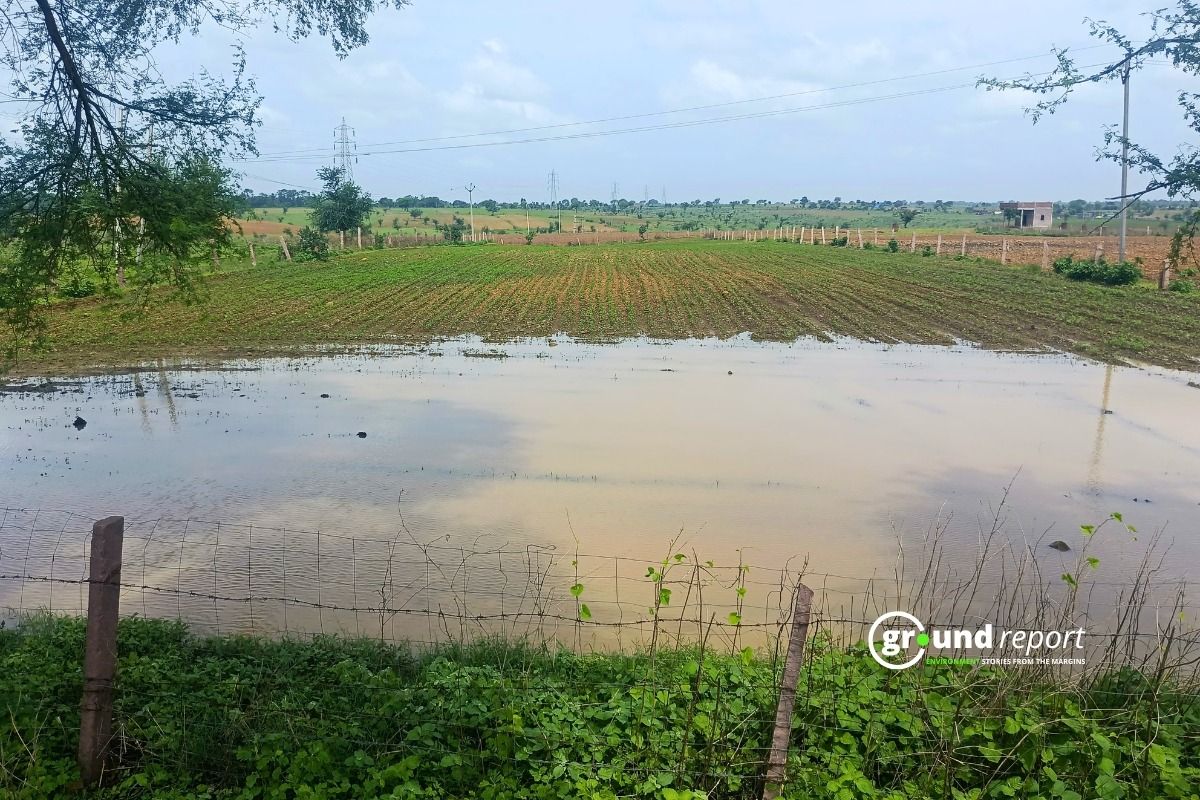
- the old canal lying adjoining to the dyke has become defunct due to which during rainy season the storm water gets stagnated and
- Consequently, the storm water, mixed with fly-ash enters into adjoining private lands of the farmers.
This reflected non-compliance with the 2020 NGT orders. Soon after the hearing in the NGT, the work started. In September 2022, the records state that various remedial measures were in progress, like fencing, water sprinklers, sewage treatment plants, silos to store ash (2×900 tonnes capacity), sapling plantation, etc.
This raises several questions about the implementation or enforcement of NGT judgments. But the major question is about the soil health of decades of fly-ash exposure. The District Agriculture Department submitted a report in January 2023, stating that their tests on pH and other micronutrients didn’t show any change in soil health. For the report, the samples were collected from “the alleged affected and unaffected agricultural lands.” The report stated, “the photosynthesis as well as transpiration capacity of plants might have been adversely affected,” due to a thick layer of coal fly-ash.
“Soil fertility cannot be reliably assessed through basic parameters like NPK and pH alone – especially when the exposure involves industrial byproducts like fly ash,” said Dharmesh Shah, an independent policy analyst. “Fly ash is a known source of toxic heavy metals like arsenic, lead, mercury, and cadmium that can alter soil chemistry, suppress microbial function, and impair long-term crop fertility,” he added.
The Assistant Director, Chemical, Agriculture Office, Kunal Singh, said that their department doesn’t test for heavy metals. This has to be done elsewhere. He agreed that fly-ash would have an impact on soil, and we have tests for the right contaminations. “Without transparent methods and toxicological profiling, the claim of ‘no degradation’ is scientifically inadequate,” Shah said.
On further probing, the District Agriculture Officer, Sri Sudhir Kumar, said that he does not know whether the new measures taken by the NTPC to solve the fly ash problem have benefited the farmers. The impact of fly-ash isn’t limited to farmers in the region; fishermen are also affected.
“When we feed to catch fish, ash sticks to it, which the fish do not eat. Because of this, the fish catch, which used to weigh 3-4 kg earlier, now weighs only 250-300 grams,” Shambhu Kumar Saini of the fisher community said. The ash has reduced the pond’s depth and the growth of fish. At least 10-12 people in the village have left the fish farming because there is no profit left in it, Shambhu explained.
On the contrary, the report from the fishery department said, “The ponds of the fishery are 1.0 KM away from the said Fly-ash Dykes [man-made walls or barriers that hold back fly ash]. So, there is no damage to fisheries due to the emission of fly ash.” Even if not disposed of directly, fly ash through the air can bioaccumulate in fish tissue. This could lead to chronic ingestion damaging human kidneys and the nervous system.
The court disposed of the 2022 case in August 2024, following a largely favorable report from the joint committee. The court held the thermal power plant responsible for previously violating the conditions for environmental clearance.
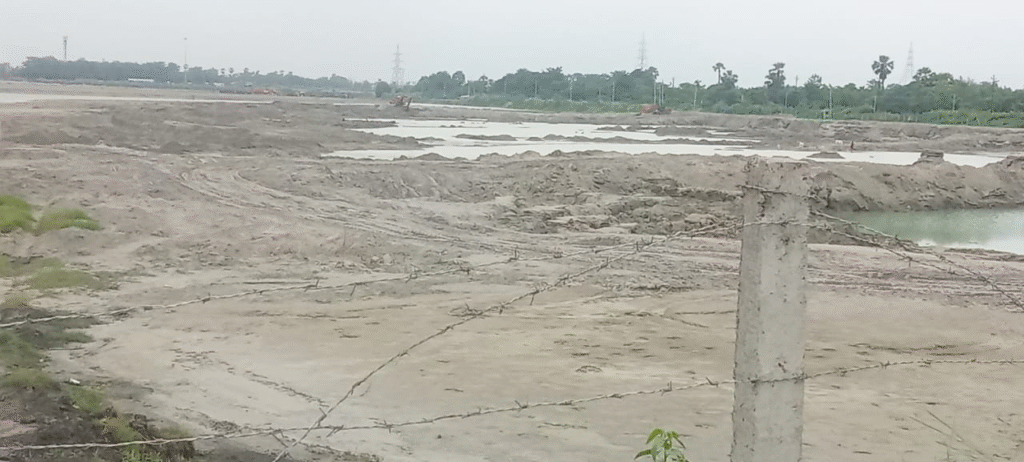
But has life for the villagers changed? As Kushwaha said, “not much.” The plant authorities have started constructing a ten-foot wall. Though the fly-ash remains in the same spot. There is barbed wire fencing around the pits. Every day, trucks and tractors carry a portion of it out of the big remains. Against the joint committees’ observation, the leaves still have the fly-ash. It still floats and settles on the food they eat. The rains come as respite. Though “when the wind blows, it is not possible to stop fly ash with a ten-foot wall”, said Kushwaha.
Coal Plants Have To Dispose of Fly Ash 100%. But, Are They?
The 2021 notification of the Union Ministry of Environment, Forest, and Climate Change, asks coal power plants to dispose of 100% of fly ash. Several plants have failed to comply with the regulations. The ministry has regularly extended the deadline, and the last being December 2024.
As per the same notification, several thermal power plants have planned how to use their fly ash generated in the process.
In the first half of the 2022–23 fiscal year, the plant reported a fly ash utilization rate of 156 percent, according to a March 2023 report by the Central Electricity Authority. The figure reflects not only the use of all the ash produced during that period but also the use of stockpiles. Most of the material went into highway projects and served as a substitute for cement in concrete.
Report on Fly Ash Generation at Coal / Lignite-Based Thermal Power Stations and Its Utilisation in the Country for the 1st Half of the Year 2022–2023 (April 2022 to September 2022) Central Electricity Authority, March 2023
| Field | Value |
| Installed Capacity (MW) | 390 |
| Coal Consumed (MT) | 0.9243 |
| Ash Content of Coal (%) | 38.05 |
| Fly Ash Generation (MT) | 0.3517 |
| Fly Ash Utilisation (MT) | 0.5512 |
| Percentage Utilisation (1st Half 2022-23) | 156.75 |
| Percentage Utilisation (1st Half 2021-22) | 134.73 |
| In the making of Fly Ash-based Bricks / Blocks / Tiles, etc. (MT) | 0.0226 |
| In the Manufacture of Portland Pozzolana Cement (MT) | 0.0000 |
| In the Construction of Highways & Roads, including Flyovers (MT) | 0.4832 |
| Part replacement of Cement in Concrete (MT) | 0.0400 |
| In the Hydro Power Sector in RCC Dam Construction (MT) | 0.0000 |
| In the Reclamation of Low-Lying Area (MT) | 0.0000 |
| In Mine filling (MT) | 0.0000 |
| In the Agriculture / Waste Land Development (MT) | 0.0000 |
| Others (MT) | 0.0055 |
Though, as per the final judgment document, approx 50% of the fly ash was in the 2023-24 year, and 7,21,564 MT remains unused.
| Particulars | Quantity Generated (Metric Tonnes) | Quantity Utilized | Balance Quantity |
| Current ash generation during April 2023 to March 2024 | 8,50,171 MT | ||
| Ash stocked at the beginning of the period, April 2023 to March 2024 | 8,96,393 MT | 10,25,200 MT | 7,21,564 MT |
| Legacy Ash (Ash Pond No. 1) under reclamation | 0 | 0 | 0 |
| Total | 17,46,564 MT | 10,25,200 MT | 7,21,564 MT |
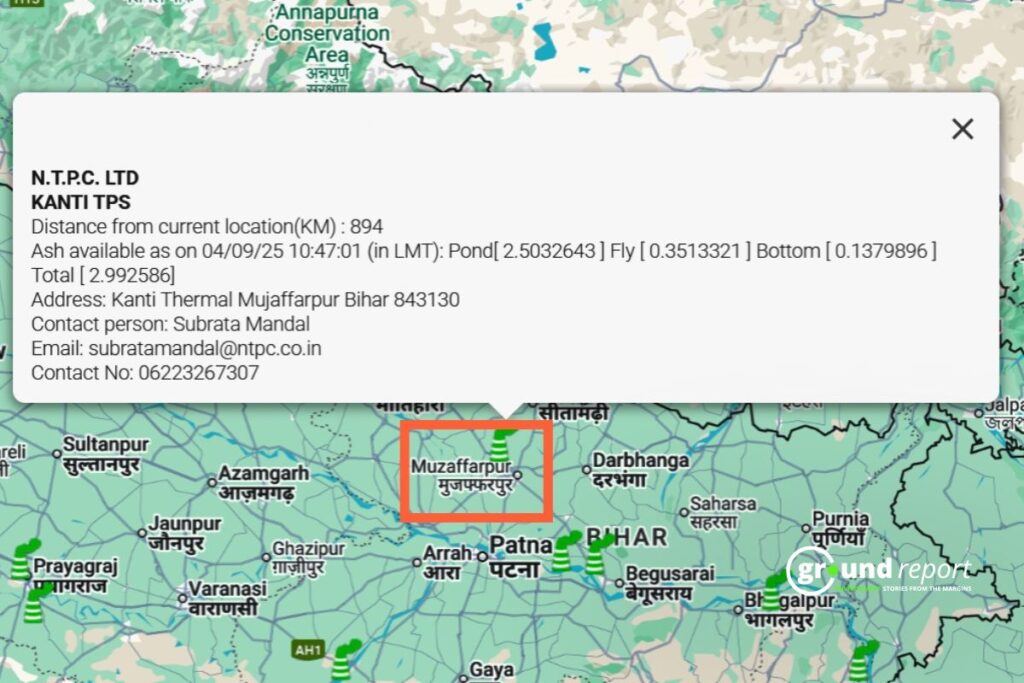
The utilisation is made public through the Ash Track App and the website. We couldn’t find the app, neither on the App Store nor on Google Play Store. Though the website showed this.
| Field | Details |
| Plant Name | N.T.P.C. LTD KANTI TPS |
| Ash Available (as on 04/09/25 10:47:01) | |
| Pond Ash (LMT) | 2.5032643 |
| Fly Ash (LMT) | 0.3513321 |
| Bottom Ash (LMT) | 0.1379896 |
| Total (LMT) | 2.992586 |
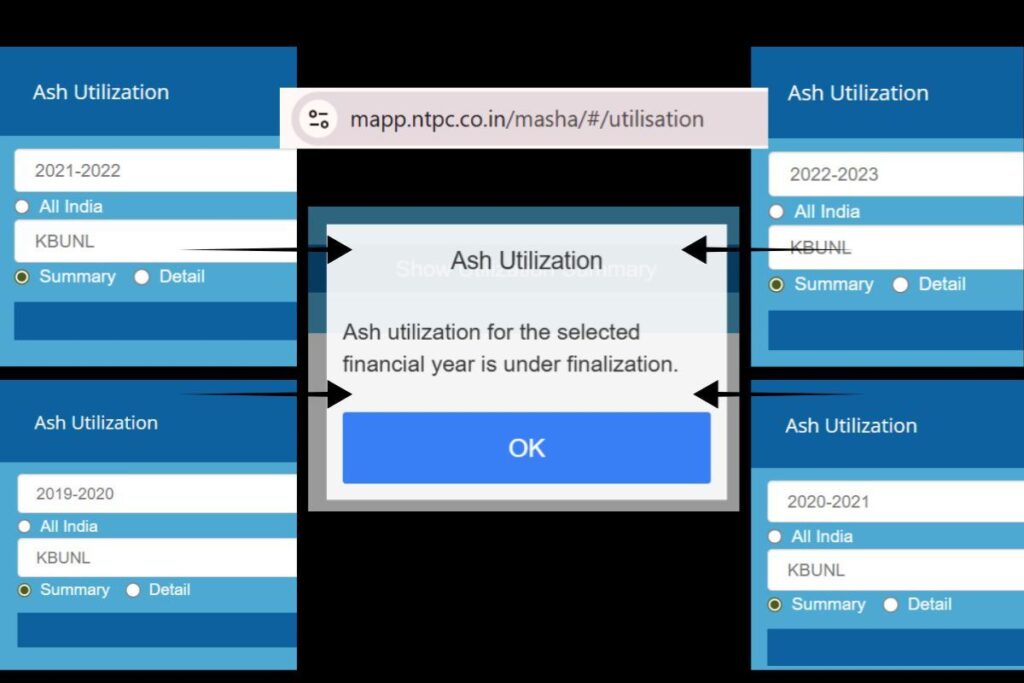
For other financial years, the data was under finalization. We reached out to the NTPC representatives for comments on the same and have the plant’s fly ash utilisation reports. We will update the report as per the response. We have filed an RTI for the same. It has been almost a month. We will update the report as and when we get a response.
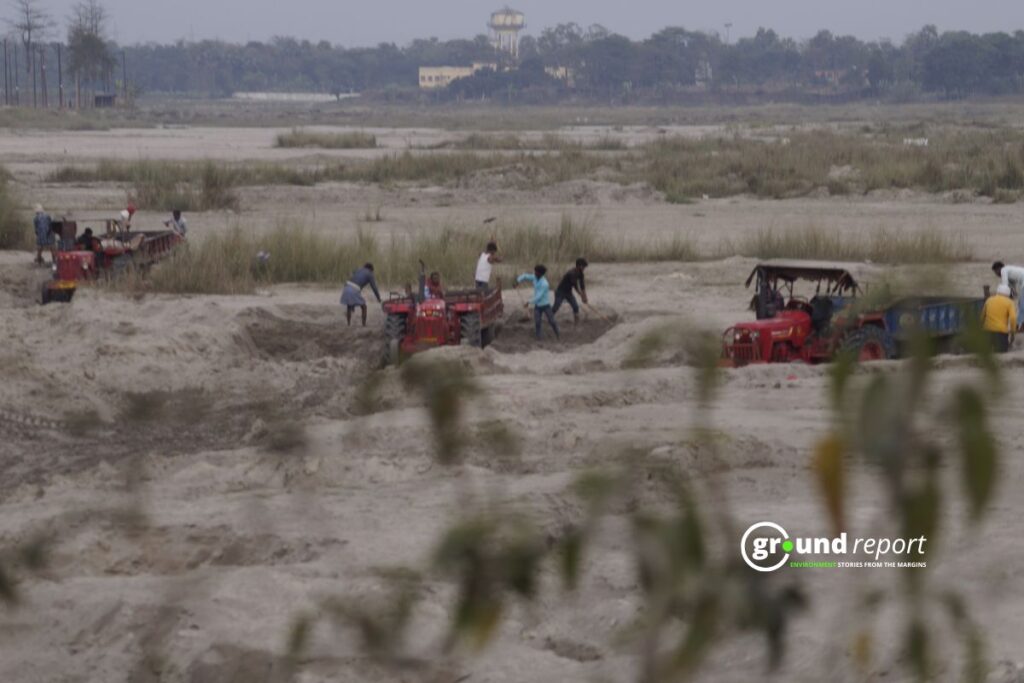
While the fly ash brick industry and related products in Muzzafapur have grown in recent years, large mounds still lie unattended. Villagers arrive with tractors to load the ash, likely for supply to nearby factories. Yet, much of it remains exposed. Children play near these dusty mounds, disturbing the surface and releasing more fine particles into the air. However, concerns remain about the long-term health impacts of such use, as highlighted earlier. How safe is fly ash when embedded in construction materials like bricks or cement? And how economically viable is its reuse?
Those questions float in and out of the conversations. The fly ash floats too, invisibly, a persistent health hazard in plain sight.
Pallav Jain Contributed Reporting
This article was originally published in Main Media and is republished here on Ground Report.
Keep Reading
Small Wild Cats in Big Trouble: India’s First National Report Released
He Left the City to Farm, But Tigers Made the Fields His Biggest Risk
Stay connected with Ground Report for underreported environmental stories.
Follow us on X, Instagram, and Facebook; share your thoughts at greport2018@gmail.com; subscribe to our weekly newsletter for deep dives from the margins; join our WhatsApp community for real-time updates; and catch our video reports on YouTube.
Your support amplifies voices too often overlooked, thank you for being part of the movement.