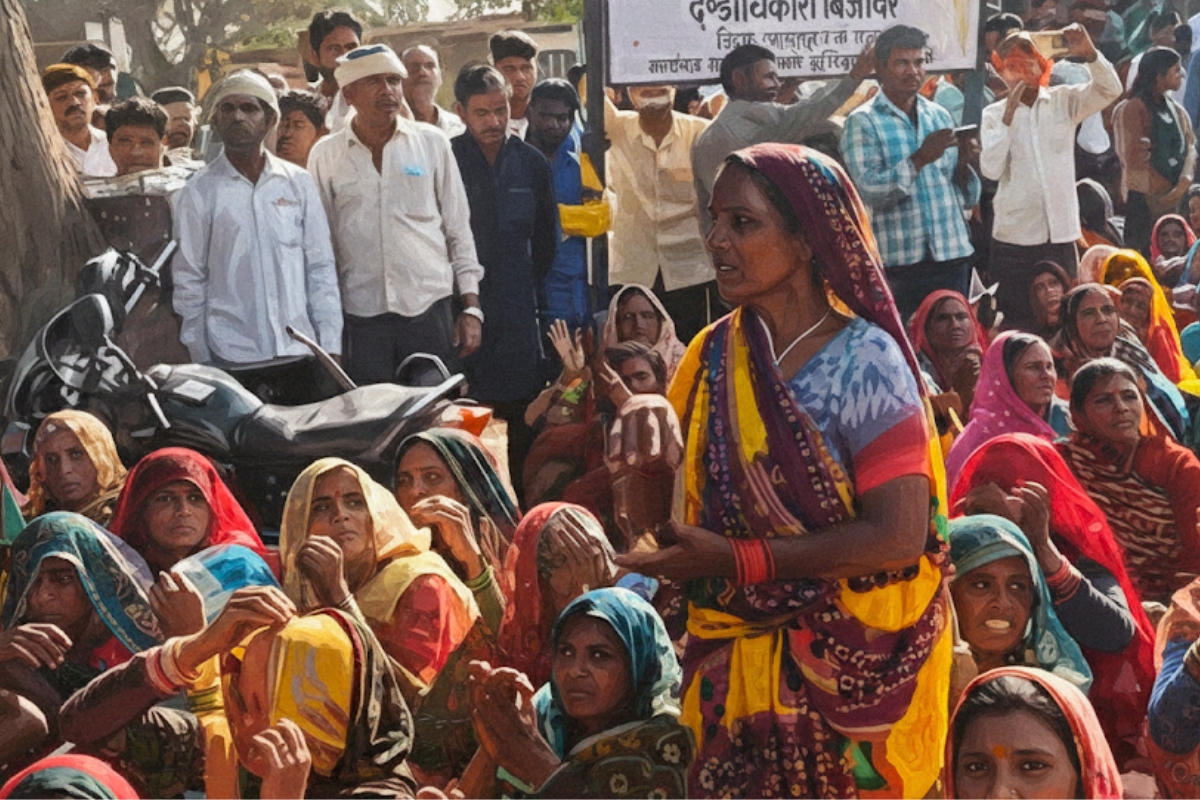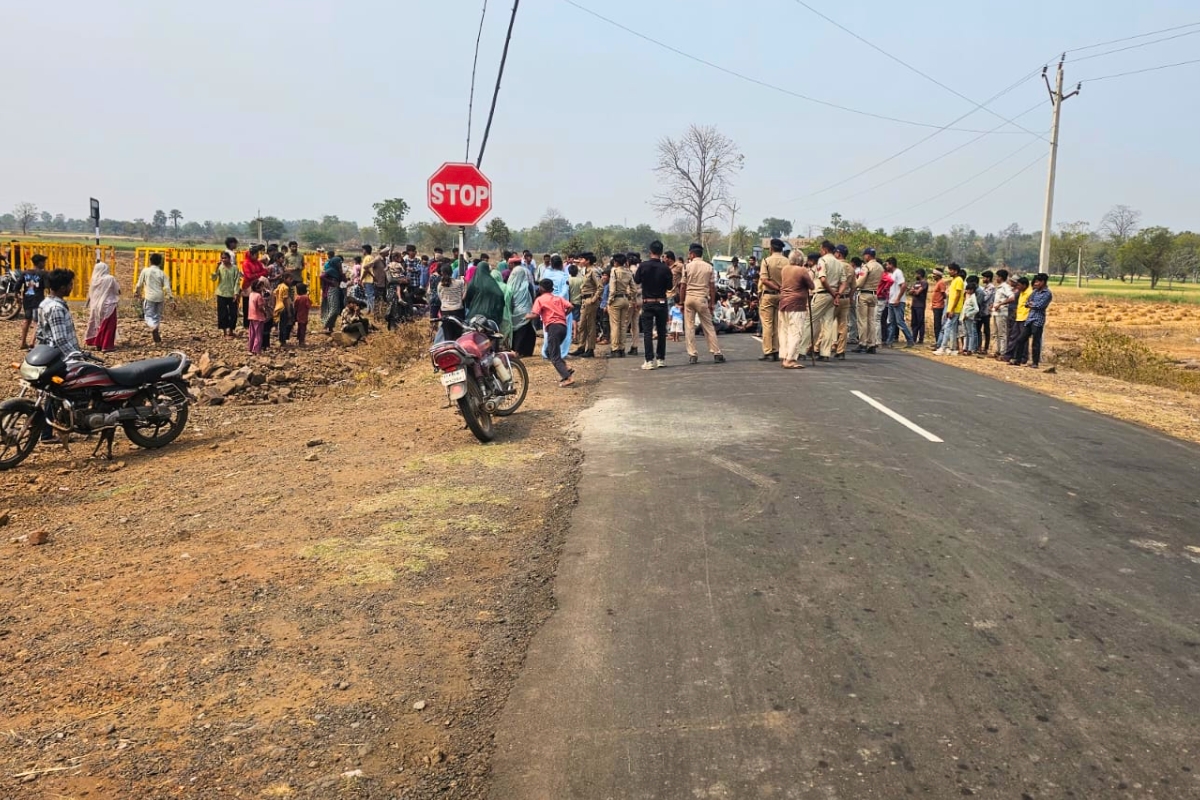
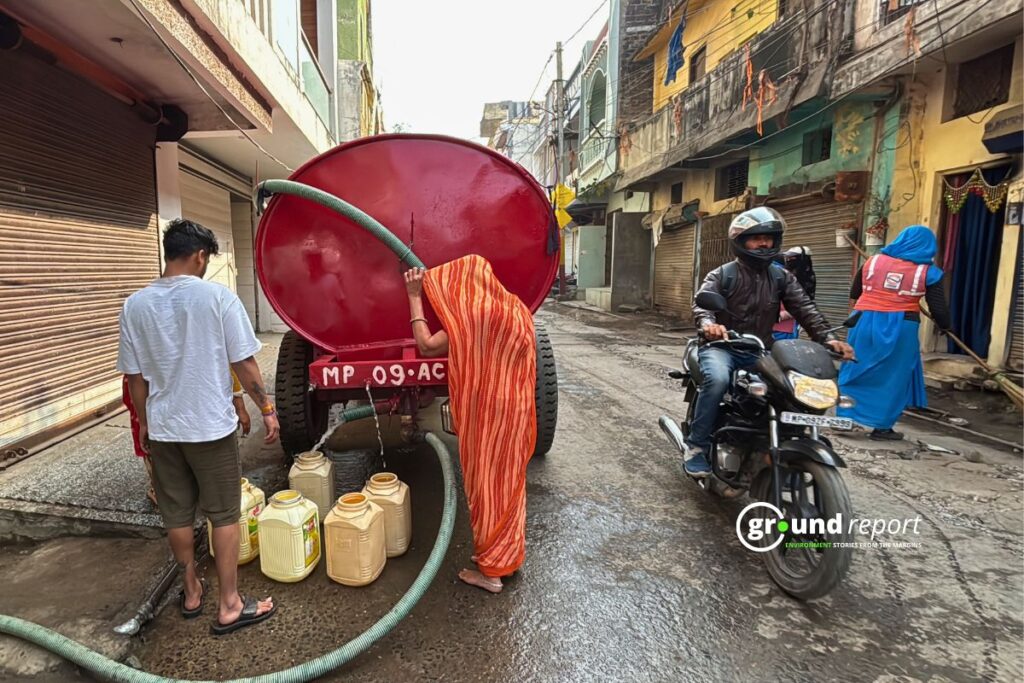
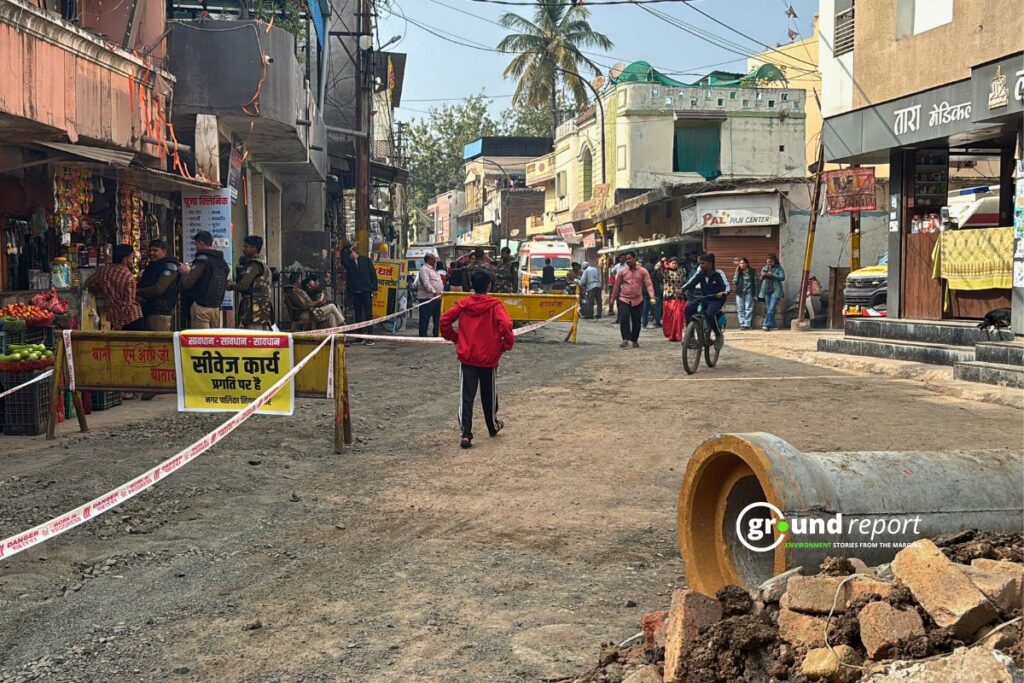
After deaths linked to drinking contaminated water in Indore, water tankers are now lined up in the narrow lanes of Bhagirathpura, in the central parts of Indore. One tanker after another moves through the area as residents fill water in everything from buckets to large containers. The gravity of the situation is evident from the heavy police deployment outside the lane.
Meanwhile, municipal corporation employees are moving through the lanes, announcing through loudspeakers: “Water will be released in the Narmada pipeline at 6 pm. Do not use it. The water is being released for testing purposes.”
Over the past two weeks, around 446 people fell ill after consuming water supplied through the pipeline. Of them, 396 were discharged, while 10 remained admitted in the ICU. Sunita Chanderia was also hospitalized for three days and has now returned home. She says that water generally used to come clean, but for the past 15 days, it has become foul-smelling and discoloured.
Media reports have claimed 20 deaths. However, Chief Minister Dr. Mohan Yadav avoided a clear figure. He said that his government does not want to get into numbers and that even a single death is distressing. According to information from the Collector’s Office, families of 18 deceased persons have received compensation.
Following the incident, local MLA and state Cabinet Minister Kailash Vijayvargiya visited the area, gathered information from officials, and spoke with residents. Addressing the media on January 1, he said that sewage water mixed with the drinking water. He suspected that a leak in the pipeline near a toilet next to the police post caused the contamination.
In Bhagirathpura, illnesses, deaths, and miscarriages caused by contaminated water have exposed deep flaws in Indore’s water and sewage system. Despite crores spent on schemes and despite past disasters, infrastructure neglect continues, at the cost of ordinary people’s health and lives.
“Mother Lost Her Life to Dirty Water”
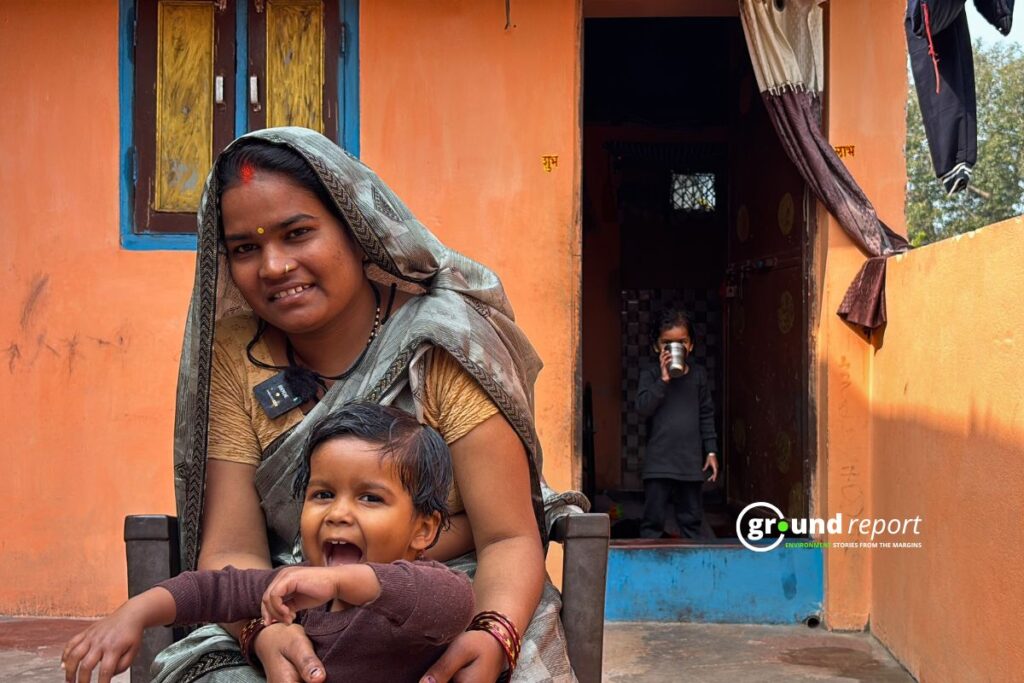
Kishore Dhruvkar lives with his family in a rented house on the first floor of a building at the main entrance of the Bhagirath Pura settlement. Water from the government pipeline was supplied every two days. The family would filter it, add alum, or boil it before drinking.
“But my mother had a habit of drinking only Narmada ji’s water,” Kishore says.
On December 23, his mother, Geeta Bai Dhruvkar, went to work at the Ready Made Complex around 10–11 am, as usual. She suddenly complained of diarrhoea. By evening, her condition worsened, and by night, it became critical. The next morning, December 24, she was admitted to the emergency ward of Maharaja Yashwantrao Hospital (MY Hospital). Her condition did not improve, and on January 1, 2026, Geeta Bai Dhruvkar died.
Aarti, Who Lost Her Baby
Aarti Kori (32) was about three months pregnant when her health deteriorated on December 23. She began suffering from vomiting and diarrhoea. Her husband, Ranjit Kori, took her to a nearby small hospital, but the doctor refused treatment because of her pregnancy. After spending the entire day searching for care, they finally received treatment at a private hospital near Mari Mata Chowraha.
After medication, her condition improved slightly. However, three days later, she started bleeding. Sonography revealed that the foetus had not survived. While her physical health recovered, the emotional trauma remains. “ I was three months pregnant, of course, it will hurt,” she says.
Narmada Water and Indore
According to Indore’s Environment Plan, five rivers flow through the district across a total length of 348 km. The city also depends on 60 lakes and ponds and 1,51,939 borewells for water.
In 1977, Indore began receiving water from the Narmada River through a single pipeline. Today, up to 440 million litres per day (MLD) is supplied from this source. However, a Smart City document states that only 360 MLD is actually drawn. The water is treated at a plant in Jalud, located 70 km from the city.
According to the Delhi-based Centre for Science and Environment (CSE), the plant’s capacity is only 182 MLD. CSE notes that high sand content in the Narmada near the intake well causes persistent silt-removal problems and severe wear and tear of pumps.
Social activist Kishore Kodwani, who works on urban issues, believes the Narmada water project has failed. “The project promised 24×7 water supply, but in many areas, water comes only once every two days,” he says.
Is the City Not Learning from Past Incidents?
Kodwani links three major incidents in Indore’s recent history. Around 28 years ago, a corpse was found in a water tank near Subhash Nagar Chowk, highlighting the lack of security around water infrastructure. On March 31, 2023, 36 people died when a stepwell collapsed in Sneh Nagar. According to Kodwani, methane gas had accumulated due to sewage connections.
He says that the incident should have prompted a thorough review of the city’s sewage system. “Because that didn’t happen, a third incident has now occurred in Bhagirath Pura,” he says.
Local corporator Kamal Waghela claims he had requested the municipal corporation in July 2022 to replace old drinking water pipelines in the area. Journalist Devendra Meena reported that an order was issued the same month to lay new pipelines at a cost of ₹2.4 crore. Even after three and a half years, the work remains incomplete.
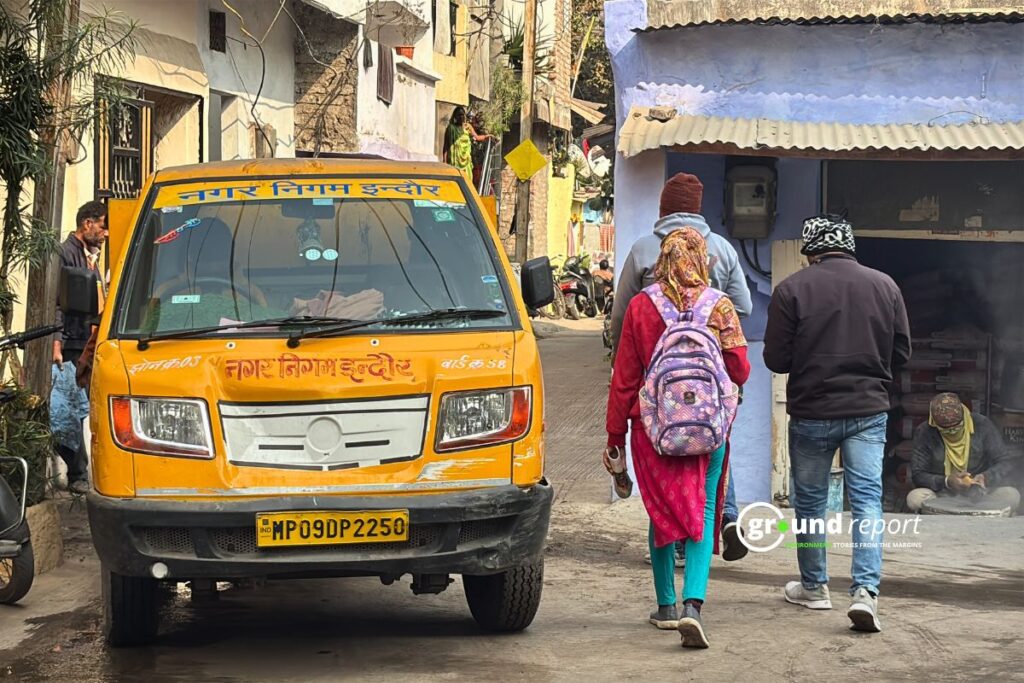
Sewage can enter drinking water pipelines only when both systems are damaged. A document from the Indore Smart City website acknowledges the poor condition of the city’s water distribution network:
“The distribution network is in poor condition as operational zones have not been properly designed. Pipelines have been laid haphazardly. While ESRs and new distribution networks have been built, integration with the existing system has not been completed.”
RTI information from the municipal corporation’s sewerage planning branch shows that ₹589 crore was spent on sewage management between 2008 and 2022.
Yet, in 2025, Bhagirathpura still lacks a completed sewerage system and new drinking water pipelines.
Kodwani says the city focuses on covering up incidents rather than learning from them. “Indore will have to correct its data first and then learn from it to plan better,” he says.
Dirty Water Still Flowing
Residents continue to complain about the dirty water. In several areas, water tankers have not reached, forcing people to depend on borewell water.
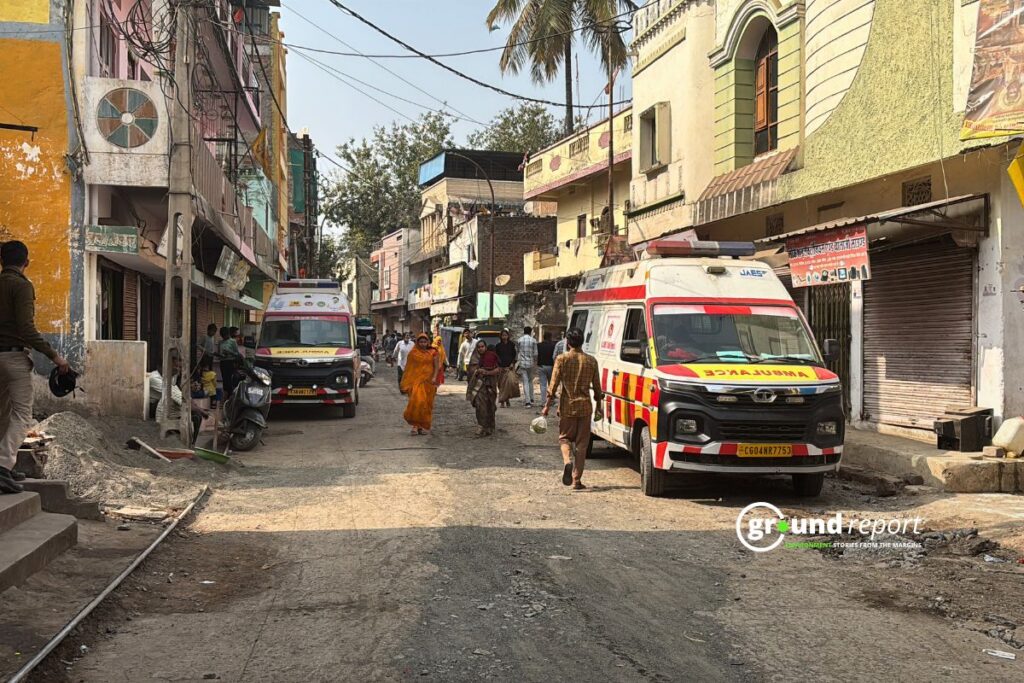
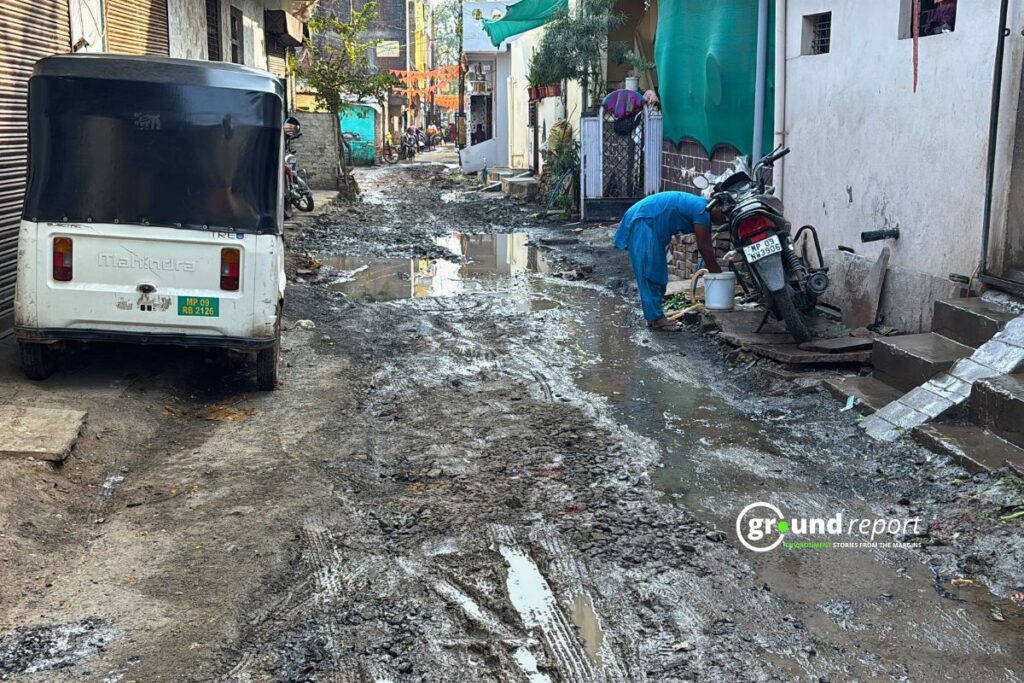
Aman Kashyap, who lives in Chirag Mohalla in Bhagirathpura, shows his mud-covered lane. Muddy, kaccha roads, laced with sewage, the edge of a burst water pipeline. Kashyap says the pipeline burst two months ago and has not been repaired.
After the incident, the state government announced that it would launch a Swachh Jal Abhiyan on January 10. At a meeting on Friday, January 9, officials said they would resume tanker-based water supply from January 13. They also said they would seal all government borewells connected to the main pipeline to prevent contamination.
Officials also announced that electronic water analysers would be installed on all 105 overhead tanks to monitor water supply and groundwater quality across Indore.
We contacted Chief Medical Officer Madhav Hasani for an official response, but he declined to comment. We were also unable to reach Mayor Pushyamitra Bhargav and Collector Shivam Verma. This story will be updated once official responses are received.
Banner Image – Kishore Dhruvkar lost his mother in the accident. Photo: Shishir Agarwal/Ground Report
Support us to keep independent environmental journalism alive in India.
Keep Reading
Life near Achan landfill: How Srinagar’s waste crisis is endangering homes, health
Two farmers die amid fertiliser queues in Madhya Pradesh
Stay connected with Ground Report for underreported environmental stories.