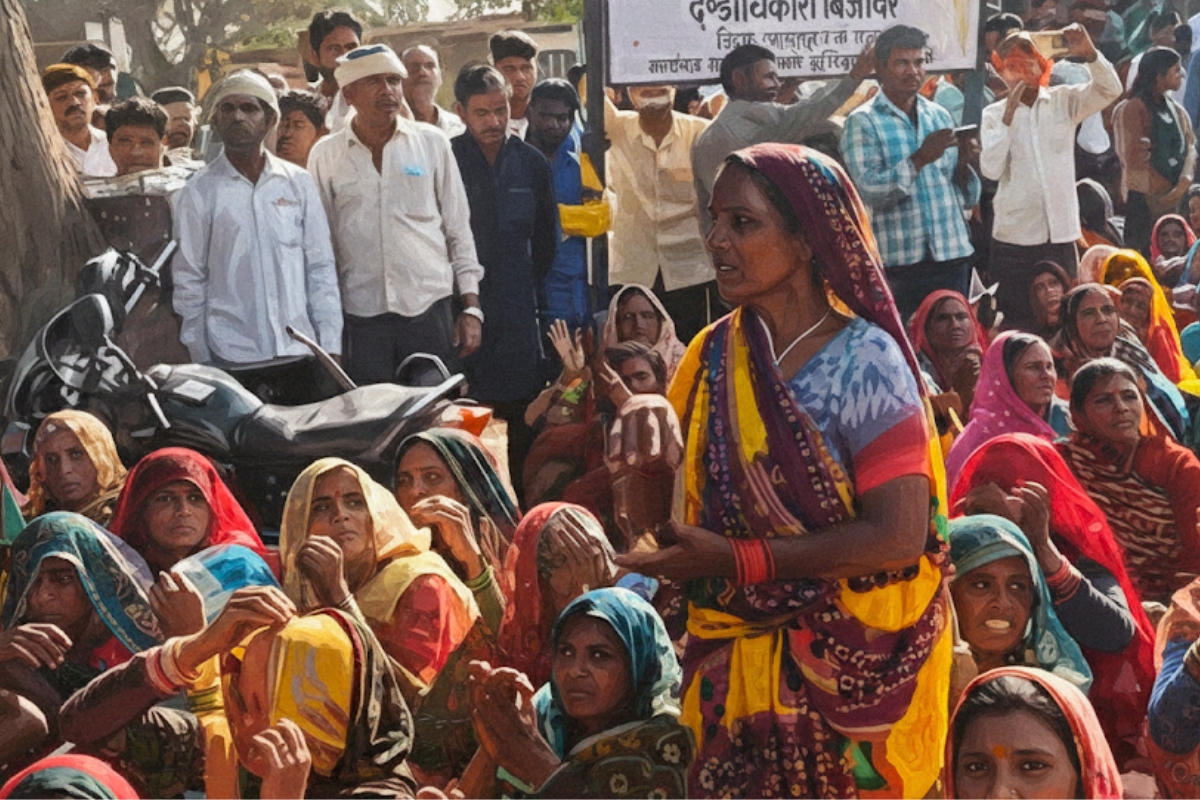
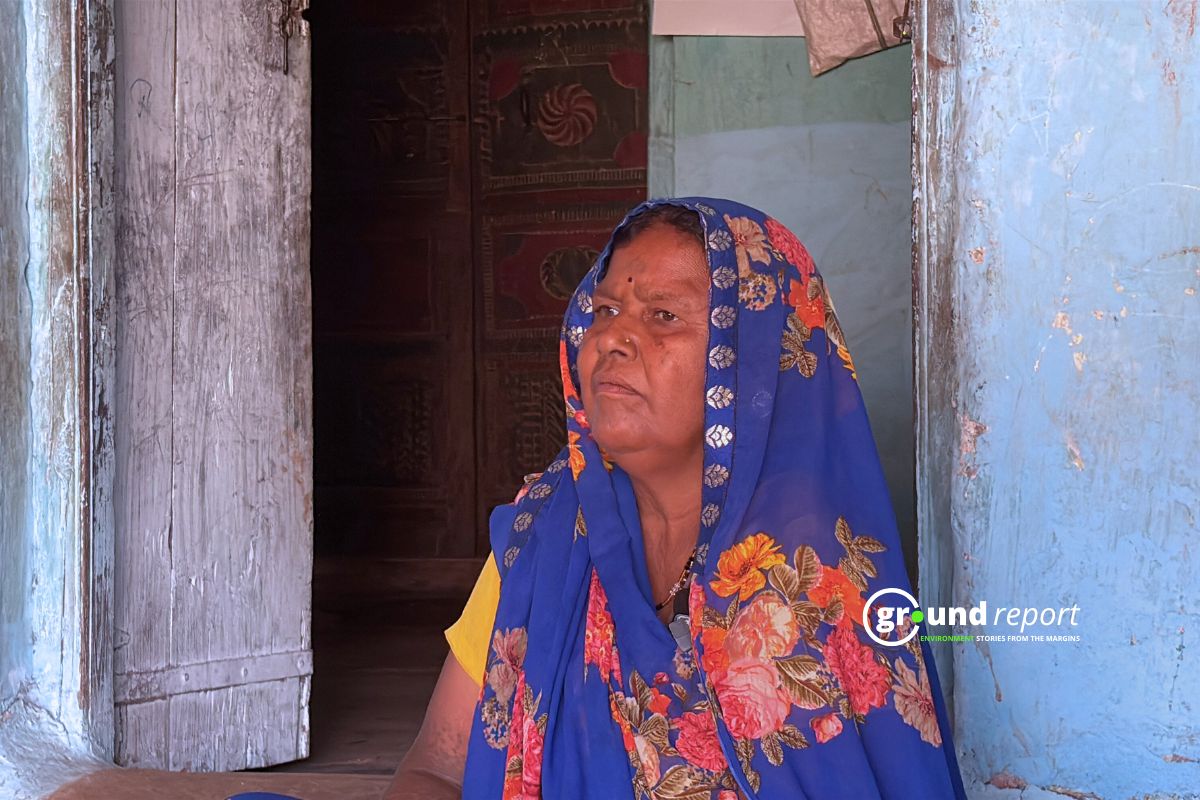
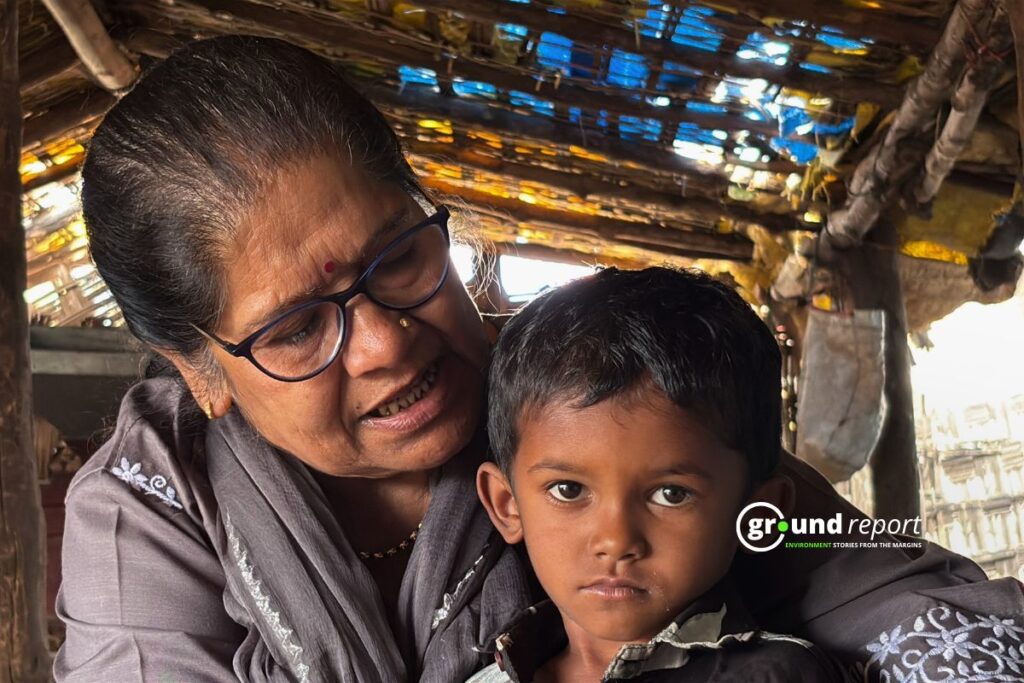
Read in Hindi| On a February afternoon in Ambada village of Khandwa district, Fulkai sits in the front courtyard of her mud house with her husband and grandson. Over the course of a long conversation, social worker Seema Prakash repeatedly addresses her as “Fulkai Maai.” Fourteen members of this Korku family share five small rooms. Yet the house feels emptier than it once did.
Three of Fulkai’s granddaughters-in-law have migrated with their husbands to the “land of bricks” and the “land of sugarcane” — brick kilns and sugarcane fields in other districts and states. For now, only one son and daughter-in-law remain at home, and they, too, leave for daily wage work each morning.
Nine years ago, in 2017, this house was rarely quiet.
Back then, Fulkai and her daughter ran a crèche. Women heading out for farm labor would leave their young children here. The two Korku women fed them, watched over them, and tried to ensure they were safe and nourished. The crèche ran for nearly three years before shutting down.
Today, Fulkai is urging the government and civil society groups to help revive it.
“Dogs snatched rotis from their hands”
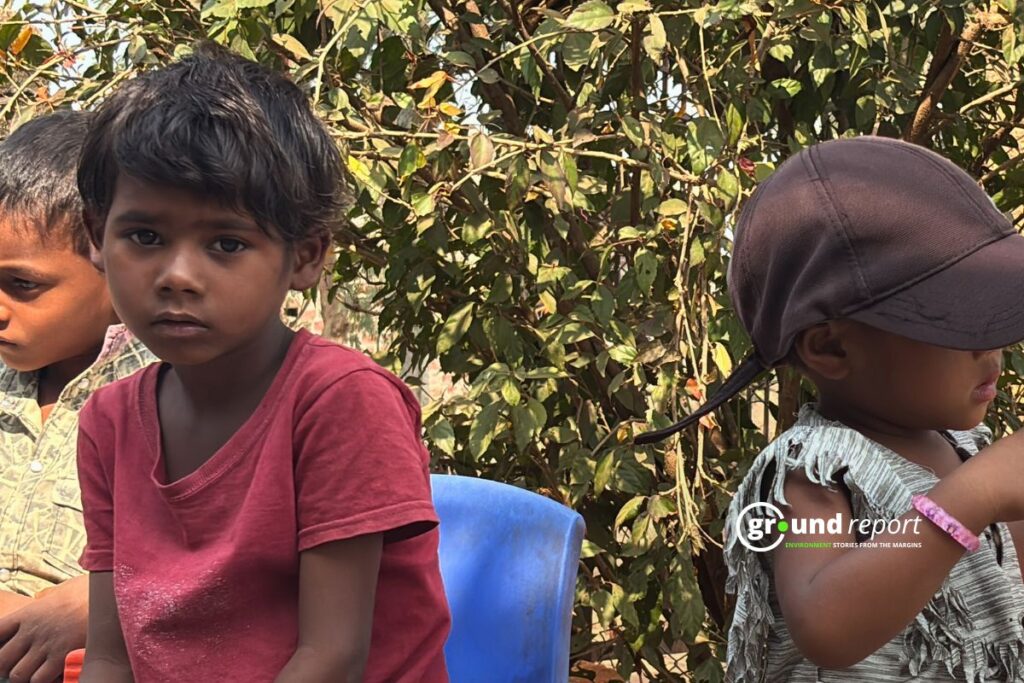
Now 57, Fulkai recalls the years between 2009 and 2018 as a time of acute malnutrition in her village and across Khalwa block. “Dogs would snatch rotis from the children’s hands. Sometimes they even bit them,” she says.
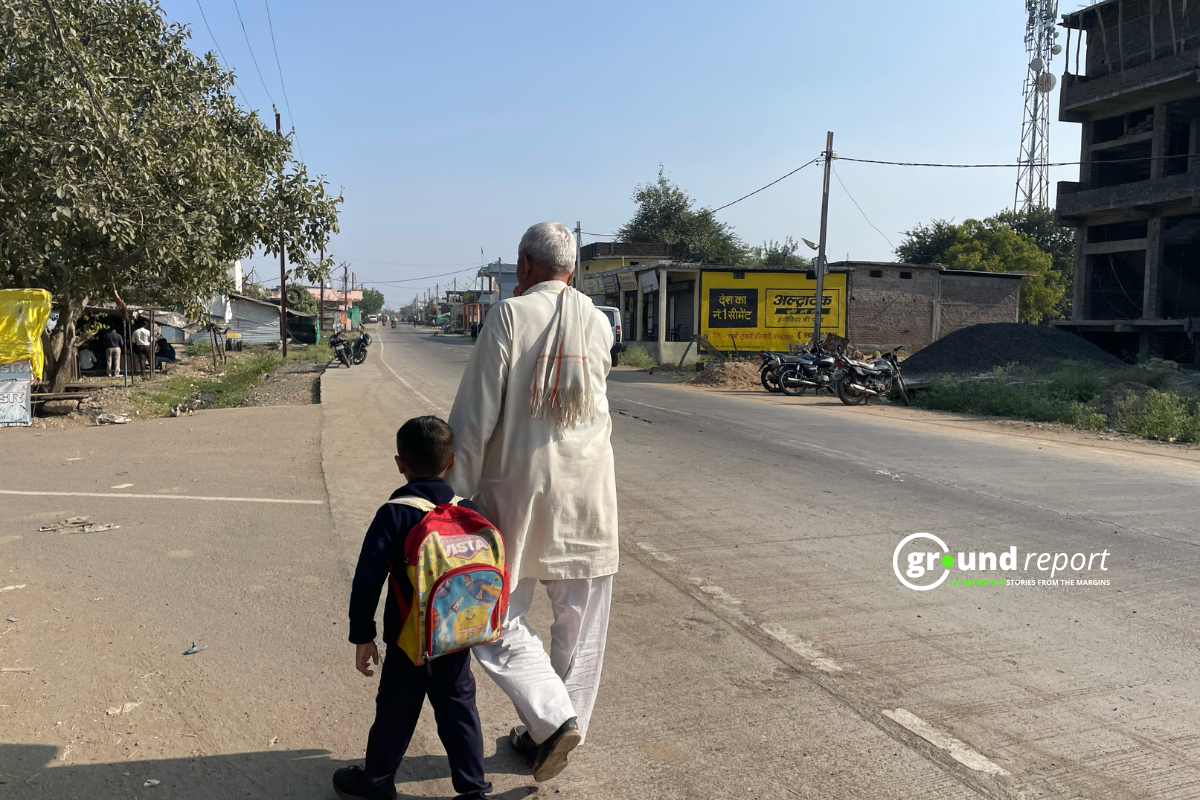
The village’s only anganwadi was about six kilometers away. Most parents could not manage the distance.
Around that time, Fulkai met Seema Prakash from Spandan Samaj Seva Samiti. Prakash encouraged her to open a crèche at home. The word was unfamiliar to Fulkai. Through Spandan’s workers, she learned that a crèche is a place where parents can leave children while they work, a safe environment offering care, supervision, and support for overall development, usually for children up to six years of age.
Initially, she refused. “I wondered how I would take responsibility for so many children,” she says. After talking to her daughter, she agreed.
Her daughter Shyamvati was only 14 then, “weak and thin,” Fulkai recalls softly. Each morning, Shyamvati went door to door persuading families to leave their children before heading to work. The crèche cared for children between six months and four years old.
According to the World Health Organization, nearly 19 million children under five globally suffer from severe acute malnutrition, leading to roughly 400,000 deaths each year. Fulkai and Shyamvati worked so Ambada’s children would not become part of such statistics.
Every day, they measured the children’s weight and height, noting the figures in a register. They provided three grain-based meals. By 6 p.m., when parents returned from the fields, they took their children home. Nutrition was tracked child by child.
For this work, Spandan paid Fulkai ₹2,000 per month initially, later increasing it to ₹5,000. Between 2014 and 2017, eight such crèches operated in Khalwa block, assisting 221 children. Each center officially enrolled 15 children, though often as many as 20 attended.
A district battling malnutrition
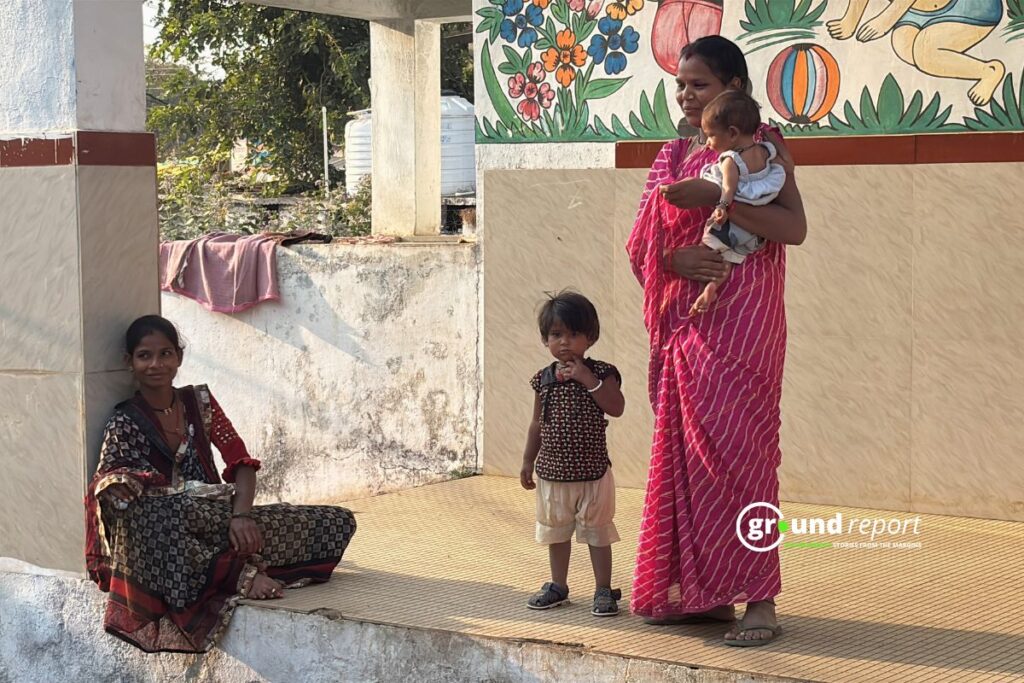
When Fulkai ran the crèche, Khandwa district was facing a severe nutrition crisis. According to the National Family Health Survey-4 (2015–16), only 1.9% of rural children aged 6–23 months who were breastfeeding received an adequate diet. Including non-breastfeeding children, the figure fell to 1.7%. In urban areas, it was 2.7%.
Nearly half (49.9%) of children under five were underweight. About 46.8% were stunted, and 23.2% were wasted. In 2016, 17 tribal children reportedly died of malnutrition in just three months.
NFHS-5 (2019–21) shows limited improvement. Only 3.5% of children aged 6–23 months in Khandwa receive an adequate diet.
Dr. Vandana Prasad of the Public Health Resource Network says crèches in tribal areas can play a crucial role in early identification and prevention of malnutrition. They also reduce the burden on working women. “Women already carry enormous responsibilities. Crèches relieve them of constant childcare while they work. That benefits their mental and physical health,” she says.
Policy shifts, shrinking centers
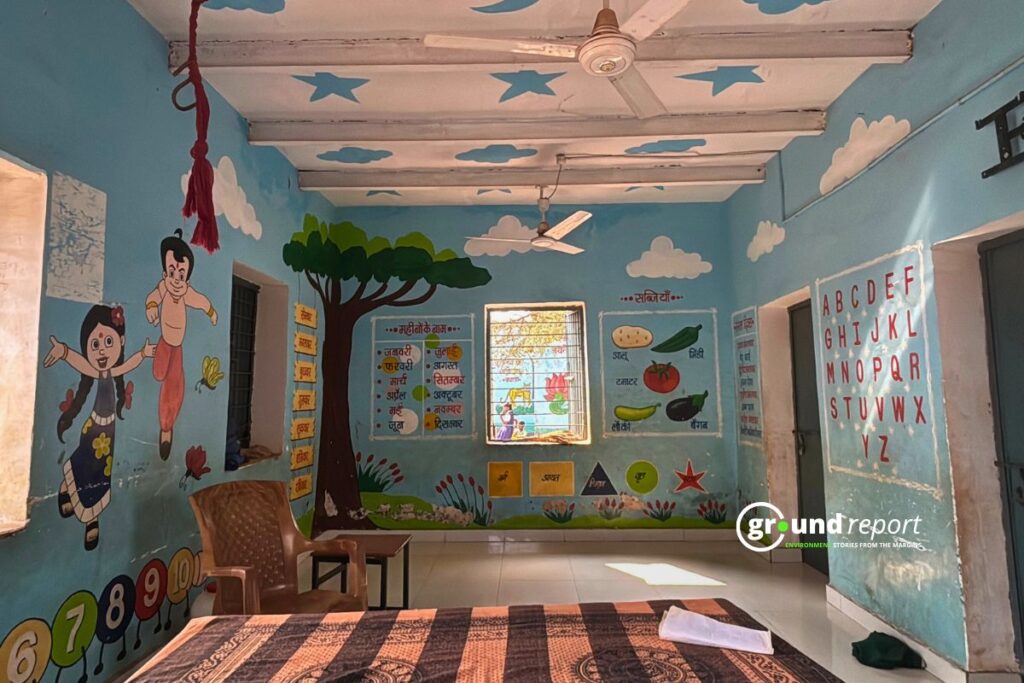
India established a National Crèche Fund in 1994. By 2003, 4,885 crèches operated nationwide, including 216 in Madhya Pradesh. Various mergers and restructurings followed. By 2015, 23,293 crèches were functioning under the Rajiv Gandhi National Crèche Scheme. But by March 2020, the number had dropped to 6,453.
In April 2022, under Mission Shakti, the scheme was renamed the Palna Yojana, aiming to integrate crèche facilities into anganwadis. The government announced plans to establish 17,000 Anganwadi-cum-Crèche Centres (AWCCs) by 2025–26. As of July 23, 2025, 14,599 had been approved, but only 2,448 were operational nationwide.
In Khandwa, District Program Officer Ratna Sharma confirms that no AWCCs are currently operational under the Palna scheme. She says the district has launched “Mission Aanchal,” encouraging community members to sponsor severely malnourished children. As of September 2025, 849 malnourished children had been identified in the district.
However, Ambada’s anganwadi remains distant, and formal crèche support is absent.
Spandan’s funding ended in 2017–18, forcing the closure of Fulkai’s center. Three years ago, Shyamvati died of tuberculosis at around 22, leaving behind a child.
Fulkai’s voice steadies as she speaks of the future. If the government or an NGO provides financial support, she says, she and her daughters-in-law are ready to restart the crèche. District officials confirm that there is currently no government grant available to run crèches independently.
Seema Prakash is exploring donor support to revive the model. But Dr. Prasad is clear: “NGOs can demonstrate models. The state must institutionalise them. This is not charity, it is a right of poor women.”
In Ambada, the courtyard waits.
This story is edited by Rajeev Tyagi.
Support Us To Sustain Independent Environmental Journalism In India.
Keep Reading
Rail Projects Halted in Kashmir After Apple Farmers Protest, Uncertainty Remains
After Indore, 22 Fall sick in Mhow Due To Drinking Contaminated Water