Akhilesh Shah has travelled the roughly 31-kilometre stretch from Basi Berdah village in Singrauli district to Sarai countless times. The road is a strip of wet concrete, pitted with potholes. On both sides stand tall sal, tendu, and teak trees, with patches of mustard fields opening up between them.
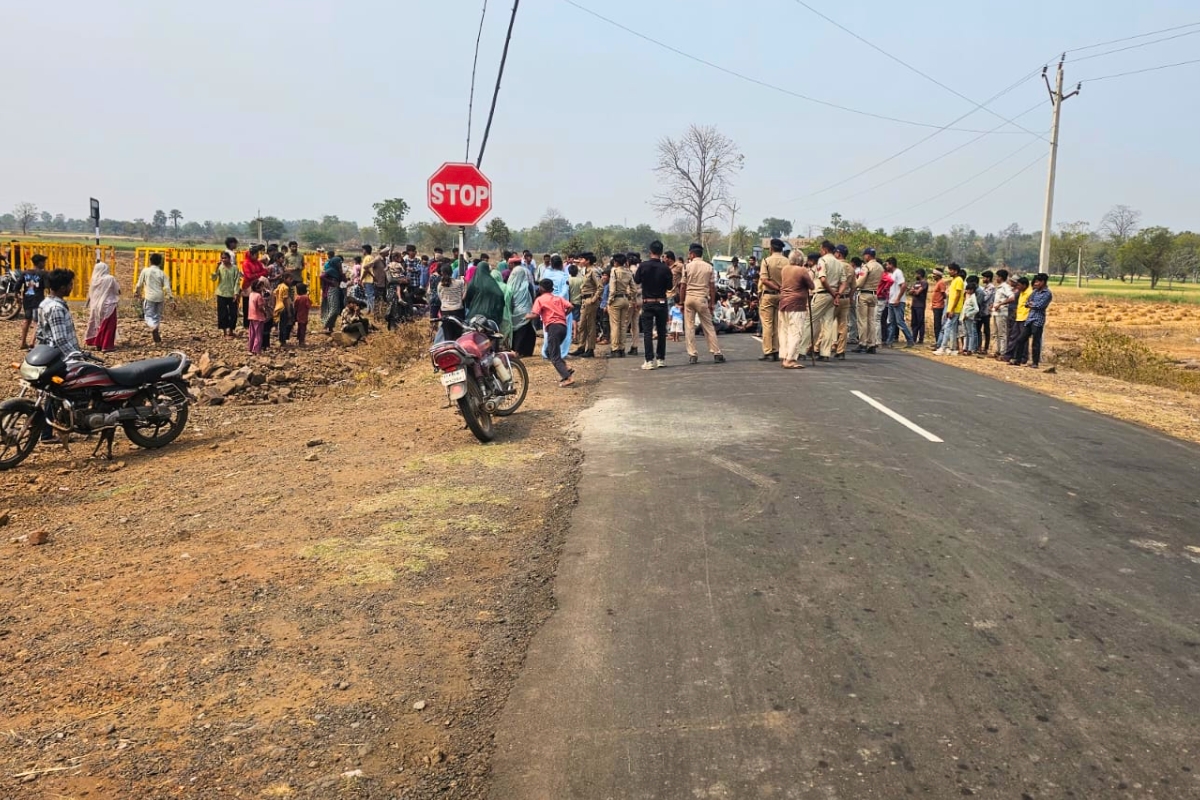
On 10 December 2025, Shah was on the same road again and had barely covered half the distance when the police stopped him.
They asked him to park his motorcycle by the roadside and, without much explanation, put him on a police bus. Shah told them he was on his way to the Sarai tehsil office for some urgent work, but it made no difference. He sat at the Sarai police station till five in the evening.
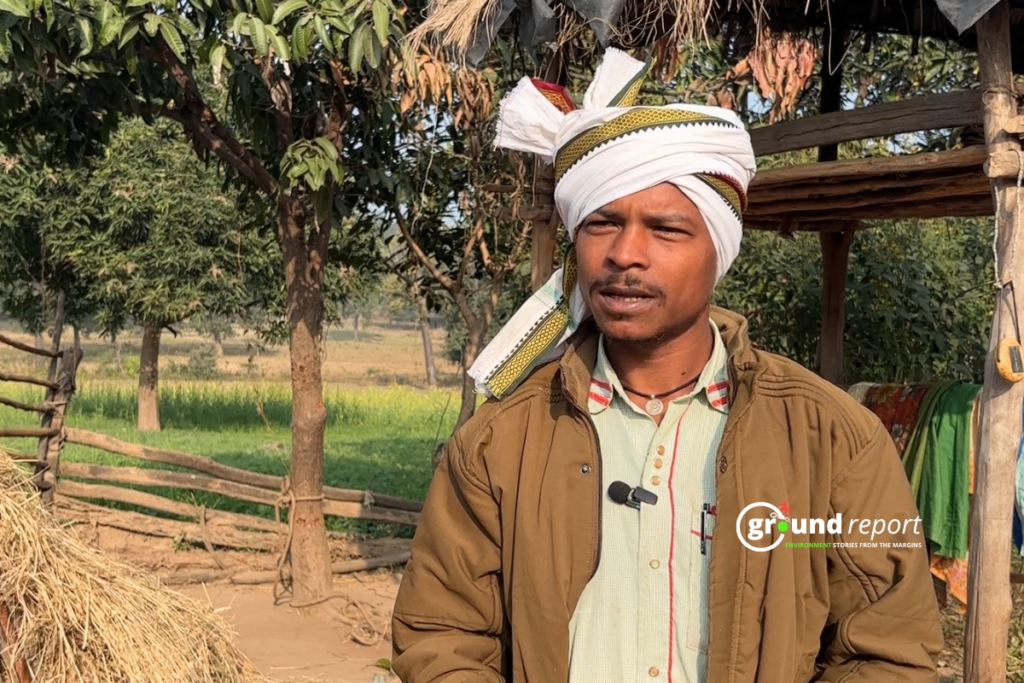
The police suspected that Shah might join the protests planned that day against tree felling for coal mining in Singrauli district.
During this time, the police took his mobile phone, saying they would return it later that evening. According to Shah, he has still not received it back.
In an hour-long conversation with us, Shah kept repeating the same slogan: “When Adani is afraid of us, it sends the police first.”
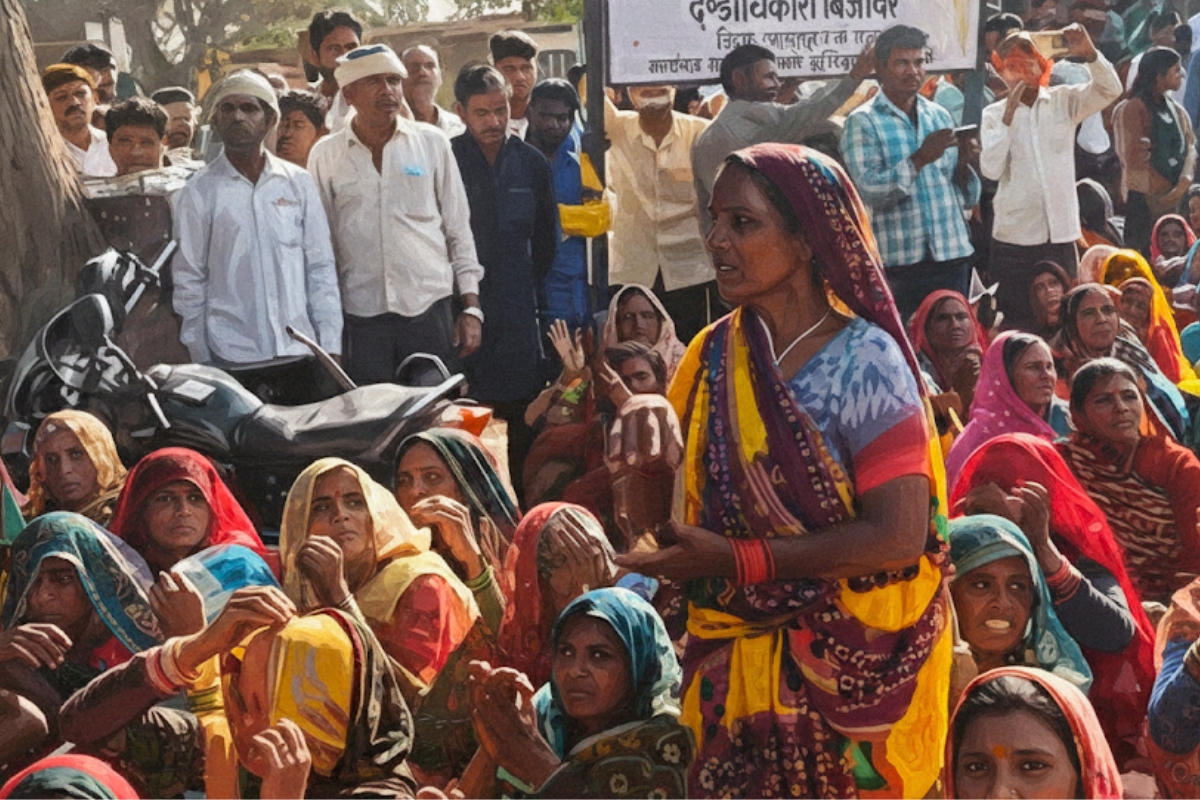
Shah was not the only one who stopped. Semaru Singh Markam from Basi Berdah, Sonmati Singh Khairwar, and her husband, Rajpal Singh Khairwar, were also restricted from travelling. All of them are important figures in the movement opposing tree felling, mining, and displacement linked to the Dhirauli coal block.
Local tribal villages have protested the proposed coal mining project in the Dhirauli coal block since the public hearing on May 4, 2022. The block was auctioned in November 2020 and allotted on 3 March 2021. Tree felling began in October 2025.
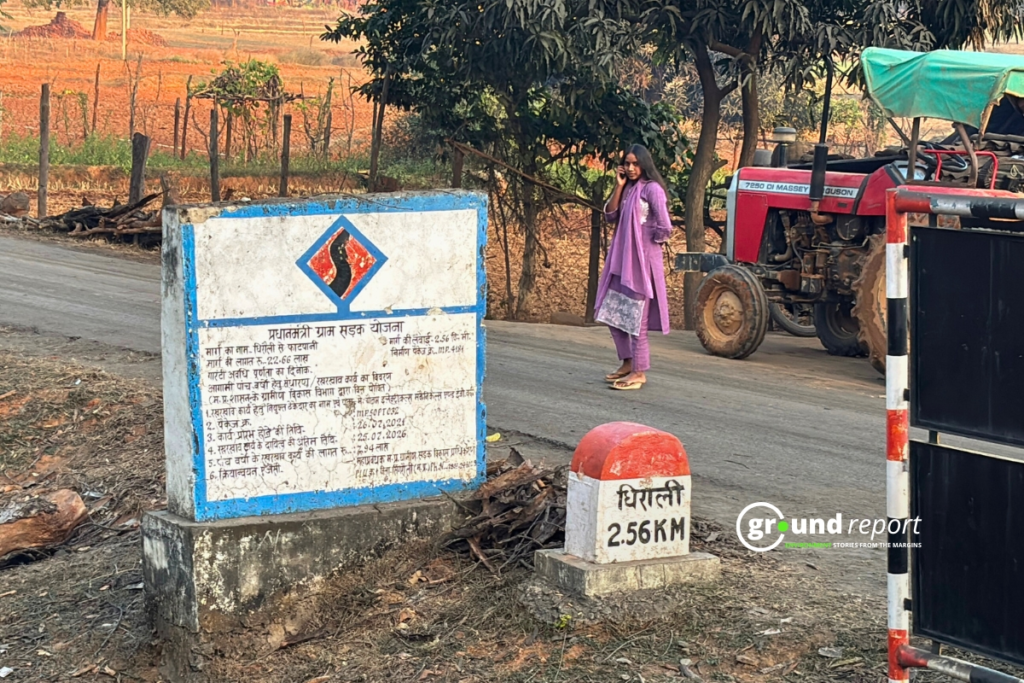
Villagers say that when tree cutting began in October, nearly 300 trees were felled in a single day. After they protested, the work stopped for a short time, but it started again on 17 November.
Now the roads leading to Dhirauli village are barricaded, and outsiders are not allowed to enter. During the protests on 10 December 2025, heavy police monitoring and restrictions made the situation more tense.
At a government event organised to showcase the state’s achievements, the minister in charge of Singrauli district, Sampatiya Uikey, said, “About six lakh trees are proposed to be cut, but that many have not been cut yet. So far, only 33,000 trees have been felled.”
Dhirauli coal block and 5.7 lakh trees
Stratatech Mineral Resources Private Limited, a subsidiary of Adani Power Limited, will mine in the Dhirauli coal block. The company won the bid in November 2020 by offering a 12.5 percent revenue share to the Madhya Pradesh government, and the coal block was formally allotted on 3 March 2021.
The coal block covers an area of 26.72 square kilometres, or 2,672 hectares, and includes eight villages such as Dhirauli, Phatpani, and Sirswah. Mining will be carried out over 2,143.39 hectares. The project is estimated to cost ₹2,800 crore and has a production capacity of 6.5 million tonnes a year.
In total, 186.06 million tonnes of coal will be mined through open-cast operations and 112.07 million tonnes through underground mining. To make this possible, 570,666 trees are to be cut.
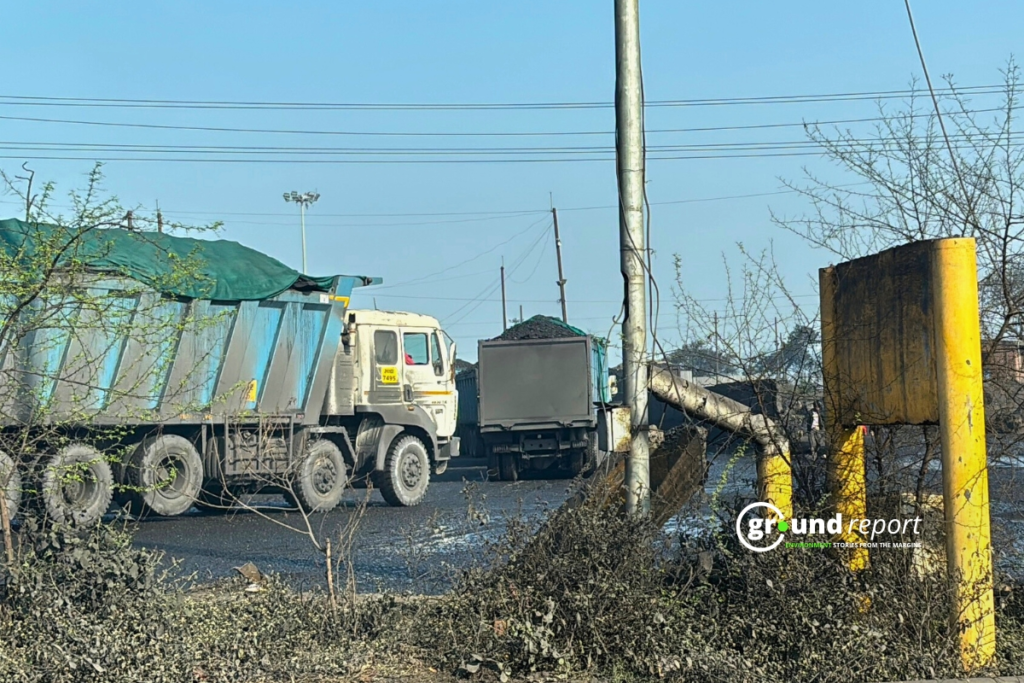
Under the project, 1,436.19 hectares of forest land have been diverted, along with 1,235.81 hectares of non-forest land. According to a Forest Department communication, a wildlife management plan worth ₹10.65 crore has been approved for the conservation of flora and fauna. The letter also states that the company will plant 3,638,165 trees in compensation, spread across 3,972.34 acres (1,607.55 hectares) in Sagar, Shivpuri, Raisen, and Agar Malwa districts.
At the public hearing in 2022, where the resistance began, Shah said the local SDM and tehsildar ignored everything they said. A few days later, the gram sabha decided that villagers would continue writing to the administration to oppose the project. Rajpal Singh Khairwar, his wife Sonmati Singh Khairwar—then carrying their four-month-old child—and Semaru Singh Markam were part of this effort.
“Adani’s company is cutting the forest without the gram sabha’s permission. Our ancestors’ property is being looted,” Sonmati Singh Khairwar said, while addressing the media in Delhi at the All India Congress Committee headquarters, five days after the 10 December protest.
Her family farms four acres of land, and has a house on about 0.1 acre, a short distance away from the fields. Rajpal says the project will acquire two acres of his farmland.
Organising through the gram sabha
Inside his mud house near the forest, Semaru Singh Markam shows gram sabha registers dating back to 2005, some bearing the signatures of his grandfather, Kashi Singh Markam, who served as village head. He says the village has held gram sabhas for the past 20 years, and since 2022, these meetings have also discussed the coal mining project.
According to Shah, about 10–11 people jointly run the movement and decide its strategy. Markam adds that they collect small donations from villagers to cover expenses, keeping records on paper.
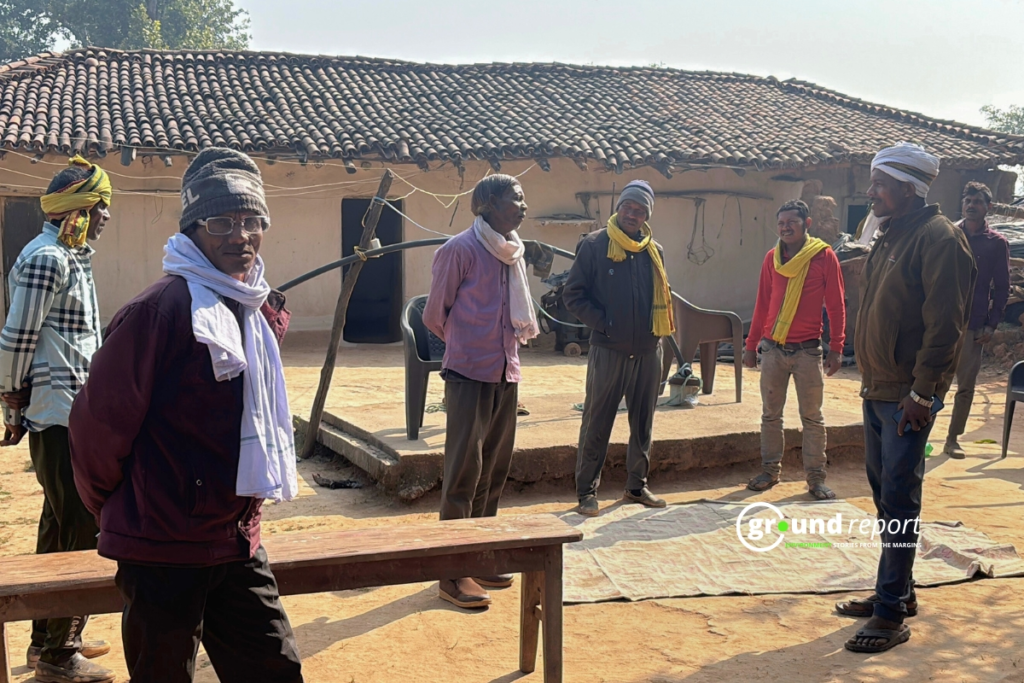
Male activists like Semaru and Rajpal ensure transportation and arrange equipment such as microphones and loudspeakers. A day before any protest, they hold a meeting to remind people to take part. On the morning of the protest, each activist goes door to door in their area to bring people along.
So far, the protests have stayed small. Usually, around 50 to 60 people participate. Whenever the company carries out any activity in the village, residents either protest on the spot or submit written complaints to the collector or the local SDM.
For the past 14 months, Sonmati has been constantly involved in the movement. Before every protest, she is responsible for mobilising women and urging them to join. “If I don’t join now, where will the coming generations go?” Sonmati says.
“Here, we women are independent. We do what we want. If we are displaced, we will have to migrate for work and live under pressure. A person cannot remain that independent outside the home.” For her, this displacement will affect women the most.
She earns around ₹1.5 lakh a year by collecting forest produce. That would not be possible after relocation. In that case, she would have to depend entirely on her husband to run the household.
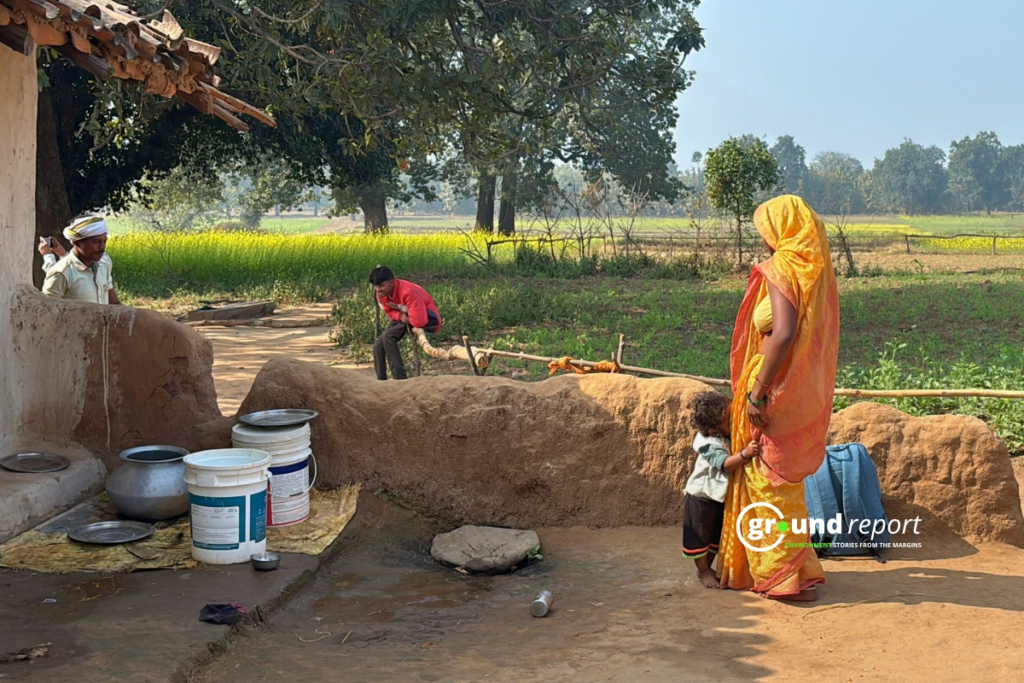
The constant activism has begun to affect their livelihood. “We can’t even look after our fields anymore,” she says, leading us into a room to show that they now have just one sack of rice left.
Fifth Schedule and the environment
Her husband, Rajpal Singh Khairwar, stands shoulder to shoulder with her in the struggle. On the day we met him, he had just returned from Delhi. Sitting in a room at home, he was on the phone, ensuring that all fellow activists had reached home safely.
“Everywhere I look, it’s only Adivasis who are being harassed,” he says, echoing Sonmati’s words. “Our village falls under the Fifth Schedule, yet no permission was taken from us.”
Under the Fifth Schedule of the Indian Constitution, certain areas are notified for the protection of tribal communities.
On 9 August 2023, in response to a question in Parliament, Union Coal Minister Pralhad Joshi said that 157 coal blocks across the country fall under the Fifth Schedule. Of these, 28 coal blocks, including Dhirauli, are in Madhya Pradesh.
Advocate Anil Garg, who works on legal cases related to forest land and scheduled areas, says that in Fifth Schedule areas, written permission from the gram sabha is required before mining can begin.
The land acquisition law includes provisions for land-for-land compensation, and Adivasis from these eight villages should receive land under this rule, social activist Dr Sunilam, who works on tribal rights in Singrauli, says. He references rehabilitation in the Narmada Valley after the Narmada Bachao Andolan.
“If the company wants to take our land, it should give us land in return,” Rajpal says. Markam adds, “Give us land like what we have now—where there are tendu and teak trees.”
Rajpal says the forest is also home to leopards, bears, and other animals. A 2021 site inspection report notes that bears, hyenas, wolves, jackals, and other carnivores permanently inhabit and move through the area, and that leopards regularly pass through nearby forests. He recalls the transient presence of elephants in the village, approximately two to three years ago.
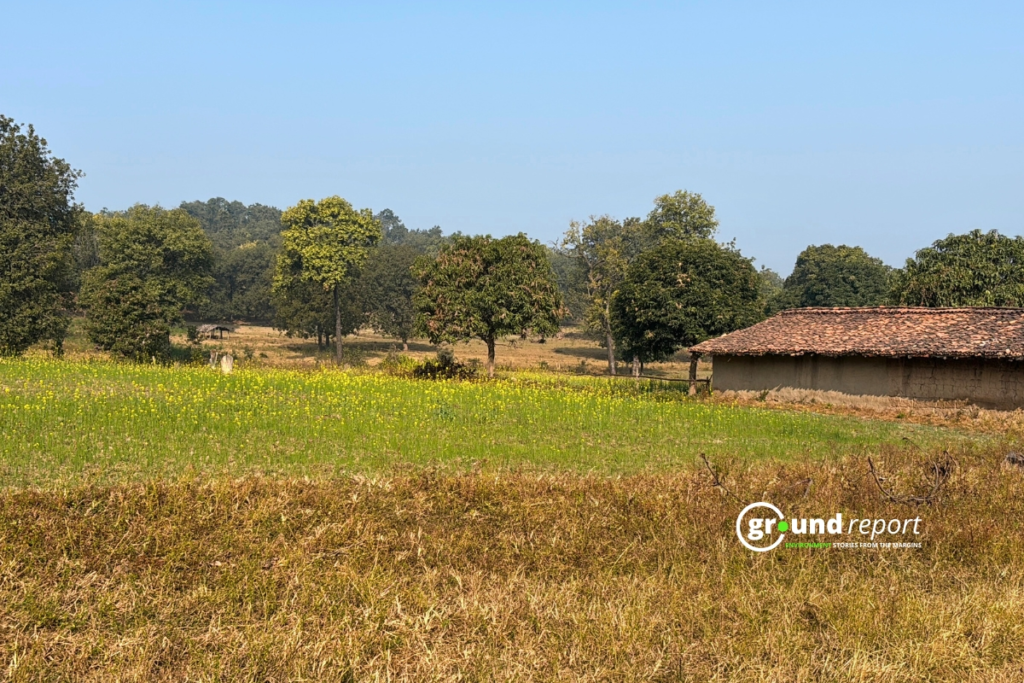
In February 2024, the Union Ministry of Environment, Forest and Climate Change wrote to the state’s Principal Secretary of Forests, stating—based on information from the state government—that the mining area falls within one kilometre of an elephant corridor.
The state government later replied that the minimum distance between the Dhirauli coal block and the elephant corridor is five kilometres, meaning the area does not officially fall within an elephant corridor.
Rajpal, Markam, Sonmati, and Akhilesh all repeat the same line: “We will keep fighting until we get justice, even if we have to fight till our last breath.”
We attempted to contact the collector by phone and also sent questions by text. The story will be updated when a response is received.
Support us to keep independent environmental journalism alive in India.
Keep Reading
Small Wild Cats in Big Trouble: India’s First National Report Released
After Tragedy, Families Face Delays in Tiger Attack Compensation
Stay connected with Ground Report for underreported environmental stories.