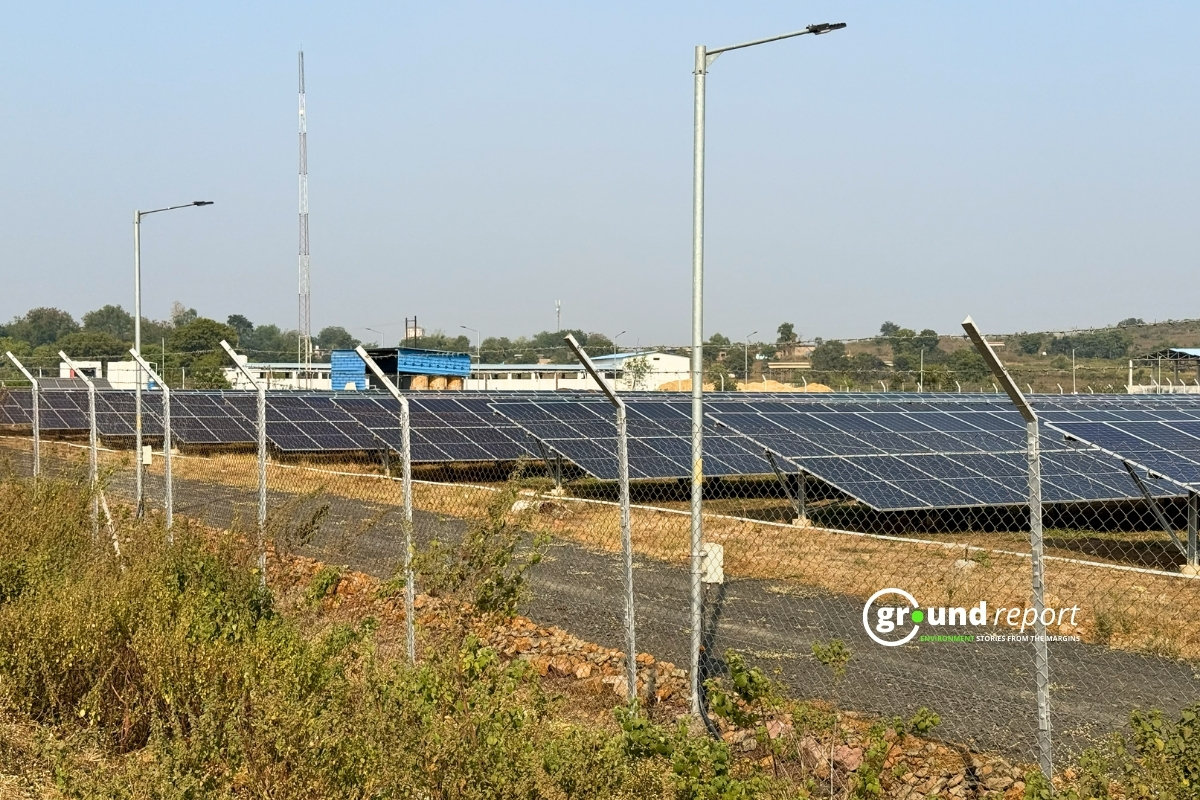
India holds a total solar energy potential of 748 GW, according to estimates by the National Institute of Solar Energy (NISE), based on data from the Waste Land Atlas of India. Union Minister for New and Renewable Energy R.K. Singh shared this figure in a written response to the Rajya Sabha.
By January 2026, India’s total installed solar photovoltaic capacity reached 1,40,601 MW, making it the third-largest solar power producer in the world after China and the United States. Solar alone accounted for more than 66 percent of India’s total renewable energy capacity, excluding large hydro projects.
Which States Have the Highest Solar Potential
Rajasthan sits at the top of the list by a wide margin. The state can potentially generate 1,42,310 MW of solar power — the highest of any state or union territory in India. Jammu and Kashmir follows with a potential of 1,11,050 MW, and Maharashtra ranks third with 64,320 MW.
Here is the full state-wise breakdown of solar potential as reported by NISE:
| Rank | State / UT | Solar Potential (MWp) |
|---|---|---|
| 1 | Rajasthan | 1,42,310 |
| 2 | Jammu & Kashmir | 1,11,050 |
| 3 | Maharashtra | 64,320 |
| 4 | Madhya Pradesh | 61,660 |
| 5 | Andhra Pradesh | 38,440 |
| 6 | Gujarat | 35,770 |
| 7 | Himachal Pradesh | 33,840 |
| 8 | Orissa | 25,780 |
| 9 | Karnataka | 24,700 |
| 10 | Uttar Pradesh | 22,830 |
| 11 | Telangana | 20,410 |
| 12 | Chhattisgarh | 18,270 |
| 13 | Jharkhand | 18,180 |
| 14 | Tamil Nadu | 17,670 |
| 15 | Uttarakhand | 16,800 |
| 16 | Assam | 13,760 |
| 17 | Bihar | 11,200 |
| 18 | Manipur | 10,630 |
| 19 | Mizoram | 9,090 |
| 20 | Arunachal Pradesh | 8,650 |
| 21 | Nagaland | 7,290 |
| 22 | West Bengal | 6,260 |
| 23 | Kerala | 6,110 |
| 24 | Sikkim | 4,940 |
| 25 | Haryana | 4,560 |
| 26 | Meghalaya | 5,860 |
| 27 | Punjab | 2,810 |
| 28 | Tripura | 2,080 |
| 29 | Delhi | 2,050 |
| 30 | Goa | 880 |
| 31 | Other UTs | 790 |
| Total | 7,48,990 MWp (748 GW) |
Which States Are Installing the Most Solar Power
Potential and installed capacity tell two different stories. Rajasthan, Gujarat, and Karnataka remained the top states for cumulative large-scale solar capacity in 2025, with shares of around 30 percent, 19 percent, and 12 percent respectively.
As of March 31, 2025, Rajasthan had the maximum installed solar capacity of approximately 26.9 GW, followed by Gujarat at 12.8 GW and Karnataka at 10.6 GW.
In 2025, Gujarat led the installation tally with around 11.1 GW of new capacity added, followed by Rajasthan at 10.2 GW and Maharashtra at 9.7 GW. The top five states — Gujarat, Rajasthan, Maharashtra, Karnataka, and Tamil Nadu — together accounted for approximately 83.7 percent of total solar and wind capacity installed in India during the year.
How Fast India Is Growing
The calendar year 2025 was one of the strongest years for solar installations. India added around 37.95 GW of new solar capacity during the year. The momentum continued into January 2026, when about 4.79 GW of solar capacity was added in a single month.
India’s total renewable energy installed capacity reached approximately 258 GW by December 2025. Solar energy contributes around 53 percent of the total renewable energy segment, making it the largest contributor, followed by wind at 21 percent and large hydro at 20 percent.
Within the solar sector, ground-mounted projects continued to dominate, with installed capacity crossing 107 GW. Rooftop solar installations reached around 24.30 GW, reflecting growing adoption by households, commercial establishments, and industries.
Solar Manufacturing: India Builds Its Own Supply Chain
By December 2025, India’s cumulative manufacturing capacity of solar modules and cells crossed the 200 GW mark. This rapid domestic growth supports the government’s push to reduce dependence on Chinese imports, which currently account for over 80 percent of India’s solar manufacturing equipment.
India added about 7.9 GW of new rooftop solar capacity in 2025, a 72 percent increase compared to 2024. Around 60 percent of these installations were added during the second half of the year, driven largely by the launch of the PM Surya Ghar Muft Bijli Yojana.
Why Some States Outperform Their Potential
States like Gujarat and Karnataka have moved faster than their potential rankings suggest. Strong state policy, grid infrastructure, and private investment have allowed them to commission large solar parks ahead of states with higher theoretical potential.
The Gujarat Hybrid Renewable Energy Park, being built near Khavda in the Rann of Kutch desert, will generate 30 GW of power from both solar panels and wind turbines, making it the world’s largest hybrid renewable energy park spread over 72,600 hectares of wasteland. As of 2025, the plant has completed around 3 GW of power generation, with the remainder expected to be fully completed by December 2026.
For states with high potential but lower installed capacity — such as Madhya Pradesh, Andhra Pradesh, and Jammu and Kashmir — the gap points to untapped opportunity rather than a lack of resources.
What the Challenges Are
Record capacity additions have not come without friction. India’s renewable energy sector added a record 44.5 GW of renewable capacity in 2025, pushing total non-fossil fuel capacity past 253 GW. But industry leaders say these figures mask a deeper crisis: the infrastructure to actually use this power does not exist, distribution companies are drowning in debt, and transmission lines are years behind schedule.
Solar power plants, in most instances, get constructed sooner than the transmission lines, causing a bottleneck in the delivery of power. These delays not only impact energy availability but also deter private investment in solar infrastructure.
Land acquisition challenges also plague large-scale projects. Solar and wind farms need vast tracts of land, and assembling landholdings can take years.
What the 2030 Target Means for States
The central government has set a target of 500 GW of non-fossil fuel power capacity by 2030, with 280 GW expected to come from solar alone. No state-specific targets have been assigned. As of January 31, 2026, India’s total installed power generation capacity stands at 5,20,510 MW, with non-fossil fuel sources accounting for 2,71,969 MW — now more than half of all installed capacity.
States with large untapped potential — particularly Rajasthan, Jammu and Kashmir, and Madhya Pradesh — remain central to whether India meets its 2030 goal on time.
Support Us To Sustain Independent Environmental Journalism In India.
Keep Reading
Highway Halt Puts Kashmir’s Fruit Economy at Risk
Railway line expansion plan put Kashmir’s apple orchards at risk
Warmer winters in Kashmir raise concerns over apple and crop yields