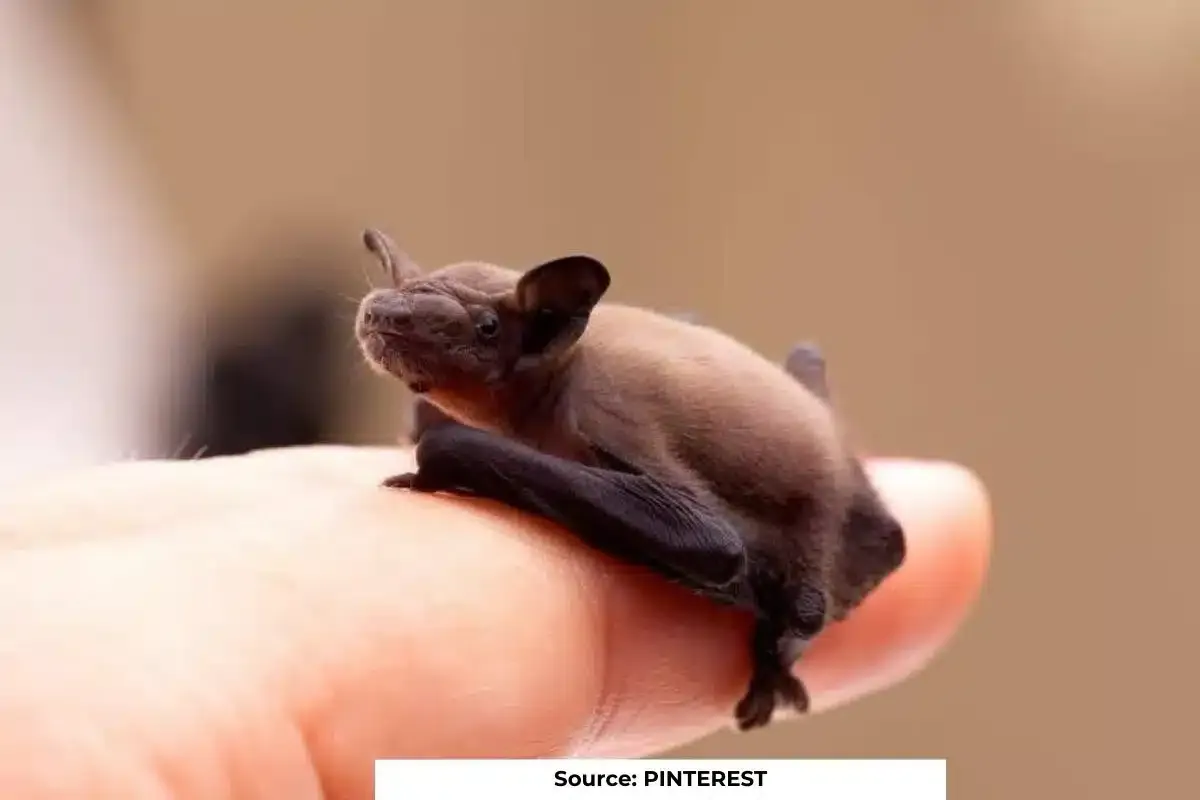
The blue whale, the largest mammal and indeed the largest animal on Earth, is well-known. But have you ever wondered about the smallest mammal on our planet? There are a few contenders, but the title goes to the adorable bumblebee bat. This tiny creature is so small that it can fit on the tip of a finger, yet it shares many characteristics with us.
A fully grown bumblebee bat is just a little over 29 millimeters long from its nose to the end of its tail. It has a wingspan of 145 millimeters and typically weighs between 1.6 and 2 grams, which is lighter than a euro cent coin.
These petite, winged mammals, which could easily be mistaken for insects, have a coat of grayish-brown fur on their backs and a lighter gray belly. Their wings are semi-transparent. They have elongated snouts with whisker-like structures to help them detect their prey, a task they accomplish using echolocation.
Other bats and it both possess excellent hearing. Their large ears and nostrils assist them in locating flying insects in the dark. Thus, the bumblebee bat eats insects.
The bat extends its feeding area up to a kilometer around the cave or cavity where it lives. It makes short flights, lasting less than an hour, at twilight (dusk and dawn), while avoiding the central hours of the day.
Where you live
One cannot find Bumblebee bats all over the planet. Instead, they inhabit very specific areas, specifically the tropical forests of Thailand and Myanmar, in warm and humid natural caves, as well as in human-made structures such as temples and mines. Usually, they form colonies consisting of hundreds of individuals there.
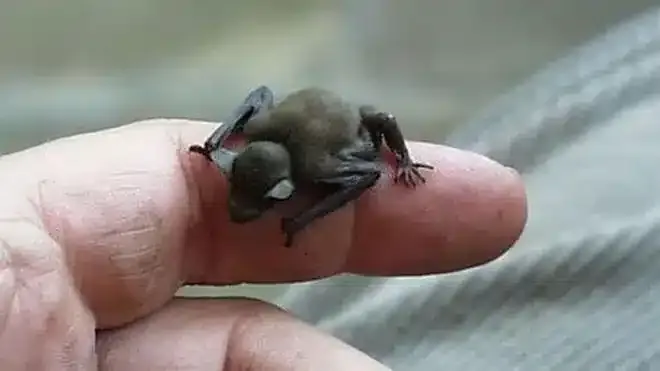
Their small size lets them crowd a roost the size of a palm. They snuggle close to each other to regulate body temperature and humidity. They also take advantage of the safety in numbers advantage by detecting predators earlier.
Only 5,000 copies left
Humans subject this incredible species to several threats, which could lead to its extinction. Often people use the caves where they live as tourist sites or for religious activities. The burning of incense during these activities significantly impacts these small bats.
In some places, people also extract bat guano as a source of fertilizer, or they directly exploit the limestone rock in caves. People consider these disturbances as the main anthropogenic threats to bumblebee bats.
Due to the limited habitat and small population size, the species is classified as vulnerable by the International Union for Conservation of Nature (IUCN). Its population is decreasing at an alarming rate. It is estimated that there are about 5,000 specimens left in the wild.
Keep Reading
Part 1: Cloudburst in Ganderbal’s Padabal village & unfulfilled promises
India braces for intense 2024 monsoon amid recent deadly weather trends
Support us to keep independent environmental journalism alive in India.
Follow Ground Report on X, Instagram and Facebook for environmental and underreported stories from the margins. Give us feedback on our email id greport2018@gmail.com.
Don’t forget to Subscribe to our weekly newsletter, Join our community on WhatsApp, and Follow our YouTube Channel for video stories.