On a cold morning in Corbett Tiger Reserve, scientists from the CSIR–Centre for Cellular and Molecular Biology walked through dense forest tracking fresh tiger pugmarks. They were not hunting the tigers themselves. They wanted what the big cats left behind.
The team collected fecal samples from Corbett and four other tiger reserves: Kanha, Bandhavgarh, Tadoba–Andhari and Periyar. These samples revealed the hidden world of microbes living inside Bengal tigers, their gut microbiome.
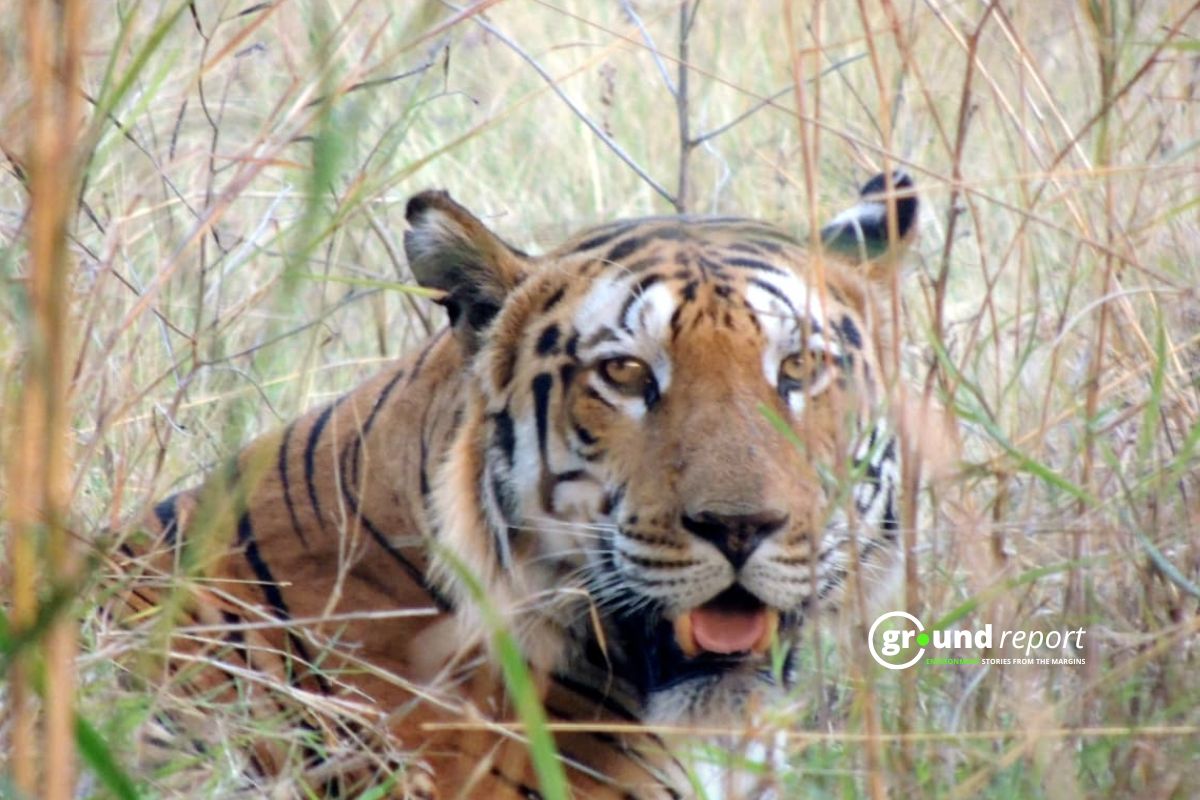
The research, published in Global Ecology and Conservation, explored whether human activities in tiger habitats leave measurable traces inside the animals. The findings show that habitats and seasons can influence the bacterial communities in tigers, with potential implications for their health.
“Tigers in buffer zones experience more human and livestock presence compared to those in the core areas. We wanted to see if this difference is reflected in their gut microbes,” said Govindhaswamy Umapathy, chief scientist at the Laboratory for the Conservation of Endangered Species and principal investigator of the study.
What Gut Bacteria Do
Gut microbes play vital roles in digestion, immunity and disease resistance. A balanced microbial community supports health, while an imbalance can make animals more vulnerable to stress or illness.
Over two years, researchers collected fecal samples from five tiger reserves to assess how gut bacteria varied by location, season and disturbance. They used DNA metabarcoding to sequence the bacteria in the samples and catalogued thousands of bacterial species.
The results indicate that tigers in each reserve carried distinct microbial communities. Bandhavgarh tigers had distinct bacterial communities, while Kanha and Tadoba showed more similarity to each other. Seasonal shifts were also notable, with monsoon and winter samples differing significantly, possibly due to changes in prey and environmental conditions.
Across all samples, 36 bacterial genera formed the core microbiome typical of wild carnivores. These groups included Proteobacteria, Firmicutes, Bacteroidota, Fusobacteriota and Actinobacteria. Yet each reserve displayed its own microbial fingerprint. Bandhavgarh had more Bacteroides, while Kanha and Periyar showed higher levels of Fusobacterium.
The Buffer Zone Effect
Buffer zones around tiger reserves often overlap with villages and grazing lands where people, livestock and tigers share space. These interactions can introduce new bacteria or stressors.
“We found variation in microbial diversity between disturbed and less disturbed habitats, but more detailed work is needed to understand the specific causes,” Umapathy said.
Dibesh Karmacharya, wildlife geneticist and executive director of the Center for Molecular Dynamics Nepal, who was not involved in the research, called the study significant.
“This study adds value by contributing to important gut microbiome and health baseline information for tigers from India,” Karmacharya said.
Karmacharya was involved in similar research from Nepal that supports the trends seen in this study. In 2019, he and his colleagues profiled the gut bacteria of 32 Bengal tigers from Chitwan, Bardia and Suklaphanta. The team found that tigers in more disturbed parks like Chitwan had higher microbial diversity compared to isolated populations in Suklaphanta.
“The microbiome patterns reflected what we had already seen in tiger genetics,” Karmacharya said. “Populations that were genetically connected had similar microbes, while isolated ones showed distinct bacterial profiles.”
Industrial Pollution in Tiger Guts
The research team used computational tools to predict microbial functions. Some bacteria aided digestion and vitamin production. Others were associated with breaking down industrial pollutants such as hydrocarbons.
“In Tadoba, where there are coal mines and power plants nearby, we found bacterial groups known to break down hydrocarbons,” Umapathy said.
A similar trend appeared in Nepal’s Chitwan, where microbial pathways suggested exposure to environmental chemicals.
For Karmacharya, this points to a broader role for gut microbes.
“The microbiome acts as an early-warning sensor. It tells us about exposure and stress long before visible signs appear,” he said.
In their study, the researchers note that such microbial shifts could also become valuable, non-invasive indicators of habitat disturbance. Changes inside the gut may reveal stress, poor diet or environmental contamination before they manifest in behaviour or population decline.
Karmacharya underlined the stakes. The gut microbiome “plays an important role in the overall health of mammals, including tigers, and therefore their long-term survivability.”
Human activities, he noted, can alter this balance.
“Land conversion, habitat encroachment and exposure to human settlements or animal production sites near tiger habitats can greatly influence and eventually alter the gut health of tigers and hence their overall health. Therefore, a good and effective buffer around protected habitats can help maintain tiger gut microbiome health, conservation of gut microbiome equals conservation of the species,” he said.
Limitations of Current Research
Both the Indian and Nepali studies relied on 16S rRNA analysis, which offers limited resolution.
Karmacharya cautioned that “reliance on predictive rather than empirical functional data means that pathways were inferred rather than directly measured. Future studies using metagenomics or metabolomics will provide a more complete picture.”
Earlier Evidence of Rising Stress
The new microbiome findings build on previous work by Umapathy’s team. In 2019, they examined tiger stress in Kanha and Bandhavgarh by measuring faecal glucocorticoid metabolites. They collected samples from tourist-heavy zones and quieter areas, and repeated the work during the monsoon closure.
They found a clear pattern. Stress levels were higher during tourism season and increased with the number of safari vehicles. Human and cattle movement also pushed hormone levels up. The study indicated that tourism, even when carefully managed, can add significant pressure on tigers already coping with fragmented, human-dominated landscapes.
Conservation Implications
For conservation managers, these internal markers may provide an early signal of how well big cats are coping in shared and changing landscapes.
The research suggests that protecting core tiger habitats from human disturbance is not enough. Buffer zones, where tigers and humans interact, need careful management to minimize stress and health impacts on the animals.
The study collected 96 fecal samples over two years, confirming 47 as tiger samples through DNA testing. After quality filtering, researchers analyzed 43 samples representing 19 females and 17 males across five reserves.
The findings add to growing evidence that human activity leaves biological traces in wildlife. These traces can be detected and measured before they become visible problems. For tigers, protecting gut health may be as important as protecting territory.
Support us to keep independent environmental journalism alive in India.
Keep Reading
Small Wild Cats in Big Trouble: India’s First National Report Released
After Tragedy, Families Face Delays in Tiger Attack Compensation
Stay connected with Ground Report for underreported environmental stories.