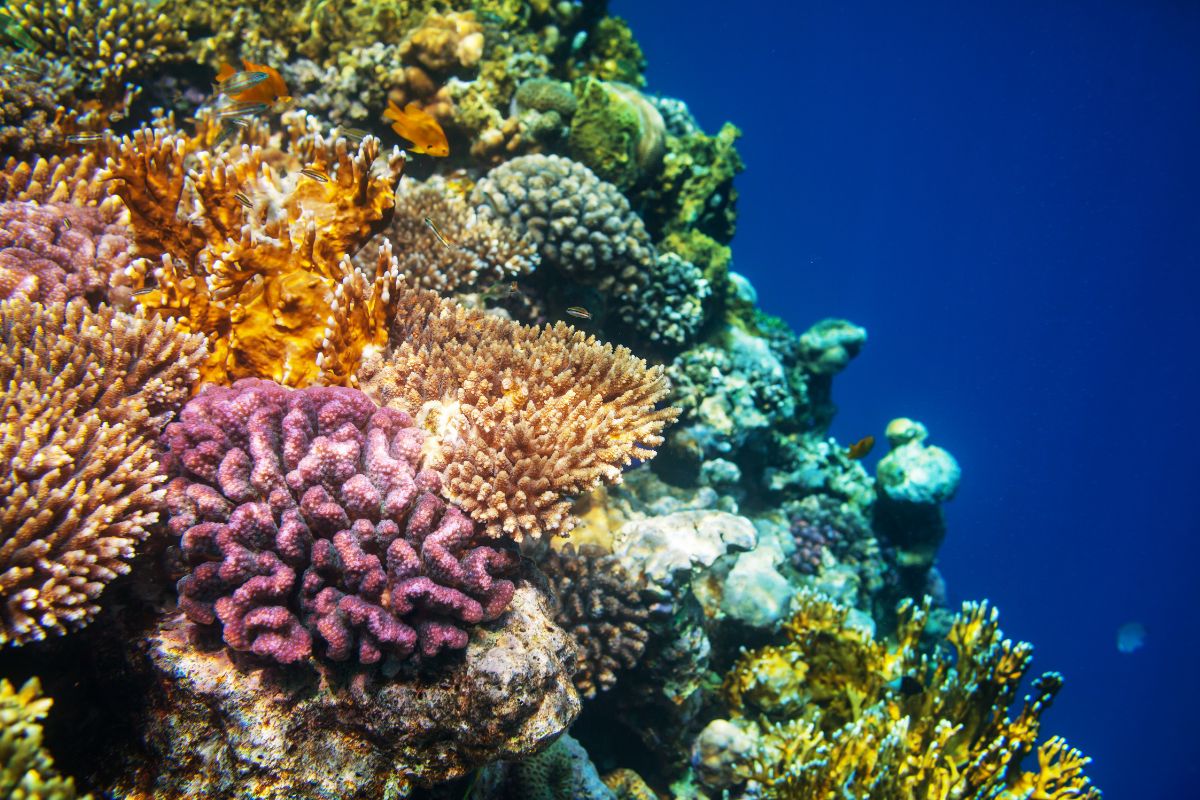
Warm-water coral reefs have crossed their thermal tipping point and are now undergoing irreversible dieback, according to the Global Tipping Points Report released by 160 scientists from 23 countries. The report stated that more than 84 percent of reefs across 82 countries have been affected by record ocean heat, marking the most widespread bleaching event ever recorded.
The report warned that the world has entered a dangerous “new reality” as global temperatures, driven by greenhouse gas emissions, near the critical 1.5°C threshold. It said that this rise is destroying coral ecosystems and pushing several other natural systems toward collapse.
“Already, warm-water coral reefs are crossing their thermal tipping point and experiencing unprecedented dieback, threatening the livelihoods of hundreds of millions who depend on them,” the report mentioned.
Global Crisis for Marine Life
The study found that since January 2023, coral reefs have been under extreme thermal stress, leading to what scientists have called the fourth global mass bleaching event in history. Ocean surface temperatures have remained well above average for months, stripping corals of their color and nutrients and leaving many reefs dead or dying.
The report noted that reefs are among the most important ecosystems on the planet. They support one-quarter of all marine species and provide food, income, and protection to nearly one billion people worldwide.
“The thermal threshold for warm-water corals has already exceeded 1.2°C,” the report stated. “Irreversible dieback has now begun.”
According to the World Meteorological Organization, global warming is expected to cross 1.5°C by 2030. If that happens, scientists warn that coral loss will accelerate, along with the collapse of other major ecosystems.
Bleaching & Dieback on a Massive Scale
The Global Tipping Points Report also highlighted that coral loss is part of a broader global pattern. Other systems, such as the Amazon rainforest, the Atlantic Meridional Overturning Circulation (AMOC), and the polar ice sheets, are now approaching similar tipping points.
The AMOC, a major ocean current that moves warm water from the tropics to the North Atlantic, could collapse if global temperatures rise above 2°C, the report said. A collapse would severely disrupt global weather, agriculture, and water systems, and could bring prolonged cold winters to northwest Europe.
The report also pointed to the Subpolar Gyre (SPG) in the North Atlantic and Arctic land permafrost as systems nearing instability around 1.5°C of warming. “Loss of these systems would amplify heat retention, accelerate melting, and disturb rainfall patterns worldwide,” it warned.
The Amazon rainforest, one of Earth’s largest carbon sinks, is also under threat. The report said that the forest could suffer widespread dieback below 2°C of warming. Its loss would cause what the authors called “catastrophic and incalculable” damage to biodiversity and would directly impact over 100 million people living in and around the region.
“These tipping systems are not isolated,” the report noted. “They form interconnected networks, where crossing one threshold can accelerate the collapse of others.”
Climate scientist Dr. Tim Lenton from the University of Exeter said the findings show how closely the planet’s systems are linked. “The collapse of one system can trigger another,” Lenton said. “We are entering a period of cascading risks that threaten global stability.”
Shrinking Window for Action
The report warned that current national pledges to cut greenhouse gas emissions are not enough to prevent the planet from crossing multiple dangerous thresholds. “The window for preventing some damaging, irreversible tipping points is rapidly closing,” the report said. “If we wait for certainty that tipping points have been crossed before we act, it will be too late.”
It called for immediate and coordinated action by world leaders ahead of the upcoming COP30 climate summit in Brazil next month. Scientists urged governments to strengthen emission targets and increase funding for ecosystem protection.
Polar ice sheets, the report added, are also nearing points of irreversible melt. Their collapse could raise sea levels by several meters over the coming centuries, threatening hundreds of millions of people in coastal and low-lying regions.
“The choices made in this decade will determine whether critical systems can still recover,” the report concluded. “Delaying action risks permanent damage to the Earth’s natural balance.”
The Global Tipping Points Report serves as a warning that the loss of coral reefs is not an isolated tragedy but part of a global chain reaction. The world’s ecosystems, once resilient, are now showing signs of irreversible change, and time to act is running out.
Support us to keep independent environmental journalism alive in India.
Keep Reading
Highway Halt Puts Kashmir’s Fruit Economy at Risk
MP brings back Bhavantar as farmers lose soybean harvests
Stay connected with Ground Report for underreported environmental stories.
Follow us onX, Instagram, and Facebook; share your thoughts at greport2018@gmail.com; subscribe to our weekly newsletter for deep dives from the margins; join our WhatsApp community for real-time updates; and catch our video reports on YouTube.
Your support amplifies voices too often overlooked, thank you for being part of the movement.