
International Women’s Day, 8 March 2022, was a significant moment for Durga Parmar of Dewas. She had led the Aajeevika Mission under the National Rural Livelihoods Mission (NRLM) in the district for nearly a decade, since 2015, mobilising rural women into self-help groups and supporting their livelihoods.
On that day, the then chief minister of Madhya Pradesh, Shivraj Singh Chouhan, handed over the keys to Poshan Aahar (Take-Home Ration) factories across seven locations in the state—Mandla, Sagar, Narmadapuram, Dewas, Dhar, Rewa, and Shivpuri, to Durga Parmar and six other women. These units are tasked with supplying mandated nutritional food, Poshan Aahar (Take-Home Ration), to schools and anganwadis (mother-child care centres) across Madhya Pradesh.
Even today, Parmar recalls the moment with hope and pride. She says the chief minister promised to shift control of Poshan Aahar from private companies to women’s self-help groups. The move aligned with his political image as “Mama”—a leader seen as supportive of women in his development vision.
But in early February 2026, that image seemed to falter. While at the Dewas factory, Parmar came across media reports stating that their unit, along with six others, would shut down by 31 March 2026. She was stunned. Parmar said she had no information regarding this. As she heads the entire unit in Dewas, she scrambled for answers and words of comfort for other women.
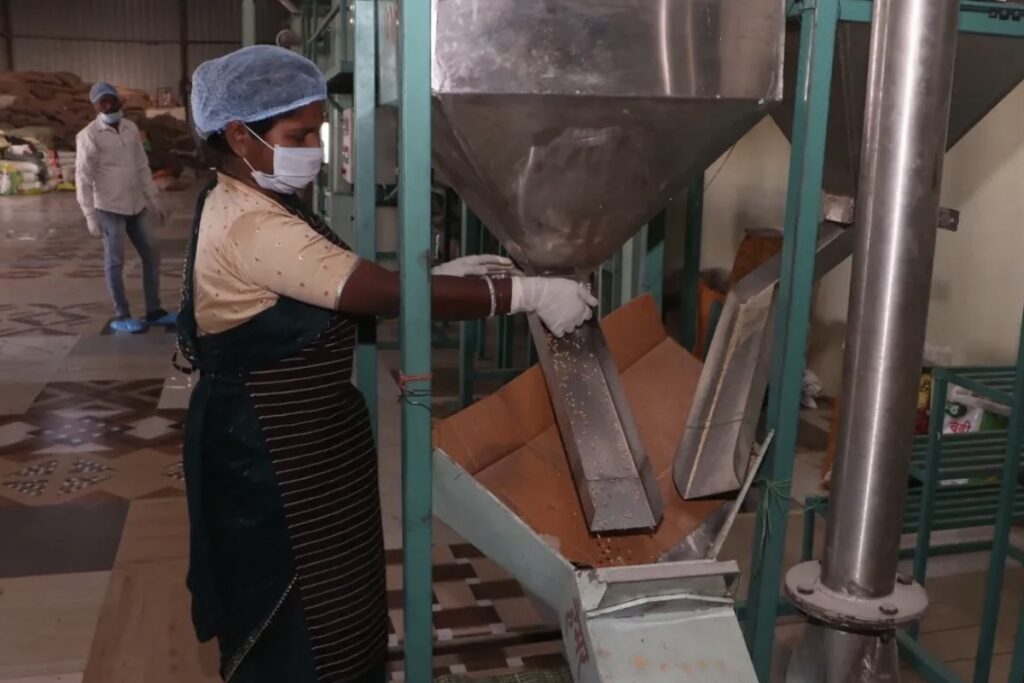
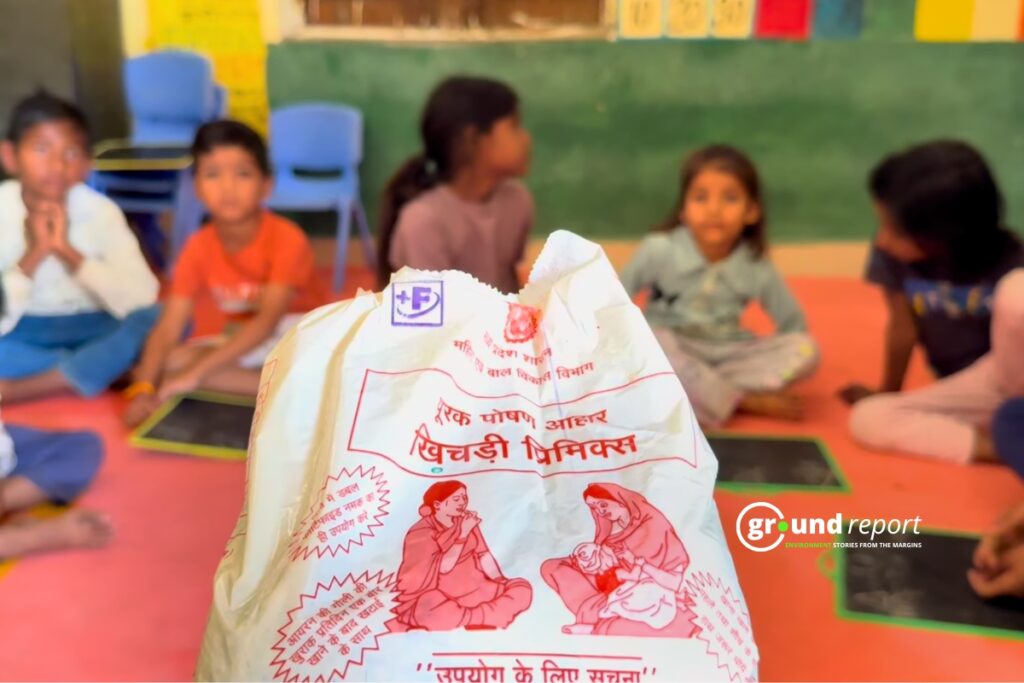
For years, these units have produced food—laddoos, khichdi, halwa, and other supplements—distributed through anganwadis to children, pregnant women, and adolescent girls. But recent developments suggest the state may now be moving away from this community-based model toward centralized or private production systems—an approach it had scrapped in 2022, citing corruption and irregularities. Officials now point to familiar concerns: financial losses and quality issues, both of which women working in these units strongly contest.
“The government says the system is not running properly. They say there are problems with accountability, efficiency, and that nutrition is not being supplied properly,” said Sachin Kumar Jain, social researcher and trainer associated with Vikas Samvad human development resource organisation.
It is estimated that up to 50,000 people—including direct employees, loaders, transporters, and others in the supply chain—could lose their livelihoods.
According to a report published by Dainik Bhaskar in February 2026, the Madhya Pradesh Aajeevika Mission had issued instructions to shut down all seven Poshan Aahar production plants from March 31, 2026. The work, currently handled by women’s self-help group (SHG) federations under the State Rural Livelihood Mission (which comes under the Panchayat and Rural Development Department), was to be transferred to the Women and Child Development Department.
The report stated that the department was planning to hand over the work of producing Take-Home Ration (THR) to private agencies or the National Agricultural Cooperative Marketing Federation of India (NAFED). SHGs were therefore told to continue production only until March 31.
However, the final approval for this decision was expected in a cabinet meeting held on April 7, 2026. According to information from the Madhya Pradesh Public Relations Department, the issue was not discussed in that meeting. As a result, the future of workers employed at these nutrition plants remains uncertain. They still have no clear information on whether the factories will continue operating or be shut down.
Parmar says that despite this uncertainty, all employees are still coming to the factory as usual. However, due to non-payment, suppliers have stopped sending raw materials, and the production of Poshan Aahar has come to a halt.
Women’s Livelihood and their Vulnerability
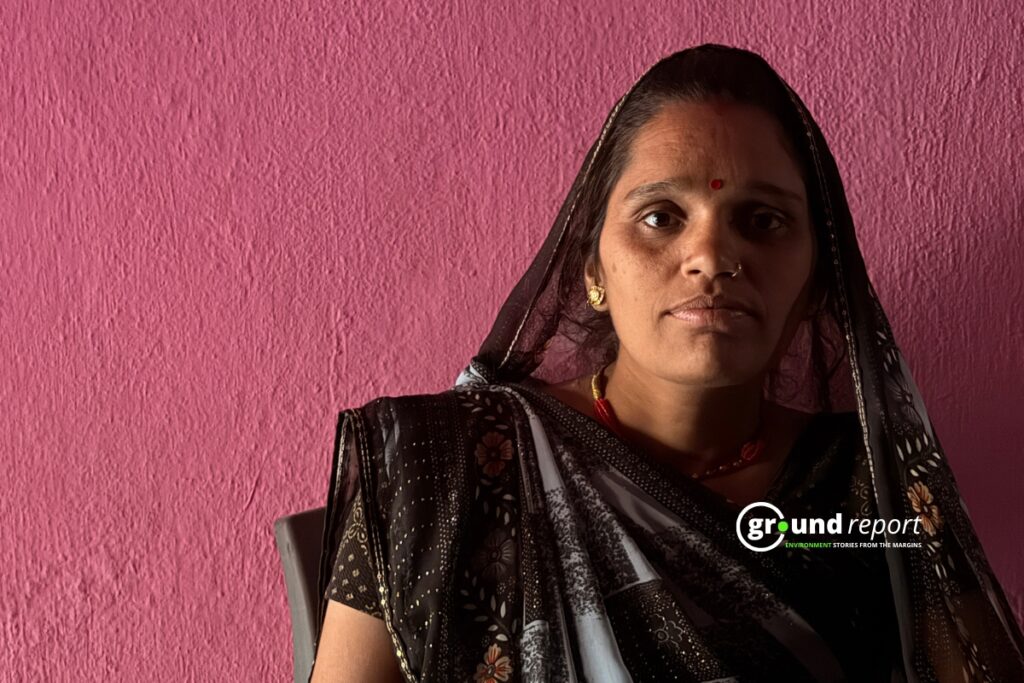
Gani Rajput, who works as a cleanliness supervisor in the factory, said, “We used to work as laborers in fields… then we were told to form groups… and later we got this factory.” She said the monthly income anchored her life and gave her a sense of independence beyond the home. It enabled her to send her children to a private school, repay loans, and sustain her household.
“We have loans… how will we pay the installments now?” Rajput says in distress.
Across the state, nutrition production plants provide livelihoods to women at multiple locations: 25 in Dewas, 25 in Narmadapuram, 15 in Dhar, 18 in Sagar, 34 in Mandla, 29 in Rewa, and 8 in Shivpuri, a total of 154 women directly employed through these units.
Women say what they stand to lose goes far beyond a monthly salary. Parmar repeatedly points to the vulnerability of these workers, many from low-income households and, in some cases, the sole breadwinners for their families.
Santhosh, who heads another self-help group in Dewas, ensured her daughter joined the production unit after she was widowed, sometime in 2020. “It allowed my daughter to earn on her own… and step out of the house,” she said.
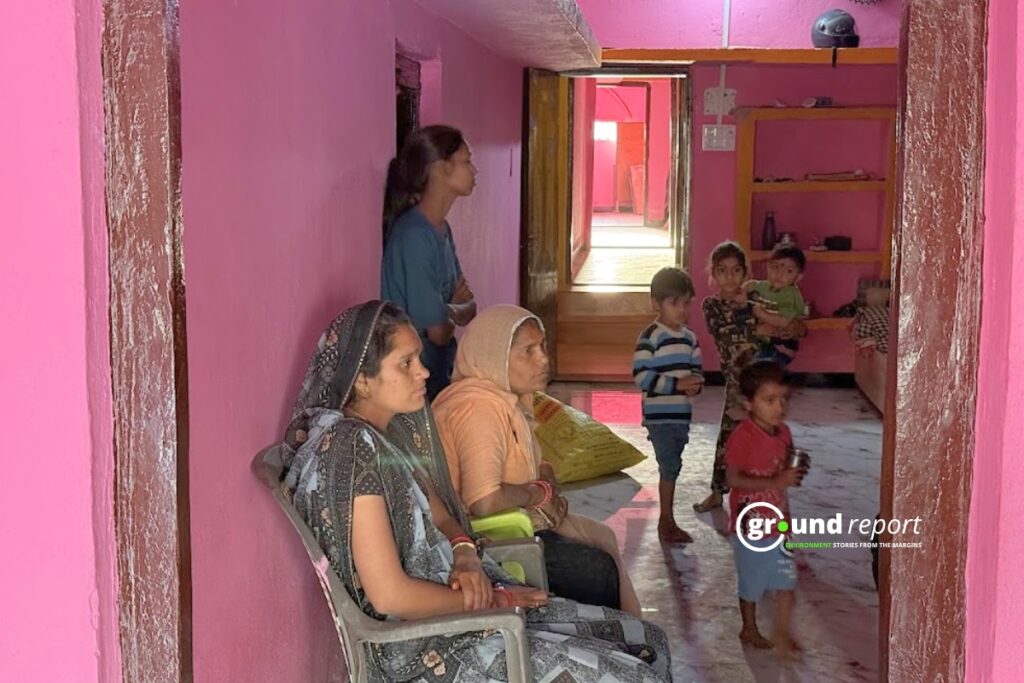
Following the reports, protests began to gather momentum. In mid-February, women at the Sagar production unit staged a protest outside the factory gates. Parmar said that heads of all seven units then came together to discuss their next course of action. They continue to do the same through WhatsApp chats. The protests that followed have seen women gathering across districts, demanding clarity and reversal of the decision.
When protests began, Madhya Pradesh’s Panchayat and Rural Development Minister, Prahlad Singh Patel, was asked for a response. He said the matter would be addressed in the state assembly.
In the Madhya Pradesh Legislative Assembly’s Question–Answer list for the February–March 2026 session (17 February 2026), a starred question sought details on whether any nutrition (poshan aahar) plants had been shut down; the reasons for such closures, and how many women had lost employment. In response, the government stated that all plants are currently operational and functioning smoothly and that no women associated with the groups working in these units have become unemployed.
What is surprising is that even as the Madhya Pradesh Aajeevika Mission was preparing to shut the plants by March 31, 2026, no clear statement was made in the Assembly or to the media. Moreover, people whose livelihoods depend on these plants were not given any notice.
The system before 2022 and related irregularities
With over a third of children under five stunted (35.7%) and one in three underweight (33%), Madhya Pradesh remains among the states with a high burden of malnutrition—underscoring the importance of schemes like Take Home Ration, according to NFHS-5. The state aims to reduce this to less than 10% by 2029 and below 5% by 2047.
Children aged 6 months to 3 years receive THR five days a week, including items like halwa, bal ahar, and khichdi. Pregnant and lactating mothers receive THR five days a week, including wheat-soya barfi, khichdi, and atta-besan laddu.
The audit report for the Take Home Ration (THR) scheme in Madhya Pradesh revealed widespread irregularities across beneficiary identification, production, transportation, and quality control.
The baseline survey for identifying out-of-school adolescent girls (OOSAGs), meant to be completed by April 2018, was delayed until February 2021, leading to “serious irregularities.” Officials accepted an inflated estimate of 5.51 lakh beneficiaries instead of 0.43 lakh, resulting in a likely excess expenditure of ₹110.78 crore.
The audit found that six plants supplied THR “despite the non-availability of stock,” while transport claims worth ₹5.46 crore were based on vehicles that were “motorcycles, cars, autos… or did not exist.” In eight districts, over 10,144 MT of THR worth ₹62.53 crore were “not found to be transported” for distribution. Payments were cleared for stock “not received,” and in some cases, stock records were not maintained at all.
Quality control failures were stark: all samples drawn from 38,304 MT of THR costing ₹237 crore, “did not conform to the required nutritional value,” indicating that beneficiaries received “poor quality THR.” The audit also flagged fake distribution entries and “extremely poor internal controls,” with officials failing to conduct mandated inspections.
“When everything is controlled from one place [centralized], corruption can also grow in one place. That is why the court said there may be vested interests in such systems,” Jain said. “This system continued because there was no proper policy change at first—only a public announcement. When companies challenged it in court, the High Court put a stay, and the system kept running for years.”
What Is Driving the Policy Shift?
The government reportedly argues that decentralized production through SHGs has become financially unsustainable. The raw material costs have increased, and the procurement rates have remained stagnant, Parmar argues. Another issue is the quality. The government argues that SHG-run units have not consistently met nutritional and hygiene standards. Parmar contests this narrative. “Every three months, our products are tested in labs… quality is not an issue,” Parmar says.
A 13 September 2017 order of the Indore Bench of the Madhya Pradesh High Court, passed in petitions by PUCL and Mahabhyuday Voluntary Organization, reiterated that private contractors cannot be engaged in ICDS nutrition schemes and emphasised decentralised production through women’s groups. This judgment was in tandem with the Supreme Court’s previous ruling.
According to a report published in Dainik Bhaskar on March 3, 2026, a file prepared by the Women and Child Development Department—regarding handing over Poshan Aahar work from self-help groups to NAFED—was submitted to Chief Secretary Anurag Jain. He returned the file, asking that the High Court’s ruling be taken into account.
This particular court order has held the final signature on the policy change.
The government official didn’t respond to our request for comment. Though a Dainik Bhaskar report quoted, on 12th February, Nirmala Bhuria, minister of Women and Child Development of Madhya Pradesh, stating that “Meetings have already been held to improve the nutrition (Poshan Aahar) system… a decision on the new system will be taken soon.”
Political Responses and Uncertainty
Parmar, along with six other unit heads, met now-Union Agriculture Minister Shivraj Singh Chouhan, who had once given them the key to the factories. Parmar said Chouhan was unaware of the issue and assured that he would definitely talk to the relevant people. She added, “Bhaiya [Shivraj Chouhan] assured us that the decision would be in our favor.”
Parmar submitted a written letter to both Chouhan and the state’s chief minister’s office, seeking intervention.
It has been nearly two weeks since that meeting, but no decision has been made. The March 31 deadline has passed, and the April 7 cabinet meeting didn’t discuss the issue. As a result, uncertainty continues to grow among the factory workers.
In another report published on April 9, 2026, Aajeevika Mission CEO Harshika Singh said that the file is still with the Women and Child Development Department, and no response has been sent to the Chief Secretary. Because of this, self-help groups will continue producing Poshan Aahar for another month.
Only after the Chief Secretary signs the file can the matter be placed on the cabinet meeting agenda. The final decision will determine the new system for producing Poshan Aahar.
“Companies were making around 30% profit from this [contractor] system. But this money is meant for children’s nutrition—if profit is taken out of it, how much actually reaches the children?” Jain said. “Food is not just about giving supplies. It also includes care and connection. If the community is not involved, the programme will not work well.”
For now, workers in these plants continue to live with uncertainty. They hope the government will consider their situation. But the government has not even given them a clear answer—if the plants are to be shut, people could at least look for other sources of livelihood.
“You gave us these plants,” Parmar asks, referring to 8th March 2022. “… Why take them away now?”
“The most important thing is that women should have ownership. Otherwise, it becomes like just buying something from a shop,” Jain said. “It [decision] depends on how much debate and pressure build around this issue. Right now, there isn’t enough discussion. If that doesn’t change, the decision may go ahead.”
This report is part of a collaborative series by Ground Report and Feminism in India.
Support Us To Sustain Independent Environmental Journalism In India.
Keep Reading
Highway Halt Puts Kashmir’s Fruit Economy at Risk
Railway line expansion plan put Kashmir’s apple orchards at risk
Warmer winters in Kashmir raise concerns over apple and crop yields
Stay Connected With Ground Report For Underreported Environmental Stories.
Authors
Support Ground Report to keep independent environmental journalism alive in India
We believe climate change should be the basis of current discourse, and our stories attempt to reflect the same.
Connect With Us
Send your feedback at greport2018@gmail.com
Newsletter
Subscribe our weekly free newsletter on Substack to get tailored content directly to your inbox.
When you pay, you ensure that we are able to produce on-ground underreported environmental stories and keep them free-to-read for those who can’t pay. In exchange, you get exclusive benefits.
Your support amplifies voices too often overlooked, thank you for being part of the movement.