Madhya Pradesh Finance Minister Jagdish Devda presented a Rs 4,38,317 crore budget for 2026-27 in the state Assembly on Wednesday, setting aside nearly Rs 39,448 crore for agriculture, 9 percent of total expenditure, up from 5.6 percent last year. The sharp rise nearly doubles agriculture’s share of the state budget in a single year, the highest the sector has received in recent years. The government declared 2026 the “Farmer Welfare Year” and announced schemes covering irrigation, crop insurance, direct cash support, and natural farming. The budget itself is 4.1 percent larger than last year’s Rs 4,21,032 crore presented on March 12, 2025.
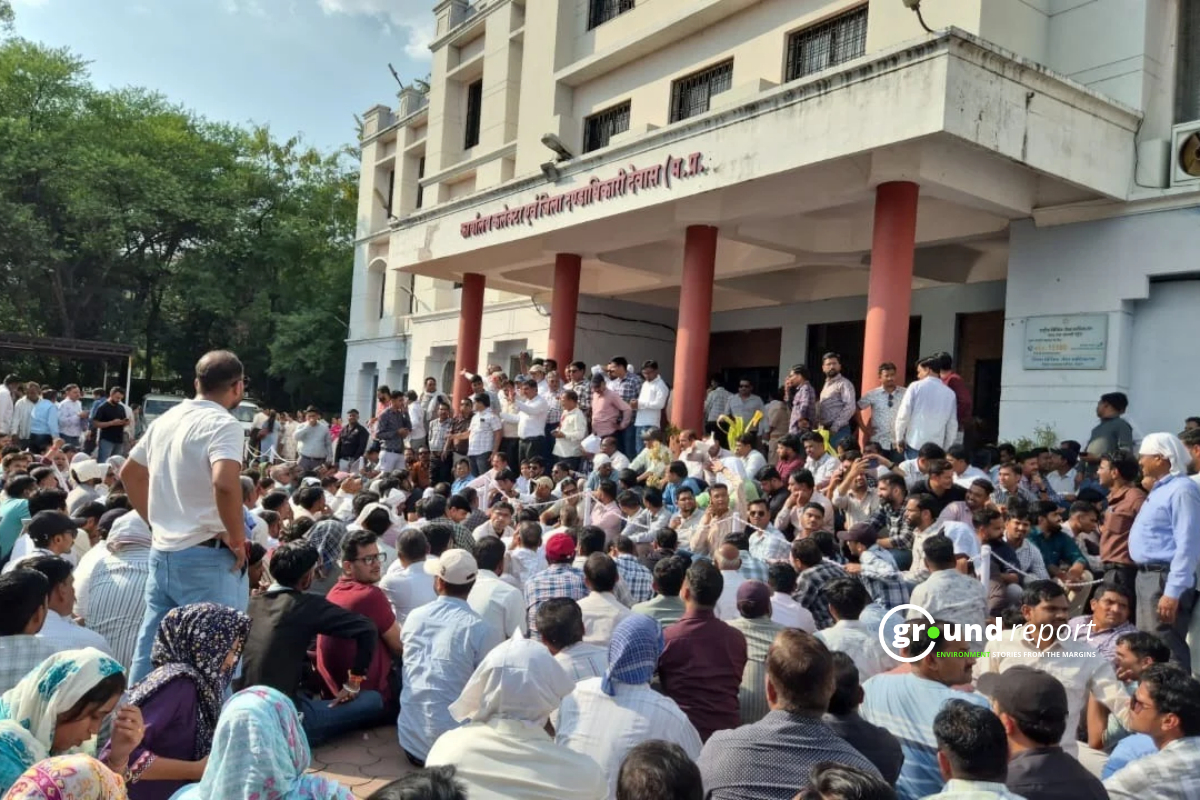
But even as Devda read out the figures, Congress legislators interrupted the speech and carried their protest to the Assembly premises, arguing that state debt and a new India-US trade deal would undercut whatever the budget promised farmers.
What Was Announced
Finance Minister Devda opened his speech with the economics verse “Praja Sukham Rajnaha” (A famous Sanskrit shloka from Kautilya’s Arthashastra, which means in the happiness of the people lies the king’s happiness.) and framed the budget around one goal, farmers prosperity.
“The government is providing assistance to farmers at every level, from production in the fields to the sale of produce,” Devda told the Assembly.
The largest single farm announcement is one lakh solar irrigation pumps at a cost of Rs 3,000 crore under the Krishak Unnati Yojana, introduced in line with Chief Minister Mohan Yadav’s push for renewable energy in farming. Devda said 6,70,000 farmers have already benefited from the scheme since its launch.
A separate allocation of Rs 5,500 crore has been made for the Krishak Unnati Yojana overall. Under this scheme, Devda announced that 6.69 lakh farmers will receive a direct incentive totalling Rs 337 crore this year.
Where the Money Goes
Under the Kisan Samman Nidhi and Mukhyamantri Kisan Kalyan Yojana combined, Devda said each eligible farmer family receives Rs 12,000 per year in direct cash. The government says this helps small and marginal farmers buy fertilisers and seeds without taking on debt.
For crop losses from natural disasters, Devda announced Rs 1,299 crore for the Pradhan Mantri Fasal Bima Yojana. Agricultural credit has been backed by a provision of Rs 25,000 crore for short-term farm loans. A further Rs 793 crore has been set aside for poor welfare, covering the most marginalised farming households.
Devda also told the Assembly that the Bhavantar Bhugtan Yojana, which pays farmers when market prices fall below the minimum support price, has been significantly strengthened, and that other states have shown interest in replicating it.
According to the budget document, irrigation contributes 5 percent and forestry contributes 8 percent to the state’s own non-tax revenue. A further 14 percent of the total budget goes to rural and urban development, which includes infrastructure that supports farming regions.
Where MP Stands
Agriculture contributes 39 percent to Madhya Pradesh’s GDP, making it the backbone of the state economy. Devda told the Assembly that Madhya Pradesh ranks first in the country in pulse production and second in both wheat and oilseed output.
Dr Sunilam, farmer union leader from Madhya Pradesh, said poor pricing and government imports are pushing farmers away from pulses. “On one hand, they run these plans and missions and say go for pulses. On the other hand, they import and sit idle. The farmer then does not get a fair price,” Dr Sunilam told Ground Report.
He added that MSP exists only on paper for most pulse farmers. “The support price is the support price at which we have to buy. They don’t even provide any support, they buy very little, even if market rates are down,” he said.
Dr Sunilam said the import timing makes the problem worse. “In summer, the crop starts arriving in April-May. And even before that, the government places an import order in March. Because of imports, farmers don’t get fair market rates,” he said.
He said this is why farmers are walking away from pulses entirely. “The farmer then doesn’t get a fair price and shifts to wheat, because the government needs wheat for its 5 kg ration scheme and procures it more reliably,” Dr Sunilam said.
“The government should stop imports and ensure procurement starts on time. If they want the farmer to get a profitable price, they need to strengthen their procurement system,” he said.
The budget registers 21.42 lakh hectares under organic and natural farming and sets a new target to expand natural farming to one lakh hectares. Devda said farmer schemes have been linked to value-addition programmes to increase income beyond the farm gate.
The budget also introduces the Viksit Bharat-G RAM G Act, which guarantees 125 days of wage employment to rural and agricultural workers, with an unemployment allowance if work is not provided. The act mandates Viksit Gram Panchayat Plans, localised rural development blueprints with digital accountability.
What the Opposition Said
Leader of Opposition Umang Singhar interrupted Devda’s speech and asked: “When the state is in deficit, how will the government fulfil such big promises?” Congress MLAs followed with slogans. Assembly Speaker Narendra Singh Tomar repeatedly asked members to return to their seats, but the protest continued.
Speaking to the media after the session, Singhar said, “The state government is continuously taking loans one after another. The government has put a debt of more than Rs 5 lakh crore on the state. Taking a loan of Rs 5,600 crore even before the budget session indicates that the state is being pushed deeper under debt.”
Madhya Pradesh Congress President Jitendra Patwari directed his sharpest criticism at the India-US interim trade agreement. Speaking to ANI, he said, “The three major products of Madhya Pradesh farmers, cotton, soybean, and maize, will now be imported from the United States. This just proved that the benefits cited for the state were false.”
Patwari also called on Chief Minister Mohan Yadav to act. “If the Chief Minister actually wants to celebrate the year of the farmers, he should go up to the Prime Minister and tell him that this deal will suffocate the farmers and it should be amended,” he told ANI.
The government has not responded publicly to the opposition’s criticism of the trade agreement.
Madhya Pradesh’s 2026-27 budget makes the clearest financial commitment to agriculture the state has seen in years. The near-doubling of the sector’s budget share, combined with direct cash support, solar irrigation, and crop insurance, signals a deliberate shift in the government’s priorities.
But the ground reality complicates the picture. A 21 percent drop in pulse production, concerns over import timing, and a new India-US trade deal targeting the state’s key crops raise serious questions about whether budgetary intent will translate into farmer income.
Support Us To Sustain Independent Environmental Journalism In India.
Keep Reading
Highway Halt Puts Kashmir’s Fruit Economy at Risk
Railway line expansion plan put Kashmir’s apple orchards at risk
Warmer winters in Kashmir raise concerns over apple and crop yields