Madhya Pradesh witnessed dramatic weather changes on Sunday evening as hailstorms blanketed villages in Neemuch and Mandsaur districts, creating scenes reminiscent of snowfall. The India Meteorological Department has issued rain alerts for 25 districts across the state, warning of continued unsettled weather over the next three days.
The most striking scenes emerged from Jharda village in Malhargarh assembly constituency, where heavy hail accumulated along roadsides, forming a white carpet that locals compared to Kashmir’s snowy landscape. Residents were seen collecting hailstones with shovels from their courtyards as the hailstorm continued for approximately half an hour.
Similar conditions prevailed in Palsoda and Bhanwarasa areas of Neemuch district, where the combination of heavy rain and hail created widespread concern among farmers about crop damage. The sudden weather shift has particularly affected wheat crops, with farmers reporting significant losses across multiple districts.
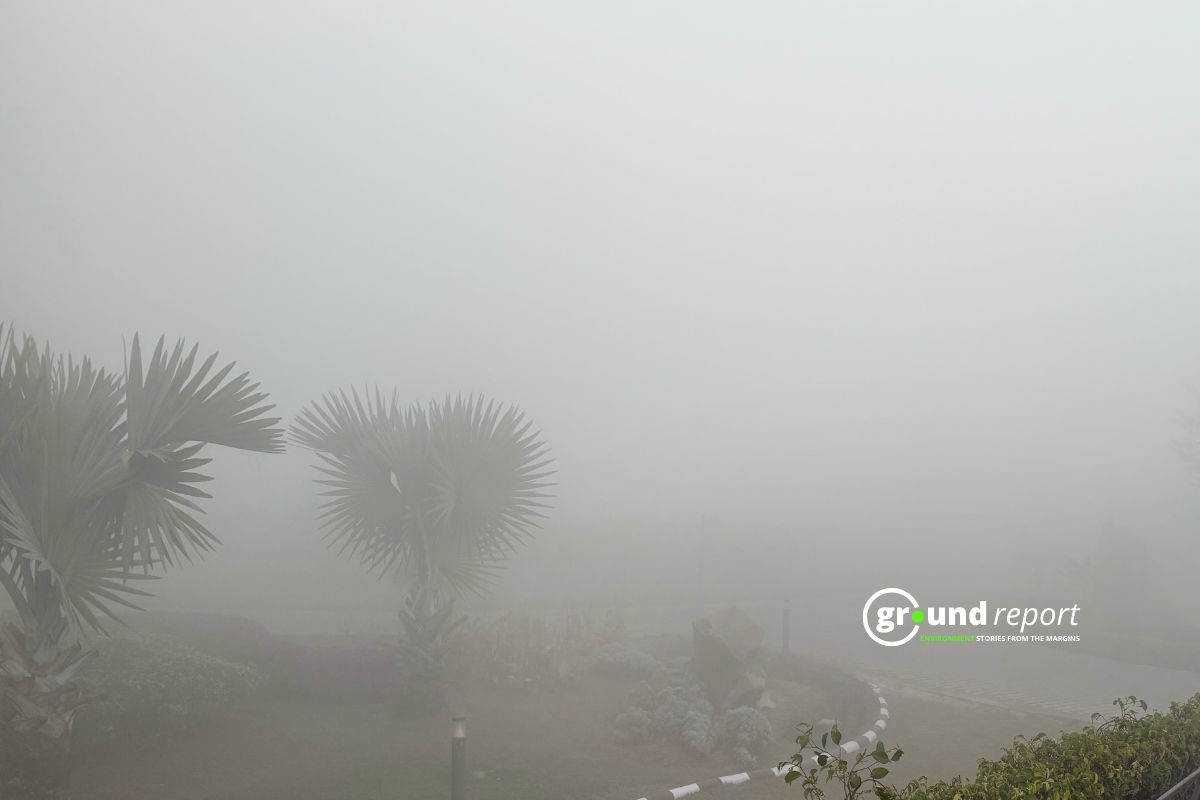
Dense fog severely impacted visibility in several areas on Monday morning. Sehore and Morena reported visibility reduced to just 50 meters, while Ambah in Morena district recorded visibility of only 100 meters. Datia and Khajuraho also experienced dense fog conditions, with visibility ranging between 50 to 200 meters, causing difficulties for motorists and disrupting normal activities.
Fog continues to blanket Neemuch district, though residents have experienced some relief from morning and evening cold. The minimum temperature in Neemuch was recorded at 14 degrees Celsius on Monday, with the weather department forecasting light rain for the next two days.
Widespread Rain Alerts Across State
Rain alerts have been issued for 25 districts on Monday, including Gwalior, Rewa, Sagar, Neemuch, Mandsaur, Agar-Malwa, Rajgarh, Vidisha, Guna, Ashoknagar, Shivpuri, Datia, Sheopur, Morena, Bhind, Damoh, Niwari, Tikamgarh, Chhatarpur, Panna, Satna, Maihar, Mauganj, Sidhi, and Singrauli.
The meteorological department attributes the unsettled weather to an active Western Disturbance affecting west-north India between February 2 and 5. This system has also brought jet stream winds to the region, with speeds reaching 220 kilometers per hour at an altitude of 12.6 kilometers over north India on Sunday. These powerful winds have contributed to the cold conditions across Madhya Pradesh cities.
Early Monday morning saw widespread rainfall across the state. Gwalior experienced light rain accompanied by cold winds, causing temperatures to drop further. Agar Malwa has been receiving intermittent rainfall for three consecutive days, affecting normal life and potentially impacting crops. Ashoknagar district received moderate rainfall around 5 am, with water falling intermittently over approximately six hours.
Tikamgarh witnessed cloudy skies with light rain starting in the morning. The changing weather conditions have intensified the cold across multiple districts, making conditions uncomfortable for residents.
Temperature Patterns Across Cities
Night temperatures in major cities remained above 12 degrees Celsius, while Khajuraho, Rajgarh, and Naugaon recorded temperatures below 10 degrees Celsius. Sehore recorded a minimum temperature of 14 degrees Celsius, with cloudy conditions preventing sunshine even until 8 am.
The weather department forecasts continued rainfall through February 3 in districts including Gwalior, Bhind, Morena, Datia, Niwari, Tikamgarh, Chhatarpur, Panna, Satna, Maihar, Katni, Umaria, Shahdol, Rewa, Mauganj, Sidhi, and Singrauli. On February 4, scattered rain is expected in Gwalior, Bhind, Morena, Sheopur, Datia, Shivpuri, Guna, Ashoknagar, Niwari, Tikamgarh, and Chhatarpur.
No thunderstorm or rain alert has been issued for February 5, though meteorologists warn that cold conditions may intensify.
According to the weather department, when the weather system returns after heavy snowfall and rain in Himachal Pradesh, Uttarakhand, and Jammu and Kashmir, another round of cold weather will likely affect Madhya Pradesh, with temperatures expected to drop during both day and night.
Rain remains possible in some parts of the state until February 10 as the Western Disturbance continues its influence over the region. Farmers remain concerned about the impact on wheat, gram, and mustard crops, with government authorities beginning surveys to assess agricultural damage across affected districts.
Support us to sustain independent environmental journalism in India.
Keep Reading
Story of Mala Nimbalkar: Rag Picker to Manager of MRF centre in Bhopal
In Bhopal’s Idgah Hills, Who is Segregating Our Plastic Waste?