A controversy over alleged cow slaughter at a municipal modern slaughterhouse in Jinsi, Bhopal has triggered arrests, political clashes, and protests since mid-December 2025.
The incident began when Hindu right-wing activists intercepted a truck carrying meat on the night of December 17, 2025, near the Police headquarters in Bhopal under jurisdiction of Jehangirabad police station.
The case has drawn attention to India’s complex relationship with beef and buffalo meat. While cow slaughter is banned in Madhya Pradesh, the state remains a significant exporter of buffalo meat, known as carabeef, which is legal in India.
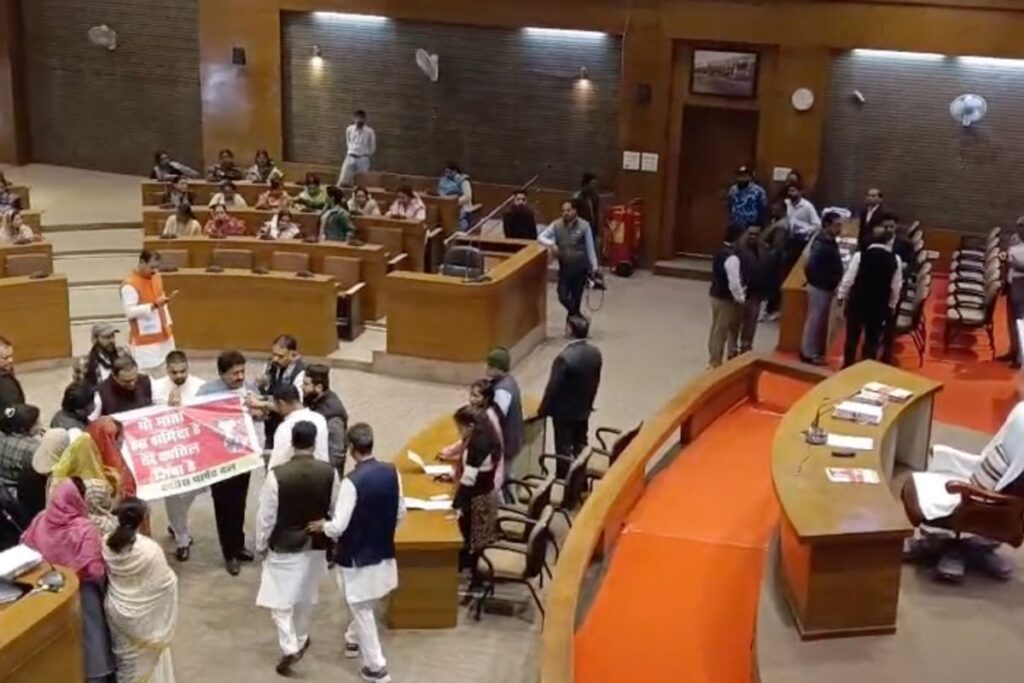
This escalated into debate about cow protection laws, municipal oversight, and political accountability in Madhya Pradesh.
Though the case is in the limelight, things which led to this escalation started some time in September 2025. Let us break down the timeline.
Timeline
September 23, 2025:
Congress state chief Jitu Patwari launched an attack on the BJP, alleging the government imposed zero percent GST (Goods & Services Tax) on beef while claiming to protect cows. He announced protests on September 26-27 to expose cow slaughter under BJP rule.
Patwari presented district-wise export data showing Indore topped with beef exports worth Rs 9,387.60 crore, followed by Dhar Rs 8,338 crore, Bhopal Rs 8,499.9 crore, Morena Rs 7,746.6 crore, and other districts. He stated meat production in Madhya Pradesh reached 152,250 tonnes in 2023-24.
BJP spokesman Ajay Singh Yadav rejected the allegations as false and baseless, saying Congress was trying to mislead people on GST.
September 24-25, 2025:
The political row intensified as BJP leaders denied cow slaughter allegations. Minister of Farmer Welfare and Agricultural Development of Madhya Pradesh, Aidal Singh Kansana said the government would never allow cow slaughter. BJP spokesperson Shahnawaz Hussain said people misrepresent buffalo meat as beef. Chief Minister Mohan Yadav hit back, alleging Congress has close relations with cow smugglers. Congress held protests across Madhya Pradesh on September 26-27.
August-October 2025:
Multiple beef seizures occurred across Bhopal before the main controversy. On August 18, Bajrang Dal workers intercepted an autorickshaw carrying meat in Aishbagh. Police arrested Mohd Rusi under National Security Act (NSA) on September 28. On October 5, activists intercepted a vehicle on Parwalia Road with nearly 100 kilograms of meat. Another car was seized on October 6 near Parvalia Sadak police station.
December 17, 2025:
Bajrang Dal activists led by Chandrashekhar Tiwari intercepted a container truck with Meerut registration near Police Headquarters in Jahangirabad. The truck was heading to Mumbai with 26.5 tonnes of meat. Activists claimed it contained cow meat from the Jinsi slaughterhouse. Police seized the container and sent samples to Veterinary College Forensic Laboratory in Mathura.
The slaughterhouse, operated by Livestock Food Processors Private Limited under Aslam Qureshi, had started operations barely a month earlier.
January 7, 2025:
Police registered a case and sent the meat sample for forensic testing to determine whether it was beef. The hostel mess was temporarily shut down pending investigation. Hospital and hostel authorities launched an internal inquiry.
January 8, 2026:
Bajrang Dal members staged protests outside the Police Commissioner’s office demanding strict action against those responsible for the illegal slaughter and transport of cow meat, including the operators of the Jinsi municipal slaughterhouse.
The protests came nearly three weeks after the initial seizure as stated by Bajrang Dal, who said activists had grown impatient waiting for the results.
January 9, 2026:
Bhopal Municipal Corporation (BMC) sealed Jinsi slaughterhouse after forensic reports confirmed the seized meat was cow meat. Police registered a case under the MP Cow Slaughter Prohibition Act and arrested operator Aslam Qureshi and driver Shoaib. Congress workers protested at BMC office, with spokesperson Amit Sharma alleging municipal officials and BJP leaders were involved.
Sharma questioned the three-week delay between the December 17 seizure and sealing action. Bhopal’s Mayor Malti Rai stated the administration took necessary action after samples confirmed the samples had cow meat.
January 10, 2026:
Police sent Aslam Qureshi and driver Shoaib to jail. The role of BMC veterinary staff came under scrutiny as officials noted meat processing requires routine inspection and certification. Huzur MLA Rameshwar Sharma called the episode serious and said cases could be pursued under the National Security Act (NSA).
January 12, 2026:
BMC officials handed CCTV footage of Jinsi slaughterhouse to police. Investigators said that the footage showed no cows being brought into or slaughtered at the facility. Sources claimed banned meat may have been brought from outside and only packaged at the slaughterhouse before being supplied to Mumbai, Uttar Pradesh and other states.
Police said the smuggling network was linked to Jabalpur with consignments transported through the Betul route.
January 13, 2026:
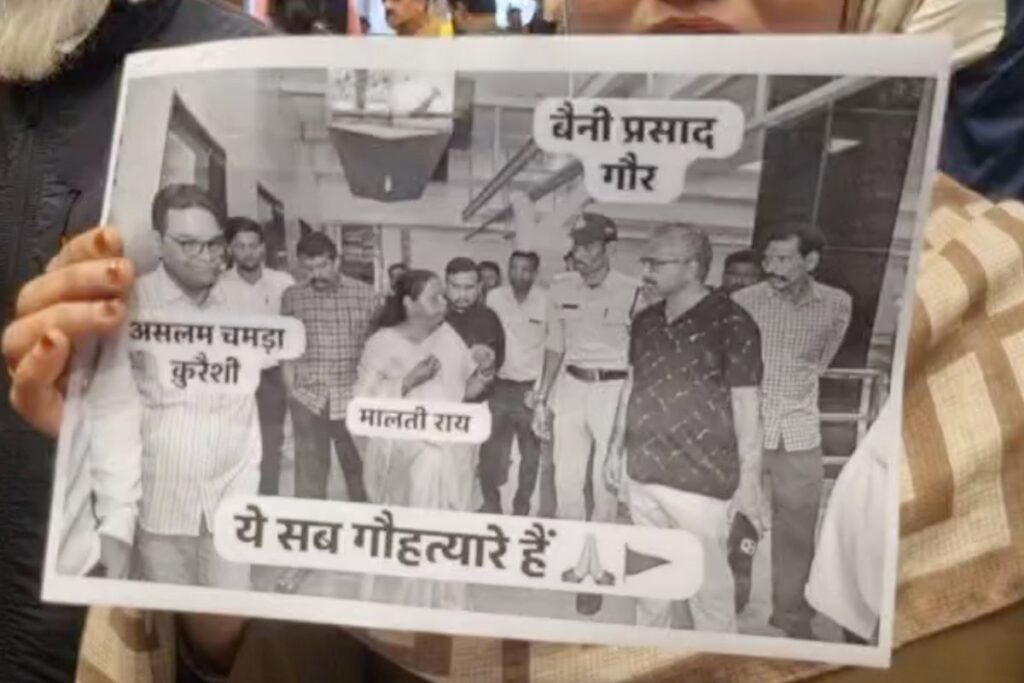
Karni Sena protested outside BMC headquarters at Inter State Bus Terminal, ISBT, Bhopal and attempted to burn an effigy of Mayor Rai for alleged negligence.
Congress state president Jitu Patwari alleged the state government promotes cow meat sale, citing zero percent GST and quality certificates issued by the government. He referenced the slaughterhouse case as proof of BJP’s dual face on cow protection.
January 14, 2026:
The BMC council meeting witnessed heated exchanges between BJP and Congress councillors. BMC chairman Kishan Suryavanshi confirmed the corporation had not received the FSL report, drawing criticism.
Hindu Utsav Samiti chairman Chandrashekhar Tiwari demanded police take remand of Aslam Qureshi to allow further questioning and investigation into the wider network.
January 15, 2026:
The slaughterhouse operator was blacklisted and 12 employees were suspended. Cabinet Minister Vishwas Sarang stated Chief Minister Mohan Yadav ordered strict action aaginst all guilty parties.
Madhya Pradesh Cow Protection Laws
Madhya Pradesh has maintained strict laws regarding cow slaughter since 1959. The Madhya Pradesh Agricultural Cattle Preservation Act bans the slaughter of cows, bulls, and bullocks. The amendments in 2012 increased the maximum punishment to seven years imprisonment for such crimes.
The law also prohibits the sale, transport, and storage of beef. Violators face fines and jail time.
The BJP has governed Madhya Pradesh since 2003, except for a brief period from 2018 to 2020. The party has consistently emphasized cow protection as a policy priority. The state operates gaushalas (cow shelters) and has set up dedicated police units to enforce anti-slaughter laws.
Ground Report had written about the condition of these shelters in detail.
India’s Beef Export Data
India is one of the world’s leading exporters of Beef meat, primarily carabeef. In the fiscal year 2023-2024, India exported approximately $3.74 billion worth of buffalo meat products totaling 1.29 million metric tons.
According to data cited by Congress leaders, Madhya Pradesh’s meat production in 2023-24 reached 152,250 tonnes. Uttar Pradesh produces 43 percent of India’s beef. Andhra Pradesh, Maharashtra, and Punjab are among the top exporting states.
Major export destinations for Indian buffalo meat include Vietnam, Malaysia, Egypt, Iraq, Saudi Arabia, Indonesia, and the United Arab Emirates. These countries accounted for nearly 65 percent of India’s carabeef exports in 2023.
According to USDA projections, India’s carabeef exports are forecast to reach 1.58 million metric tons in 2025, virtually unchanged from 1.56 million metric tons in 2024. Export growth is expected from markets in Egypt and Middle Eastern countries, while exports to Southeast Asian countries, especially Indonesia, are foreseen to be weak.
Support us to keep independent environmental journalism alive in India.
Keep Reading
Small Wild Cats in Big Trouble: India’s First National Report Released
After Tragedy, Families Face Delays in Tiger Attack Compensation
Stay connected with Ground Report for underreported environmental stories.