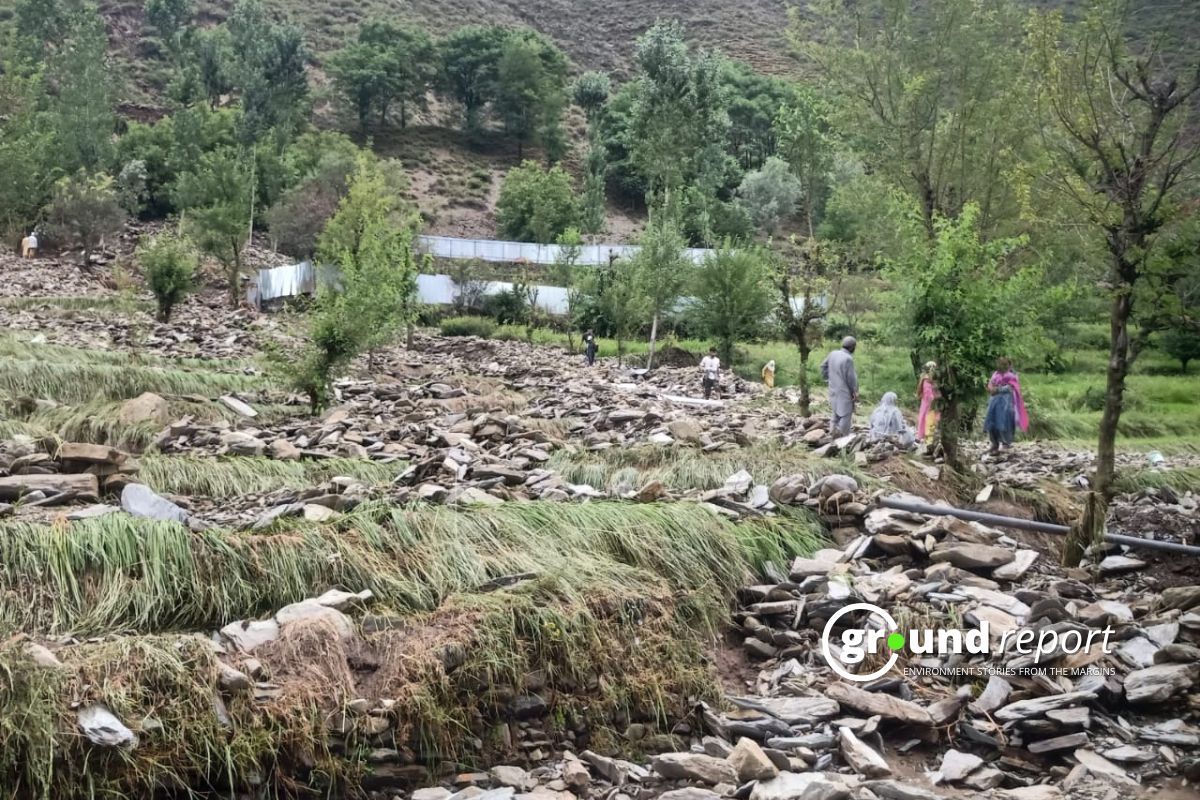
India’s 2025 monsoon season wasn’t just another rainy period. It turned into one of the world’s worst climate disasters, killing over 1,860 people and draining $5.6 billion from India and Pakistan combined. A new global report from Christian Aid, “Counting the Cost 2025”, shows this disaster ranked fifth among the 10 costliest extreme weather events that hit the planet this year.
May 2025 broke records as India’s wettest May ever documented. The rains kept coming. By September, India had received 8 percent more rainfall than normal. Weather officials counted 2,277 separate flooding and heavy rain incidents across just four months.
The monsoon arrived early and hit hard. Rivers burst their banks. Farms vanished underwater. Mountain regions faced deadly landslides and sudden floods. Melting glaciers made everything worse. Thousands of towns found themselves completely submerged.
Pakistan suffered alongside India. More than seven million Pakistanis alone felt the disaster’s impact. Homes washed away. Crops were destroyed. Families lost everything they owned.
Poor Countries Pay Highest Price
Christian Aid, a global charity fighting poverty, released these findings in their yearly report called Counting the Cost 2025. The report reveals something striking: while rich countries can measure their losses in insurance money, poor countries measure theirs in lives lost.
Asia bore the worst of it. Four of the six most expensive disasters happened in Asian countries. But expense doesn’t tell the whole story. India and Pakistan’s monsoon killed more people than any other single disaster on the list, even though it ranked only fifth in financial cost.
Mohamed Adow runs Power Shift Africa, a research group. He explained the unfairness clearly: “While wealthy nations count the financial cost of disasters, millions of people across Africa, Asia and the Caribbean are counting lost lives, homes and futures.”
What Happened Around World
Christian Aid’s report tracked 10 major disasters worldwide. Together, they cost more than $120 billion. California’s wildfires alone accounted for half that amount at $60 billion. The fires killed over 400 people when counting both direct deaths and those who died from related causes.
Southeast Asian countries got hammered in November. Cyclones and floods killed more than 1,750 people across Thailand, Indonesia, Sri Lanka, Vietnam and Malaysia. The damage bill reached $25 billion.
China faced devastating floods that forced thousands from their homes. At least 30 people died. The cleanup cost hit $12 billion.
World’s 10 Costliest Disasters
| Disaster | Location | Deaths | Cost (Billions) |
|---|---|---|---|
| Palisades and Eaton Fires | California, USA | 400+ | $60 |
| Cyclones and Floods | Southeast Asia | 1,750+ | $25 |
| Flooding | China | 30+ | $11.7 |
| Hurricane Melissa | Jamaica, Cuba, Bahamas | Not finalized | $8 |
| Monsoon Floods | India and Pakistan | 1,860+ | $5.6 |
| Typhoons | Philippines | Hundreds | $5+ |
| Drought | Brazil | Not specified | $4.75 |
| Ex-Tropical Cyclone Alfred | Australia | 1 | $1.2 |
| Cyclone Garance | Réunion, East Africa | 5 | $1.05 |
| Flash Flooding | Texas, USA | Not specified | $1+ |
These dollar amounts only show insured losses. The real costs run much higher. Many people in poor countries don’t have insurance. Their losses never get counted in official numbers.
When homes wash away, crops die, and animals drown, poor families have no safety net. They can’t rebuild easily. They can’t replace what they lost.
Patrick Watt runs Christian Aid. He said this year showed the harsh reality of climate breakdown. Violent storms, severe floods and long droughts hit poorest communities first and hardest.
India’s Full Disaster Picture Worse
Another group called Centre for Science and Environment dug into India’s official data. What they found was shocking.
India faced extreme weather on 99 out of every 100 days during the first nine months of 2025. Every single one of the 122 monsoon days brought extreme weather somewhere in the country.
The toll was massive: 4,064 people died, 9.47 million hectares of crops were damaged, 99,533 houses were destroyed, and nearly 59,000 animals were killed. And these numbers are incomplete. The real damage was likely higher.
Himachal Pradesh got hit worst. Natural disasters struck the state on 103 days. Gujarat and Madhya Pradesh each faced 94 days of disasters.
Scientists Say This Isn’t Natural
Joanna Haigh studies atmospheric physics at Imperial College London. She made a strong point: “These disasters are not ‘natural’, they are the predictable result of continued fossil fuel expansion and political delay.”
In other words, calling these events “natural disasters” misses the truth. Humans burning coal, oil and gas changed the climate. That made these disasters happen.
Haigh explained that such damaging events are happening more often and hitting harder because of human-caused climate change. The world keeps paying higher prices for a crisis we already know how to fix.
Why Poor Nations Suffer Most
Rich countries built better protection systems. They have insurance. Their buildings are stronger. When disaster strikes, they can rebuild faster.
Poor countries lack these advantages. They contributed least to causing climate change but suffer its worst effects. They need help adapting to the new reality, but they’re not getting enough support.
At the big UN climate meeting in November, called Cop30, wealthy nations promised to triple their financial help. By 2035, they’ll provide $120 billion yearly to help poor countries prepare for extreme weather.
Sounds good, right? The problem is it’s nowhere near enough. The actual need is much, much higher.
Patrick Watt pointed out that the suffering isn’t random bad luck. It’s the result of political choices. Governments keep allowing fossil fuel companies to operate. Emissions keep rising. Promises about climate money get broken.
Watt called on world leaders to actually do something in 2026. Poor communities need resources now to protect their lives, land and livelihoods.
The disasters themselves send a warning. If the world doesn’t rapidly move away from coal, oil and gas, things will get worse. Much worse.
At Cop30, countries tried to create mandatory plans for phasing out fossil fuels. That effort failed. Instead, it became voluntary, countries can choose whether to participate or not.
Still, some progress is coming. Brazil will lead work on fossil fuel phase-out roadmaps this year. Colombia will host a special conference in April focused entirely on moving away from fossil fuels. Over 80 countries plan to attend and support the effort.
What Happens Next Matters
The bill for extreme weather will keep climbing until greenhouse gas emissions actually drop. Every year of delay means more disasters, more deaths, more destroyed communities.
Watt summarized it simply: these climate disasters warn us what’s coming if we don’t speed up the transition away from fossil fuels. Poor countries especially need help adapting, because their resources are stretched thin and their people face the worst climate shocks.
The 2025 monsoon that devastated India and Pakistan was just one disaster on a growing list. Unless something changes soon, next year’s list will be even longer and more deadly.
Support us to keep independent environmental journalism alive in India.
Keep Reading
Small Wild Cats in Big Trouble: India’s First National Report Released
After Tragedy, Families Face Delays in Tiger Attack Compensation
Stay connected with Ground Report for underreported environmental stories.