A large-scale experiment in rural India has demonstrated that delivering treated water directly to homes can achieve near-universal adoption among poor households, offering a potential breakthrough in global efforts to provide safe drinking water to billions of people.
The study, conducted across 60,000 households in 120 villages in Odisha state, found that when clean water was offered at low prices or for free, more than 90 percent of families chose to use it. The results challenge decades of assumptions about how to solve one of the world’s most persistent public health problems.
“Our research shows that the goal of providing tasteless and safe drinking water that is also convenient to access can be achieved without relying on expensive pipe infrastructure,” said Fiona Burlig, an assistant professor at the Harris School of Public Policy at the University of Chicago and lead author of the study.
More than 2 billion people worldwide still lack access to safe drinking water at home. In low-income countries, only 14 percent of rural residents have clean piped water. The problem causes approximately 2 billion cases of diarrhea and half a million deaths among children under age five each year.
Testing a Market-Based Solution
The researchers partnered with Spring Health Water, a private company that operates solar-powered water treatment plants in rural Odisha. The company draws water from local wells or surface sources, treats it to remove bacteria and contaminants, then delivers it in sealed reusable bottles to households.
The experiment ran from May 2022 to August 2023. Researchers divided villages into three groups to test different pricing models. Some households could purchase water at discounts ranging from 10 percent to 90 percent off the regular price of 1.4 rupees per liter, roughly 1.7 cents. Others received up to 400 liters per month free. A third group could choose between free water or cash rebates if they declined their allocation.
The findings revealed stark differences in how people responded to various offers. At the lowest price tested, equivalent to 0.14 rupees per liter, about 89 percent of households ordered water. When water was completely free, take-up reached 90 percent.
“With the right incentives, simple water treatment and delivery could become a key tool to providing universal access to clean drinking water,” Burlig said.
These adoption rates far exceeded those of chlorine tablets, the most commonly promoted alternative for water treatment in developing countries. Previous studies have shown that chlorine tablets typically achieve take-up rates of only 46 percent, even when distributed for free. Many people dislike the taste chlorine leaves in water or find treating water at home inconvenient.
What People Will Pay
The study produced two key measures of how much households value clean water. The first, willingness to pay, estimated that families would spend an average of 132 rupees per month, about $20 annually, to access clean water. That represents approximately 1.5 percent of median household spending in the study area.
The second measure, willingness to accept, revealed something more striking. When offered cash rebates to give up their water entitlement, very few households took the money. Even when rebates were set at 100 percent of the water’s value, families continued ordering an average of 300 liters per month, forgoing 420 rupees in potential cash payments.
“We suggest that one approach to bringing clean water to the poor is to literally deliver it to them,” said Anant Sudarshan, professor at the University of Warwick and study co-author. “Small rural companies are increasingly providing this service but not at prices that most households can afford.”
The amount households were willing to forgo, roughly $60 per year, proved sufficient to cover the variable costs of providing water for free. This finding suggests governments could subsidize water delivery programs and still maintain financial sustainability.
Health Benefits & Time Savings
Households that drank the treated water reported fewer illnesses and missed fewer work days. In the group paying discounted prices, families reported 62 percent less sickness compared to control households. Those receiving exchangeable entitlements reported 36 percent less sickness, while the free ration group reported 23 percent fewer sick household members.
Health spending also declined. Families drinking treated water in the discount group spent 91 rupees less per week on medical expenses, a reduction of 37 percent. Work absences due to illness fell by similar margins.
The study did not conduct clinical health assessments. Instead, researchers relied on household surveys asking families to report illness symptoms, health expenses, and missed work in the previous week.
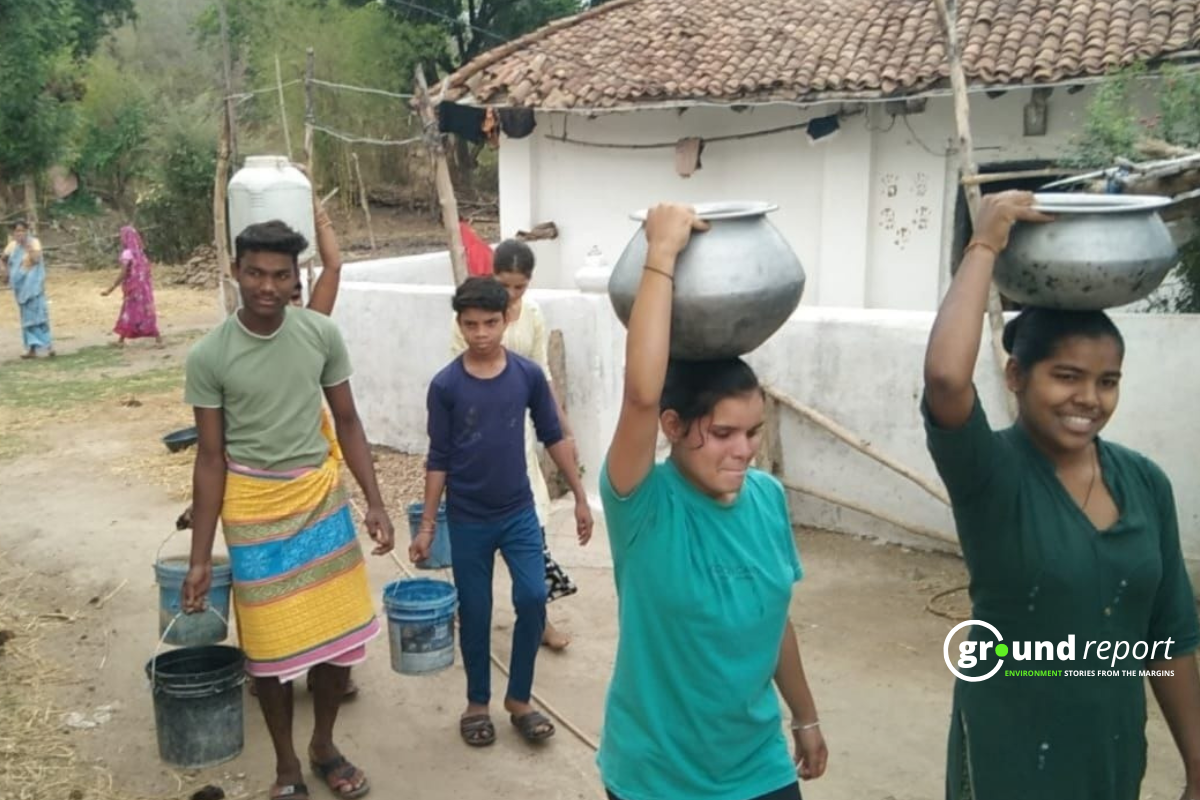
Clean water delivery also saved time. Control households spent an average of 32 minutes per day collecting water. Families receiving discounted water reduced collection time by nearly five minutes daily. Those in the free ration group saved more than 12 minutes per day.
“Households also said it saved time, as household members did not need to spend as much time collecting water from wells and fuelwood to boil it,” said Amir Jina, assistant professor at the Harris School of Public Policy and study co-author.
Cost Effectiveness Analysis
The researchers calculated that free home delivery of clean water costs between $71 and $226 per disability-adjusted life year saved. This metric, commonly used to evaluate health interventions, measures years of life lost to poor health or premature death.
By comparison, providing chlorine through dispensers costs $106 per disability-adjusted life year, while distributing chlorine coupons through maternal health centers costs $33. All three approaches fall well below standard cost-effectiveness thresholds set by international health organizations.
However, the higher take-up rates for delivered water meant it prevented more illness overall despite higher per-person costs. The study estimated net benefits of $2,256 per child for full-service water delivery, compared to $894 for chlorine dispensers and $673 for chlorine coupons.
Obstacles to Universal Access
Despite high demand at low prices, the study found households are quite price sensitive. As prices increased, fewer families ordered water. At the full market price of 1.4 rupees per liter, only about 1 percent of households purchased water regularly.
The research showed that private companies can operate profitably at higher prices, but these prices exclude most poor families. This explains why private water delivery services, while growing in developing countries, have not solved the access problem.
The study location, Odisha, ranks among India’s poorest states. In 2021, 83 percent of rural households lacked piped water. A 2023 survey of nearly 10,000 villages found 41 percent of the population lacked safe drinking water access.
Water testing conducted for the study revealed contamination in samples from wells, tube wells, and even piped water sources. Laboratory analysis detected E. coli and fecal coliform bacteria in all tap water samples tested. Only water treated by Spring Health showed no contamination.
Policy Implications
The findings suggest governments could rapidly expand clean water access by subsidizing private water delivery services. Many developing countries already operate large cash transfer programs. The study proposes allowing households to exchange part of their cash transfer for water delivery vouchers.
“We show that households value safe water and can afford it at discounted prices, suggesting that government subsidies or vouchers may be a good idea,” Sudarshan said. “We all look forward to a day when we have clean piped water in every home, but until we get there, this idea seems a highly promising solution to one of today’s biggest public health challenges.”
The decentralised treatment model requires far less infrastructure investment than piped water networks. Solar-powered treatment plants can operate without grid electricity, making them viable in remote areas. Spring Health has operated for more than a decade in several hundred villages across Odisha.
Support us to keep independent environmental journalism alive in India.
Keep Reading
Small Wild Cats in Big Trouble: India’s First National Report Released
After Tragedy, Families Face Delays in Tiger Attack Compensation
Stay connected with Ground Report for underreported environmental stories.