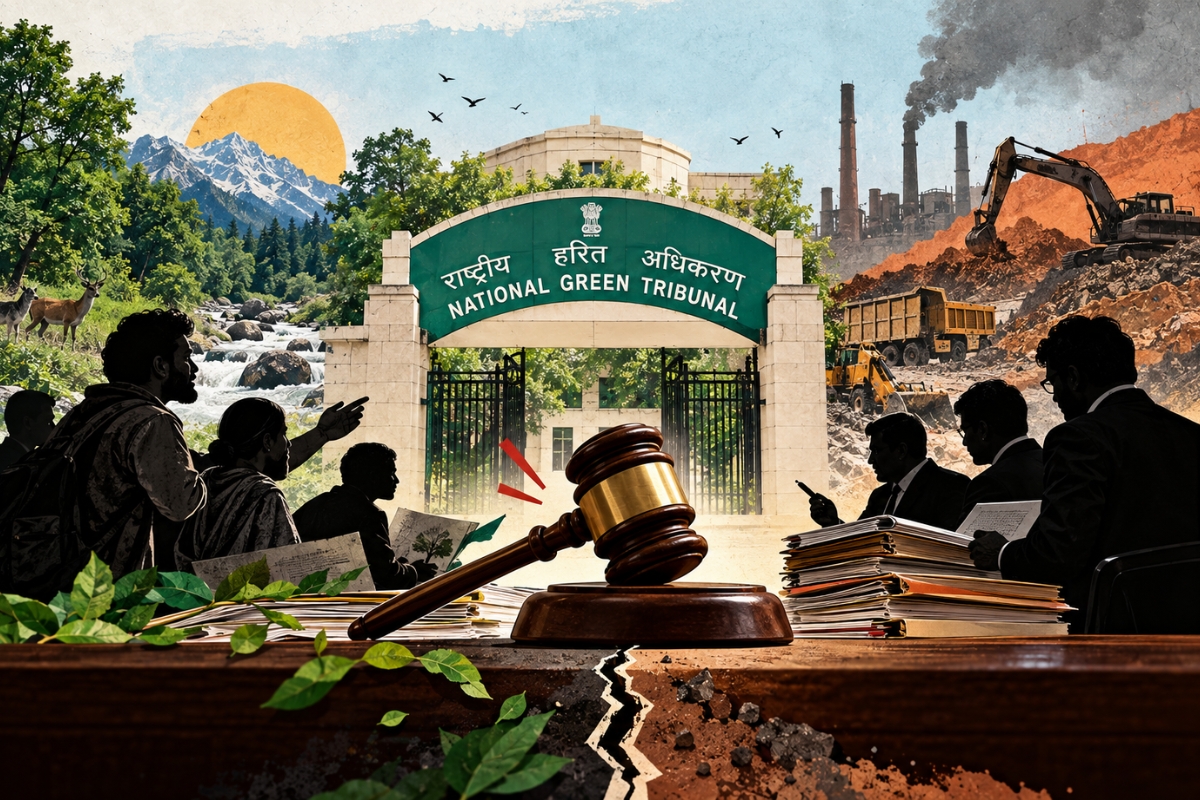

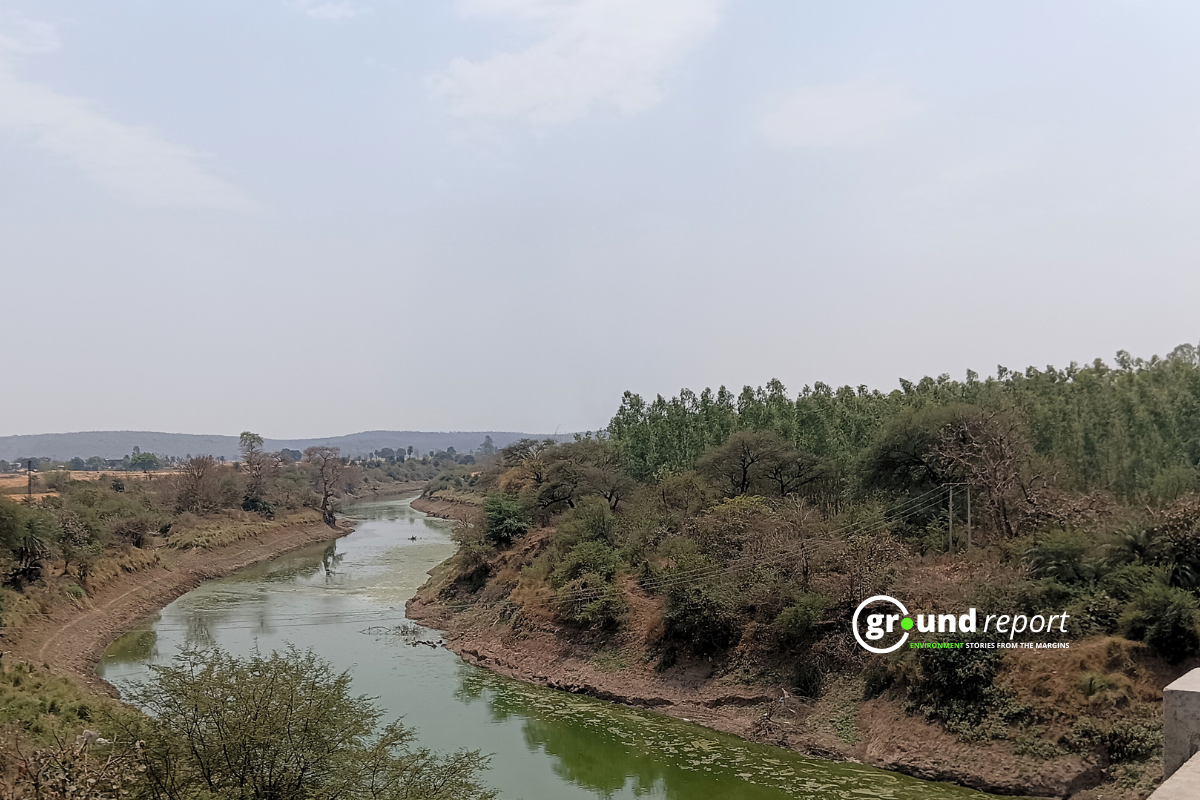
The National Green Tribunal has directed authorities to protect the origin point of the Betwa River in Madhya Pradesh’s Raisen district after allegations of illegal encroachment and tree felling threatened the water source.
Environmental activist Rahul Sharma filed a petition in March 2025 claiming that local individuals had blocked the river’s natural origin point at Jhiri village with soil, debris, and concrete. He also alleged that hundreds of trees near the source were being cut down, disrupting the ecological balance.
The tribunal formed a joint committee comprising officials from the Central Pollution Control Board, Madhya Pradesh Pollution Control Board, and Raisen district administration. The committee visited the site on September 13, 2025, to investigate the claims.
The inspection revealed multiple natural water sources at the origin point, including the main “Gomukh” structure which was found broken. “At the time of visit natural flow from Gomukh was observed,” the committee noted in its report.
Officials discovered several unauthorized structures at the origin point. These included a concrete temple covering approximately 400 square feet, a steel shade temple of similar size, a concrete platform on a natural water body, and a residential hut. The committee also found tree stumps protruding from the ground, confirming some tree cutting had occurred.
The origin site falls within the Ratapani Tiger Reserve under the Forest Department’s jurisdiction. Forest Superintendent Sunil Bharadawj informed the committee that a comprehensive conservation plan had been prepared. This plan includes constructing 118 percolation tanks, boulder check dams using 3,000 cubic meters of material, contour trenches, and plantation covering two hectares using specialized techniques.
The committee recommended strict measures to prevent further damage. “It is absolutely essential to control all unauthorized activities and strictly no more encroachments should allow there, otherwise, there remains a serious risk of the Betwa origin being damaged or blocked again,” the report stated.
Officials called for the immediate demolition of concrete structures near the water source. “All concrete structures near the stream must be demolished with immediate effect by the Forest Department with help of District Administration, Raisen and Police Department,” the committee directed.
To limit human interference while allowing religious access, the committee suggested installing a zigzag gate that permits only pedestrian entry. All vehicles would be restricted to the main road outside the origin area. This measure aims to protect both the water source and local wildlife.
The committee emphasized that all natural streams feeding the Betwa must receive equal protection, not just the marked origin point. Village Sarpanch Kamal Singh Gurjar and local residents informed officials that several other natural water sources existed in the vicinity.
The inspection team included Dr. Poulami C. Patil from the Central Pollution Control Board, Chandrashekhar Shrivastav from the revenue department, and Dr. K.N. Katare from the regional pollution control office. The applicant Rahul Sharma and volunteer legal expert Dr. Subhash C. Pandey also participated in the site visit.
The tribunal transferred the case from its Delhi bench to the Central Zone Bench in Bhopal for further proceedings. The Madhya Pradesh Pollution Control Board has been designated as the nodal agency for coordinating implementation of the committee’s recommendations.
Sharma had argued in his petition that the blockage violated the Water Act of 1974, the Environment Protection Act of 1986, and the Forest Conservation Act of 1980. He demanded the formation of an investigation committee, removal of encroachments, and legal action against those responsible for environmental damage.
The committee recommended that the Forest Department’s conservation plan be implemented with strict compliance to ensure the long-term protection of the Betwa River’s source.Retry
Support us to keep independent environmental journalism alive in India.
Keep Reading
Elephants Are Back in MP After a Century, But Can They Stay?
Solar Energy – A Paradigm Shift in Wildlife Conservation
Stay connected with Ground Report for underreported environmental stories.