Trigger warning: This article discusses suicide. If you or someone you know needs help, please contact a mental health professional.
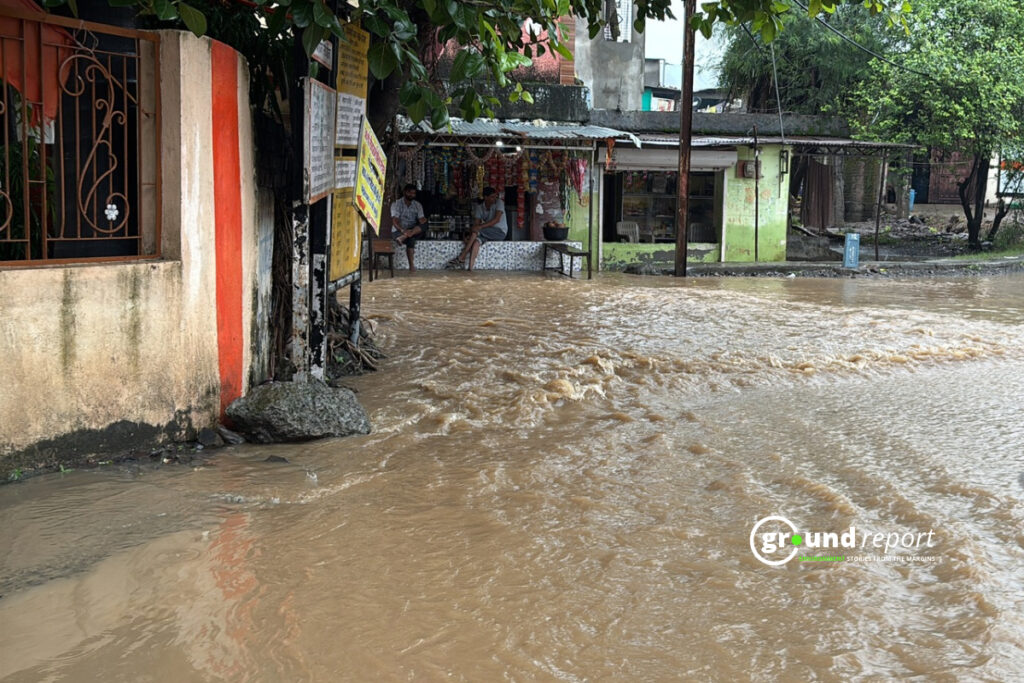
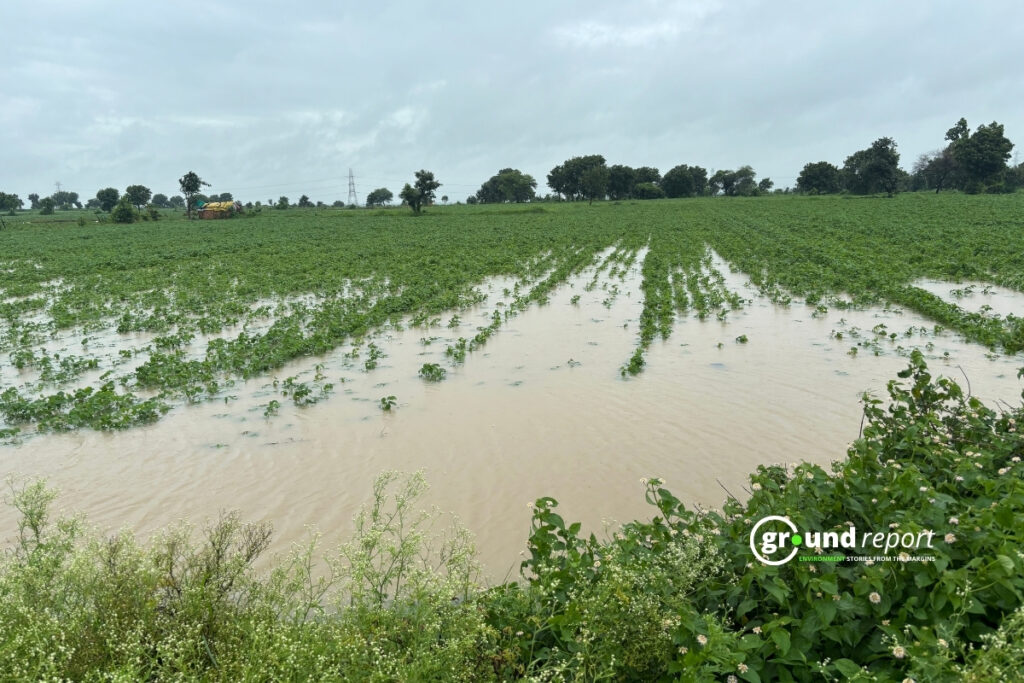
Following heavy rainfall in October 2025, water inundated Ram Singh Bhami’s fields in Bagla village, Ujjain district, destroying his soybean crop across seven bighas. After harvesting about three bighas, Bhami returned home and died by suicide on 4 October.
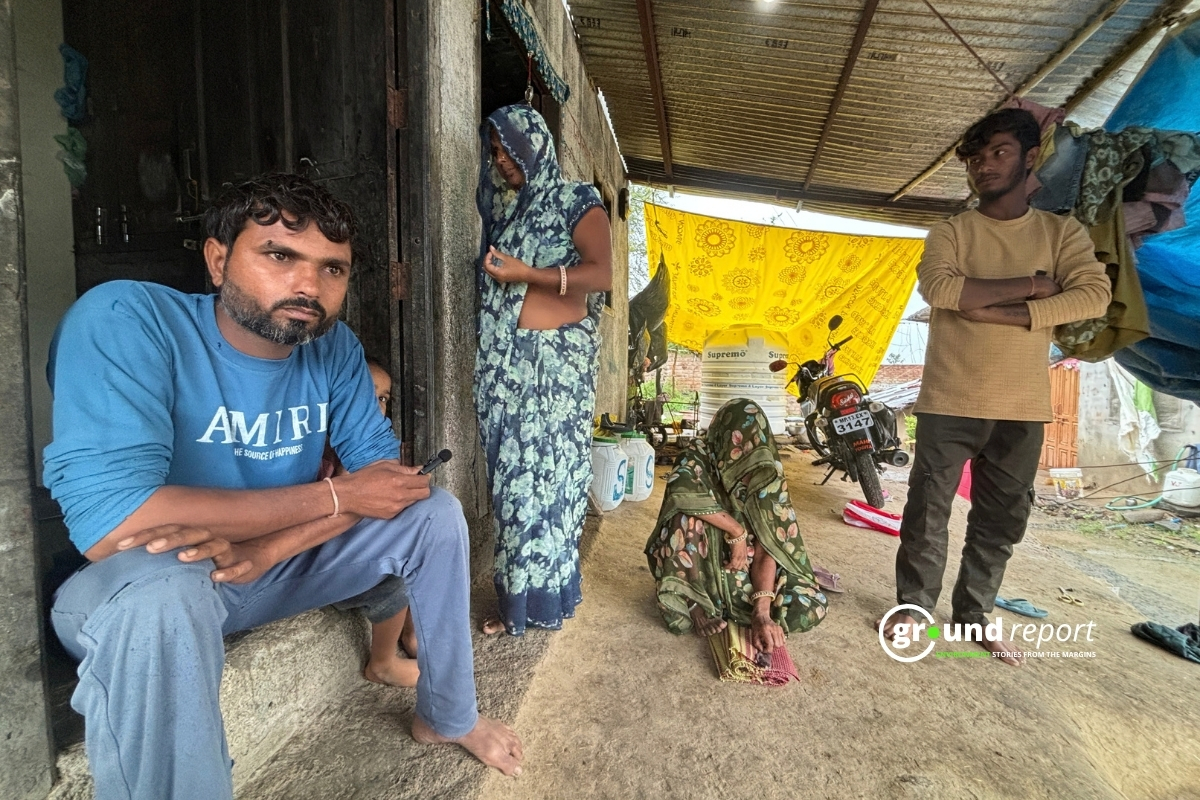
After her husband’s death, Rajubai (47) began experiencing sleeplessness, headaches, and anxiety. She believed that telling her son or daughter-in-law about her problems would only add to their stress. Her son, Sunil Singh, said his mother spends most of the day sitting quietly.
Sunil, who previously worked as a labourer, does not know how to farm. But the responsibility for the family, including its agricultural land, has now fallen on him. He says this leaves him worried.
Pankaj Malviya, from Kheda Jamunia village, posted a video on his WhatsApp status showing flattened wheat crops shortly before he died by suicide on 28 January this year. Media reports suggest that heavy rainfall, strong winds, and large hailstones damaged wheat and gram crops in the area.
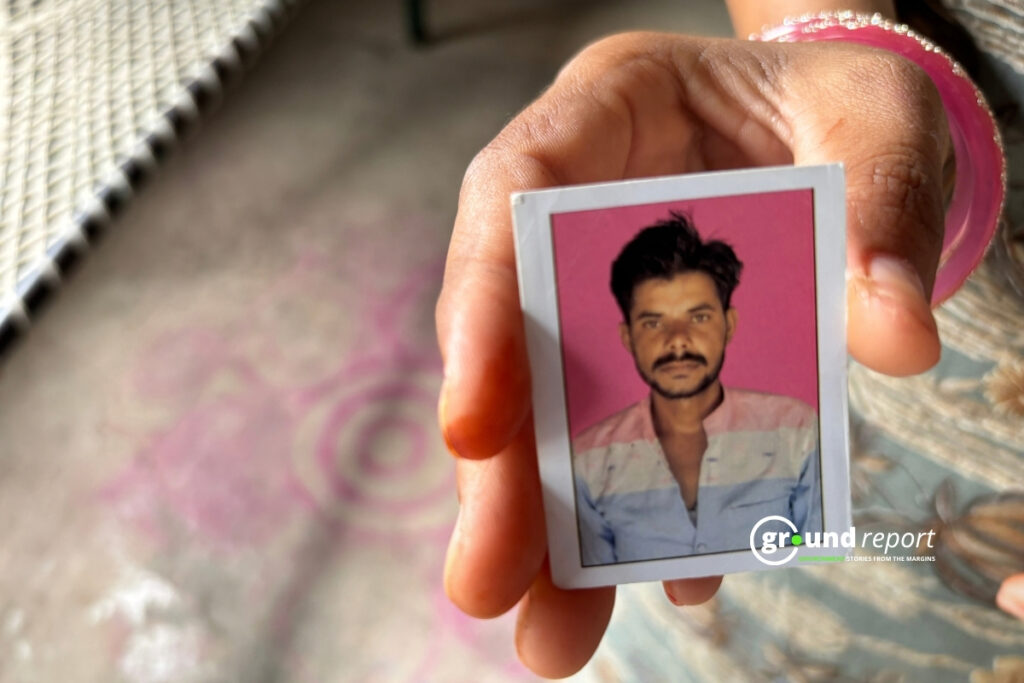
Pankaj’s sister, Payal Malviya (22), said three bighas of their wheat crop had been damaged. Following their father’s death two years earlier, Pankaj had become the only adult male in the family. Payal now lives with her mother and sister-in-law to support them. Now, three women manage farming.
At the time of his death, Pankaj owed at least ₹5 lakh. Payal said she avoids going to the market for several days whenever a lender comes to demand repayment. “If people see us in the market, they will think we are out shopping even though we haven’t repaid our loans,” she said, explaining her state of mind.
We met several families in Ujjain, the home district of Madhya Pradesh Chief Minister Dr Mohan Yadav, whose heads of household had died by suicide following excessive rainfall or other extreme weather events. At least one member of each family was struggling with a mental health problem.
Our investigation found that the administration had provided none of these families with mental health support. They had no access to the District Mental Health Programme, a decades-old initiative, and were unaware of the telephone counselling service introduced to improve access to mental healthcare.
The Mental Health Impacts of Extreme Weather
Pankaj Malviya’s family had planted soybean across eight bighas this year. Heavy rainfall in the first week of July, soon after sowing, inundated their fields and caused the seeds to rot. The family had to sow the crop again.
“Now it can rain at any time; sometimes it doesn’t rain at all, and sometimes there is hail. How are we supposed to repay our loans under these circumstances?” Payal Malviya asked.
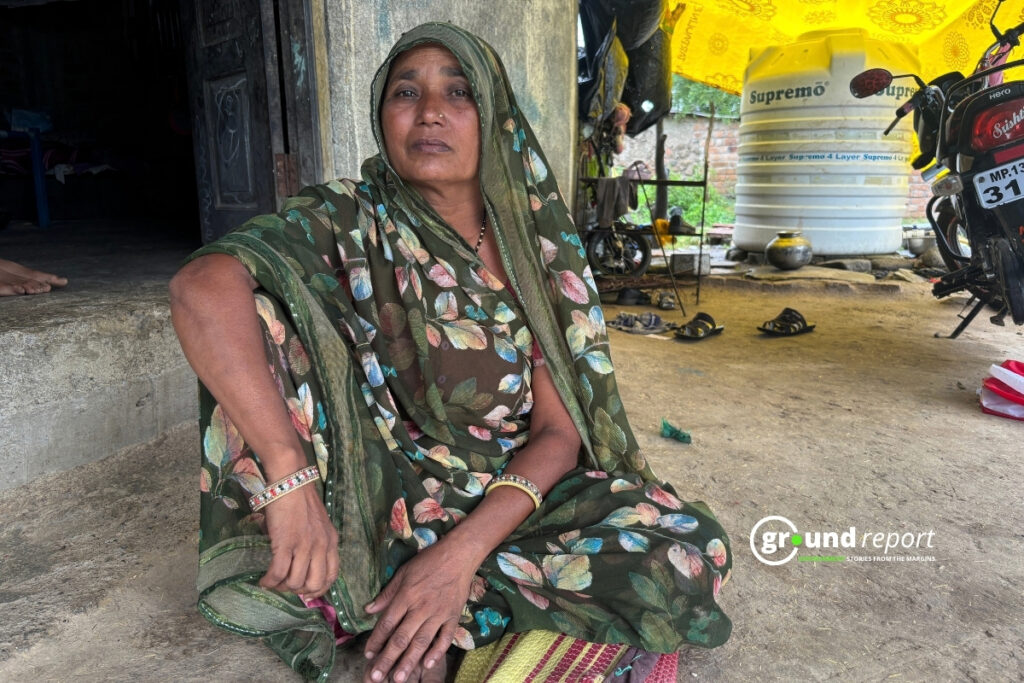
Because her fields lack irrigation facilities, Payal Malviya buys water from a neighbouring farm to irrigate her crops. Between 1 June and 28 September, Ujjain received 644.7 mm of rainfall, 27% below normal.
Excessive rainfall in the early weeks damaged her crop, while a prolonged dry spell later left it struggling for water. Eventually, she paid an increased price for water, which she said added to the family’s financial burden. Repeated agricultural losses have made the family’s financial situation increasingly difficult.
Ritu Bharadwaj, Director of Climate Resilience, Finance, and Loss and Damage at the International Institute for Environment and Development (IIED), has studied the effects of environmental changes on agriculture and mental health in Madhya Pradesh, other Indian states, and several countries.
Drawing on her experience, she explained that when the sole male member of a household dies by suicide, women are often left to manage everything alone, from ploughing the fields and handling loans to caring for children. This leaves them with little time to look after themselves or recover from their loss.
Extreme Events Increasing in Madhya Pradesh
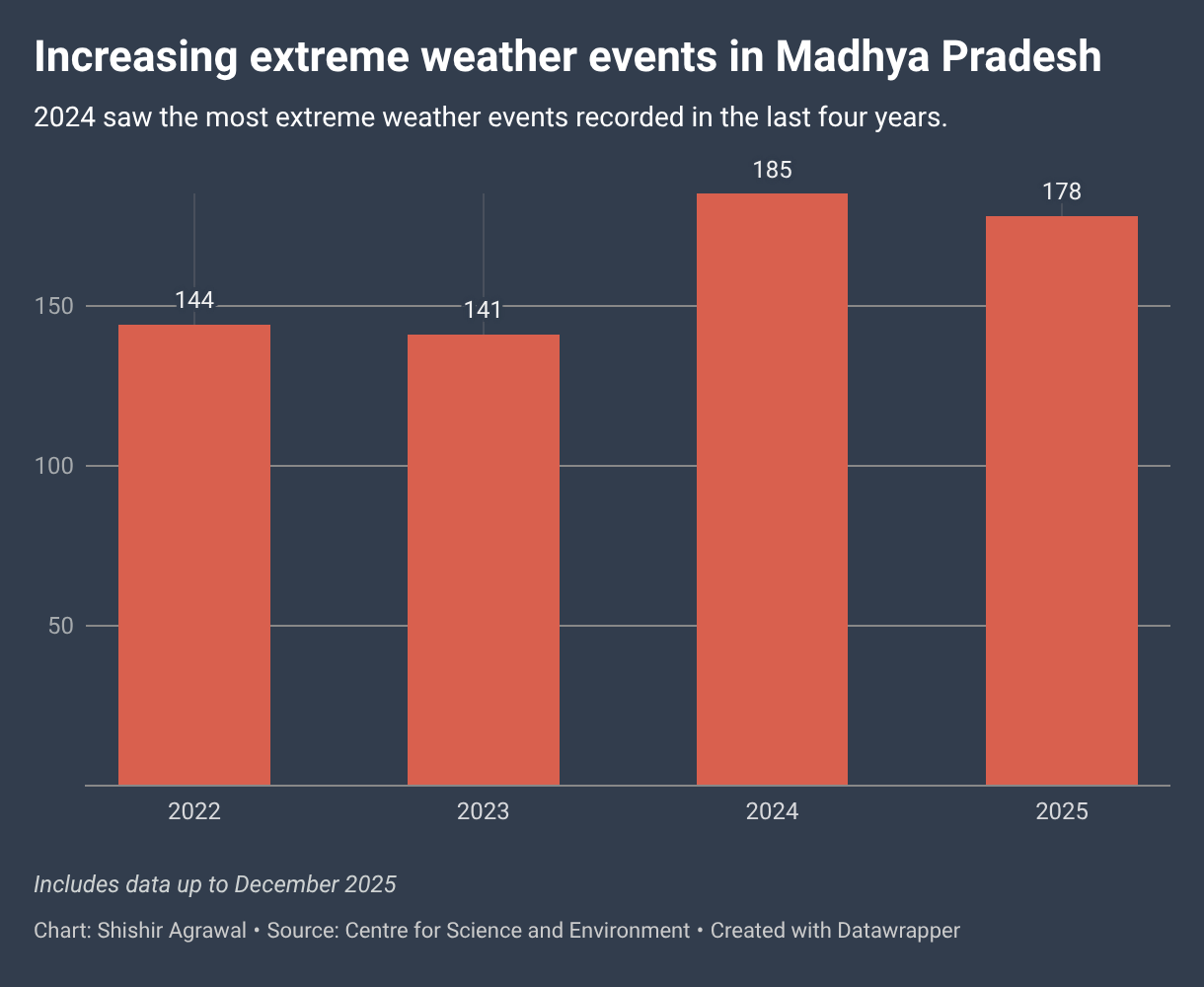
According to a report by the Centre for Science and Environment (CSE), central India recorded extreme weather events on 200 of the 273 days between 1 January and 30 September 2025.
Madhya Pradesh recorded the most such events in central India, with 144 days and the highest number of human deaths in the country, at 532. Approximately 12,000 hectares of crops were damaged in the state.
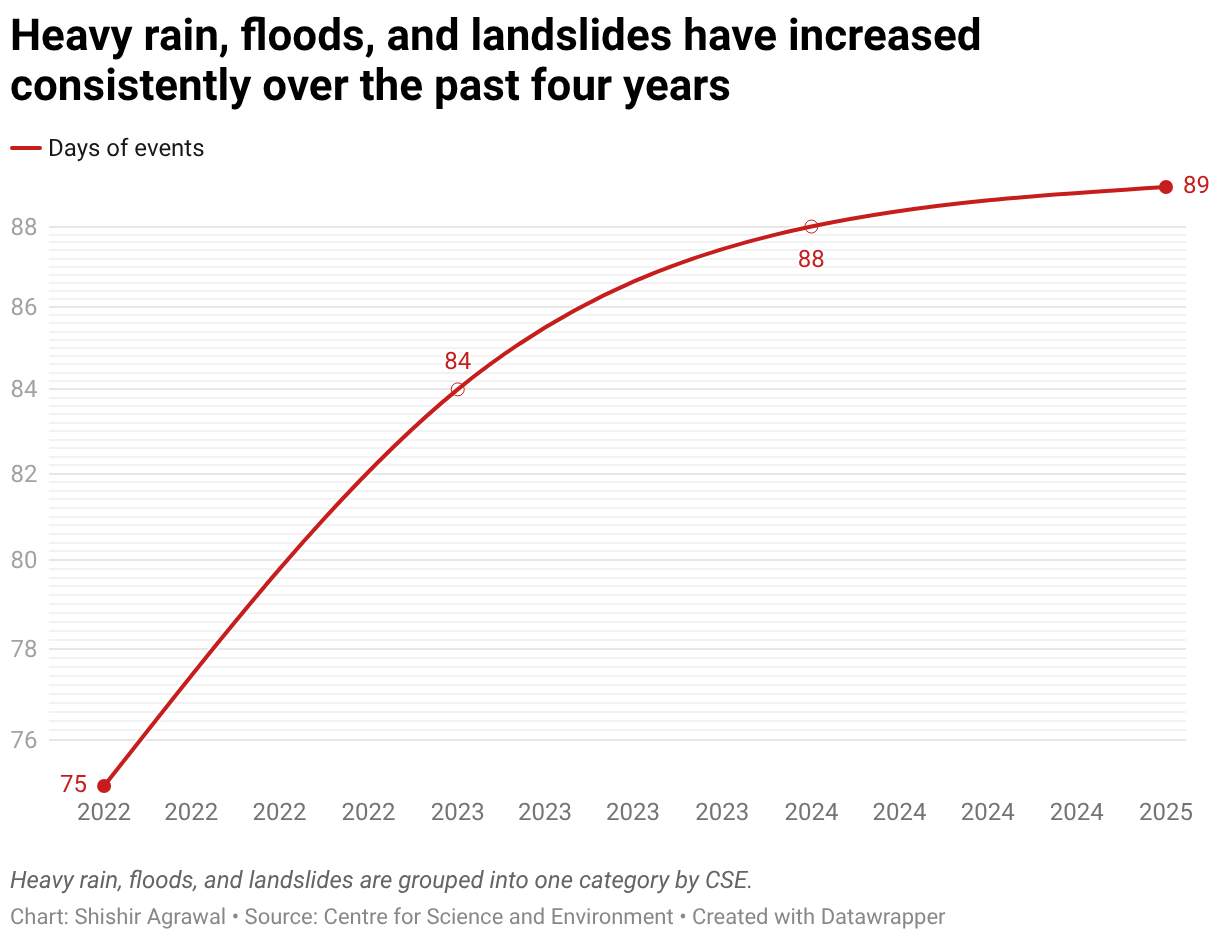
Kiran Pandey, Programme Director of CSE’s Environment Resource Unit, said the number of days with heavy rainfall, floods, and landslides in Madhya Pradesh steadily increased between 2022 and 2025.
Dr Arun Sharma, a senior scientist at the India Meteorological Department’s Bhopal centre, said intense rainfall events wash away soil minerals, ultimately affecting crop yields.
“Declining yields add to the distress of families already grieving a loss. Farming is their means of repaying loans and making a living,” said Ruhi Kumari, who works on advocacy related to climate change and mental health.
Farmer Families Lack Access to Mental Healthcare
A systematic review of 75 studies examining the psychological effects of extreme weather events in India found that the prevalence of mental health conditions among affected populations ranged from 5.8% to 87.6%.
The Comptroller and Auditor General of India (CAG) 2026 report noted that 13.90% of Madhya Pradesh’s population suffers from mental health conditions, higher than the national average of 10.70%.
The review found that floods disproportionately affect rural communities and people from lower socioeconomic backgrounds because their livelihoods depend heavily on the environment. When extreme heat and rainfall disrupt agricultural production, the burden of supporting their households can push farming families towards depression and suicidal thoughts.
On 18 February 2026, the Chief Minister told the Madhya Pradesh Legislative Assembly that the state had recorded 32,385 suicides between 13 December 2023 and 20 January 2026, including 562 farmers and 667 agricultural labourers.
This translates to approximately one farmer dying by suicide every two days and one agricultural labourer every day. However, the Chief Minister added that only two deaths were attributed to crop losses, noting that the government had not provided any financial assistance to the deceased’s families.
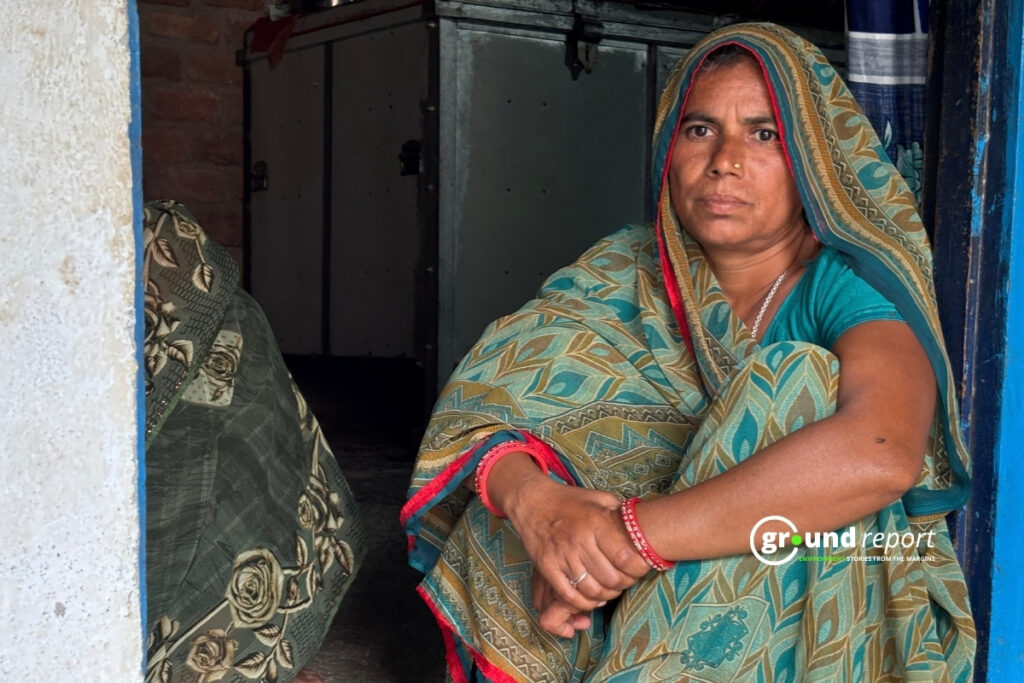
To address mental health, India’s District Mental Health Programme operates in 767 districts across India. Dr Neet Rajgauda, a psychiatrist at Ujjain District Hospital, said he sees about 30 patients daily, around 70% of whom come from rural areas.
Yet none of the five families we contacted knew about the mental health services available at the district hospital.
The CAG’s 2026 report found that Madhya Pradesh had no mental health policy, despite the National Mental Health Survey of 2015–16 recommending one. According to the audit, the state has just 0.05 psychiatrists per 100,000 people, compared with a requirement of at least one psychiatrist per 100,000 people. Government hospitals also face shortages of essential treatment equipment ranging from 47% to 100%.
On 10 October 2022, the central government launched two toll-free numbers—14416 and 1-800-891-4416—under the National Tele-Mental Health Programme, known as Tele-MANAS, to improve access to mental health counselling and care. The CAG report noted that 16% of calls to Tele-MANAS went unanswered, while 78% were disconnected prematurely.
Tele-MANAS has received more than 4.5 million calls across the country so far, as per the official dashboard. Yet neither Payal, who has completed her graduation, nor Bharadwaj, who has worked on technology-based solutions for farmers in Madhya Pradesh and elsewhere, knew about the service.
We called both numbers on four different days. Most of the time, we were told that all counselors were busy attending other calls.
On one occasion, however, we spoke to the Tele-MANAS cell in Indore. We identified ourselves as social workers. During a call lasting approximately half an hour, the counsellor listened to our concerns and advised us to take the patient to the Mankaksh (mental health unit) at the district hospital.
The counsellor suggested accessing government schemes to address the financial stress from agricultural losses. They acknowledged having no information about ways to reduce crop losses.
Bharadwaj said farmers needed a single helpline where they could seek assistance with crop-related problems, weather conditions and crop insurance, as well as their mental health.
Ruhi Kumari said that communities must take initiatives to improve the mental health of affected families. Local people experiencing the same changing weather conditions, she said, may be better placed to listen to and support families facing distress.
An example of this approach can be found in a district in Maharashtra.
The Halo Medical Foundation has spent the past 30 years working on women’s and children’s health in the Dharashiv district. Basavaraj Nare, the foundation’s project coordinator, said it had trained Accredited Social Health Activists (ASHAs) in the Lohara and Tuljapur talukas to provide mental health counselling, identify people with mental health conditions, communicate with them and take them to district hospitals when necessary.
The foundation did not receive support from the district administration for this training. Nare said government healthcare professionals providing psychological support at the district level often had limited awareness of the effects of climate change on farmers.
Kamlesh Rathore, Assistant Director of the Agriculture Department in Ujjain, does not consider extreme weather events responsible for the suicides in the district or their subsequent mental health impacts. He said assessing families’ mental health after such incidents did not fall within the department’s responsibilities.
Ruhi, however, believes the state needs a policy that addresses agricultural losses and mental health together.
For now, these families continue to struggle with immense psychological distress. They have received neither adequate mental healthcare nor support to reduce the effects of extreme weather events. Their struggle continues.
Note: Shishir Agrawal is a mentee of the Climate Change Media Hub at the Asian College of Journalism. The programme is supported by Interlink Academy, Germany.
Support Us To Sustain Independent Environmental Journalism In India.
More Ground Reports
How Madhya Pradesh Farmers Are Adapting Solar Pumps to Protect Them From Theft
Stay Connected With Ground Report For Underreported
Author
Support Ground Report to keep independent environmental journalism alive in India
We believe climate change should be the basis of current discourse, and our stories attempt to reflect the same.
Connect With Us
Send your feedback at greport2018@gmail.com
Newsletter
Subscribe our weekly free newsletter on Substack to get tailored content directly to your inbox.
When you pay, you ensure that we are able to produce on-ground underreported environmental stories and keep them free-to-read for those who can’t pay. In exchange, you get exclusive benefits.
Your support amplifies voices too often overlooked, thank you for being part of the movement.