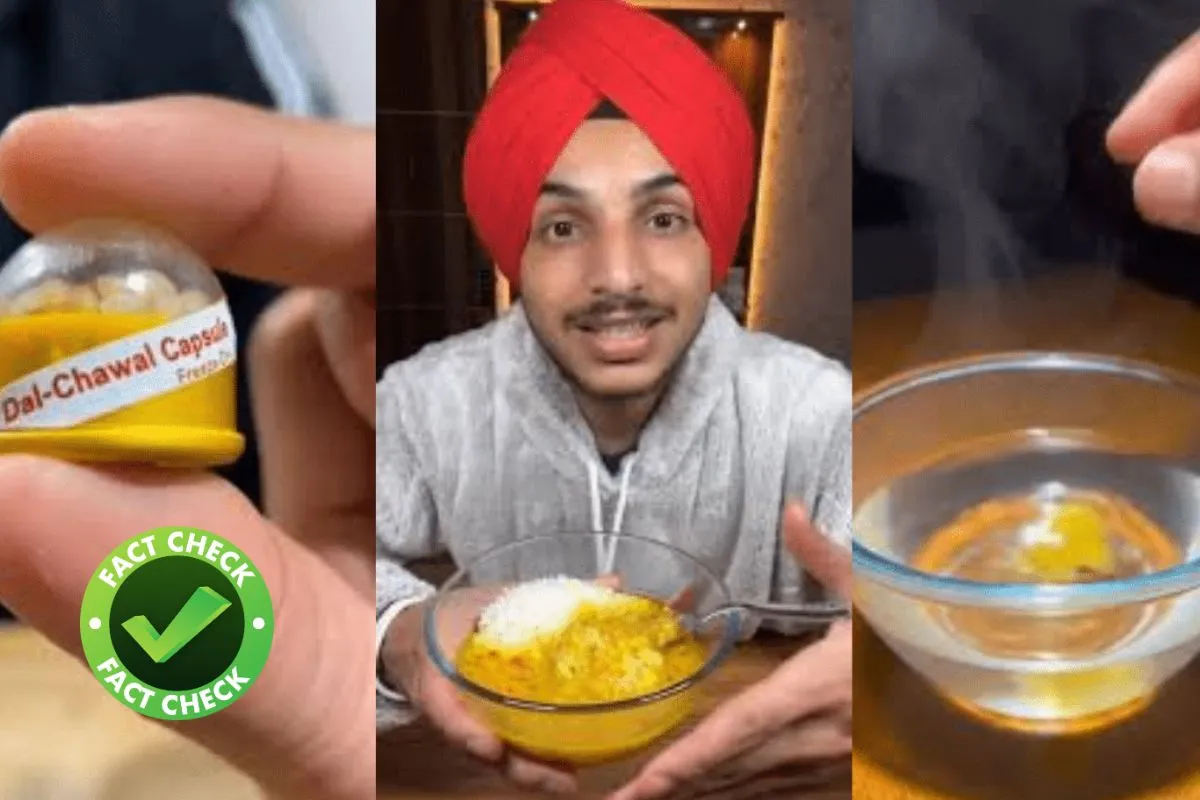
Videos showing people dropping small pills into boiling water and instantly producing plates of cooked dal and rice went viral on Instagram in early December 2024. The clips accumulated millions of views as people searched frantically to buy these miracle meal capsules. Influencers claimed the capsules were available on apps like Blinkit and Zepto for ₹50 to ₹200 each.
What Is the Claim
The viral videos followed a simple pattern. Creators held colorful capsules and dropped them into hot water. Within seconds, the capsules dissolved and transformed into fully cooked lentils and rice. The videos showed detailed product packaging and brand names. Influencers posted testimonials about taste and convenience.
The content looked professional with smooth editing and realistic packaging. Some creators had large followings which added credibility. Thousands of comments and shares created social proof. The videos used hashtags like #DalChawalCapsule and #InstantFood to spread.
People believed the videos because the concept seemed possible. Freeze-dried foods and instant meals already exist in stores. The idea of capsule meals did not seem impossible. The videos appealed to busy people who wanted quick cooking solutions.
What Is the Reality
No dal chawal capsule product exists. Searches on Amazon India, Flipkart, Blinkit, Zepto, Swiggy Instamart, BigBasket, and JioMart show zero results. No food company has released such a product. The Food Safety and Standards Authority of India has no approvals for meal capsules.
Food science makes these capsules impossible. A small pill cannot hold enough ingredients for a full meal. Rice and lentils need specific temperatures and cooking times to become edible. Even freeze-dried camping foods need five to ten minutes to rehydrate. The instant transformation shown in videos violates basic physics.
Truth
Creators made these videos using AI tools like Runway Gen-2, Pika Labs, and Stable Video Diffusion. These platforms generate realistic video clips from text descriptions. Users type prompts like “colorful capsule dissolving in water transforming into dal and rice” and the AI creates the video. Creators then edit the clips and add fake packaging.
Tech viewers spotted AI generation signs in the videos. Objects change size between frames. Textures shimmer unnaturally. Shadows do not match lighting. Some videos show distorted hands with extra fingers. The physics of dissolving capsules breaks natural laws. Some creators later added disclaimers stating the content was AI-generated. Others posted follow-up videos explaining the fake.
Support us to keep independent environmental journalism alive in India.
Keep Reading
Small Wild Cats in Big Trouble: India’s First National Report Released
After Tragedy, Families Face Delays in Tiger Attack Compensation
Stay connected with Ground Report for underreported environmental stories.