Young people around the world are demanding change. From 2024 to 2025, Generation Z protesters took to the streets in at least 13 countries. They want better jobs, honest governments, and a fair chance at life.
Table: Gen Z Protests Around World (2024-2025)
| Country | When It Started | What They Want | Deaths/Injuries | What Happened |
|---|---|---|---|---|
| Bangladesh | June 2024 | Fair jobs, end corruption | 1,400+ killed | Prime Minister fled country |
| Kenya | June 2024 | Lower taxes, cheaper living | 65+ killed, 531 hurt | Tax bill canceled, protests continue |
| Serbia | November 2024 | Fix corruption after building collapse | Unknown | Protests still going after 8 months |
| Indonesia | August 2025 | Stop giving politicians huge payments | 3,000+ arrested | Politicians lost their extra money |
| Nepal | September 2025 | Stop corruption, rich politicians | 74+ killed, 2,000+ hurt | Prime Minister quit, new leader chosen |
| Timor-Leste | September 2025 | No luxury cars for politicians | 12 arrested | Car buying stopped |
| Philippines | September 2025 | Stop stealing public money | 200+ arrested | Top politician resigned |
| Peru | September 2025 | Fix pensions, end corruption | Unknown | President removed |
| Madagascar | September 2025 | Water, electricity, better life | 22+ killed, 100+ hurt | Government dissolved, military took over |
| Morocco | October 2025 | Better hospitals, stop wasteful spending | 3 killed | Prime Minister facing pressure |
| Mexico | November 2025 | Stop violence, cartels, crime | Unknown | Protests ongoing |
| South Korea | December 2024 | Remove president after martial law | Unknown | President impeached in April 2025 |
| Maldives | October 2025 | Free media, honest government | 8 arrested | Protests ongoing |
Why Young People Are Protesting
Generation Z includes people born between the late 1990s and early 2000s. Most are now between 18 and 30 years old. They grew up with smartphones and social media. They see what life looks like in other countries. Generation Z know when their leaders are lying.
The protests started because young people face the same problems everywhere. They cannot find good jobs. Generation Z watch politicians get rich while regular people struggle. They see their parents working hard but getting nowhere. Generation Z want change now.
Kat Duffy works at the Council on Foreign Relations studying technology and policy. She said computers and robots are taking jobs that young people used to get. She said AI and automation will keep adding pressure to a weak job market. Young people expected to do better than their parents. Instead, they are doing worse.
How youth protests spread across countries
| Country | Trigger | What Happened | Outcome |
|---|---|---|---|
| Bangladesh | Job quota system | Students protested job reservations. Police used force. Over 1,400 died. | Hasina fled. Interim government formed. Party banned. |
| Nepal | Elites flaunting wealth online | Youth anger spread on TikTok and Instagram. Parliament burned. | PM quit. Online vote picked interim leader. |
| Indonesia | Lawmakers’ housing allowance | MPs approved large payments for themselves. | President canceled payments. Trust stayed low. |
| Timor-Leste | Luxury SUVs for MPs | Students protested SUV purchase amid poverty. | Parliament canceled cars and pensions. |
| Serbia | Train station roof collapse | Renovated roof killed 16 people. Corruption blamed. | Protests lasted months. Police violence reported. |
| Morocco | Maternal deaths | Eight women died in childbirth. Health system blamed. | Protests grew. Police killed two. Pressure on PM. |
| Madagascar | Power cuts and water shortages | Daily blackouts and no water sparked unrest. | President removed. Military-backed interim rule. |
| Kenya | New tax bill | Youth opposed higher taxes and living costs. | Bill withdrawn. Protests continued. |
| Philippines | Missing flood funds | Billions stolen from flood projects. | Speaker resigned. Probe launched. |
| Peru | Pensions and corruption | Protests demanded reforms and accountability. | President removed. Elections planned. |
| Mexico | Mayor’s murder | Killing linked to cartel violence and weak security. | Protests spread. Crime remains key issue. |
| South Korea | Martial law | President declared martial law. Youth mobilized fast. | President impeached. New election held. |
| Maldives | Woman’s mysterious fall | Youth demanded truth and accountability. | Arrests made. Protests ongoing. |
How Social Media Changed Everything
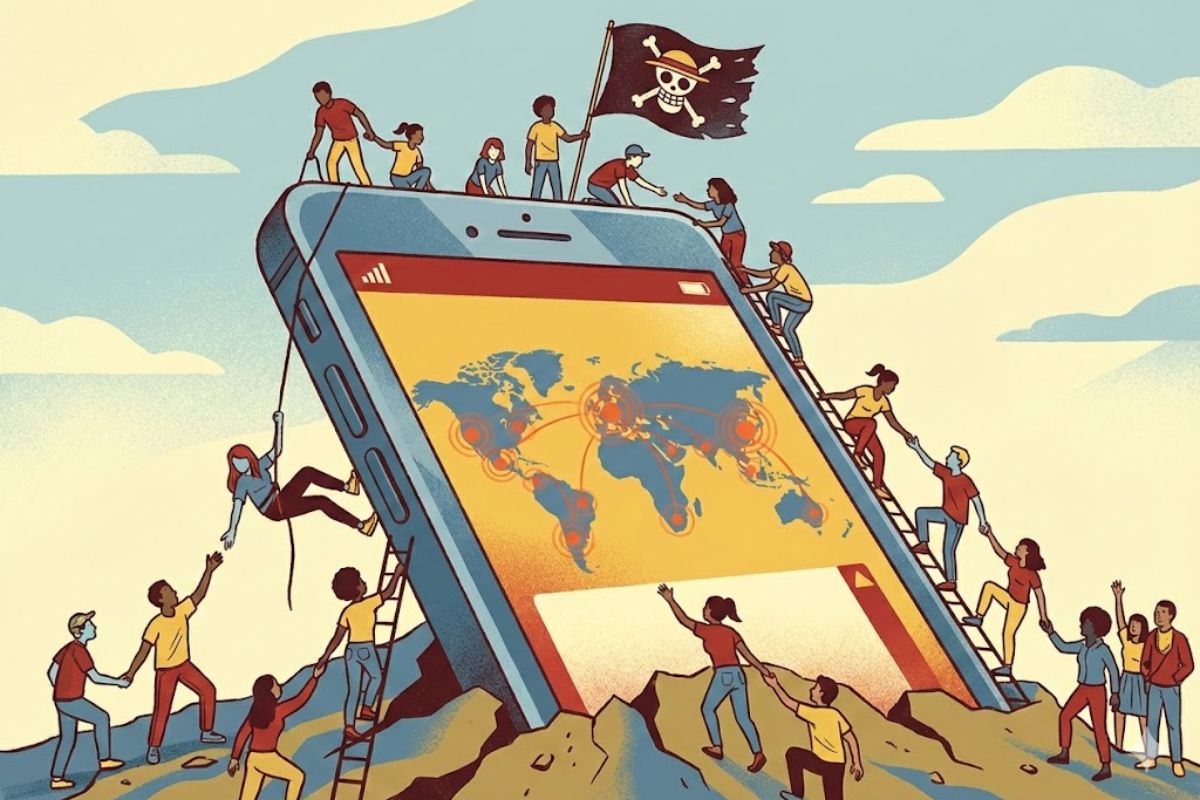
Young protesters use apps like Discord, TikTok, Instagram, and Facebook to organize. They share protest plans, livestream events, and spread their message worldwide.
The pirate flag from the One Piece cartoon became a symbol across many countries. The flag appeared in Indonesia, Nepal, Philippines, Peru, Madagascar, and Mexico. The show’s message about fighting corrupt governments speaks to young people everywhere.
Janjira Sombatpoonsiri studies protests at the German Institute for Global and Area Studies. She wrote for the Carnegie Endowment for International Peace that organizing on social media creates equality. But she said these movements often lack structure. Without clear leaders and organizations, protests can lose focus.
Some governments fought back by blocking the internet. Bangladesh shut down social media in 2024. This made protests bigger and helped force out the prime minister. Nepal banned 26 apps. People saw it as censorship and protested harder.
Do the Protests Work?
The results are mixed. Some governments fell. Bangladesh, Nepal, and Madagascar got new leaders. But experts worry that new governments may not fix the real problems.
Michelle Gavin studies Africa at the Council on Foreign Relations. She said the big problem is that economic issues are global. She said countries are part of a worldwide system that does not work for many nations. This pushes people to protest. But she said protests organized online often lack hierarchy. This makes it hard to create specific changes after old power structures fall.
In some countries, leaders gave in to small demands to calm people down. Indonesia stopped the politician payments. Kenya canceled the tax bill. Timor-Leste stopped buying luxury cars. But the deep problems remain.
Joshua Kurlantzick studies Southeast Asia and South Asia at the Council on Foreign Relations. He said Gen Z movements often lack clear plans. They know how to protest but not how to turn demands into laws. He said Gen Z could gain more power by working with civil society groups, political parties, and government insiders.
What Comes Next
Several countries will hold elections in 2026. Nepal votes in March 2026. Morocco and Peru also face elections. Experts say Gen Z voters will be powerful. Their demands about corruption, jobs, and fairness will shape campaigns.
Thailand shows one path forward. After protests in 2020 against laws protecting the royal family, young leaders created the People’s Party. The party won the most seats in 2023 elections. This shows protest energy can turn into political power.
But success is not guaranteed. Subir Sinha directs the SOAS South Asian Institute. He told CNN that government leaders seem far away from the everyday lives and fears of Gen Z. He said there is a feeling that liberal democracy is ending in country after country.
Steve Killelea founded the Institute for Economics and Peace. He said people are learning what they should expect from leaders. He said big change takes time but gradual improvements that meet protester needs are possible.
Some call 2025 the year of the protest. Young people with smartphones and shared cultural symbols have shown they can force political change. Whether they can turn street power into lasting reform is the big question. The answer will define politics for the next generation around the world.
Key Takeaways
Young people cannot find good jobs. Youth unemployment is high across protest countries. Morocco and Serbia both had 22 percent youth unemployment in 2024. Nepal had 20 percent.
Politicians are seen as corrupt. Protesters everywhere say leaders steal public money while regular people struggle. They want leaders who care about normal citizens.
Social media makes organizing easy. Apps like Discord, TikTok, and Instagram let protesters plan events and share messages. Governments that try to block social media often face bigger protests.
Some protests work, others fail. Bangladesh, Nepal, and Madagascar changed governments. But in other countries like Indonesia, leaders made small changes and protests faded. Long-term reform remains uncertain.
Elections in 2026 will test Gen Z power. Young voters may reshape politics in Nepal, Morocco, Peru, and other countries. Their demands will force politicians to respond or risk losing power.
Support us to keep independent environmental journalism alive in India.
Keep Reading
Small Wild Cats in Big Trouble: India’s First National Report Released
After Tragedy, Families Face Delays in Tiger Attack Compensation
Stay connected with Ground Report for underreported environmental stories.