
हिंदी में पढ़ें। In Khargone, a district in Madhya Pradesh known for its cotton and chilli production, Mahesh Patidar and his wife Sangeeta Patidar are trying turmeric and ginger. In Rajur village, about 25 kilometers from the district headquarters, the couple has been cultivating crops through organic methods for more than four years. They say that even on just one acre of land, a farmer can earn as much as ₹5 lakh.
Like most farmers in the district, the couple once relied entirely on cotton and chilli cultivation. But rising input costs, pest infestations, labour shortages, and unstable prices gradually pushed them to reconsider their choices. Eventually, they decided to shift to organic farming. They first experimented with pigeon pea (arhar) and later moved to cultivating turmeric and ginger. The change, they say, has improved their income and also provided them with “pure” (without chemicals) spices for their own household consumption.
Starting the turmeric experiment
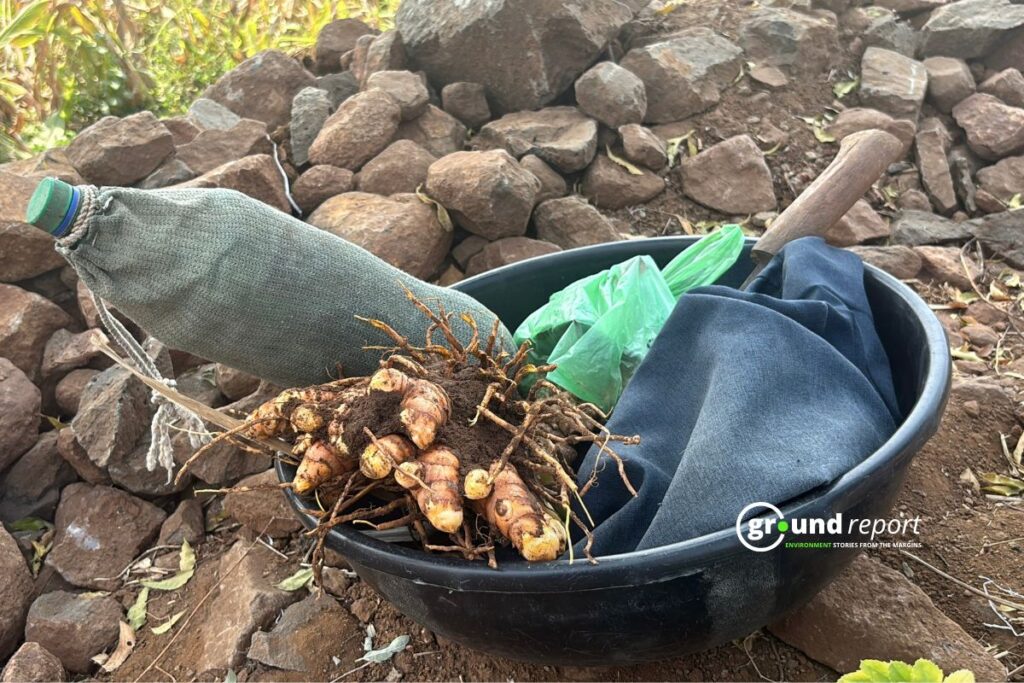
In May 2023, the couple decided to experiment with turmeric and ginger on just one acre of their land. They sourced the seed rhizomes from another farmer in the village, Ramchandra Patidar. Last year, they planted six quintals of turmeric seed on one acre at a cost of about ₹75,000.
Though the journey wasn’t straightforward. Initially, Sangeeta worried about the possibility of losing their investment.
Mahesh explains that labour costs for planting turmeric usually range between ₹5,000 and ₹7,000. Preparing the beds costs another ₹3,000. In total, around ₹1 lakh must be invested per acre. However, the yield can reach 50–60 quintals. Last year, they sold 50 quintals of turmeric at ₹14,000 per quintal. This year, they expect production to reach 60–70 quintals.
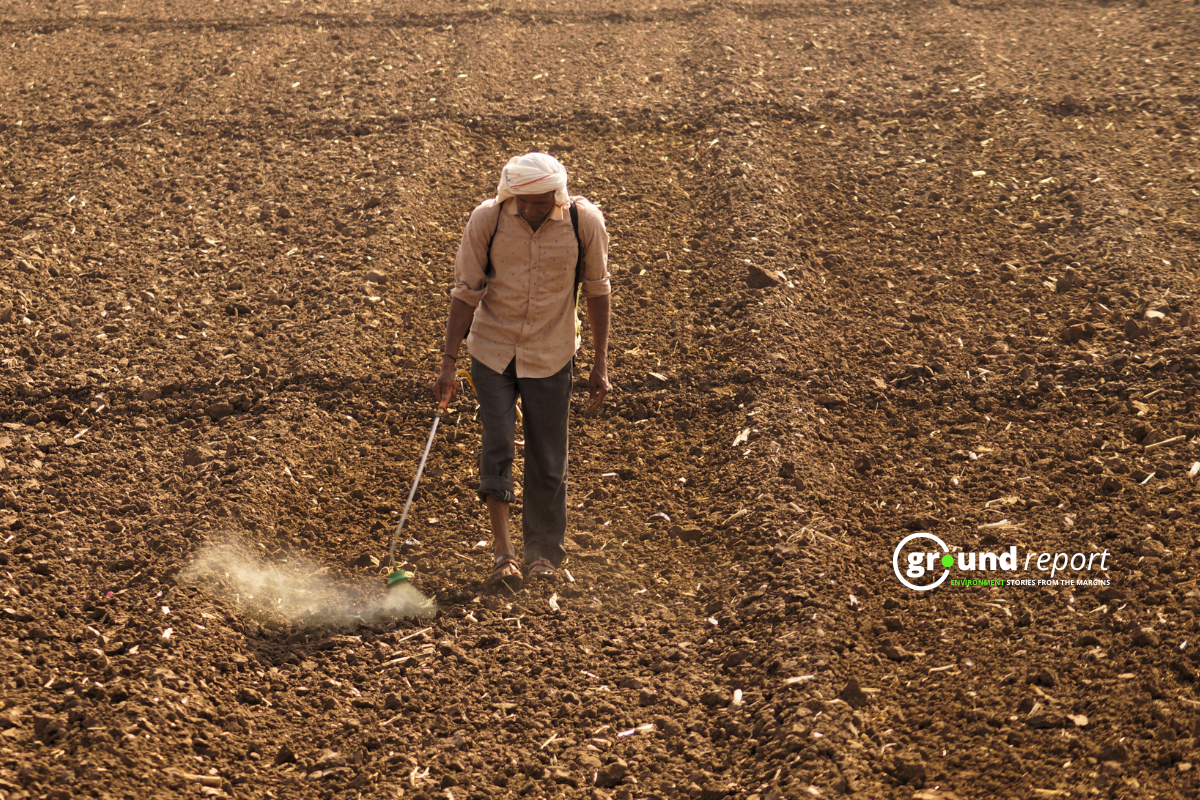
Instead of plastic sheets for mulching, the couple uses crop residues. This helps retain soil moisture, increases the soil’s carbon content, and prevents plastic contamination. Rather than chemical pesticides, they use cow dung, jeevamrit, and different homemade plant extracts to nourish the soil.
Turmeric grows best at temperatures between 20 and 35 degrees Celsius and in areas that receive at least 1,500 mm of rainfall. Although it can grow in many soil types, it performs best in well-drained red or clay loam soils with a pH between 4.5 and 7.5. Turmeric typically takes 10–12 months to mature. “If you plant it in May, you should harvest it only in May the following year—never earlier,” Sangeeta explains.
Discovering new farming ideas online
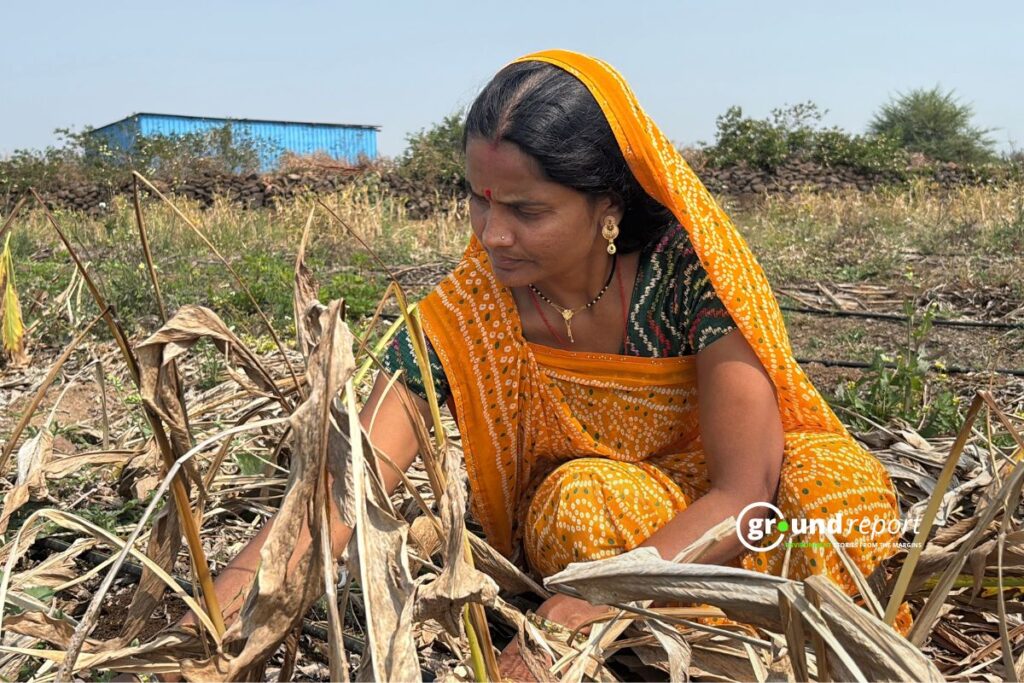
Mahesh previously worked in a textile factory in Khargone but left his private job in 2019 to return to the village. That is when he began considering farming on his ancestral land. “Our forefathers cultivated cotton and chilli, and everyone in the village still grows the same crops,” he says. “So we also began with cotton and chilli.”
Within two years, however, he began to see the difficulties of this system. “From sowing to harvesting cotton, we were dependent on labour for everything. But finding workers had become very difficult,” he says. At the same time, costs remained high while market prices fluctuated.
The state’s agricultural data reflects a similar pattern. Cotton production in Madhya Pradesh fell by about 3.78 percent—from 873,000 tonnes in 2023–24 to 840,000 tonnes in 2024–25. The state’s recent economic survey attributes the decline to pest attacks, weather instability, and price uncertainty.
Mahesh experienced this firsthand. In 2020, he planted cotton on five acres, expecting a yield of 12–15 quintals per acre. But an outbreak of pink bollworm reduced production to barely five quintals per acre. When he took the crop to the mandi, he received only ₹4,500–5,000 per quintal.
After that experience, he decided to shift to organic farming and began watching videos on his mobile phone about different crops. “We watched videos about mushroom cultivation, turmeric, ginger, and pigeon pea,” he says. “But turmeric and ginger seemed the most suitable.” According to him, these crops require less effort and cost while offering higher prices.
A new challenge: the market
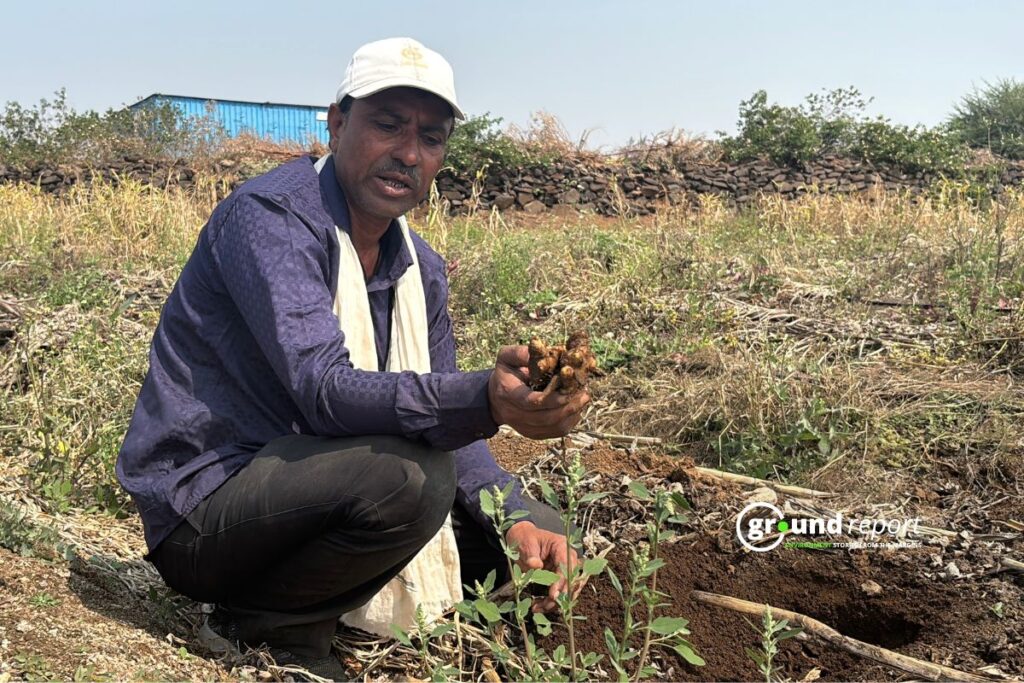
The couple says turmeric farming has been better than cotton in many ways. Yet, unlike cotton, there is no well-established market for turmeric in the region. Mahesh currently sells most of his produce to the same trader who supplied the seed rhizomes for turmeric and ginger. Some of it is also sold to local traders, but he has not yet found an opportunity to sell directly to spice manufacturers.
Khargone is one of the major cotton-producing districts in Madhya Pradesh, where cotton is cultivated on 211.45 lakh hectares of a total 405.7 lakh hectares, more than half of the district’s cultivated area. Chillies are grown on 17.58 lakh hectares. In comparison, turmeric remains relatively small-scale.
Mahesh says that even the district-level agriculture department does not have clear data on turmeric production in Khargone. However, according to the Indian Spices Board, both the area under turmeric cultivation and overall production in Madhya Pradesh have increased steadily between 2020 and 2024. In 2024, turmeric was cultivated on 26,051 hectares in the state, producing 96,437 metric tonnes.
India is the world’s largest producer of turmeric, accounting for more than 70–75% of global output. The crop was grown on about 3.24 lakh hectares in 2022–23, producing 11.61 lakh tonnes. In October 2023, the government of India constituted the National Turmeric Board to “focus on the development and growth of turmeric and turmeric products in the country.” The turmeric exports are expected to reach USD 1 billion by 2030.
While most turmeric comes from southern states— Maharashtra, Telangana, Karnataka, and Tamil Nadu— production has been gradually expanding in states such as Madhya Pradesh, where farmers in districts like Khargone are beginning to experiment with the crop as an alternative to cotton and chilli. Madhya Pradesh’s Shahdol district has promoted turmeric as part of the central government’s One District One Product (ODOP) scheme.
A change in the family’s fortunes
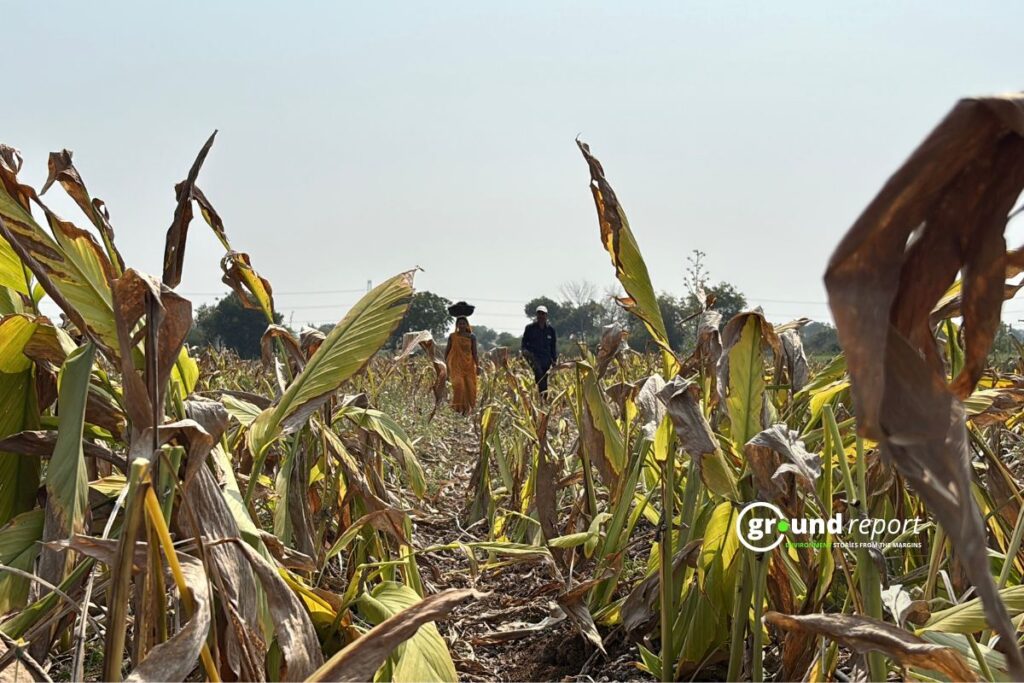
Today, Mahesh estimates that the couple earns between ₹15 and ₹20 lakh a year—far more than they did from cotton and chilli farming. The change has significantly improved the financial stability of their six-member household. “There is no longer the same financial stress as before,” he says.
The couple has two children. One is already an engineer, and they hope the other will become a doctor. For that, the younger child is studying at a coaching institute in Rajasthan. “If I didn’t earn, how would I pay the fees?” Mahesh says. “Cotton farming could never have supported that.”
Sangeeta says people sometimes laugh at their farming choices when they pass by the field, saying nothing will come out of this kind of cultivation. But the couple has decided to continue experimenting with their organic ways.
Mahesh hopes to bring more farmers into this approach so that “more people can grow better crops and earn better incomes.” So far, they have had limited success convincing others, but Sangeeta believes that over time, more farmers will join them.
Support Us To Sustain Independent Environmental Journalism In India.
More Video Reports
Meet the Rajgarh Farmer Who Switched from Soybeans to Strawberries and Built a Profitable Model
How Aeroponics Is Reshaping Potato Seed Production in Madhya Pradesh