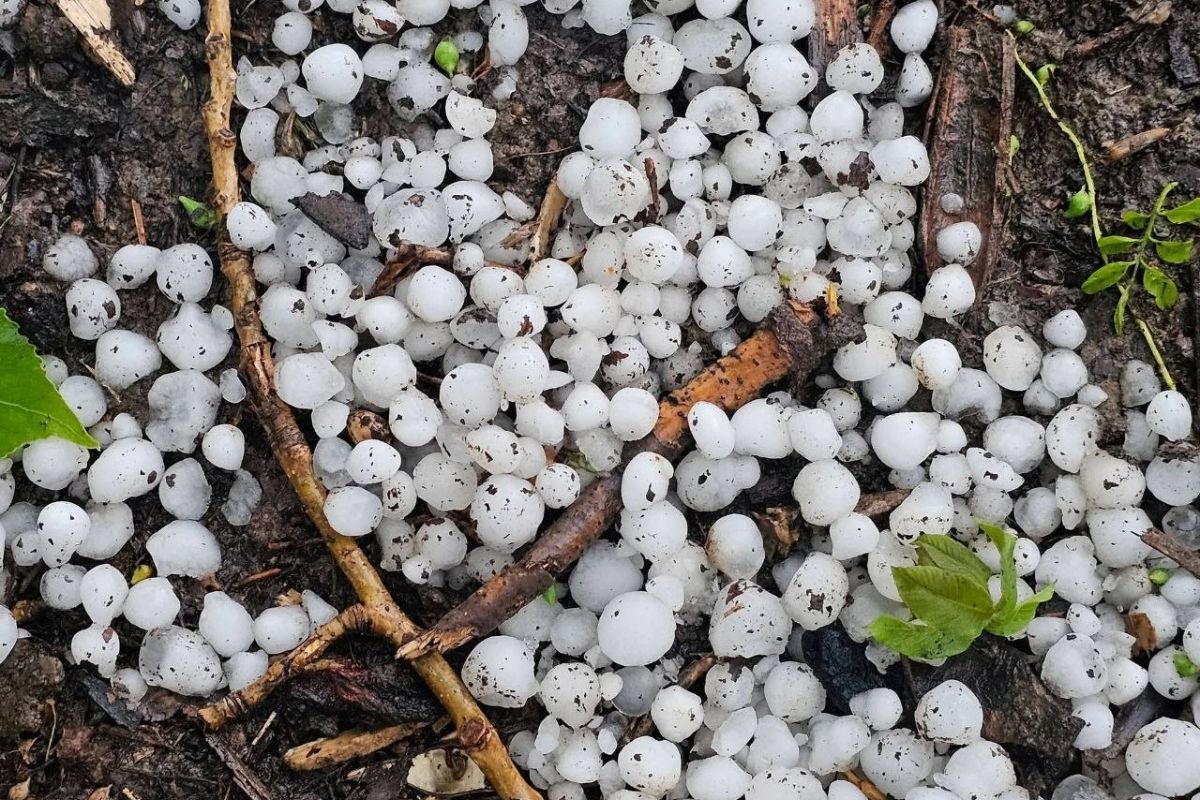
Hailstorms and heavy rain on April 6 damaged apple orchards across several districts of Kashmir during the critical flowering stage, raising concerns over crop losses this season.
The worst-hit areas were in south Kashmir’s Shopian and Kulgam districts, where villages including Manduja, Kanjiullar, Saidpora Payeen, Sedow and Aharbal reported damage. Farmers said that although the hailstorm was brief, its intensity caused visible damage across large swathes of orchards.
In central Kashmir’s Ganderbal district, villages such as Anderwan and Arhama were also affected, while parts of north Kashmir’s Bandipora district, including Arin and Dardpora, reported losses.
How storm caused damage
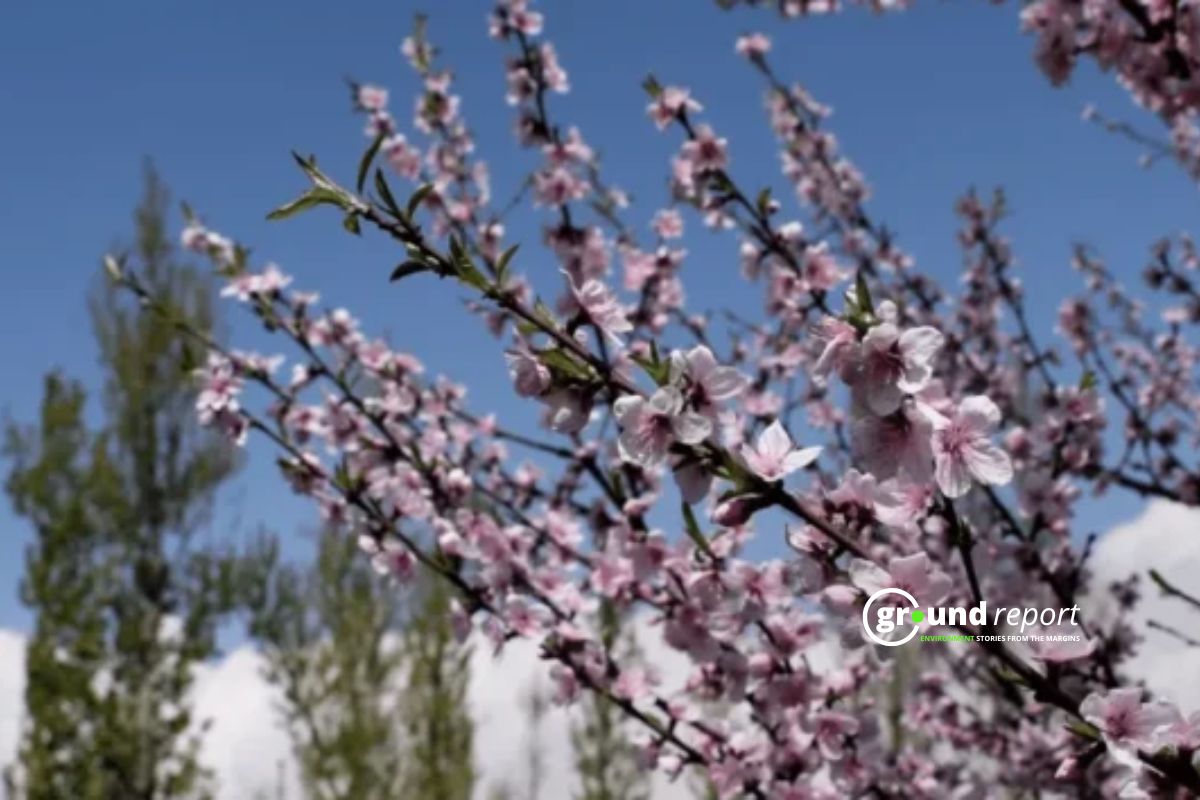
In Kashmir, the apple crop cycle begins with bud formation during winter dormancy, followed by flowering in spring typically in March and April.
Once pollination occurs, fertilised blooms transform into fruits, a stage that develops over 100 to 200 days after flowering, depending on variety. Later, the harvest season generally runs from late September to early November.
In Anderwan village of Ganderbal district, orchardist Abdullah Ganie said he lost his entire crop from an orchard spread over nearly an acre.

“Trees themselves are physically damaged. It may take two years for them to recover,” Ganie told Ground Report. “I was expecting around 1,000 boxes of apples this year, and that income is now gone.”
Ganie said he had been depending on this harvest to support his family. “We had no warning. By the time it stopped, there was nothing left to save,” he said.
In Arhama a small village, also in Ganderbal, farmer Ghulam Mohammad Wagay said the damage came suddenly. “The flowers had just opened. One hour of hail finished everything we worked for through the entire year,” Wagay said.
He says, “Hailstones hitting the flowers mean they won’t survive. The chances of recovery are very low”.
How does hailstorm affect trees?
Hailstones strike the tree with physical force, knocking off blossoms and cutting off any chance of pollination and fruit formation. Hail can tear, shred, or even remove leaves, impacting tree’s ability to photosynthesize and produce energy for growth and fruit development.
According to a technical bulletin published by Indian Council of Agricultural Research (ICAR), hailstorms cause two types of damage to fruit trees.
The first is primary injury, breaking of branches and tender stems, peeling of bark, heavy flower and fruit drop, and shredding of leaves. The second is secondary injury, which follows first. Once the bark peels and branches break, fungal and bacterial infections enter through the open wounds, causing dieback, rotting of stems, and discolouration of damaged parts.
Official response and advisory
Deputy Commissioner Bandipora, Indu Kanwal Chib, visited affected villages and directed concerned departments to conduct a detailed survey of losses.
In Shopian, office of the Chief Horticulture Officer issued an advisory asking orchardists to take immediate steps after hail damage.
The advisory said affected orchards should be sprayed with recommended fungicides once the weather improves. It also advised farmers to remove fallen leaves and maintain proper drainage in orchards to prevent disease.
Javid Ahmad Bhat, Deputy Director of Horticulture, Kashmir, said continuous rainfall during the blooming stage has increased risks for orchards. “We are seeing continuous rainfall during flowering stage. Farmers should ensure proper drainage and stay in touch with horticulture officers for spray advice, especially to control scab,” Bhat told Ground Report.
He said some orchards may have missed protective sprays due to ongoing rain, which could increase the risk of disease if not managed in time.
Weather forecast and warning
The Meteorological Department has forecast continued unstable weather across Jammu and Kashmir in the coming days. Rainfall over the past two days has remained above normal in several parts of Jammu and Kashmir.
Srinagar recorded 25.1 mm of rainfall, while Qazigund received 18.8 mm and Kupwara 14.1 mm. Gulmarg recorded 32.2 mm of precipitation, data showed.
Mukhtar Ahmad, Director of IMD Srinagar, said another weather system will affect the region. “A Western Disturbance from April 7 to 9 will bring widespread rain and snowfall in higher reaches, along with thunderstorms, hail and gusty winds at several places,” Ahmad told Ground Report.
The department said winds may reach speeds of 40 to 50 kmph and advised farmers to suspend farm operations during this period.
Support Us To Sustain Independent Environmental Journalism In India.
Keep Reading
Highway Halt Puts Kashmir’s Fruit Economy at Risk
Railway line expansion plan put Kashmir’s apple orchards at risk
Warmer winters in Kashmir raise concerns over apple and crop yields
Stay Connected With Ground Report For Underreported Environmental Stories.