In the fast-changing world of logistics, nowadays, companies are under more and more pressure to deliver quicker, accurately and flexibly at the same time. One of the key technological changes that is driving this transformation is the installation of sorting robots in the advanced intralogistics system. These robots, when used along with the complete warehousing solutions, are changing the traditional ways of fulfilling, sorting and managing the material flow in distribution centres.
The Sorting Robot as Game-Changer
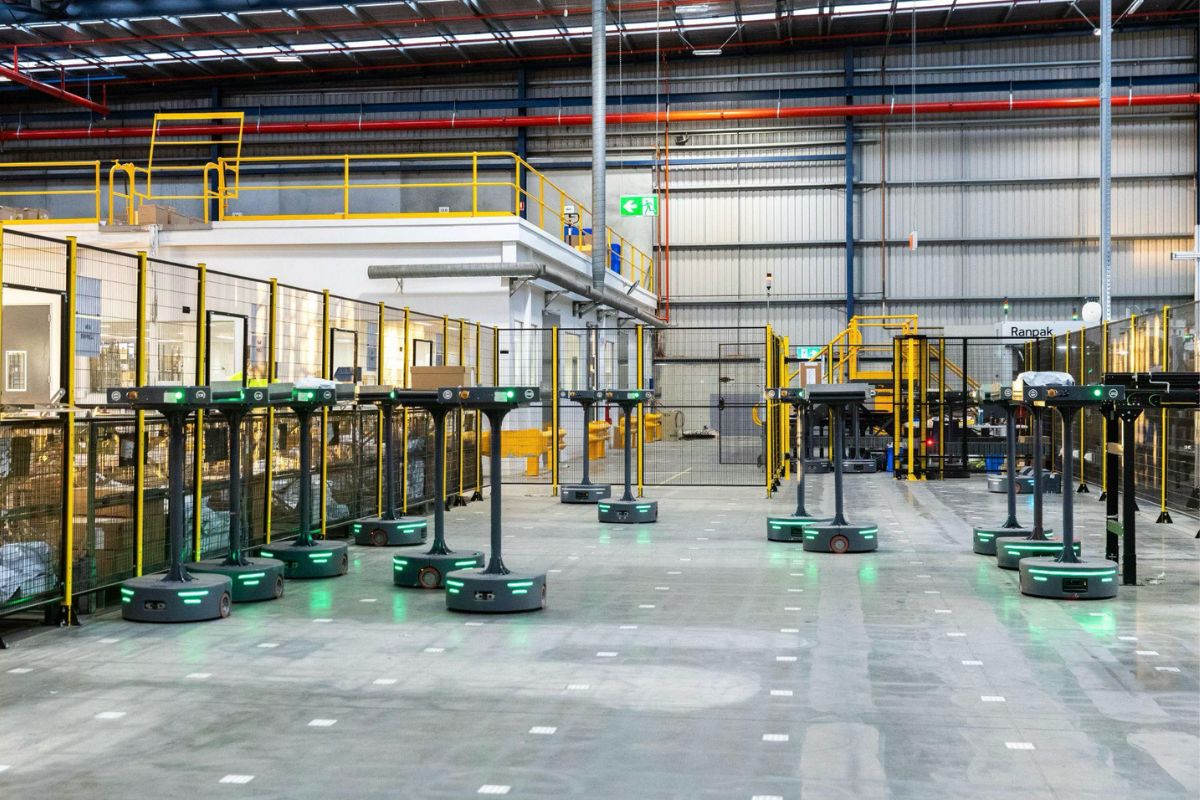
Traditionally, warehouse sorting of goods has been done through fixed conveyors, manual labour and dynamic chute systems. The mentioned setups have had difficulties adjusting to changing SKUs, high order volumes, different size parcels and the need for fast throughput. On the other hand, a new generation sorting robot combines AI vision, sensor inputs, robotic movement control and smart path planning to locate items, place them in the right destinations and change accordingly to the flow.
The use of these robots with high-speed scanning, classification, diverting, and routing cuts down the time between goods receipt and dispatch drastically. The end product is better accuracy, less damage or mis-sorts, and a great deal more throughput per hour. Henceforth, the sorting robot will not be just a point tool but is going to be a major component of a progressive warehousing solution.
Strategic Impacts on Warehousing and Logistics
The introduction of sorting robots as a full warehousing solution has a great influence on the strategy in different ways:
Enhanced throughput and accuracy
Sorting robots in high-volume operations are able to sort thousands of items or parcels with precision, and this definitely replaces the manual or semi-automatic sortation. Faster order fulfilment windows and fewer sorting mistakes are the direct result of such a performance increase.
Flexibility for volume and SKU variation
Modern logistics operations are dealing with various challenges that include peaks, seasonal surges, promotions, and constantly changing SKU assortments. A sorting robot as part of a warehousing solution is capable of adapting its tasks, routes, and destinations to various situations instead of being fixed to the predefined conveyor patterns. This allows the warehouse to cope with variable inflows and outflows more efficiently, thus incurring less downtime and reconfiguration.
Space and labour efficiency
By automatising sortation, warehouses can cut back on the large manual sortation zones. Traditionally, operating cost comes in the form of labour-intensive processes, while errors come with rework. In turn, modular sorting robots use less space than huge conveyor sortation systems and can be clustered, relocated or rescaled as required.
Visibility, integration and data-driven decision making
Typically, sorting robots are not standalone machines. Instead, within a true warehousing solution, it connects to Warehouse Management Systems, Warehouse Execution Systems and the Fleet Management Software. That link allows for real-time tracking of items, tracking of robot performance, predictive maintenance and analysis in terms of prevention of incidents, throughput efficiency, error incidents and throughput trend. It is about making the warehouse smarter, not just warehousing fast.
Key Considerations in Implementation
Deploying a sorting robot as part of warehousing solutions requires careful planning and strategic alignment:
- Define the current sortation problem: Are high parcel volumes, sortation accuracy, variability in SKUs, returns or other issues causing the problem? The aim, therefore, describes what type of robot and integration are required.
- Integration with flow and infrastructure in place: Most facilities may need legacy conveyors, chutes and manual zones. The sorting robot solution must complement the flow while the work continues.
- Modular and scalable: Such a robot design that allows incremental expansion, addition of new routes or destinations, and conversion to the sortation of new parcel types or volumes.
- Software orchestration with metrics: A robust software backbone that connects robots with sortation flows, downstream picking, and upstream receiving must serve the orchestration. Such key performance indicators must be defined in advance of deployment.
- Workforce alignment and training: Automation doesn’t eliminate people; it shifts roles. Workers will now be supervising robots, handling exceptions, maintaining robots, and interpreting data. This is where workforce readiness becomes critical.
- Return-on-investment business case: Up-front investment in sorting robots and the accompanying warehousing solutions must equate to labour cost savings, faster throughput, space savings or lessening occurrence of errors. Setting metrics with an expected timeline payback will bring the business case to life.
A Focus on Addverb
As part of its advanced warehousing and automation portfolio, the company designs and manufactures sorting robots that set new standards for precision and efficiency. The Zippy range of flexible robotic sorters can handle payloads of 6, 10, 30, and 40 kilograms, making them ideal for parcel-level or SKU-level sortation with unmatched accuracy. Complementing Zippy is SortIE, an intelligent vertical sortation system that maximises floor space utilisation and accelerates throughput in high-density operations.
Together, Zippy and SortIE create a comprehensive sortation ecosystem, integrated with intelligent control software and an orchestration layer, capable of managing dynamic material flows, varying parcel sizes, and high-throughput environments. This combination delivers a powerful, end-to-end warehousing solution built for the next generation of logistics and supply chain efficiency.
Conclusion
AI-powered sorting robots act as a strategic inflection point for logistics and warehousing operations. Correctly embedded within a comprehensive warehousing solution environment, they can deliver faster order processing, higher accuracy, flexible scalability, and good space and labour efficiency.
Organizations embracing this change will remove the bottlenecks caused by sortation and make their warehouse an operationally strategic asset, fostering responsiveness, cost efficiency and opportunities for growth. Brand brings end-to-end automation expertise and thus ensures that sorting robots are not just a plug-and-play kind-of-device, but instead something that is woven through the integration of hardware, software and operational design.
Disclaimer: This content is provided by a third party and does not reflect the views or opinions of Ground Report. No journalist is involved in creating this material, and it does not imply any endorsement by the editorial team. Ground Report Digital LLP takes no responsibility for the content that appears in third-party articles and the consequences thereof, directly, indirectly or in any manner. Viewer discretion is advised.
Follow Ground Report on X, Instagram and Facebook for environmental and underreported stories from the margins. Give us feedback on our email id greport2018@gmail.com.
Keep Reading
Tank under construction, dam under repair & Chanderi Village struggles for water?
Constructed wetlands can provide a solution for wastewater treatment