A deep well pump is a crucial device used to extract water from deep underground wells. It plays a significant role in various applications, from residential water supply to agricultural and industrial use. This article will explore different aspects of deep well pumps.
Working Principle
Deep well pumps operate based on the principle of pushing water to the surface. Unlike shallow well pumps that rely on suction, deep well pumps are submerged in the well. The pump has an impeller that rotates at high speed. When the impeller spins, it creates a centrifugal force. This force pushes the water towards the outer edge of the impeller, increasing the water’s velocity and pressure. The water then moves through the pump’s diffuser, which converts the high – velocity energy into high – pressure energy. Finally, the pressurized water is forced up through the discharge pipe to the surface.
Types of Deep Well Pumps
There are mainly two types of deep well pumps: submersible pumps and jet pumps. Submersible pumps are designed to be fully submerged in the well water. They are highly efficient as they don’t have to rely on suction to lift water. These pumps are usually made of corrosion – resistant materials to withstand the harsh underground environment. Jet pumps, on the other hand, can be either above – ground or partially submerged. They work by using a jet of water to create a vacuum, which helps to draw water from the well. Jet pumps are more suitable for shallower wells compared to submersible pumps.
Applications
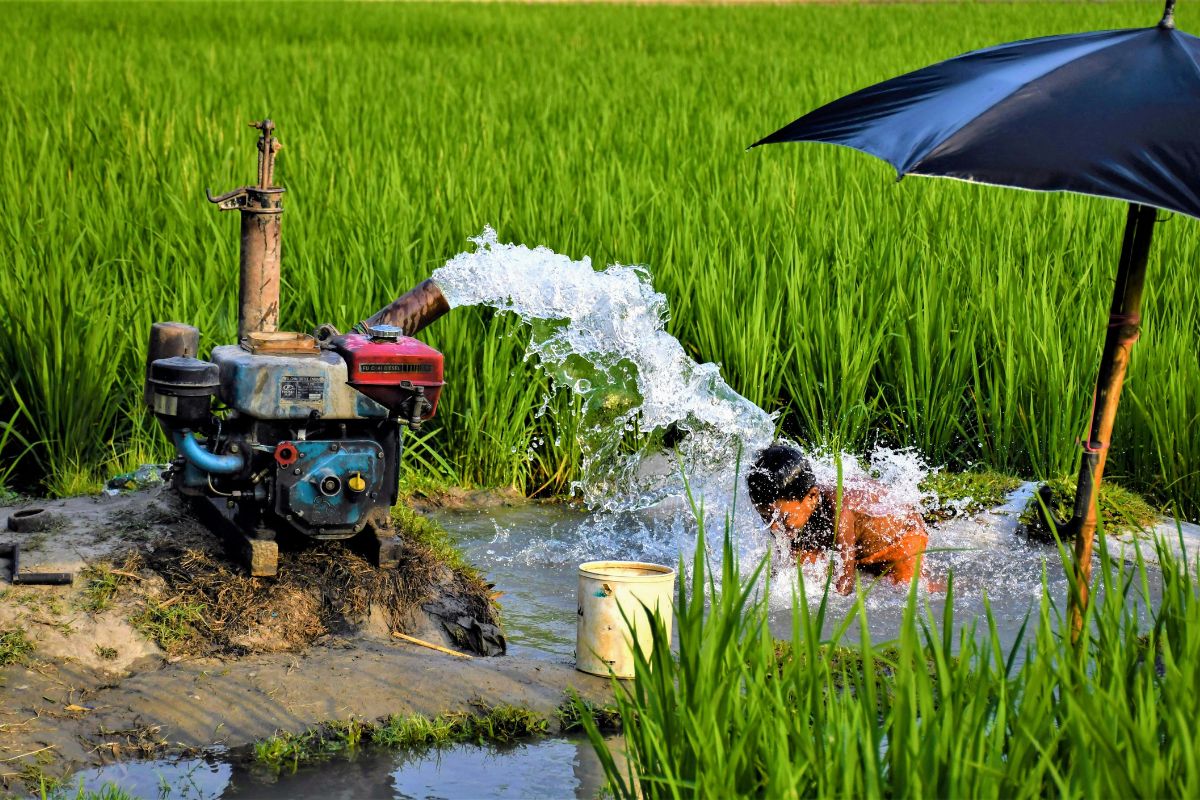
In residential settings, deep well pumps are used to provide a reliable water supply for households. They can ensure a constant flow of water for drinking, cooking, and other daily uses. In agriculture, deep well pumps are essential for irrigation. They can pump large amounts of water from deep wells to irrigate fields, helping to increase crop yields. In industrial applications, deep well pumps are used in processes such as cooling systems, mining operations, and water treatment plants. They can handle large – volume water transfer and are often required to operate continuously.
Maintenance and Considerations
Proper maintenance is crucial for the long – term performance of deep well pumps. Regularly checking the pump’s motor for signs of wear and tear, and ensuring the electrical connections are secure is necessary. The water level in the well should also be monitored to prevent the pump from running dry, which can damage the pump. When choosing a deep well pump, factors such as the depth of the well, the required flow rate, and the power source need to be considered. A pump that is not properly sized for the well can lead to inefficiency and premature failure.
Disclaimer: This content is branded and does not reflect the views or opinions of Ground Report. No journalist is involved in creating branded material and it does not imply any endorsement by the editorial team. Ground Report Digital LLP. takes no responsibility for the content that appears in branded articles and the consequences thereof, directly, indirectly or in any manner. Viewer discretion is advised.
Support us to keep independent environmental journalism alive in India.
Stay connected with Ground Report for underreported environmental stories.