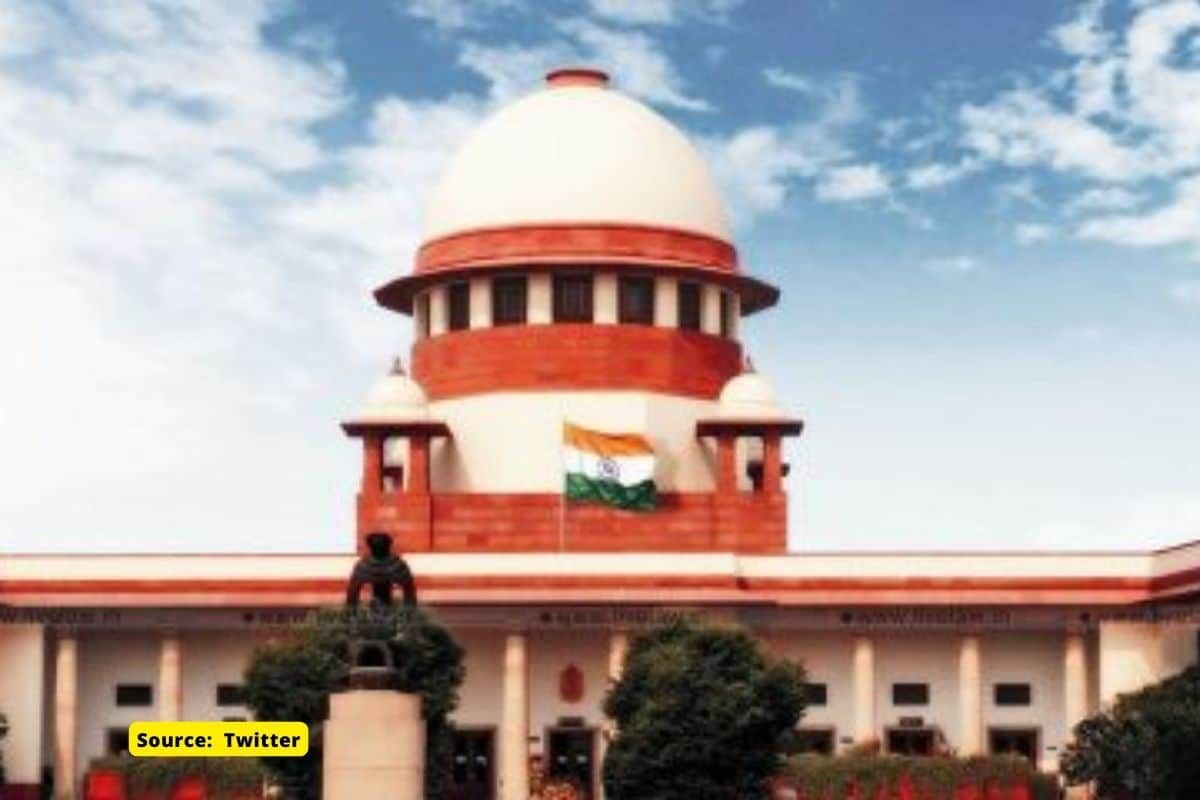
Supreme Court recently said that it will constitute a five-judge constitution bench to hear petitions challenging the constitutionality of polygamy and nikah halala among Muslims.
A bench comprising Chief Justice DY Chandrachud and Justice PS Narasimha took cognizance of the argument of advocate Ashwini Upadhyay that a new five-judge bench was constituted due to the retirement of two judges of the previous constitution bench, Justice Indira Banerjee and Justice Hemant Gupta.
The Chief Justice said that there are very important matters which are pending before the five-judge bench. We will constitute a (bench) and take the matter into consideration.’
On August 30 last year, a five-judge bench comprising Justice Indira Banerjee, Justice Hemant Gupta, Justice Surya Kant, Justice MM Sundaresh and Justice Sidhanshu Dhulia had ordered the National Human Rights Commission (NHRC), National Commission for Women a party to these petitions and sought their response.
The Supreme Court considered the petition in July 2018 and referred the matter to a constitutional bench which is already hearing similar petitions.
What is nikah halala?
Nikah Halala is a law that requires a woman to marry and sleep with another man to return to her first husband.
Halala in Islam is a term that has its roots in the word ‘Halal’ which means something that is permissible and therefore ‘Halal’. In the context of nikah, this means that a divorced woman can become halal again for her ex-husband after the nikah halala is completed.
The tradition of nikah halala is found to some extent in Muslims living in Britain and in other countries of the world.
While a Muslim man is allowed to have four wives, nikah halala refers to the process whereby a Muslim woman, who wishes to remarry her husband after divorce, must first marry another person and obtain a divorce. After that, he has to get divorced.
According to one interpretation of Islam, a Muslim man has the freedom to divorce the same woman twice and remarry. However, if he decides to dissolve the marriage for the third time, he can remarry the same woman only if she first marries another man, fulfils the terms of the marriage and only if the man dies or voluntarily If a woman seeks divorce, she can go back to her first husband and remarry him.
Misconception about Halala
- The practice of Halala obliges the divorced wife to marry someone else temporarily.
- The wife has no choice of her own.
- Divorce filed by the second husband with the intention of legalizing the marriage with the ex-husband.
ALSO READ
- How Many Muslims Mosques are disputed in India?
- How Muslim women in India face discrimination during hiring process?
- Why do Muslim countries celebrate Eid on different days?
- Why Muslims in many countries didn’t fast during Ramadan?
Follow Ground Report for Climate Change and Under-Reported issues in India. Connect with us on Facebook, Twitter, Koo App, Instagram, Whatsapp and YouTube. Write us on GReport2018@gmail.com.