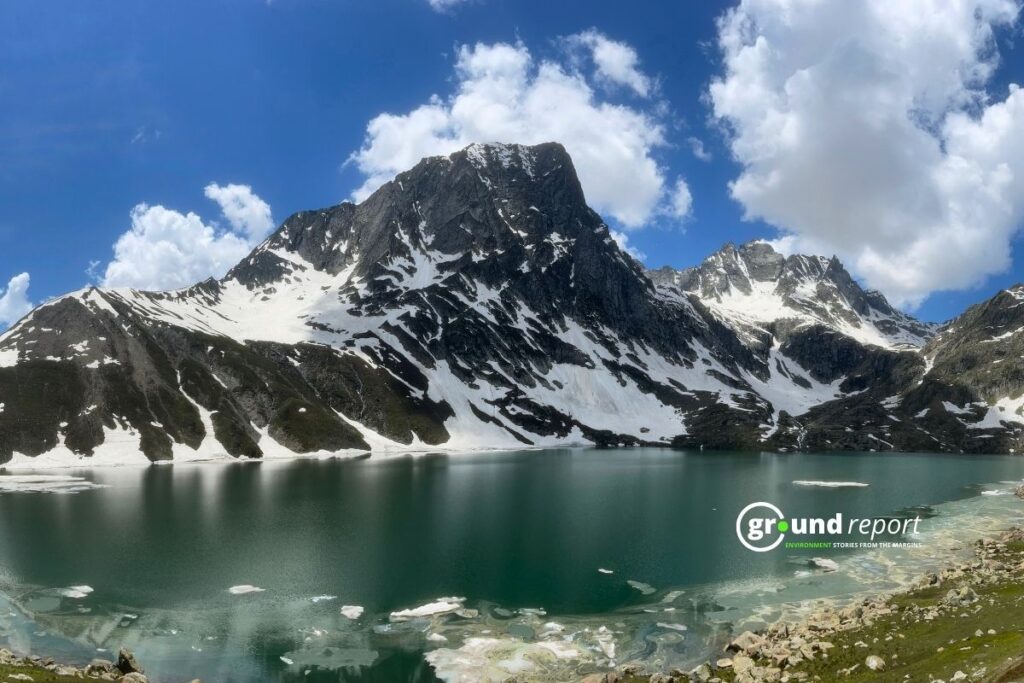
The Himalayan regions of Jammu and Kashmir, Himachal Pradesh, and Uttarakhand recorded their lowest snowfall in a decade during January 2026. The higher reaches experienced far less accumulation than normal levels, according to India Meteorological Department (IMD) data.
At Tungnath peaks of Uttarakhand, no snow accumulated in January 2026, the first time since weather records began there in 1985. Auli, also in Uttarakhand, recorded only 20 percent of normal snowfall. Gulmarg in Kashmir experienced brief snow around the New Year, though it didn’t sustain through the season.
“I am 65 years old. I have never seen a winter like this in Srinagar,” says Abdul Rashid, a shikara operator on Dal Lake. “The tourists come and ask me where the snow is. I have no answer.”
This decline can be understood by a five-year trend across the western Himalayas, with meteorologists attributing the pattern to weakening western disturbances, rising temperatures, and shifting precipitation patterns.
The five-year pattern
Kashmir experienced good snowfall during the 2020-2021 and 2021-2022 winters. The 2022-2023 winter remained largely dry. The 2023-2024 winter recorded a 48 percent deficit in January and February. The current 2025-2026 winter marks the worst season yet.
Seven districts, Srinagar, Budgam, Shopian, Udhampur, Samba, Doda, and Ramban, recorded zero snow from January 1 to 14, 2026, a 100 percent deficiency.
Mukhtar Ahmad, Director of the Meteorological Department in Srinagar, said December and January have remained largely dry since 2018, except for the winters of 2020 and 2021.
In Himachal Pradesh, official snowfall records from Shimla show a collapse from 67 cm in 2020-21 and 161.7 cm in 2021-22 to just 6 cm in 2022-23, 7 cm in 2023-24, and 9.5 cm so far this winter. The state recorded its sixth-lowest December rainfall since 1901.
Snow cover across four major river basins, Chenab, Beas, Ravi, and Satluj, fell from 20,210 square kilometres in 2018-19 to 17,437 square kilometres by 2023-24, a 13.72 percent decline in six years, according to the Himachal Pradesh State Centre on Climate Change.
Uttarakhand’s snowfall, too, has steadily declined over five years, from 90 to 120 centimeters in 2021 to just 2-7 centimeters by 2025.
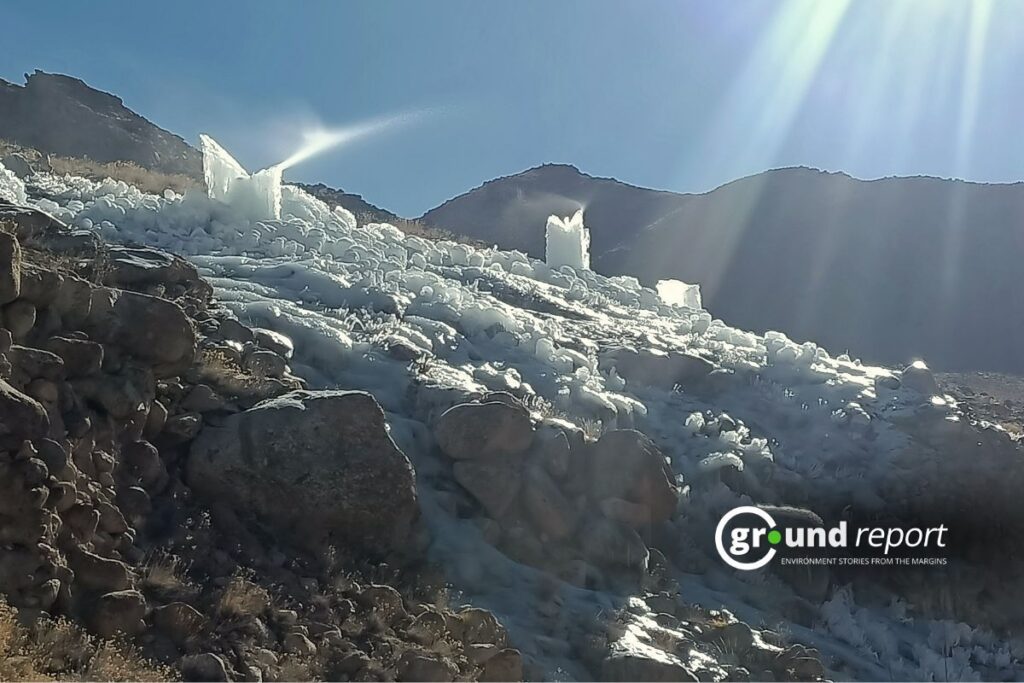
Residents in Uttarakhand staged a protest in January, demanding the use of artificial snow machines installed in 2011. Similarly, apple farmers in Kashmir and Himachal fear poor flowering and low yields this season, as orchards need a long winter chill period that snowfall now fails to provide.
Weakening weather systems
Western disturbances, Mediterranean Sea weather systems, bring most winter precipitation to northern India. At lower elevations, this falls as rain. At higher altitudes where temperatures stay below freezing, it falls as snow.
“The western disturbances currently have little moisture, and the trough is shallow, impeding its ability to lift moisture and create snow,” C S Tomar, Director of IMD Dehradun, said.
In December, eight western disturbance streams crossed the northernmost Indian region against a normal of six, but produced little rain.
Uttarakhand received zero rainfall across all 13 districts in December 2025. Jammu and Kashmir recorded a 96 percent deficit in the first half of January 2026. Himachal Pradesh saw a 93 percent decline in precipitation during the same period.
“Over the past 10 to 15 years, there has been a drastic change in Western Disturbances. The quantum of snowfall has declined significantly, while a larger share of precipitation is now falling as rain instead of snow,” says Professor Muhammad Sultan Bhat of the Geography and Disaster Management Department at the University of Kashmir.
He added that climate change has impacted the Mediterranean source regions. “Due to warming, the moisture-carrying capacity of these systems has reduced. Weaker disturbances are unable to penetrate Central Asian regions and mountain barriers effectively,” says Bhat.
Global wind circulation changes like El Niño conditions and the North Atlantic Oscillation are resulting in weaker and less moisture-laden disturbances, Ahmad said.
The International Centre for Integrated Mountain Development found that the 2024-2025 winter had the lowest snow persistence in 23 years, 23.6 percent below normal. Snow persistence measures how long snow stays on the ground after falling. The report shows persistence stayed below average for four of the past five winters.
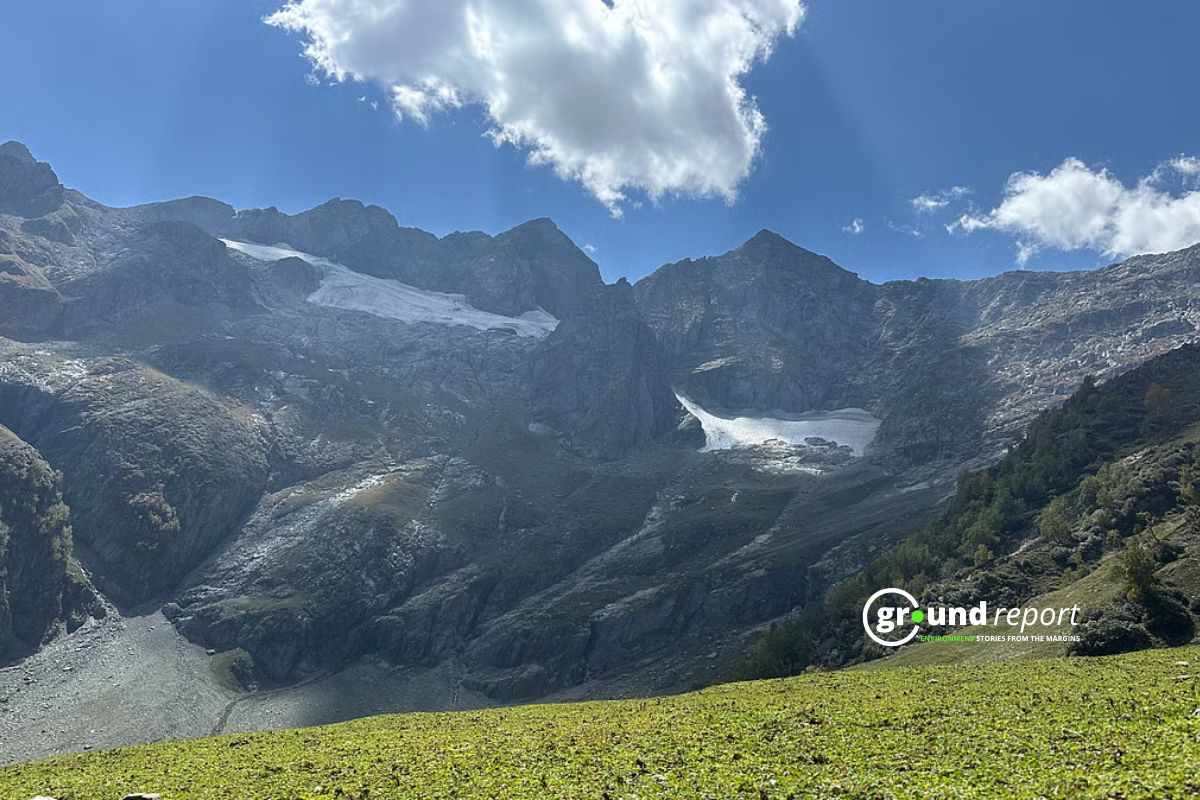
Glaciers in all three regions are retreating at alarming rates. The Thajiwas glacier near Sonamarg retreated by 34 percent between 1992 and 2020. The Kolhoi glacier in Anantnag district shrank from 11 square kilometers to just 2.63 square kilometers over three decades, a loss of more than 75 percent of its area.
Glaciers are shrinking because less winter snowfall means less ice buildup and faster melting during warmer months
Less snow in the mountains means less water for cities, farms, and industries across the Indo-Gangetic plain. The Himalayas feed the Ganges, Indus, and Brahmaputra, rivers that in turn supply water to 1.3 billion people across northern India for agriculture, industry, and cities.
What begins as a mountain snowfall deficit will cascade into a water crisis by summer. Reduced snow cover is directly affecting water availability for agriculture and drinking purposes, says Riyaz Ahmad Mir, geologist at the National Institute of Hydrology.
Support us to keep independent environmental journalism alive in India.
Keep Reading
Small Wild Cats in Big Trouble: India’s First National Report Released
After Tragedy, Families Face Delays in Tiger Attack Compensation
Stay connected with Ground Report for underreported environmental stories.