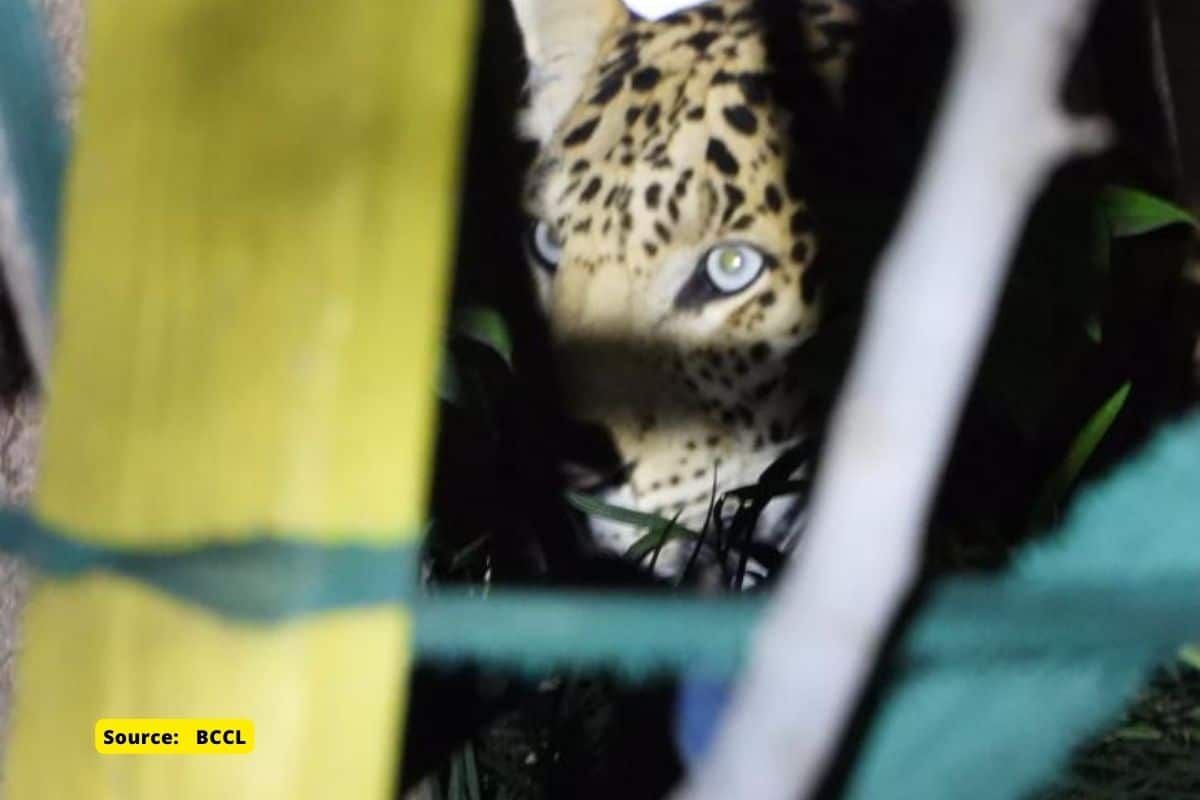
Many would be surprised that Uttarakhand has a transit and rehabilitation center where nine Guldars (leopards) are kept in cages accused of killing humans or entering areas of human settlement.
The Chidiyapur Transit and Rehabilitation Center built on the Haridwar-Najibabad road houses nine leopards serving their “prison sentence”.
The imprisonment is such that the hope of release is negligible, and thus becomes “life imprisonment”.
The number of leopard sightings and attacks has increased so much in some places that residents have abandoned their villages in fear of the big cats.
Many villages in Dugadda and Pokhra blocks in Uttarakhand’s Pauri district have now been ‘abandoned’ by residents who moved from their homes after several people were killed or injured in leopard attacks.
These “convicted” leopards include Ruby, Rocky, Dara, Munna, Jat, Mona, Gabbar, and Joshi.
According to the report of the News agency IANS, female leopard named Ruby, charged with “human homicide” in 2015 when she was just six years old, is serving time for the last seven years.
Rocky, a thirteen-year-old man-eater, was caught in the Santala village of Tehri in 2017.
Similarly, 12-year-old Dara was captured in Kotdwar’s Lalpani in 2017. Four-year-old Munna Guldar has been locked up here since her birth due to separation from her mother.
On the other hand, 6-year-old Mona was taken to the center after entering the DPS school in Rishikesh in 2020. Similarly, 10-year-old Gabbar was captured at Haridwar Forestry Division in 2020.
An eight-year-old leopard that was captured in Joshimath in 2020 was named Joshi.
Uttarakhand Chief Wildlife Warden Sameer Sinha says this is a rehabilitation center for wildlife. “Here animals injured in different incidents are brought in for treatment and then released back into the wild after treatment.”
However, in the case of the leopard, Sinha says that since they become man-eaters, these leopards are imprisoned in cages here and then their release becomes impossible. Due to human contact and being in a cage for a long time, these leopards have become more feared under mental stress. Now it is not even possible to release them into the wild.
In the fast on Tuesday, the Head of the Wildlife Watch says that the animals do not get prey daily in the forest, so they fast for a day. This also improves your health.
ALSO READ
- What Is COP27, And Why Is It So Important?
- 5 Biggest Environmental Issues In India In 2022
- More Than 1,700 Environmental Activists Murdered In Past Decade
You can connect with Ground Report on Facebook, Twitter, Koo App, Instagram, and Whatsapp and Subscribe to our YouTube channel. For suggestions and writeups mail us at GReport2018@gmail.com