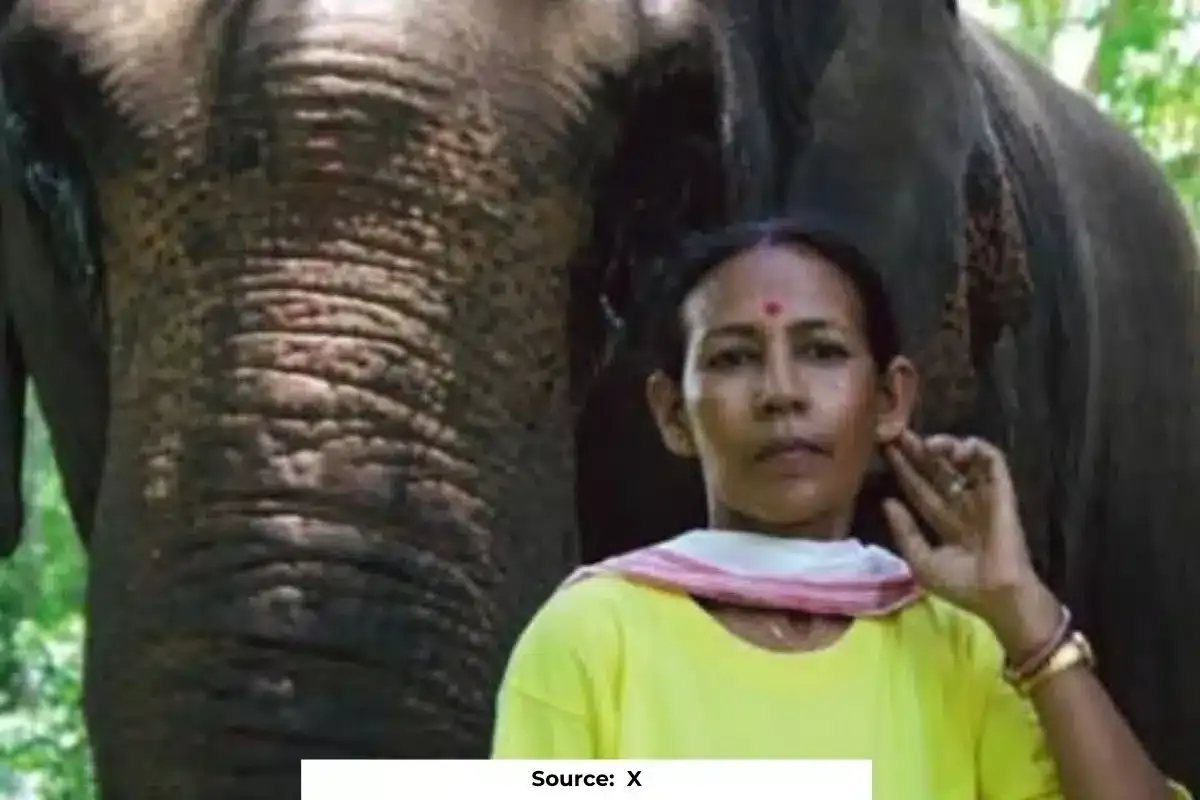
As India marks its 75th Republic Day on January 26, the nation has honoured the contributions of 132 citizens with Padma Awards for their exceptional work in various fields. Among the awardees is Mahout Parbati Baruah, fondly referred to as Hastir Kanya (daughter of elephant), who has been bestowed with the Padma Shri Award for her work in Social Welfare, specifically Animal Welfare.
Parbati embarked on her journey at the tender age of 14, learning the art of capturing and taming wild elephants from her father, the late Prakritish Chandra Barua, a member of the Royal Family of Gauripur. The royal family was known for their herd of 40 elephants. Parbati’s dedication to elephant conservation continues to this day, earning her national recognition and respect.
Who is Parbati Baruah?
Parbati Barua was born in 1954 in Gauripur, India, and she is a renowned politician and animal rights activist. Her career, which spans from 1972 to the present, has seen her best known for her work in elephant conservation. Parbati Barua’s dedication and contributions to animal welfare have won her national recognition. In 2024, they honored her with the Padma Shri award.
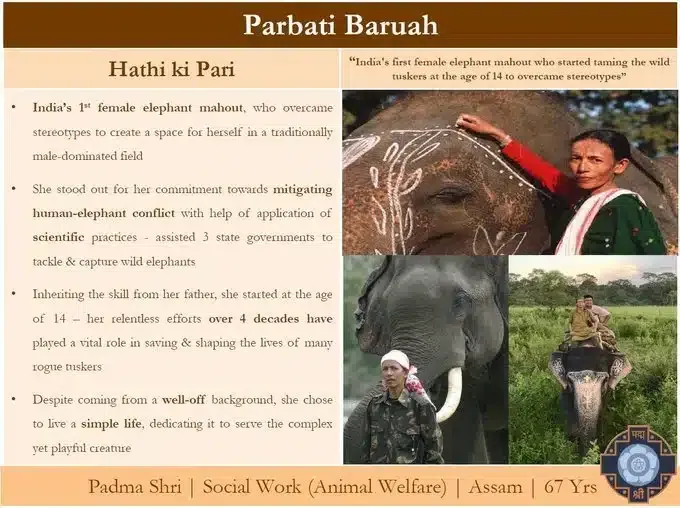
She became famous after the BBC made a documentary about her life called “Queen of the Elephants”. She lives in Guwahati and is a member of the Asian Elephant Specialist Group, IUCN. She’s also the sister of Pratima Barua Pandey and niece of filmmaker Pramathesh Barua.
Parbati was one of nine children born to Prakritish Barua, the last Rajah of Gauripur. She developed a deep understanding and interest in elephants from a young age, often accompanying her father on trips to the jungle. Her father, a skilled hunter with a deep understanding of elephants, had 40 elephants in his royal stables.
Family trips sparked Parbati’s interest in elephants
The family, including Prakritish’s four wives and nine children, would often go on long trips to the forest. It was during these trips that Parbati developed her interest in elephants. However, the abolition of the privy purse in 1970 ended the tax-free regimes and money allotted to them, leading to financial difficulties for the family.
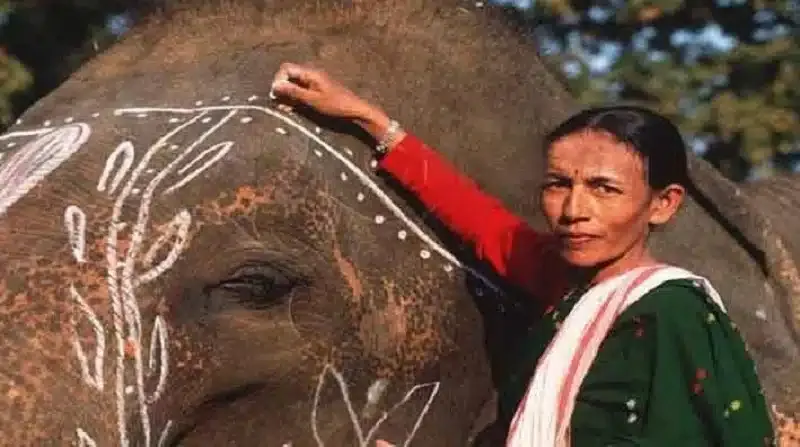
Despite facing numerous challenges, Parbati managed to catch her first wild elephant when she was only 14 years old and has since perfected the craft of rounding up and domesticating elephants. Multiple times, people have called upon her to capture or look after wild elephants in the jungles, tea plantations, and rural areas of West Bengal, Odisha, and Assam.
Baruah is a member of the Asian Elephant Specialist Group, IUCN. She also gained recognition for her love of elephants and her efforts to protect them. Filmmakers have produced several documentaries about her life.
Keep Reading
- How retreat of Machoi glacier impacting lives in Kashmir?
- Hathiya Kheda: Four Villages In MP Waiting For Roads
- “Give Plastic, Take Gold” Initiative In Sadiwara Village Of Kashmir
Follow Ground Report for Environment and Under-Reported issues in India. Connect with us on Facebook, Twitter, Koo App, Instagram, Whatsapp and YouTube. Write us on GReport2018@gmail.com.