Recent news reports from the Indian state of Kerala made me fearful. A brain-eating amoeba— Naegleria fowleri– has killed at least 43 individuals in 2025 alone, with 178 cases, as of 7 December 2025, from the State Surveillance Unit
The disease that this amoeba leads to is called primary amoebic meningoencephalitis (PAM), which has been documented only 488 times since 1962, and is ‘almost always fatal’, as per a 2015 study.
For most, the fear-inducing phrase is ‘brain-eating’. But many experts say there is more to PAM than the fear-inducing narrative the media tends to cover about Naegleria fowleri.
These pathogens are what scientists call thermophilic– they like warmer temperatures, love temperatures above 30°C. And, it can be more lethal in temperatures above 40°C. And they can breed in lakes, Ponds, Rivers, or other water bodies, then feed on the bacteria in the water.
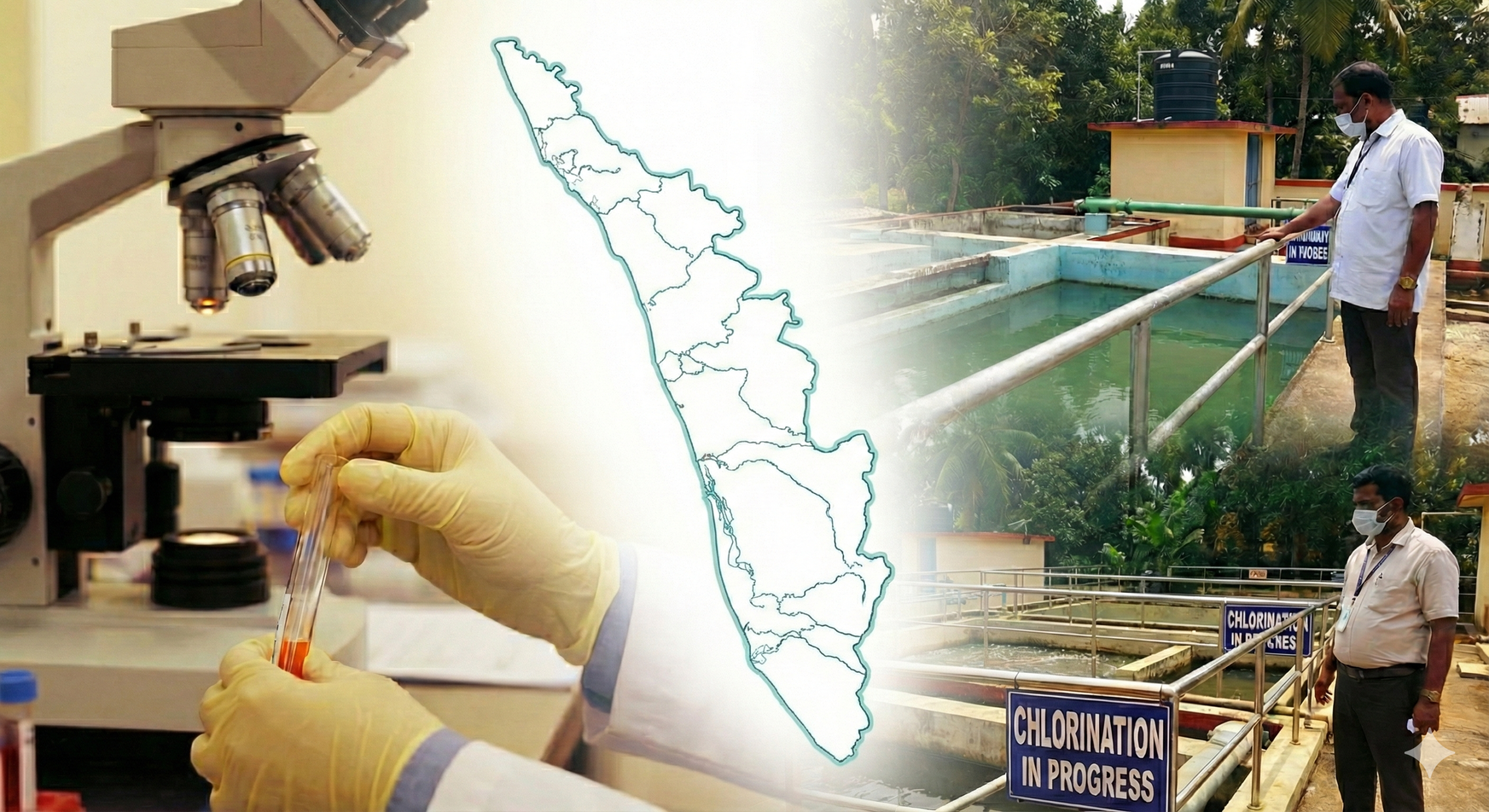
If the water is chlorinated, you are safe. And, drinking contaminated water won’t necessarily infect you, as it enters through your nose. Swimming, diving, and washing your nose are some of the ways it can enter your body. Then, through the olfactory nerves– used to smell– make their way into the brain and feed on brain tissue. Slowly, completely destroying them.
Kerala tracks multiple types of amoebic brain infections. Five amoeba species have been confirmed in the state: Naegleria fowleri, Balamuthia mandrillaris, Acanthamoeba, Vermamoeba, and Sappinia. While several of these can cause granulomatous amoebic encephalitis (GAE), only Naegleria fowleri, which causes the more aggressive PAM, has caused deaths in 2025.
The initial signs of infections are fever, stiff neck, fatigue, vomiting, confusion, and weakness, among others.
Climate change might fuel its spread into other regions.
What I am about to describe is quite similar to the opening scene of HBO’s Emmy-winning series The Last of Us. Naegleria might not currently be lethal and widespread enough. Though slowly, as the average water temperature rises, there is a probably that it would be present in water where it wasn’t previously.
Another study, published in 2021, based in the US, found it moving eastwards, i.e., from southern states, it is coming towards midwestern states. Perhaps in regions where physicians aren’t aware of what to do with such a pathogen.
“Naegleria fowleri is a tragic example of a climate‑sensitive infection: still very rare, but less rare than it used to be, and appearing in more places as waters warm, ” Julián Benito-León, MD, PhD, of University Hospital “12 of October” in Madrid, said.
After reporting just a few cases annually, in 2024, the number rose to 19, and five deaths, as per the Health and Family Welfare Department, Government of Kerala.
And, now in 2025, the cases have risen to around 178.
“The rise in reported cases in 2025 reflects stronger surveillance,” a Kerala government health official said to Ground Report. All treating doctors have been instructed to report suspected cases. When usual tests come back negative, they continue with deeper testing. “Since this training has reached every level, including private doctors, awareness is high now”.
For treatment, they add, “the treatment follows the protocol developed in 2024. It is a cocktail approach, and medicine varies based on each patient’s condition.”
Kerala, as a state, has one of the best health infrastructures, too. They followed aggressive testing and early diagnoses to identify and treat PAM. So, we can fight the ‘almost always fatal’ disease if a state-backed public health apparatus works to fight it.
The temperatures are rising. We find ourselves more and more attracted to water. Till we put our might behind climate change, let us train our physicians to know and understand what brain-eating amoeba can do.
“Kerala’s experience shows both sides of the story – real risk where warm freshwater and fragile infrastructure meet, and also the power of basic public‑health tools: safe water, clear advice, and doctors who know what to look for,” Benito-León said.
Wahid Bhat contributed reporting.
Support us to keep independent environmental journalism alive in India.
Keep Reading
Small Wild Cats in Big Trouble: India’s First National Report Released
After Tragedy, Families Face Delays in Tiger Attack Compensation
Stay connected with Ground Report for underreported environmental stories.