हिंदी में पढ़ें | Over the past decade, winters in Madhya Pradesh have begun to resemble a climate crisis. From the northern districts of Gwalior–Chambal to the western regions of Malwa–Nimar, cold wave events are not only becoming more frequent but also longer and more dangerous.
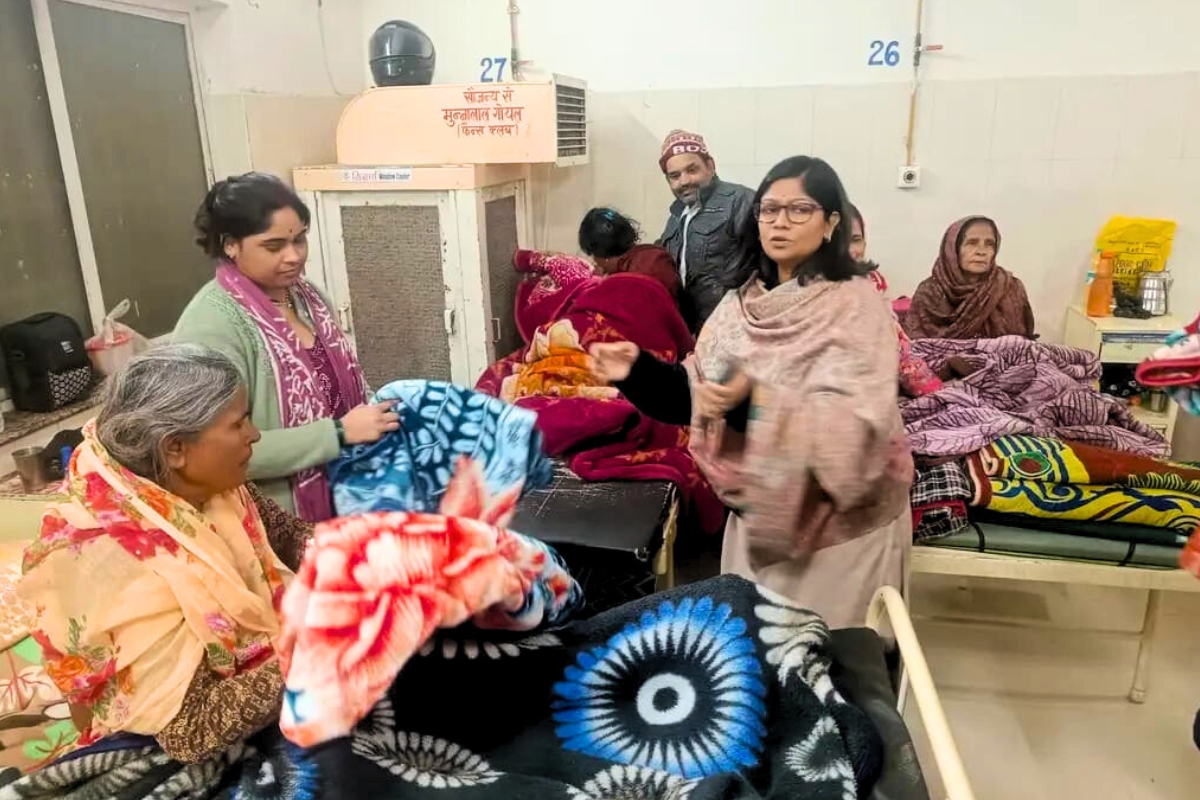
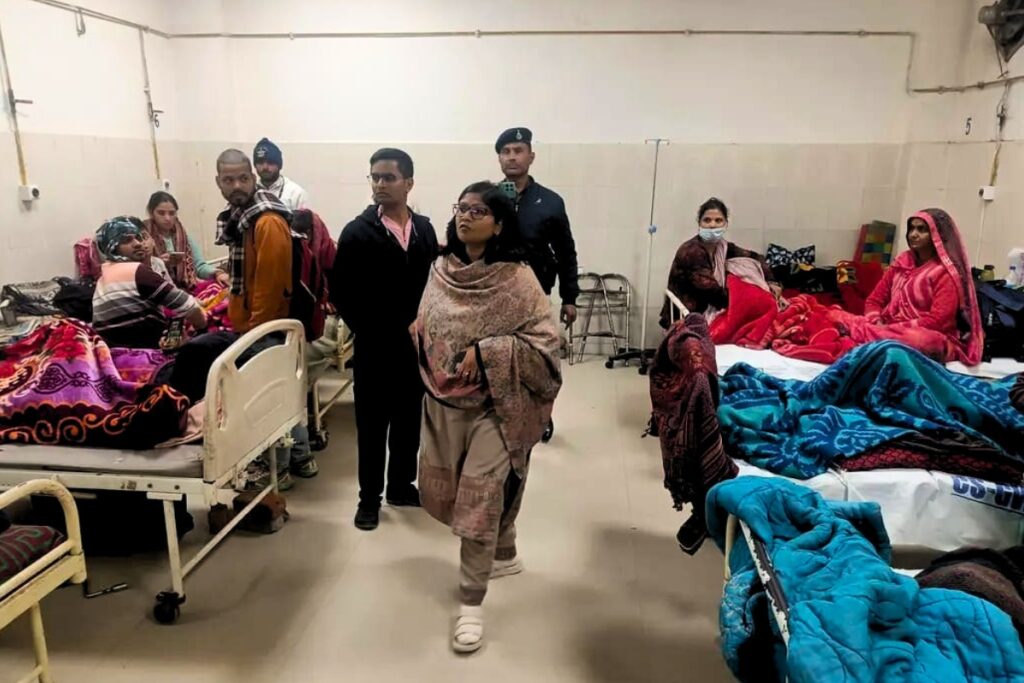
Data from Gwalior’s major government hospital, Jayarogya Hospital (JAH), highlights the severity of the situation. Between December 29, 2025, and January 9, 2026, the hospital recorded 308 heart attack cases and 123 brain stroke patients. Twenty-three people died during this period. Most concerning for doctors is that several of the deceased were between 30 and 45 years old.
“This is not a normal winter,” hospital superintendent Dr. R.K.S. Dhakad says. “We are seeing young patients with no prior arterial blockage suffering from cold-induced strokes.” The number of cardiac and respiratory patients in the outpatient department has doubled, Dhakad says.
How Cold Triggers Heart Attacks
Dr. Puneet Rastogi, head of cardiology at G.R. Medical College, explains the science behind the trend.
At temperatures around 4°C, the body constricts blood vessels to conserve heat. This can suddenly push blood pressure beyond 160/100— the normal is below 120 / 80. In younger individuals, stress and unhealthy lifestyles may already leave small plaques in the arteries. Under sudden pressure, these plaques can rupture, forming clots that cause massive heart attacks.
He adds that in an era of global warming, people have adapted their homes with air-conditioners and heaters. But the human body remains unprepared for sudden thermal shocks. Reduced thirst during winter often leads to dehydration, thickening of the blood, which increases the risk of brain strokes.
Deaths Linked to Heart Attack and Brain Stroke During Cold Wave (Gwalior)
| Date | Heart Attack Deaths | Brain Stroke Deaths | Patient Name (Age) | Min Temp (°C) |
| 29 Dec | 0 | 1 | Deepak Prajapati (37) | 9.0 |
| 30 Dec | 0 | 0 | — | 6.6 |
| 31 Dec | 2 | 0 | Surendra Natha (45), Fauji Baba (49) | 8.4 |
| 01 Jan | 1 | 1 | Radhelal (35), Gautamdas (42) | 10.1 |
| 02 Jan | 1 | 0 | Soneram Ojha (55) | 10.2 |
| 03 Jan | 3 | 1 | Heera Bai (59), Devisingh (65), Kasturi Devi (62), Narayan Das (50) | 7.79 |
| 04 Jan | 0 | 0 | — | 6.4 |
| 05 Jan | 2 | 0 | Sardu Devi (62), Ashutosh (39) | 7.3 |
| 06 Jan | 2 | 3 | Gotiram (50), Tehsildar Singh (44), Surendra Adivasi (55), Kamla (52), Shakuntala (49) | 7.7 |
| 07 Jan | 1 | 2 | Mohanlal (66), Prakash Ojha (47), Dataram (48) | 8.7 |
| 08 Jan | 1 | 0 | Savitri Devi (59) | 7.1 |
| 09 Jan | 2 | 0 | Names not available | 5.0 |
Note: Minimum temperature based on Meteorological Department records. During this period, 308 heart attack patients and 123 brain stroke patients were admitted to the government Jayarogya Hospital, Gwalior. The figures above represent recorded deaths among admitted patients.
Climate Whiplash: A Frozen Response to Extreme Heat
This winter has broken several temperature records across the state. During December and January, temperatures fell below 5°C in many districts. Mandsaur recorded 2.5°C, while Bhopal dropped to 3.8°C—its lowest in a decade. Gwalior experienced persistent cold days accompanied by dense fog.
Scientists describe this phenomenon as “climate whiplash,” where weather swings rapidly from one extreme to another.
IMD scientist Dr. Divya Surendra explains that 2025 was the eighth warmest year in India since 1901. Unusual post-monsoon heat destabilized atmospheric systems. When winter set in, the accumulated energy was released through extreme cold waves.
Arctic Warming and Its Impact on Central India
According to scientists at the Bhopal Meteorological Centre, the subtropical westerly jet stream is currently flowing over northern India at an altitude of about 12.6 kilometers, with wind speeds reaching up to 240 km/h.
Dr. Surendra explains that Arctic warming has weakened the jet stream, making it more wavy. In January 2026, one of its southern dips pushed cold air directly into the plains of Gwalior, Chambal, and Bhopal. This is why the biting cold persisted even during sunny afternoons.
In December 2025, rainfall across much of India, including Madhya Pradesh, was 69 percent below average. The lack of moisture made the air dry and heavy, trapping pollutants such as PM2.5 close to the ground. This created a toxic chamber effect, making dry cold more harmful to the heart and lungs than humid cold.
In Jabalpur, fog combined with pollution made breathing difficult, and brain stroke cases reportedly increased by 20–30 percent.
According to IMD scientists, the most dangerous aspect of this winter was not the drop in minimum temperatures but the sustained fall in daytime temperatures. Cities like Bhopal and Gwalior recorded daytime temperatures 6–7 degrees below normal, remaining between 18°C and 20°C throughout January.
Dr. Rastogi explains that this meant the human body never received adequate recovery time during the day, increasing the risk of hypothermia and heart failure.
An analysis of weather patterns between 2016 and 2026 shows a clear trend—instability. Winters once followed predictable patterns; now new records are broken almost every year. January 2021 was among the warmest in a decade, while January 2026 turned into one of the coldest.
Policy Gap: Cold Waves Still Not Treated as a Disaster
Madhya Pradesh’s State Action Plan on Climate Change (MP-SAPCC 2022–27) includes detailed protocols for heat waves, such as ORS corners, heat OPDs, and cool roof initiatives. Compensation mechanisms also exist for heat waves and floods under disaster management rules.
However, no comparable ground-level strategy exists for cold waves.
Environmental activist Rashid Noor Khan says cold-related deaths are often recorded as cardiac arrest or illness rather than climate-related disasters. As a result, affected families do not receive compensation similar to that provided for floods or lightning strikes.
The administration has taken temporary measures. School timings were changed or holidays declared in several districts, and district officials in cities like Gwalior arranged bonfires and blankets for homeless populations.
But critics argue these steps are temporary. Hospitals, they say, are being prepared for heat-related emergencies but not for winter cardiac or cold-stroke cases. Dedicated warming rooms or winter OPDs are still absent.
What Needs to Be Done
This January’s cold wave serves as a warning for Madhya Pradesh. Climate scientists warn that as the planet warms, jet stream instability may increase, leading to more sudden and severe winters in the future.
Dr. Rastogi advises people aged 30–45 to avoid morning walks between 4 a.m. and 8 a.m., calling this the most vulnerable period for heart attacks during winter. He recommends going outdoors only after sunrise.
Environmental activist Subhash Pandey argues that cold waves should be officially classified as a state disaster. Hospitals need winter-specific protocols and infrastructure, and climate action plans must move beyond paperwork to implementation. Urban planning, increasing green cover, and pollution control, he says, must become part of the response.
Support Us To Sustain Independent Environmental Journalism In India.
Keep Reading
Highway Halt Puts Kashmir’s Fruit Economy at Risk
Railway line expansion plan put Kashmir’s apple orchards at risk
Warmer winters in Kashmir raise concerns over apple and crop yields